1. Headboard Ledge Shelf With a Poinsettia
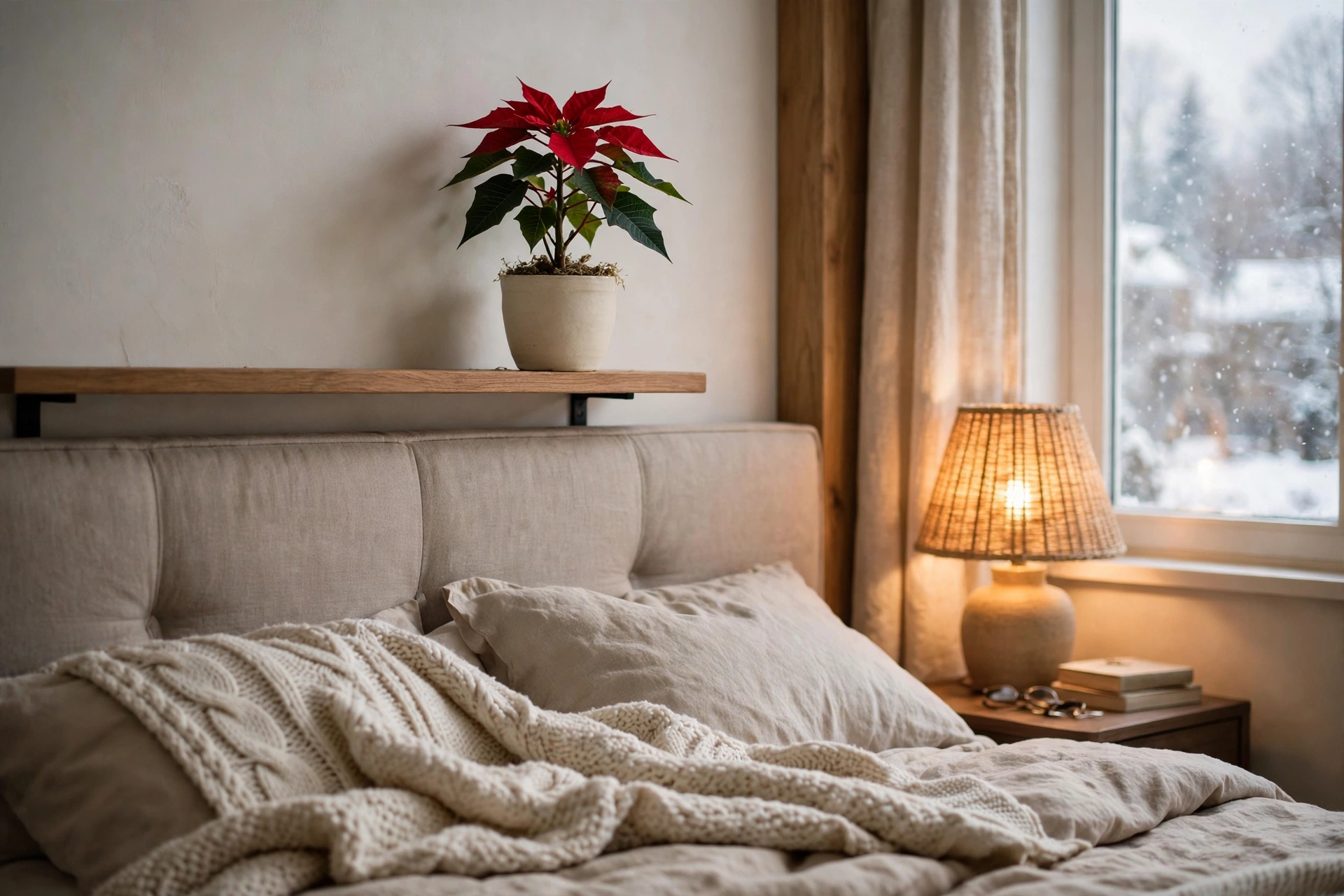
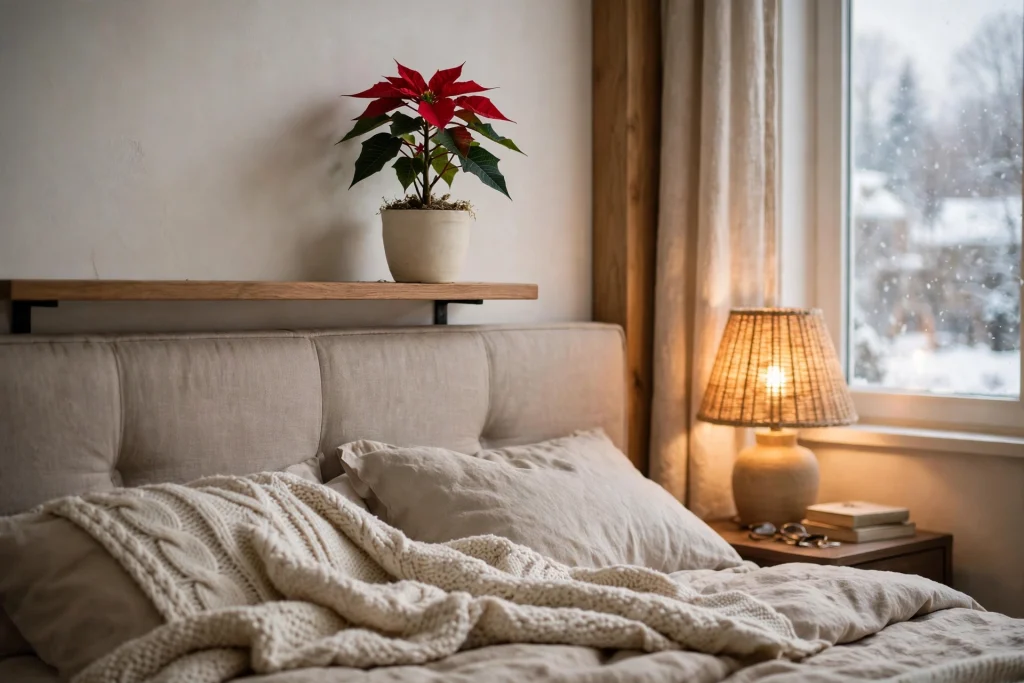
Okay, here’s the thing! That blank wall above your headboard is the best shelf spot in your bedroom! A narrow ledge holds a small poinsettia in a cream pot, showing off bright red bracts all winter! Poinsettias love bright indirect light for 6 or more hours a day, so keep the shelf near your window! Water when the top inch of soil feels dry, and keep the pot away from drafts and heat vents! Warm rooms between 65 and 70 degrees suit it best, like most bedrooms. The ASPCA lists poinsettia as toxic to cats and dogs, though it calls the danger generally over-rated, so keep the bedroom door closed!
One tip: slip the shiny foil wrapper off or punch holes in it, since trapped water at the bottom turns happy roots soggy fast!
2. Dresser-Top Tiered Riser With Paperwhites
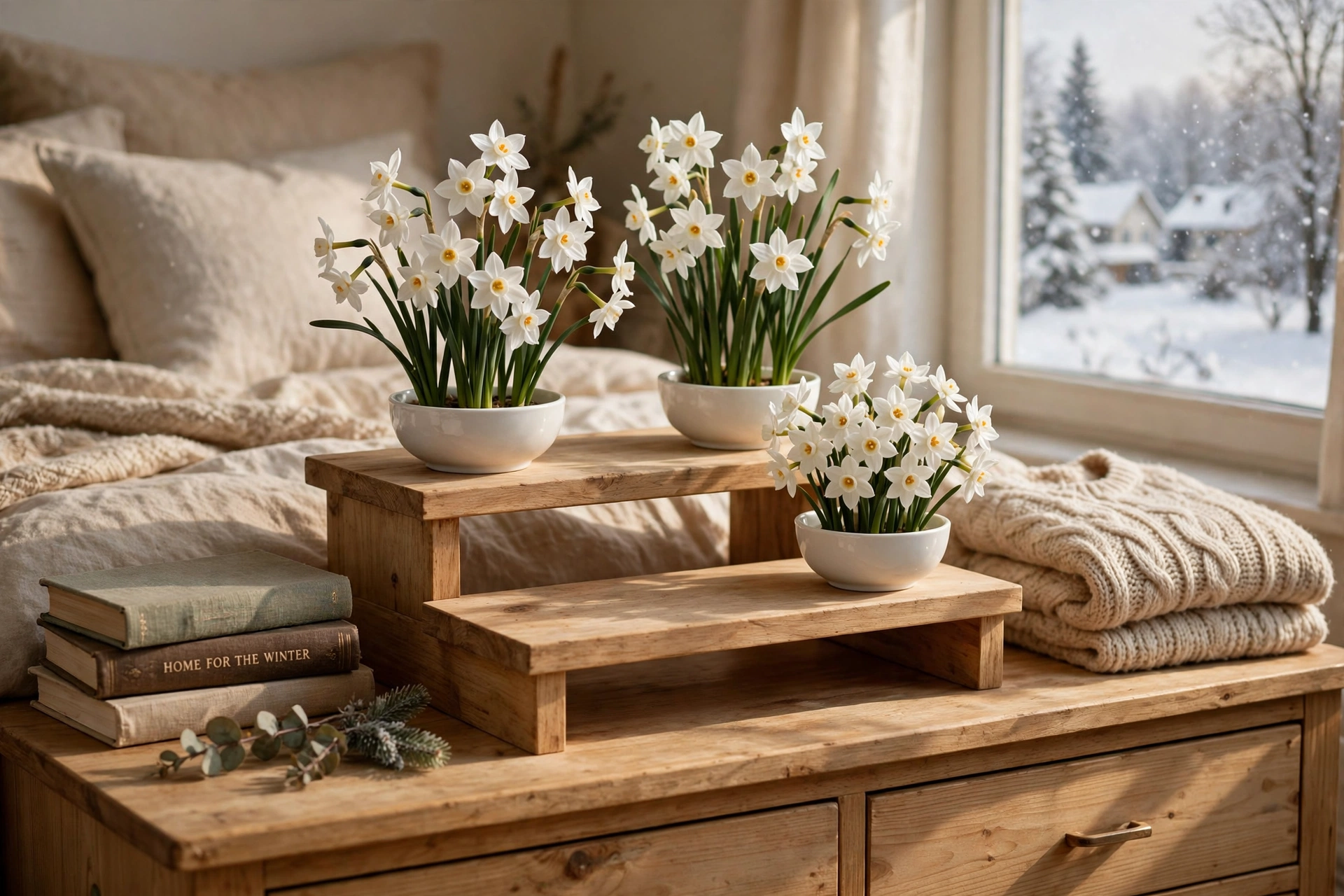
Paperwhites are magic in a bowl, and your dresser is their stage! A small two-tier wooden riser lifts the forcing bowls to different heights, so the dresser looks like a winter garden! Set the bulbs on pebbles with water just touching their bases, and fragrant white blooms open in 4 to 6 weeks! No chilling period is needed, which makes paperwhites the easiest bulbs you can force indoors! Bright light and a cool room around 60 to 65 degrees keep stems short and sturdy, not tall and floppy. The ASPCA lists paperwhites as toxic to cats and dogs, with bulbs the most poisonous part, so keep them away from pets!
One tip: start a second batch of bulbs two weeks after the first, so lovely fresh blooms open just as the first batch fades!
3. Bright Wall Shelf Beside the Window With Rosemary
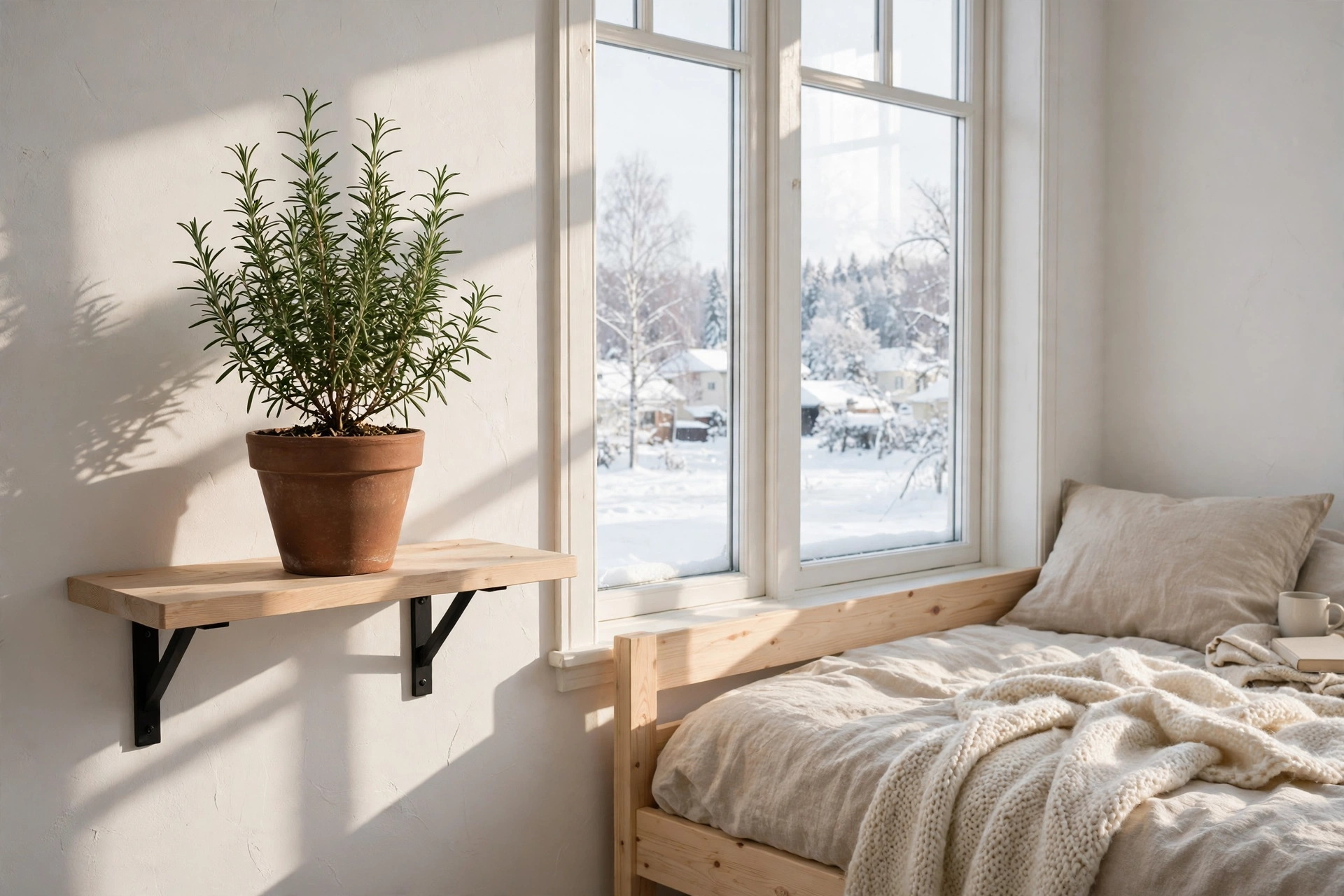
Rosemary on a shelf beside your window is the bedroom plot twist nobody saw coming! This sunny Mediterranean herb wants 6 to 8 hours of direct sun a day, so a south-facing wall shelf is its happy place! A terracotta pot with drainage holes suits it beautifully, while the needle-like leaves catch the low winter light! Let the top 1 to 2 inches of soil dry between waterings, and water less in winter when growth slows. Cool air near the window suits it perfectly, and a little airflow keeps the foliage fresh and fragrant! The ASPCA lists rosemary as non-toxic to cats and dogs, wonderful news for pet owners!
One tip: snip a fragrant sprig for your cooking whenever you like, since regular snipping keeps the plant bushy and full!
4. Above-the-Door Shelf With a Trailing Asparagus Fern
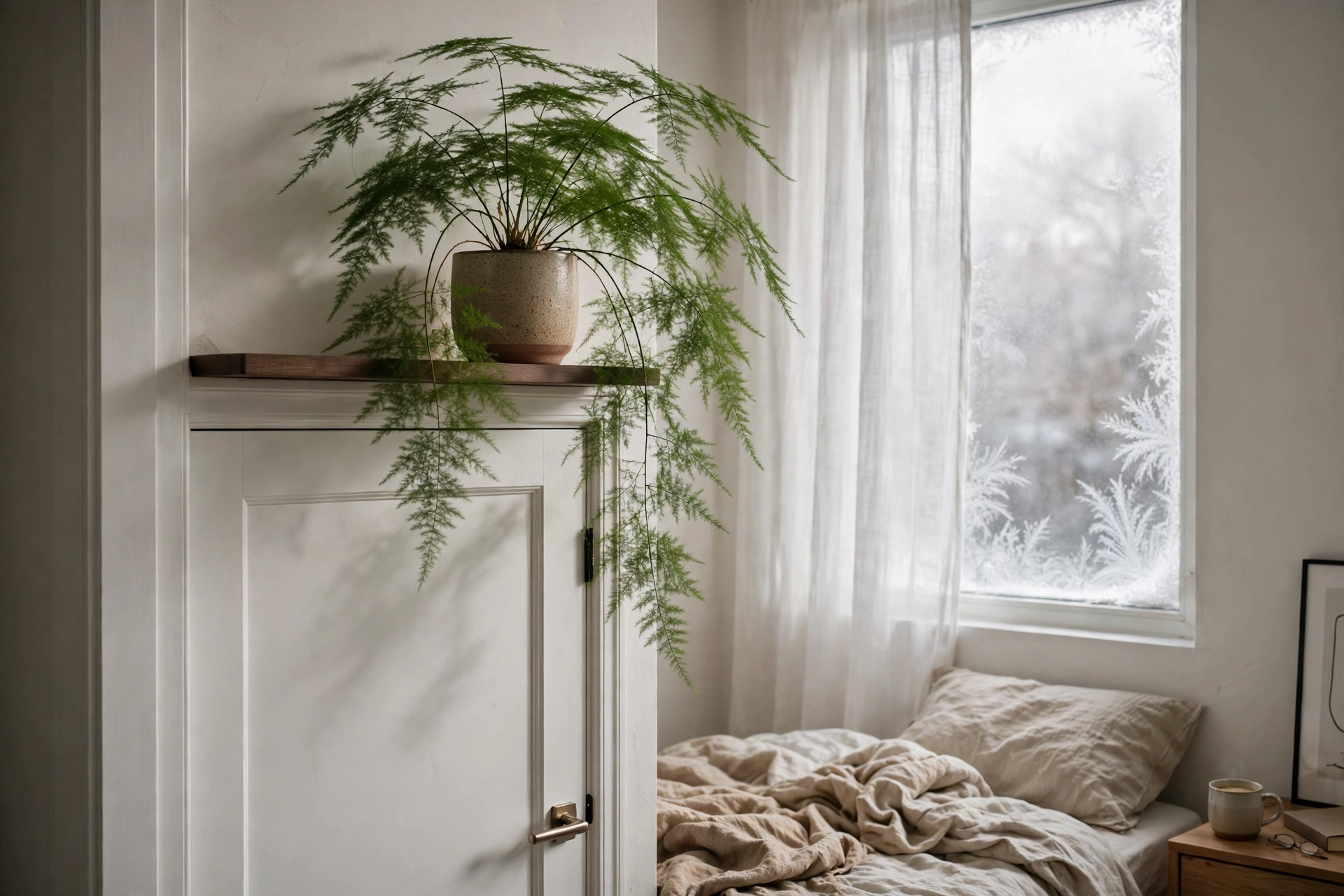
Seriously, the wall above your bedroom door is free space begging for a plant! A sturdy shelf up there gives a sprengeri asparagus fern room to trail its feathery stems down like a green curtain. Bright indirect light keeps the delicate foliage full and fresh, so pick the door nearest your window! Water when the top inch of soil feels dry, and humidity around 40 to 60 percent keeps the fronds happy! Your normal bedroom warmth suits it beautifully, and the high shelf keeps the pot out of the way! The ASPCA lists asparagus fern as toxic to cats and dogs, so a closed bedroom door keeps curious pets safe!
One tip: trim the longest stems as they grow, so the pretty trails stay above the door frame and never catch the door!
5. Closet Shelf Grow-Light Nook With a Peace Lily
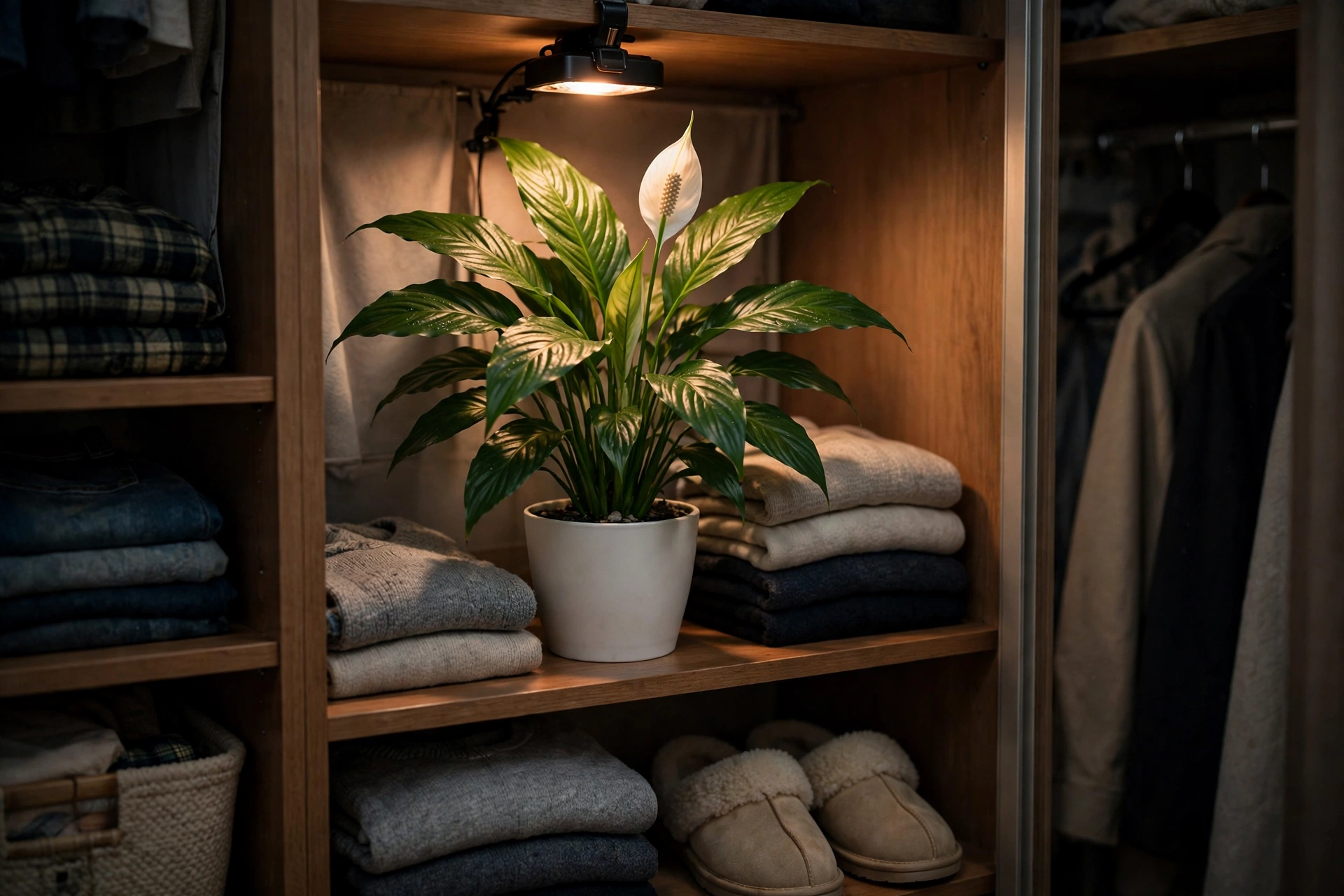
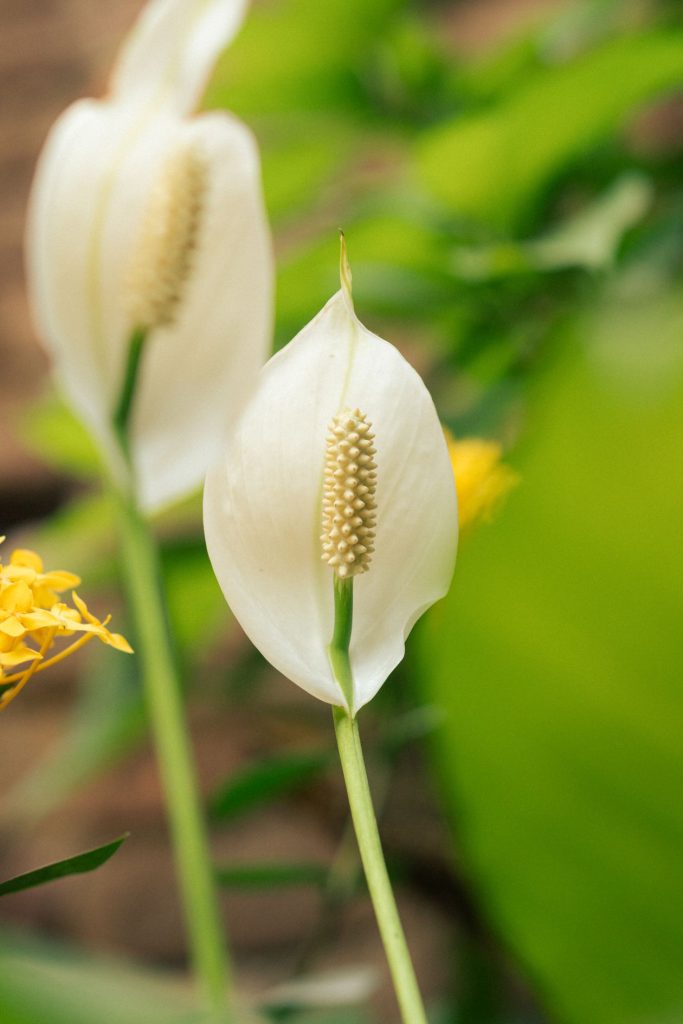
Your closet shelf is secretly a greenhouse waiting to happen, and a happy peace lily is ready to move in! Peace lilies earned the nickname the closet plant because they survive in very low light. A small grow light on a timer gives it steady light through short winter days, and lovely white spathes may follow! Water when the top inch of soil feels dry, and water less in winter when growth slows. It loves warm rooms between 68 and 85 degrees, along with humidity of 50 percent or higher! The ASPCA lists peace lily as toxic to cats and dogs, so keep the closet door closed when pets roam!
One tip: set the grow light on a timer for the daytime hours, so the plant gets a steady rhythm and you never forget a thing!
6. Nightstand Lower Shelf With a Blue Star Fern
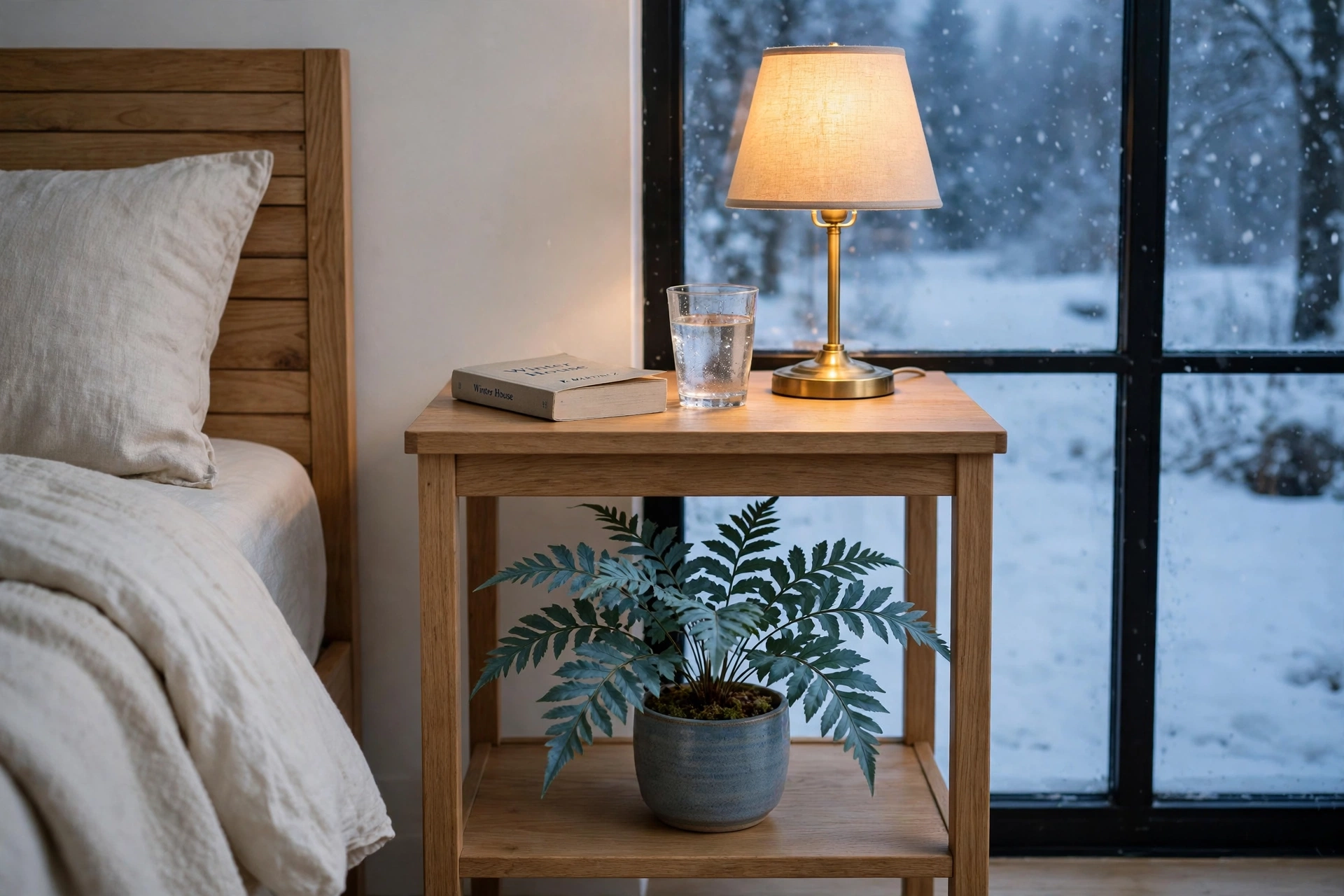
Okay, confession time: the lower shelf of your nightstand is the most underused plant spot in the house! A lovely blue star fern fits there beautifully, with blue-green fronds that glow softly in the lamplight! Bright indirect light suits it best, though it tolerates lower light too, so a bedside spot works wonderfully! Water when the top inch of soil feels dry, and it forgives a missed watering far better than too much. It handles average indoor humidity better than most ferns, which makes winter heating wonderfully easy! Blue star fern is considered non-toxic to cats and dogs, so pets and plants can share the room!
One tip: set the pot on a pebble tray with water, since the gentle moisture keeps the fronds fresh and happy all winter!
7. Vanity Shelf With a Polka Dot Begonia
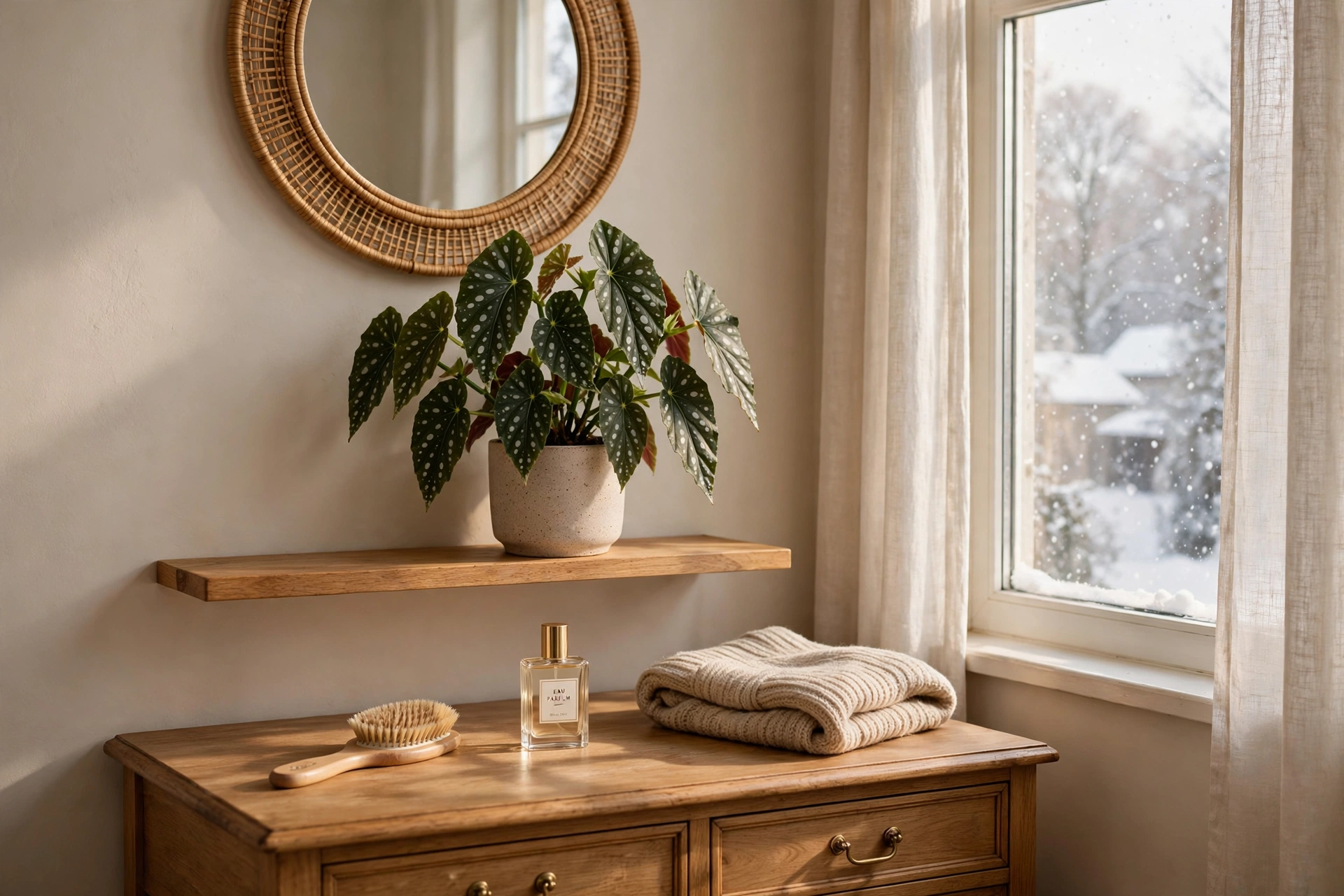
A polka dot begonia on your vanity shelf is pure delightful main-character energy, and honestly, it knows it! Its long leaves wear gorgeous silver spots on dark green, with warm red undersides that catch the mirror light! Bright indirect light keeps the silver spots vivid and the cane stems compact and tidy! Water when the top inch of soil feels dry, and water at the soil line to keep the leaves dry. It loves warm rooms between 65 and 75 degrees, with humidity around 45 percent or higher! The ASPCA lists begonia as toxic to cats and dogs, so a pet-free bedroom keeps everyone happy!
One tip: pinch the cane tips in spring, since pinching keeps the plant delightfully bushy and full instead of tall and leggy!
8. Top-of-the-Bookcase Display With an African Milk Tree
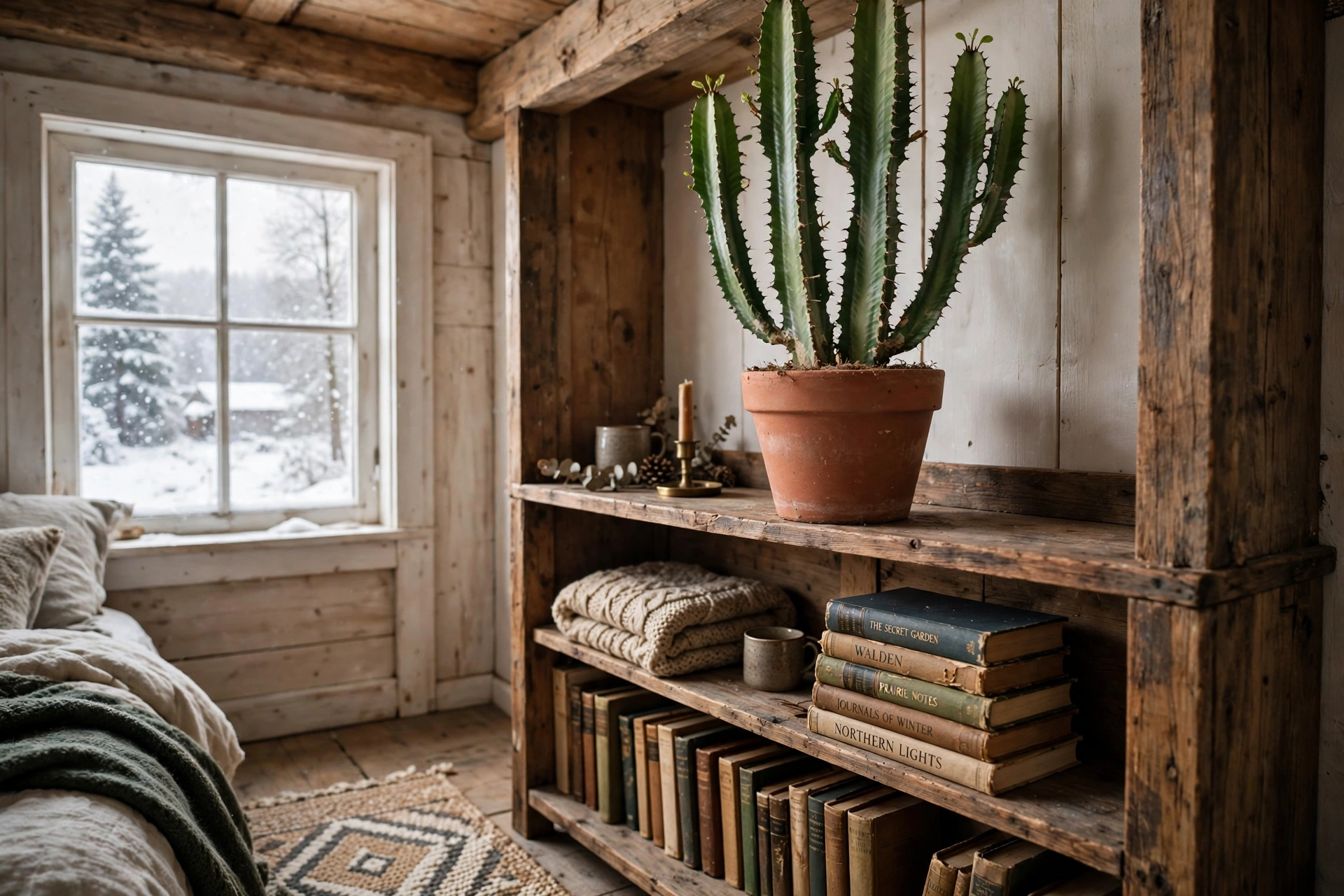
That bare top of your bookcase is begging for a glow-up, and an African milk tree delivers! This tall succulent grows upright ribbed stems with small leaves along the ridges, like a gorgeous living sculpture! It is not a true cactus at all, even though it certainly looks the part! Bright indirect light indoors keeps it happy, and a spot near your brightest window works beautifully! Water sparingly, only when the top 1 to 2 inches of soil feel dry, and water even less in winter. The ASPCA lists African milk tree as toxic to cats and dogs, and its milky sap irritates skin too, so handle it with gloves!
One tip: rotate the pot a quarter turn every couple of weeks, so the tall stems grow straight and proud instead of leaning toward the window!
9. Knee-Wall Shelf in a Cool Attic Bedroom With a Camellia
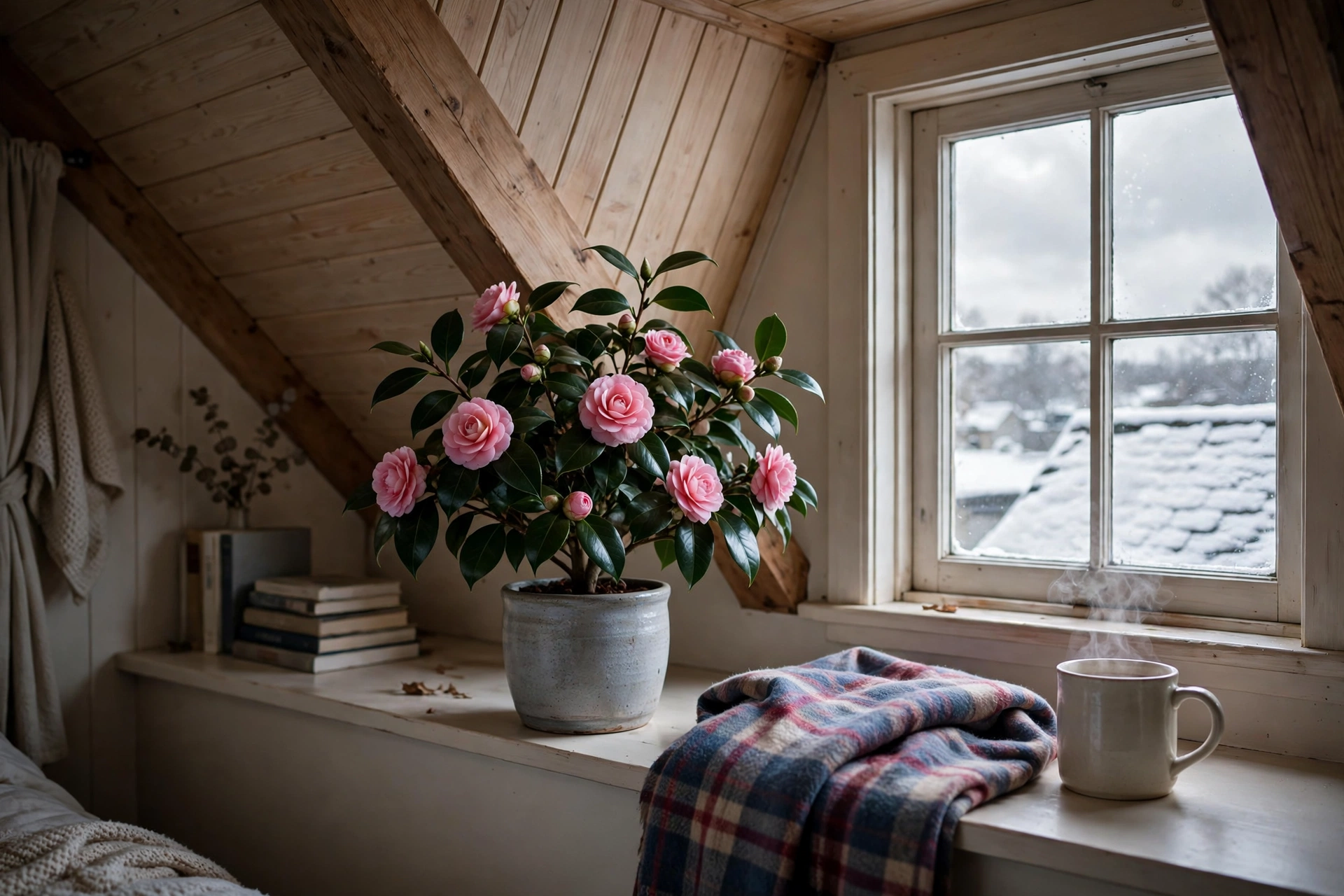
A cool attic bedroom is secretly camellia paradise, and that knee-wall shelf is the perfect stage! Camellias bloom in winter and early spring, opening big gorgeous rose-like flowers when most plants rest! Bright indirect light suits it beautifully, with a little gentle morning sun if your dormer window allows! Cool rooms between 45 and 60 degrees keep the blooms fresh for weeks, which is exactly what an attic bedroom offers! Keep the soil evenly moist, especially while the lovely buds form, and never let the pot sit in water! The ASPCA lists camellia as non-toxic to cats and dogs, so pets can wander the attic freely!
One tip: use lovely rainwater or distilled water when you can, since camellias love soft water and tap water can bother them!
10. Shelf Above the Bedroom TV With a Crown of Thorns
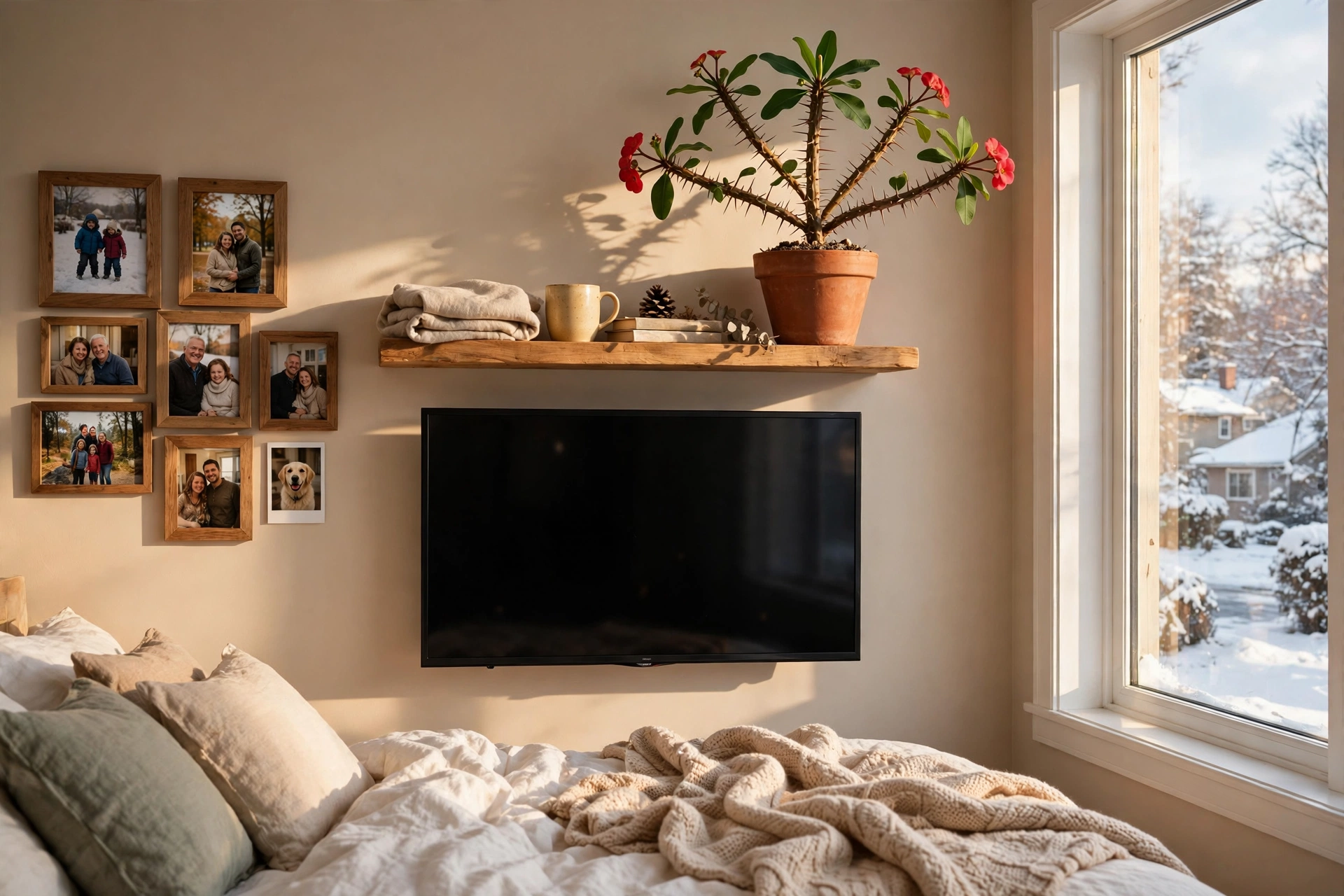
A shelf above your TV is prime real estate, and a crown of thorns owns it! This spiny succulent wears clusters of red or pink bracts through fall and winter, like twinkling lights! Bright light is the secret to blooms, so give it 4 to 6 hours of direct sun a day! Water only when the top 2 inches of soil feel completely dry, and water sparingly in winter! Warm rooms between 65 and 85 degrees suit it beautifully, so a heated bedroom is perfect! The ASPCA lists crown of thorns as toxic to cats and dogs, and its milky sap irritates skin, so keep it away from curious paws!
One tip: move the pot closer to the brightest window in winter, since shorter days mean less light for those gorgeous blooms, and a sunny spot keeps them glowing!
11. Window-Seat Shelf With a Clivia
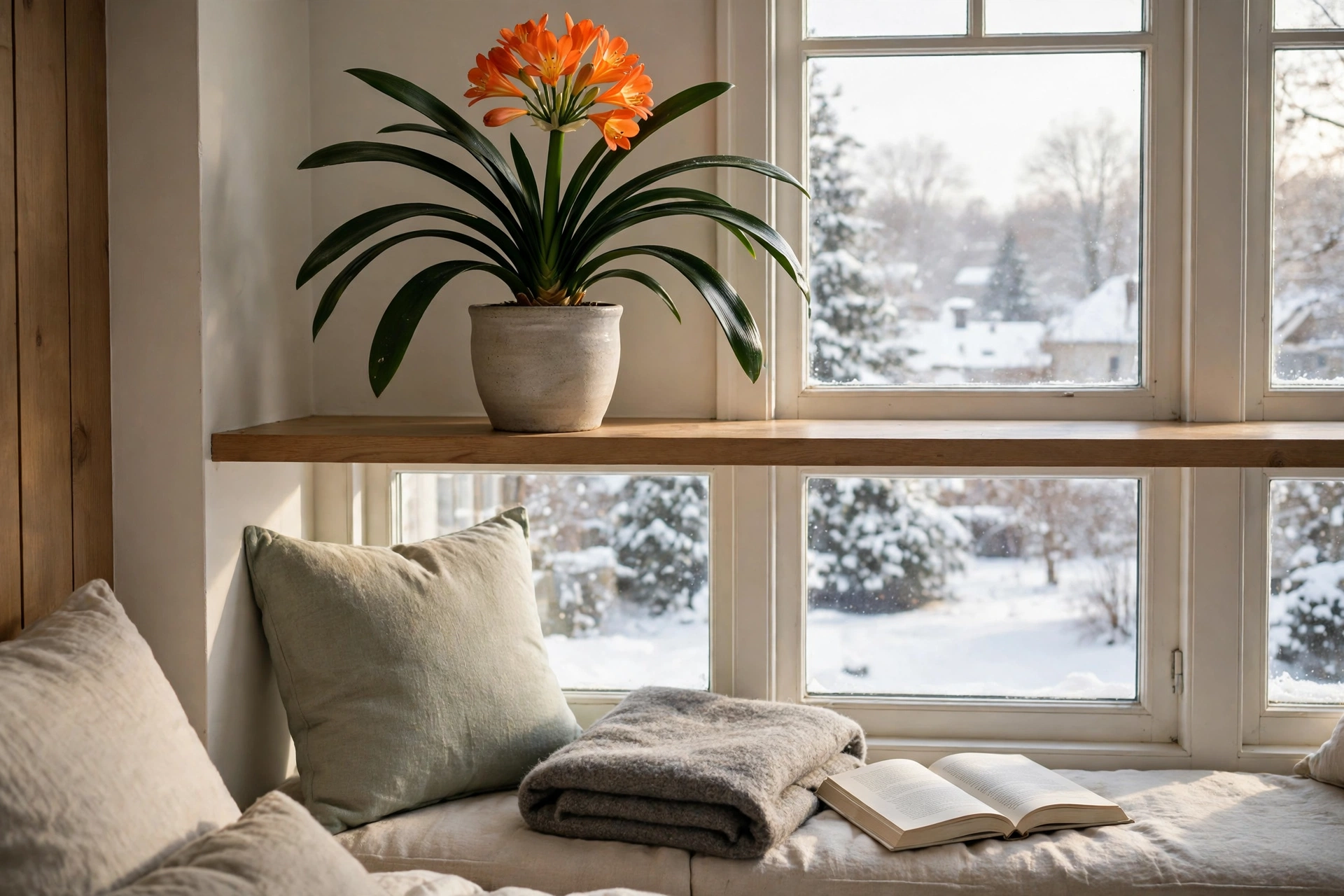
A clivia on your window-seat shelf is the slow-burn romance of the plant world, and winter is when it shines! Its dark green strap-like leaves fan out in a lovely clump, and cheerful clusters of orange flowers follow in late winter! Bright indirect light suits it beautifully, with no direct sun on the leaves! Cool nights just below 50 degrees for 6 to 8 weeks in fall set the buds for those winter blooms. Water sparingly during the rest, then water when the top inch of soil feels dry once growth returns! The ASPCA lists clivia as toxic to cats and dogs, so this one belongs in a pet-free room!
One tip: leave the plant in its snug pot, since clivias bloom best when their roots feel a little crowded and cozy, and happy roots mean gorgeous blooms!
12. Reading-Nook Shelf With a Stromanthe Triostar
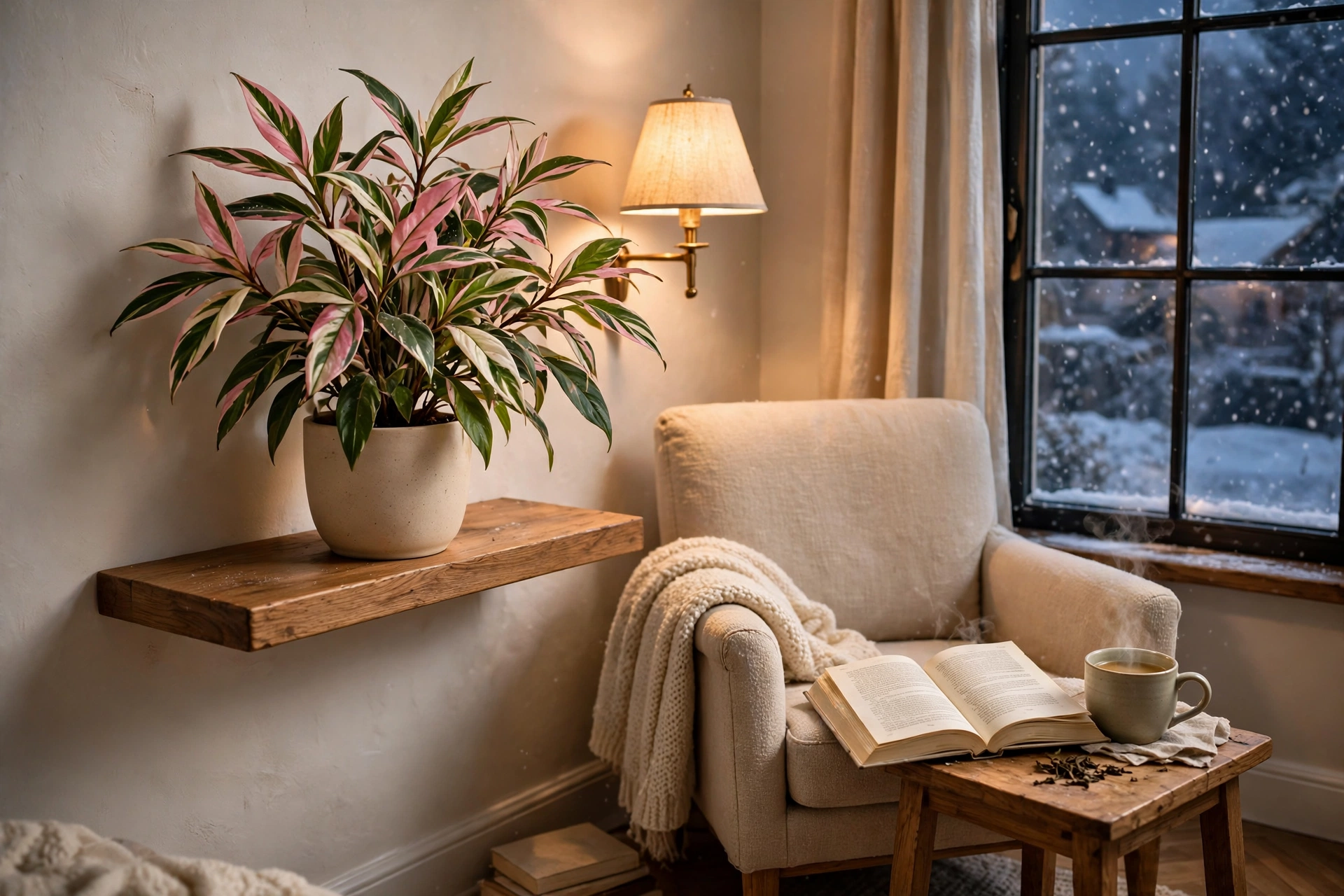
A gorgeous stromanthe triostar turns your reading nook into a lovely watercolor painting, and it is not even trying! Its long leaves swirl pink, cream, and green on top, with gorgeous deep magenta undersides that glow beautifully in lamplight! Bright indirect light keeps the pink bold and beautiful, while direct sun scorches the pale parts fast! Water when the top inch of soil feels dry, and keep the soil lightly moist through winter! Humidity above 50 percent keeps the leaf edges smooth, so a small humidifier nearby works wonders! No toxicity is listed for stromanthe, and its prayer-plant relatives are ASPCA-listed non-toxic!
One tip: water with distilled or filtered water, since tap water minerals often leave brown tips on the pretty leaves, and soft water keeps them looking gorgeous and fresh!