
1. Root Pothos Cuttings in Water
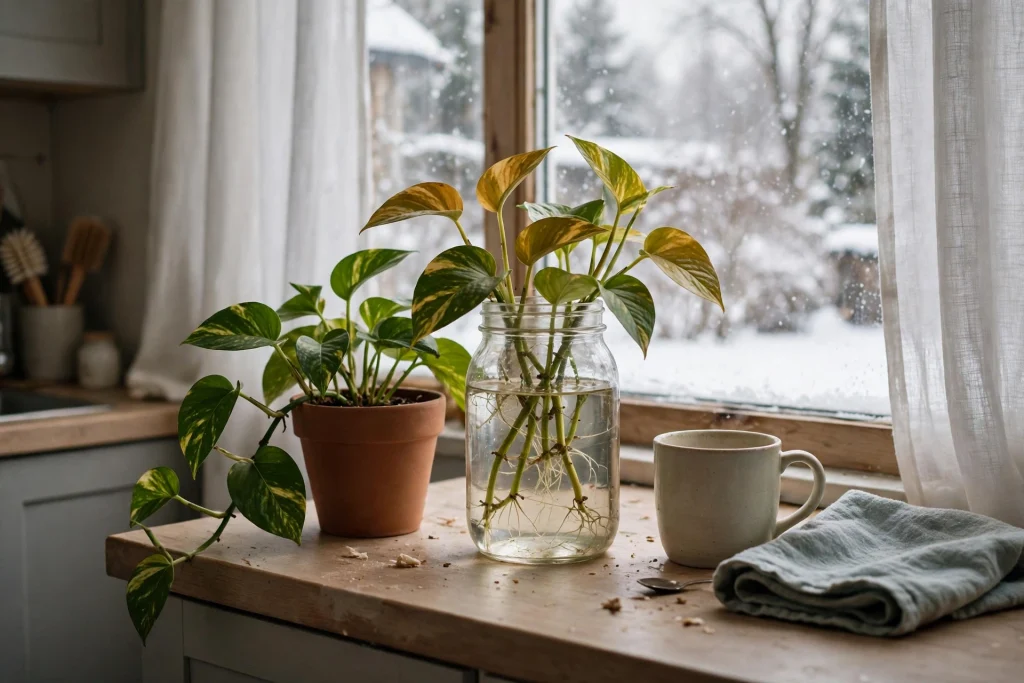
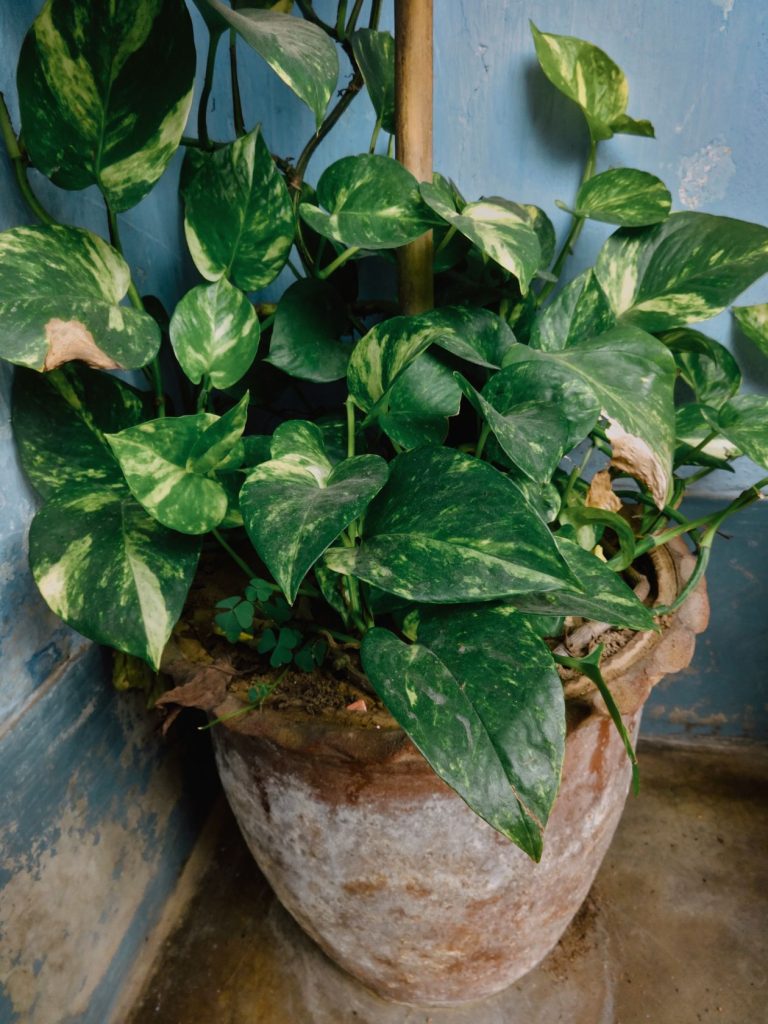
Budget small apartment plant decor feels cheerful and cozy when one pothos vine makes your next plant. Cut a healthy stem piece with several leaf nodes, since a node is the bump where a leaf meets the stem, for happy starts. Remove leaves from the lower nodes so no leaves sit below the water surface, for calm jars. Place the cutting in room temperature water in indirect light, away from cold winter glass, in cozy spots. Roots can take days or weeks, sometimes months, to form, so the wait feels sweet. Golden pothos is toxic to cats and dogs, so keep cuttings where pets cannot chew them, for calm shelves.
One tip: replace cloudy water with fresh room temperature water and wait until roots grow longer than two to three inches before potting. Fresh green payoff makes the wait feel happy and hopeful.
2. Start With Small Starter Plants
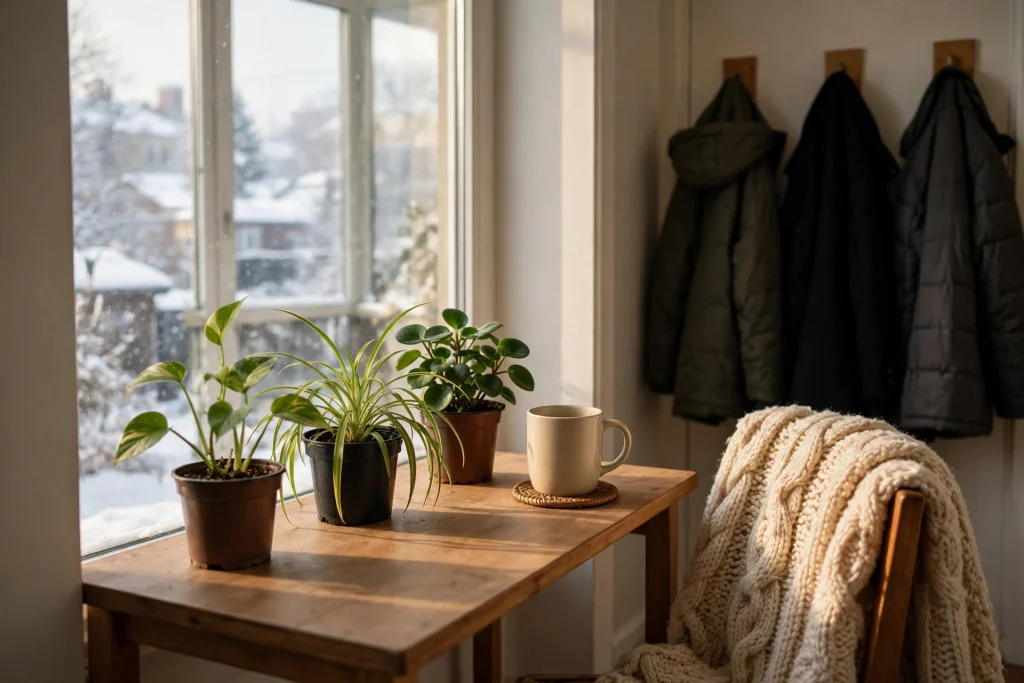
A small starter plant lets you test a spot before a big plant claims your whole shelf, for a happy start. Check your light first, then pick a plant whose needs match that light, for a calm choice. South or southwest windows suit high light plants, while north windows suit low light plants. Plants without enough light can turn pale and grow long thin stems. Small pots also fit desks, shelves, and narrow stands without blocking your walkway. Keep the plant in its nursery pot at first so you can move it with ease, for calm days. Your desk gains a lovely green friend for a bright, happy, cozy start.
One tip: feel the soil before watering a new starter plant, since low light plants use less water at home, and happy roots stay calm. That calm start feels fresh, happy, and welcoming.
3. Trade Cuttings With Friends
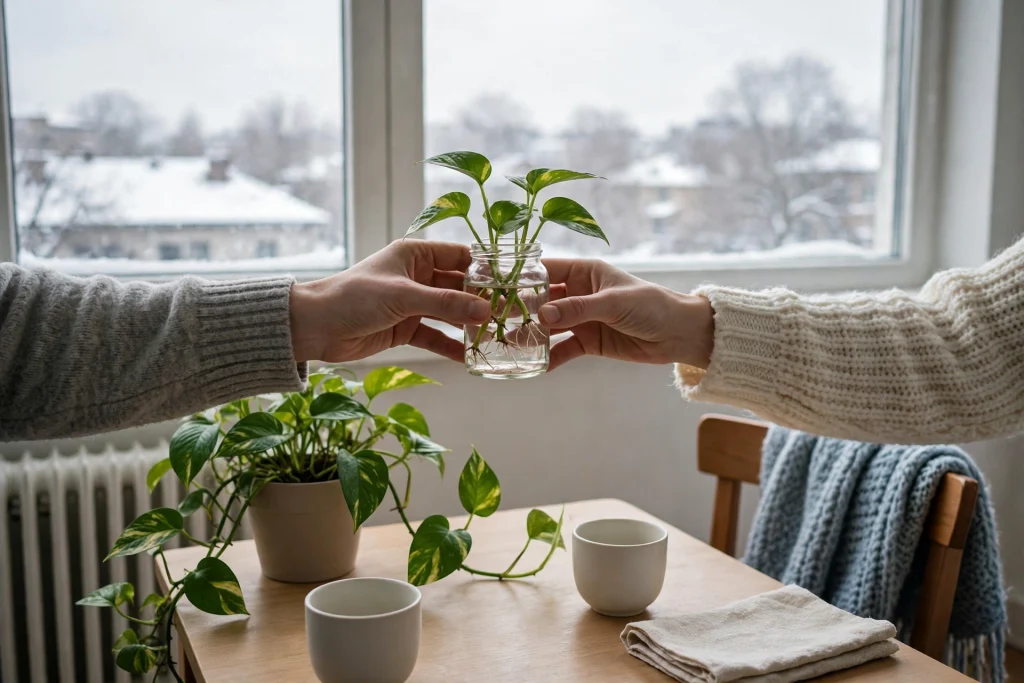
Trading cuttings turns one healthy vine into a tiny plant swap with zero drama at checkout, for happy friends. Ask a friend for a stem piece with several nodes, then offer one from your plant in return, with a smile. Use a clean jar or pot for each traded cutting you bring home, for cheerful swaps. Keep traded cuttings in clean water or moist mix until roots form. Share the plant name with your friend so care needs stay clear from day one, for calm care. Check leaves and stems for disease, insect damage, or infestation before the swap so unhealthy cuttings stay out. Everyone leaves smiling with fresh joy.
One tip: swap only cuttings from healthy stems, and skip any piece that looks unhealthy before it joins your shelf. Friendly swaps bring fresh joy to both cozy shelves.
4. Divide a Clumping Plant
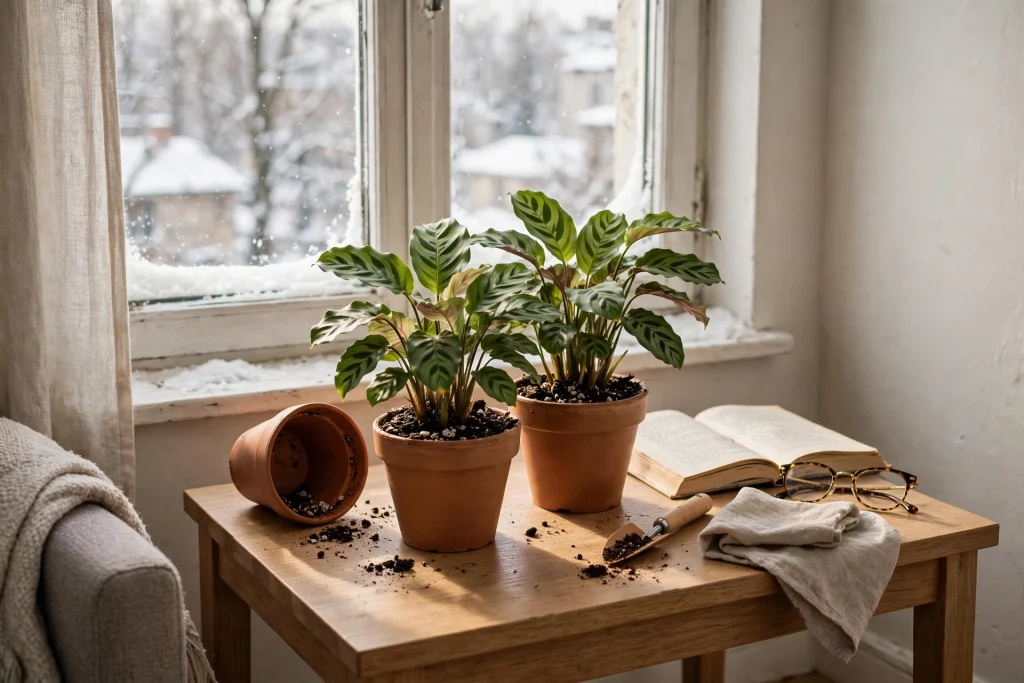
Division works for plants that grow in clumps or send up more than one stem, for cheerful beginnings. Slide the plant from its pot and gently pry stems apart, cutting tough root balls with a sharp knife, with calm hands. Each piece needs a fair share of roots so it can settle into fresh mix, for a happy start. Repot each piece right away so the roots do not dry out, for calm starts. Choose two fuller pieces over many tiny weak pieces in tiny pots. Place the new pots where light matches the parent plant needs, for cheerful corners. Your happy plant becomes two cozy corners.
One tip: set out pots with drainage holes before you start, so each divided piece can go straight into mix. Calm setup gives both new plants a cheerful, happy start.
5. Pot Spider Plant Babies
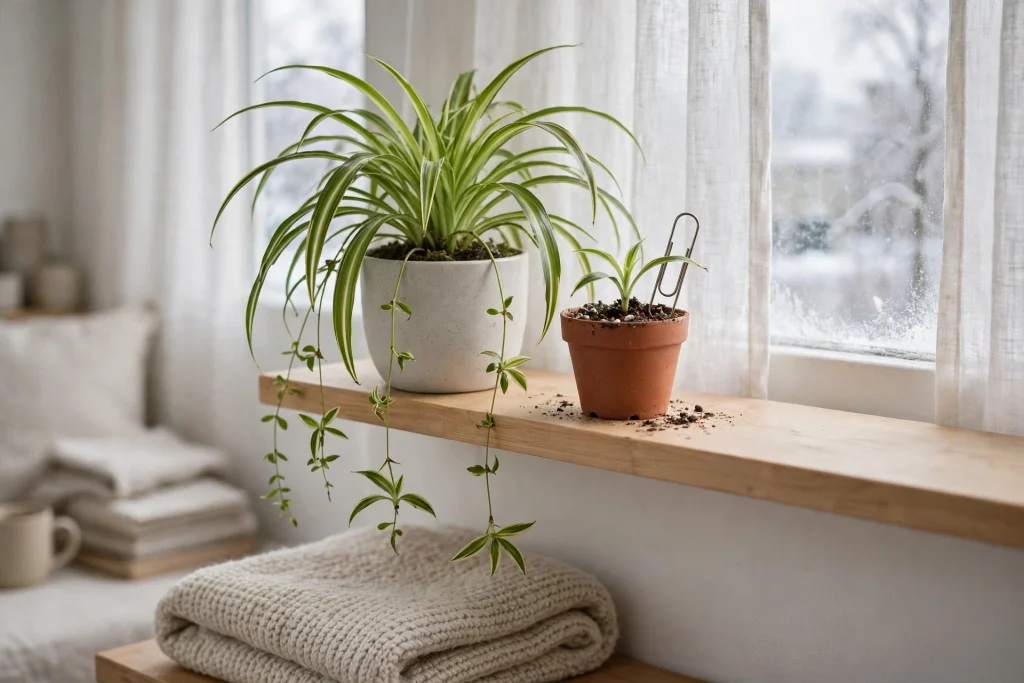
Spider plant babies dangle from long stems like sweet tiny green parachutes over the pot edge in a bright winter room, for a cheerful shelf. Set one plantlet, still attached, on soilless potting medium in a small pot, for a happy start. Roots form while the baby stays linked to the parent plant, in a sweet way. Cut the connecting stem only after the plantlet has rooted in the new pot, for a cheerful plant. Medium to bright light suits spider plants through the year, for a bright corner. ASPCA lists spider plant, Chlorophytum comosum, as non-toxic to dogs and cats, for pet homes. Your shelf gains sweet, cheerful life.
One tip: hold the plantlet against the mix with a bent paper clip until roots take hold in the new pot. Sweet babies make the whole shelf feel cheerful and cozy.
6. Use Glass Jars as Cachepots
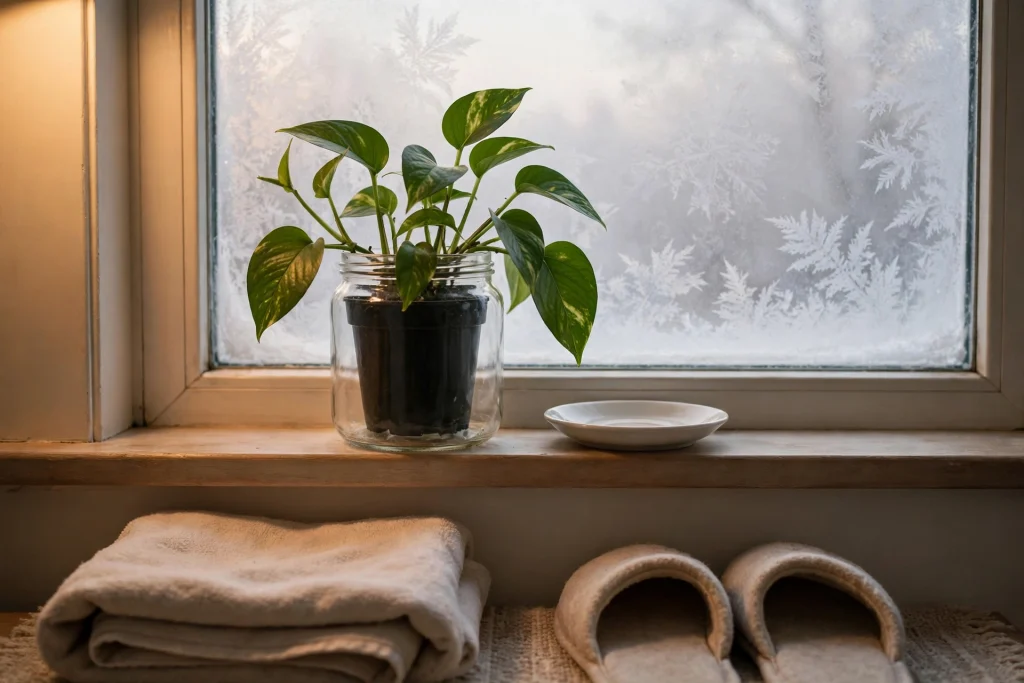
A clean glass jar can dress up a plain nursery pot without touching the roots, for a lovely shelf. Keep the plant in its inner pot, since jars without drainage holes are not made for direct planting. Water the inner pot at the sink, let excess drain, then set it back in the jar, for a cheerful finish. Standing water can leave soil waterlogged, and waterlogged soil can cause root rot, so calm care matters. Glass also lets you spot trapped water before it becomes a soggy surprise. Pick a jar wide enough for the inner pot to lift out with ease. Your plain pot looks fresh, cozy, and lovely.
One tip: empty the jar after watering if water collects under the inner pot, then replace the pot dry underneath. Clear jars keep the shelf fresh, neat, and cheerful.
7. Turn Tin Cans Into Pots
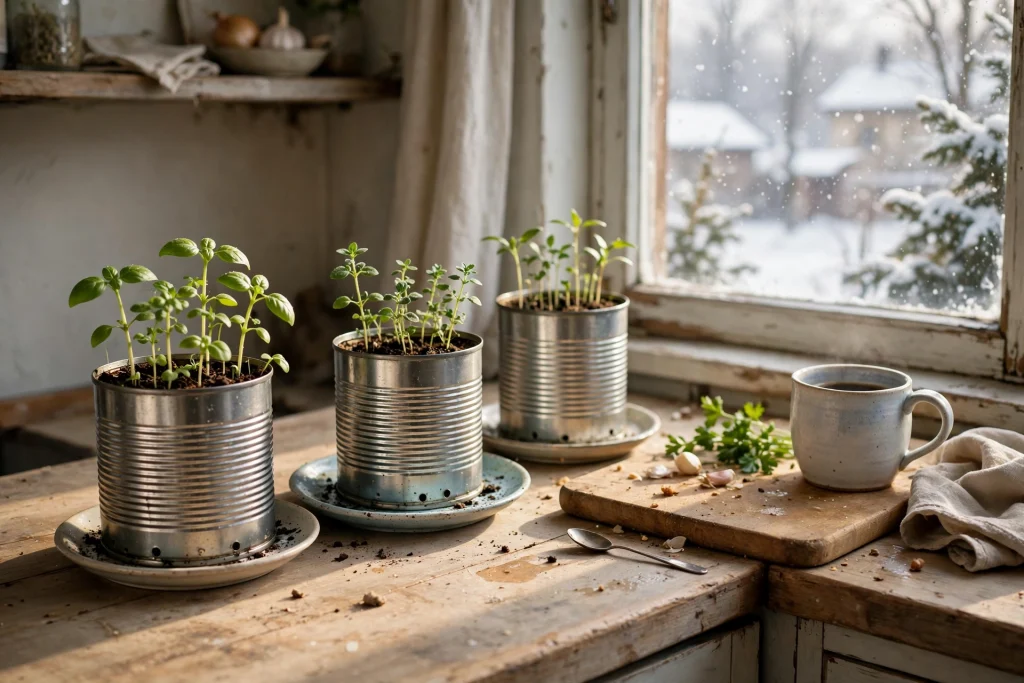
A clean tin can becomes a small pot once you add drainage holes to the base, for a cheerful planter. Rinse the can well and smooth any sharp rim edge before you handle it, for calm handling. Most containers suit indoor plants when they have a drainage hole in the bottom, for happy plants. Metal pots hold moisture longer than clay pots, so check soil before watering again, for calm care. Set the can on a saucer so drained water stays off your shelf, for a cheerful shelf. Small starter plants fit this scale, and tin can rust over time, for a sweet display. Your counter gains a cozy touch.
One tip: turn the can upside down, make base holes, sand sharp metal bits smooth, then test drainage with water. Handmade planters bring fresh, cheerful charm to your counter.
8. Hunt Thrifted Pots and Baskets
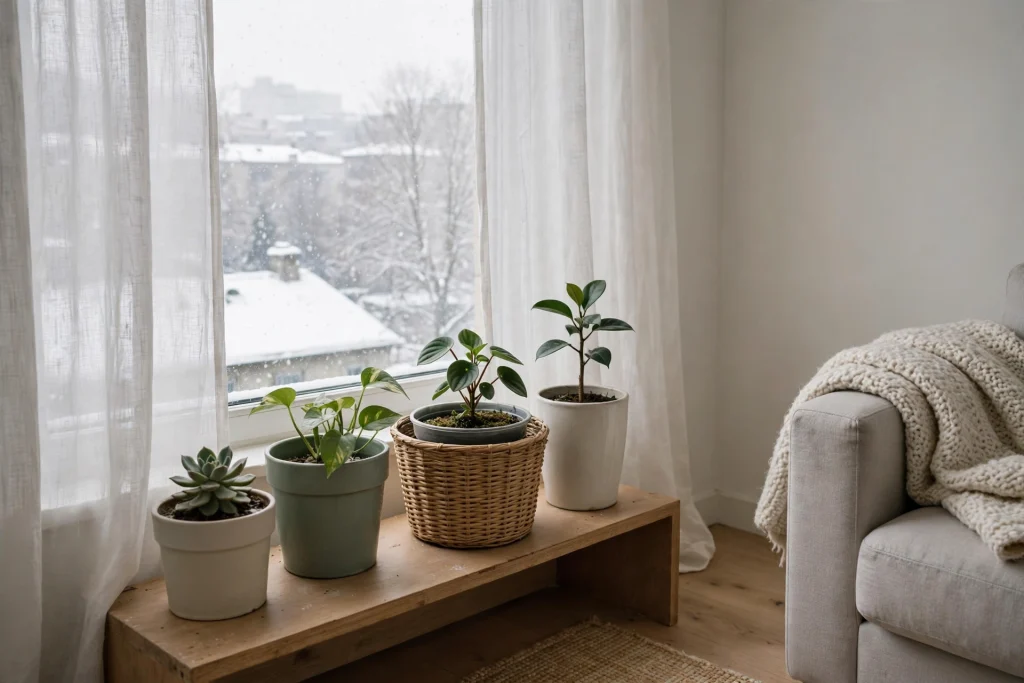
Thrifted pots give your plants a second life look with mismatched charm your shelf will love, for a happy corner. Look for drainage holes first, since drainage helps excess water leave the container, for calm displays. Hole free finds can still work as outer cachepots for a plain inner pot, for a collected look. Place a saucer under the inner pot inside baskets to catch drained water. Clean and disinfect used pots before planting, since disease organisms and insects can remain in old containers, for a happy start. Mix heights and widths so the group looks planned, not like a yard sale spill, for cheerful shelves. Your corner feels warm.
One tip: bring a small inner pot along while shopping so you can test the fit inside baskets and cachepots. Warm corners feel sweeter with that cheerful fit.
9. Group Small Pots on a Tray
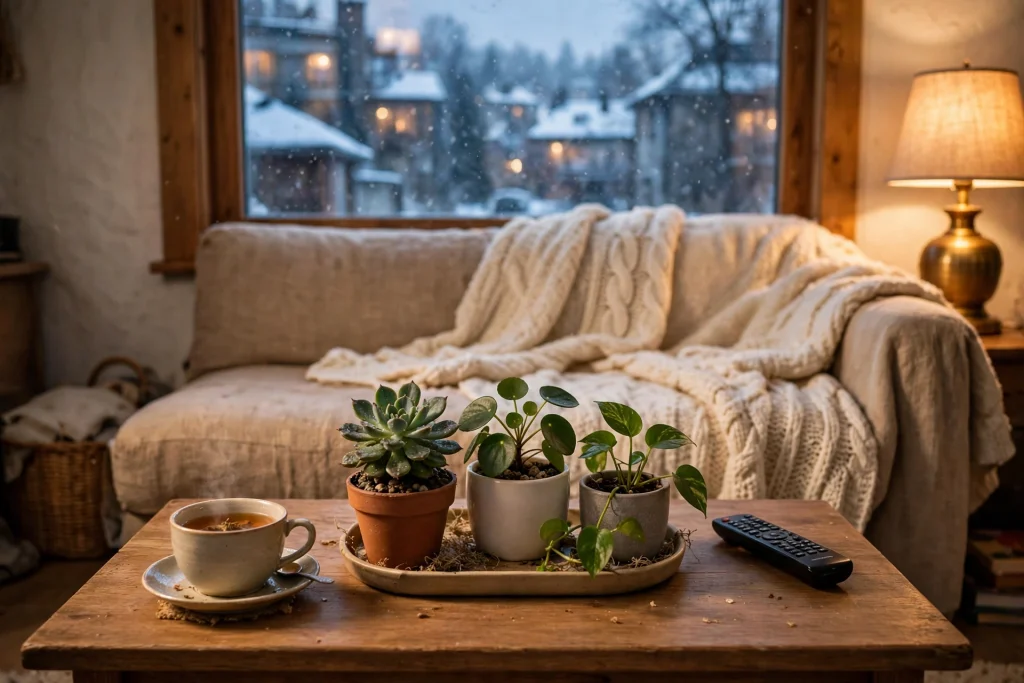
Grouping small pots on one tray makes three tiny plants read as one fuller display, for a cheerful table. Water evaporating from soil and leaves can raise humidity around grouped plants, for happy displays. Trays also catch drips before water reaches wood shelves or books, for a cozy table. Leave small gaps between pots so leaves do not press into one crowded mat, for a fresh display. Match plants with similar light needs so the whole tray can share one bright spot, for a cheerful gathering. Winter air can feel dry indoors, so grouped pots raise humidity right around their leaves, for calm leaves. Your table gains a cozy gathering.
One tip: lift each pot after watering and pour off tray water so no pot bottom sits in water on the tray. Neat trays keep the display fresh, calm, and cheerful.
10. Turn a Step Stool Into a Stand
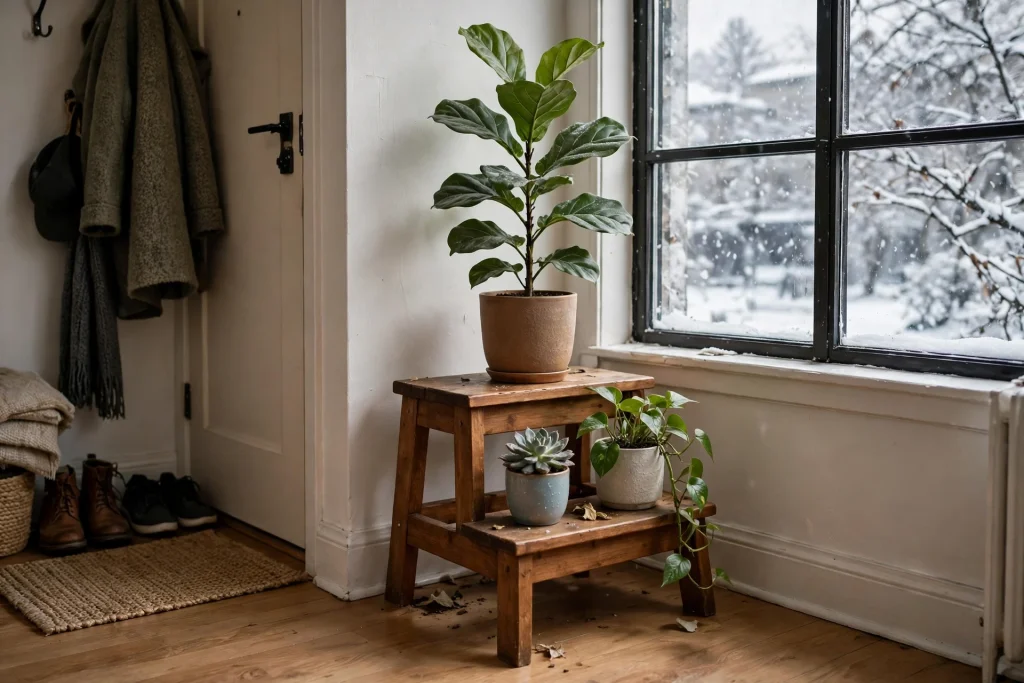
A sturdy step stool turns dead floor space into a two level plant stand, for cheerful corners. Place taller plants on top and shorter pots below so leaves do not hide each other, for a layered look. Light drops fast as plants move back from a window, so keep the stand near glass, for bright corners. Keep leaves off cold glass whenever outdoor temperatures are freezing in winter, for calm leaves. Check the stool stays steady before you load it with wet, heavy pots, for a cozy setup. This setup lifts plants off the floor while your walkway stays clear, for a welcoming room. Your corner becomes a happy nook.
One tip: put the heaviest pot on the lowest level, and lift pots off before moving the stand across the room. Steady setups keep the corner calm, fresh, and cheerful.
11. Fill Bookshelf Gaps With Plants
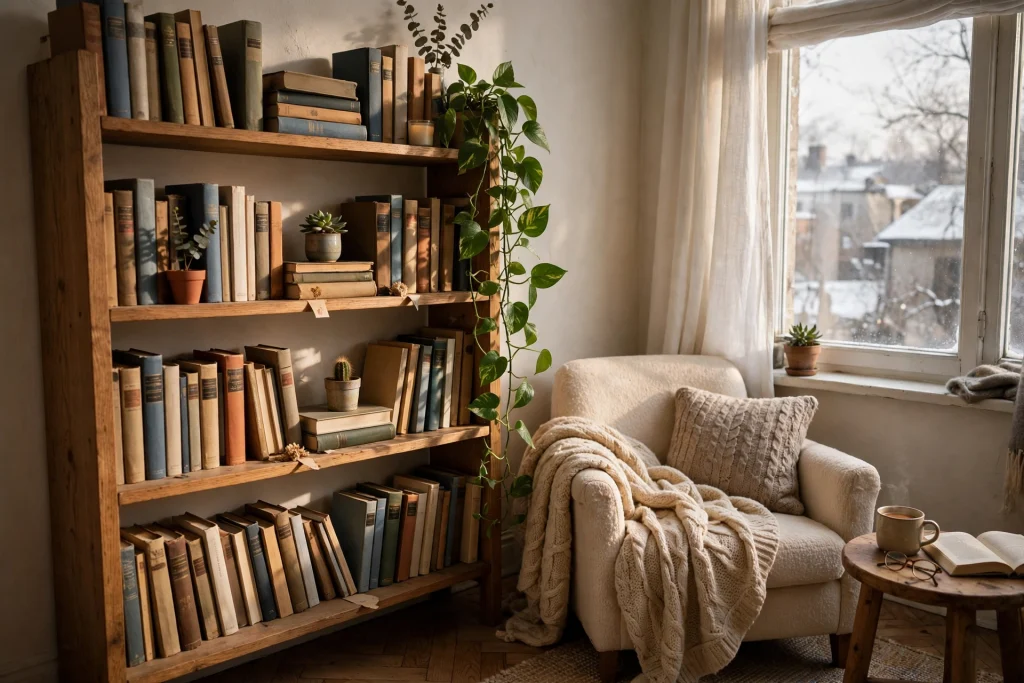
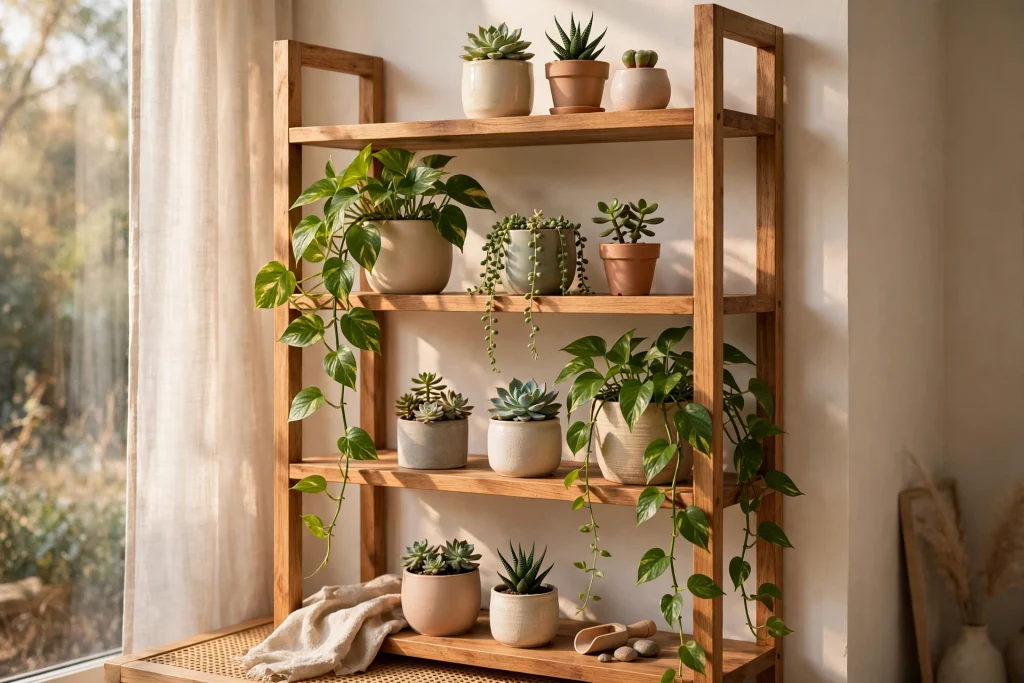
Bookshelf gaps can hold small plants where books leave a little breathing room, for cozy corners. Choose plants whose light needs match the shelf spot, not the plant you wish fit there, for a happy shelf. Shelves far from windows can be dim for plants that need brighter light, so cheerful matching matters. Move a low light shelf plant to better light for four to eight weeks at a time, for brighter shelves. Keep pots away from book pages so watering drips do not soak paper, for calm shelves. Small trailing stems can soften shelf edges without taking desk space, for a calm edge. Your corner feels cozy and alive.
One tip: group two small pots with one stack of books so the shelf looks styled, not stuffed with random clutter. Sweet styling makes the shelf feel calm, cozy, and cheerful.
12. Hang a Light Plant by a Window
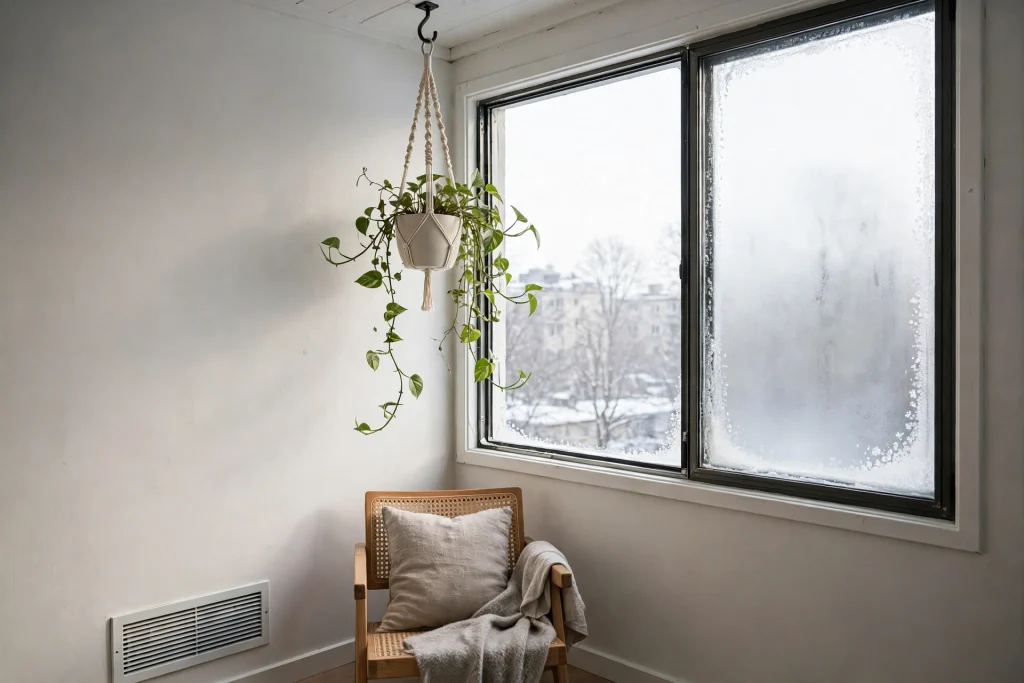
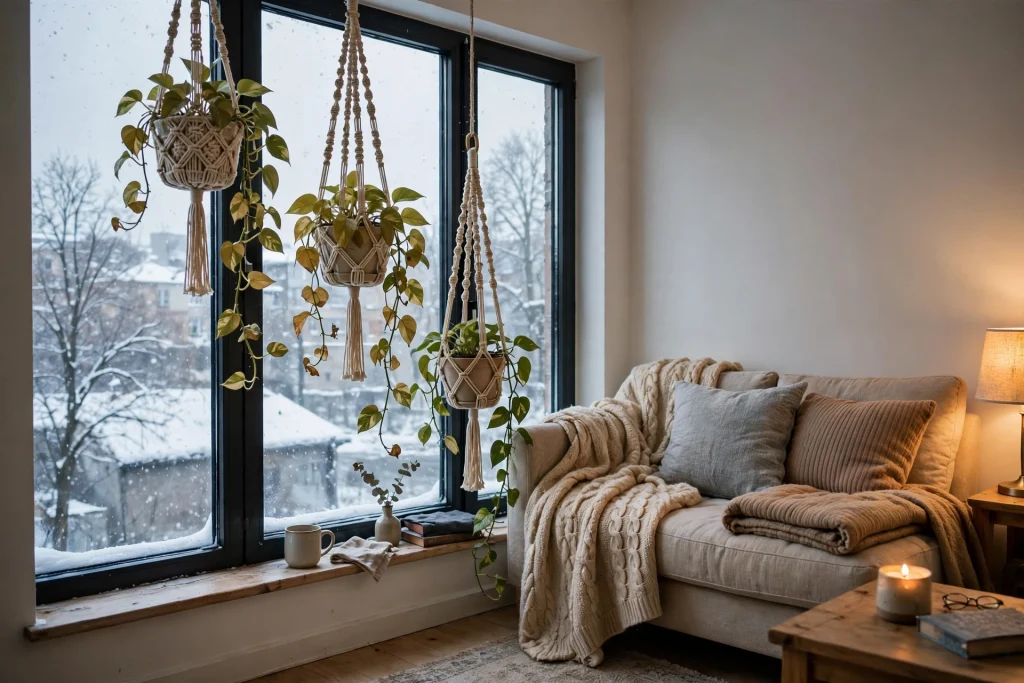
Hanging one light trailing plant frees floor space while stems spill into open air, for a cheerful window. Use a hook and support rated for the watered pot weight before you hang it overhead, for a safe display. Place the hanger where light matches the plant needs through the day, for a bright corner. Keep leaves away from cold glass and direct heat vent air, for calm, cozy leaves. Water over a sink when you can, since drips fall farther from a high pot, for a cheerful room. A hanging pot also keeps trailing stems off desks and side tables, for a fresh, calm room. Your corner gains cheerful movement.
One tip: lower the pot to eye level when you water so you can check leaves and soil up close. Close looks keep care calm, fresh, sweet, and cheerful.
13. Set a Row Back From Cold Glass
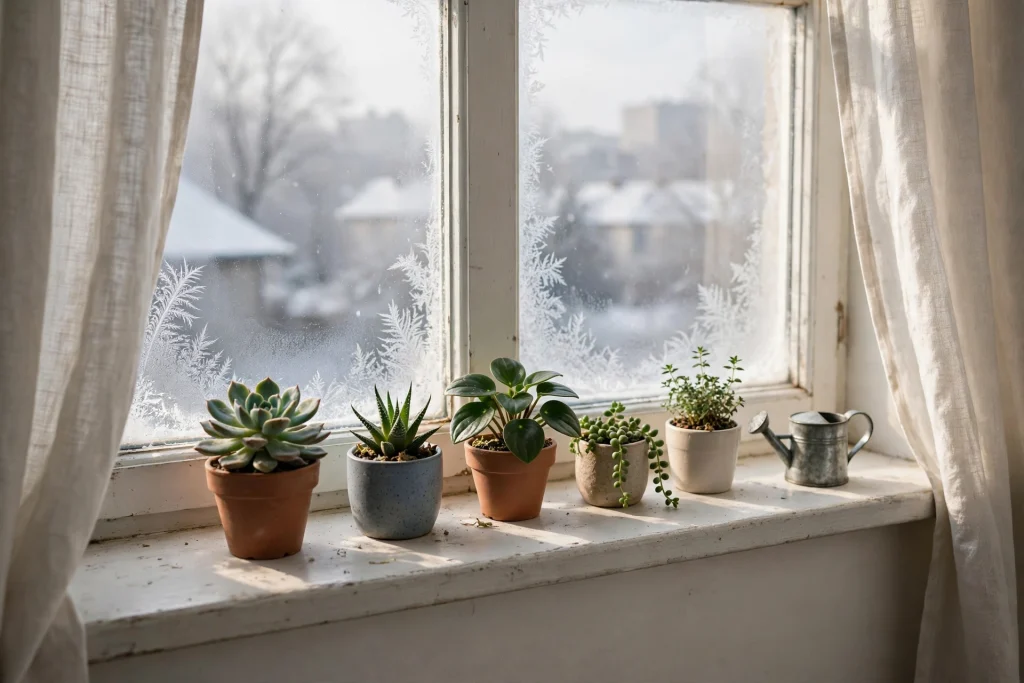
A windowsill row puts small plants close to light without buying a new stand for your tiny winter apartment, for cheerful sills. Plants nearer glass get more available light than plants set farther back, for a bright sill. Do not let leaves touch glass when outdoor temperatures are freezing, for calm, cozy leaves. Set pots a short step back from the pane while keeping them near the light, for a cheerful row. Curtains and blinds can cut light, so open them during the day, for fresh light. Line pots by height so taller leaves do not shade the smallest plants, for a cheerful display. Your sill becomes a happy garden.
One tip: pull pots back from the pane when outdoor temperatures freeze so leaves never touch the cold glass surface. Bright rows stay calm, cozy, and cheerful all winter.
14. Start Seeds in Small Cups
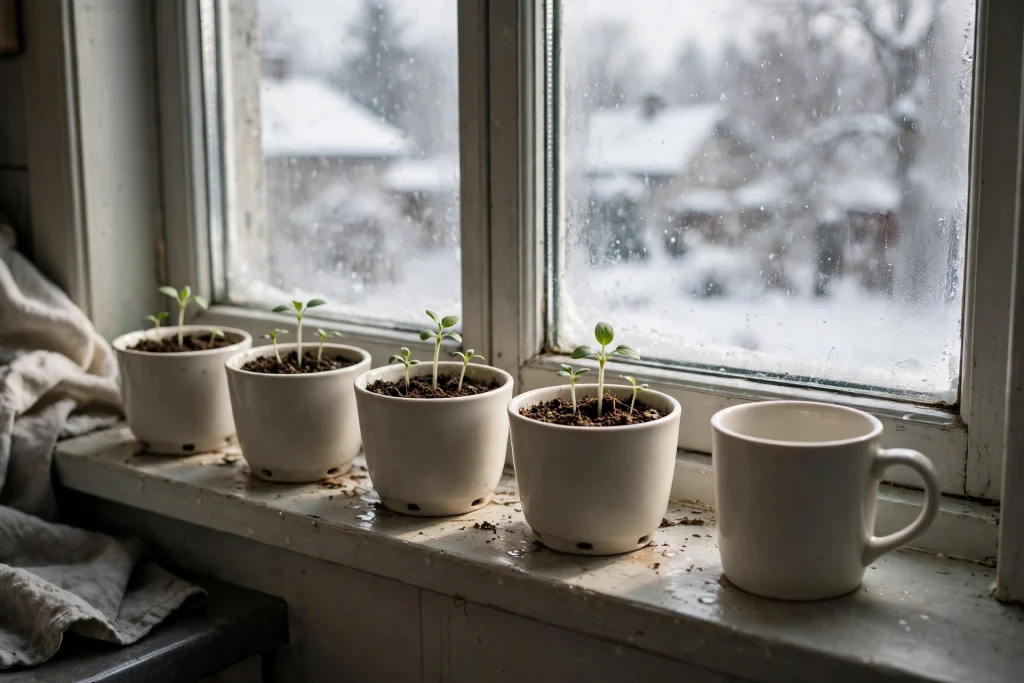
Seeds can start new plants in small household cups with drainage holes on a kitchen counter, for a cheerful start. Use commercial seed starting mix, since it gives seeds a sterile, weed free medium, for calm starts. Plant seeds according to package directions for the type you chose, and keep the packet nearby for later checks, for easy checks. Seedlings need adequate light once they emerge from the mix. Hold cups in a warm spot away from cold drafts until sprouts emerge from the mix, for cozy sprouts. Too much moisture and poor light can weaken seedlings, so move emerged sprouts to your brightest window. Tiny sprouts bring cheerful joy.
One tip: label each cup with the seed name and sowing date so tiny sprouts do not become mystery plants. Sweet labels keep every sprout easy to love.
15. Rotate Plants to Share Light
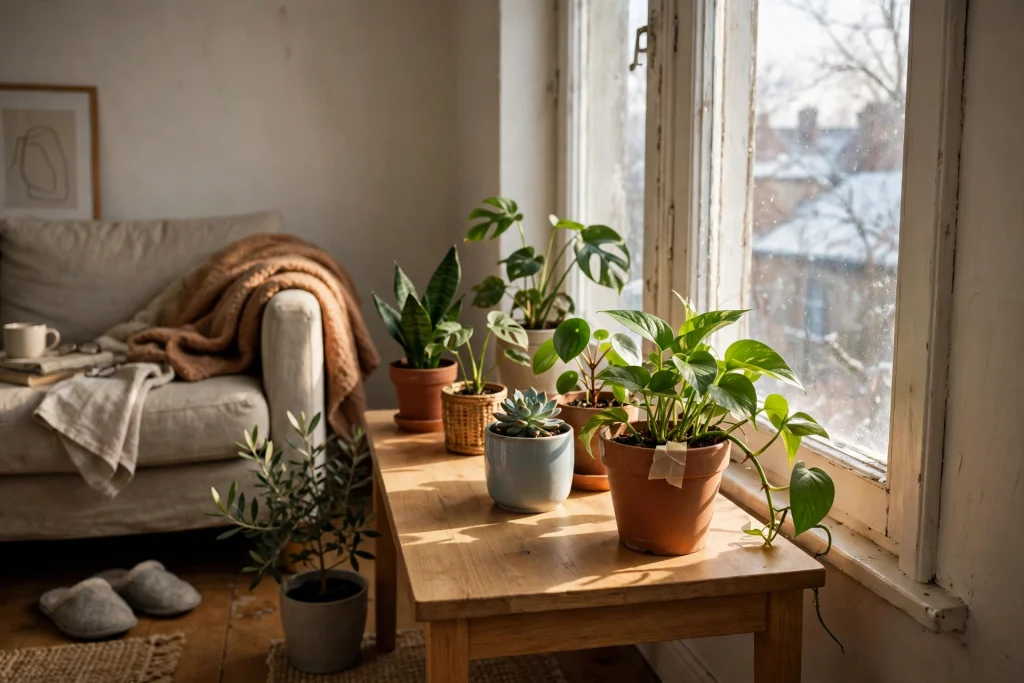
Rotating low light plants through your brightest spot helps one good window serve more pots in a small winter apartment, for cheerful rooms. Low light plants can move to better light for several weeks, for a happy turn. Better light can help a plant regain strength before it returns to a dimmer accent spot, for a cozy return. Without enough light, plants may turn pale or drop older leaves. Swap spots before a plant turns pale and grows long thin stems from weak light, for brightness. This rotation needs no new purchase and uses light you already have at home, for sweet routines. Every plant gets a happy turn.
One tip: mark the pot rim with tape so you know which side faced the window last time you moved it. Simple marks keep the rotation calm, fair, and cheerful.