1. Staghorn Fern
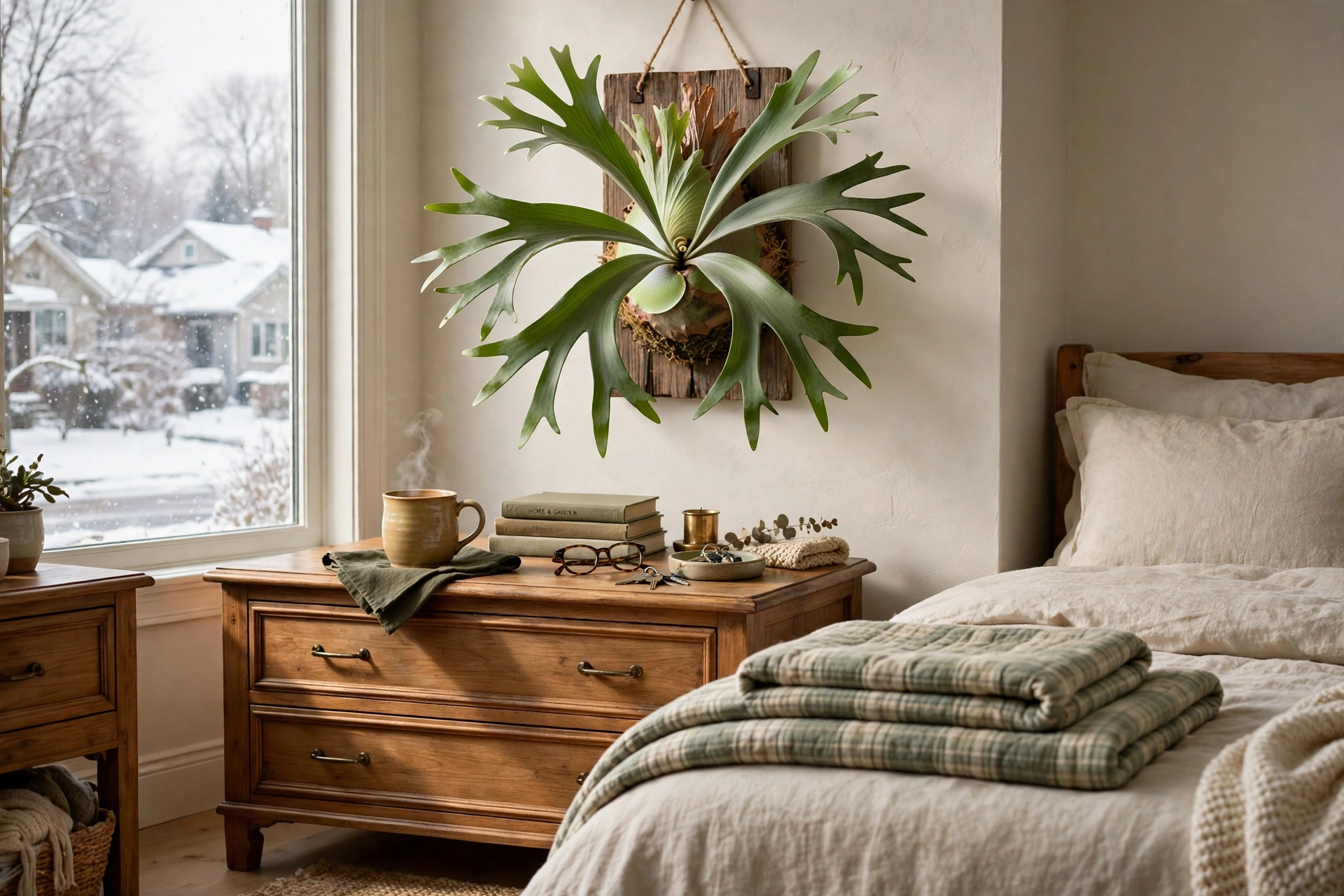
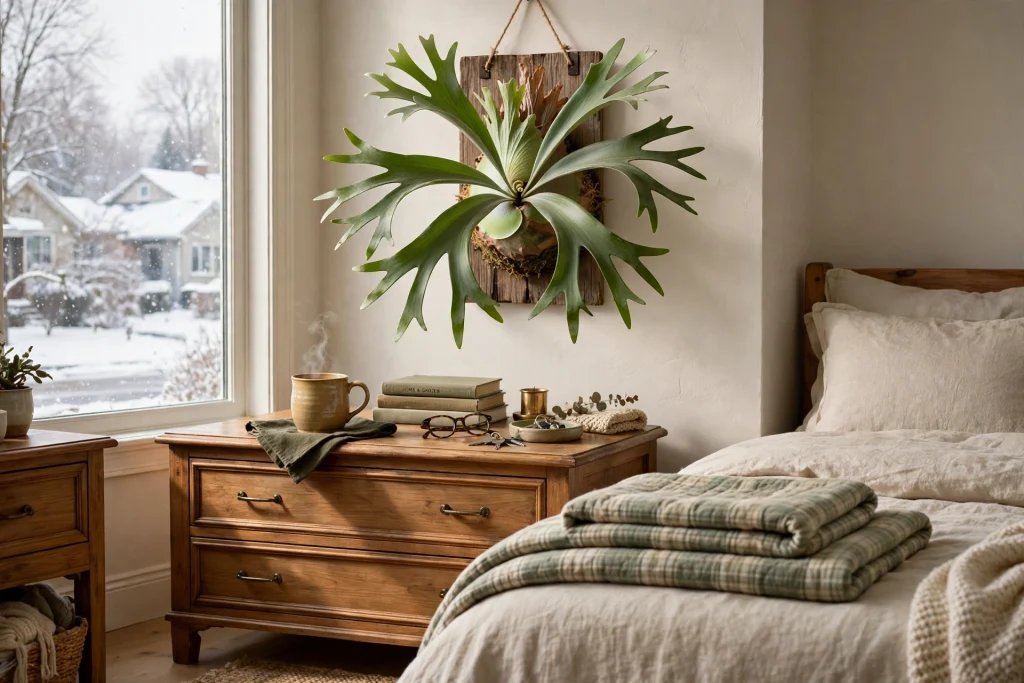
Okay, so here’s the thing! Staghorn fern hangs on your bedroom wall like living art, and pets can share the room with it! Its antler-shaped fronds spread from flat shield fronds that hug a wooden board, and it grows 2 to 3 feet tall. Bright indirect light keeps the fronds green and happy, so a spot near an east window works great. Soak the mount in the sink for 10 to 20 minutes, then let it drain. Moist air at 50 percent humidity or higher keeps the frond tips fresh. The ASPCA lists staghorn fern as non-toxic to cats and dogs, wonderful news for pet owners!
One tip: soak the mount every two to three weeks in winter, since the plant drinks slowly in the cool season!
2. Rattlesnake Plant
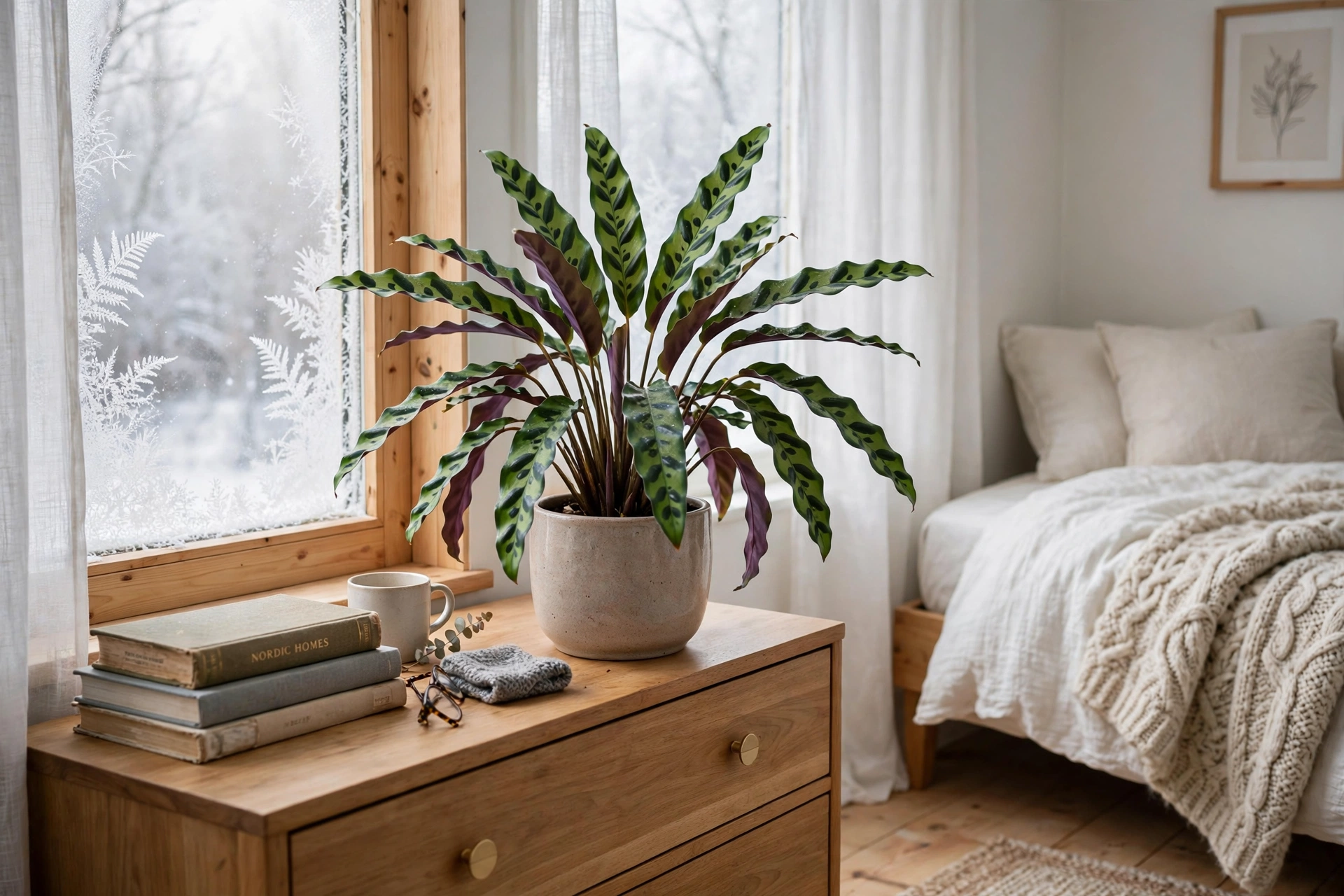
Rattlesnake plant brings wild pattern to your bedroom without any of the drama! Its long leaves wear dark green spots on top and rich purple underneath, and each leaf adds bold pattern beside the bed. Bright indirect light keeps the pattern bold, so a spot a few feet from a bright window works great. Keep the soil evenly moist, and water less in winter when growth slows down. Warmth between 65 and 75 degrees keeps it growing happily through the short winter days. The ASPCA lists rattlesnake plant as non-toxic to cats and dogs, great news for pet households!
One tip: set the pot on a tray of wet pebbles, since the moist air keeps every leaf glossy and happy!
3. Peacock Plant
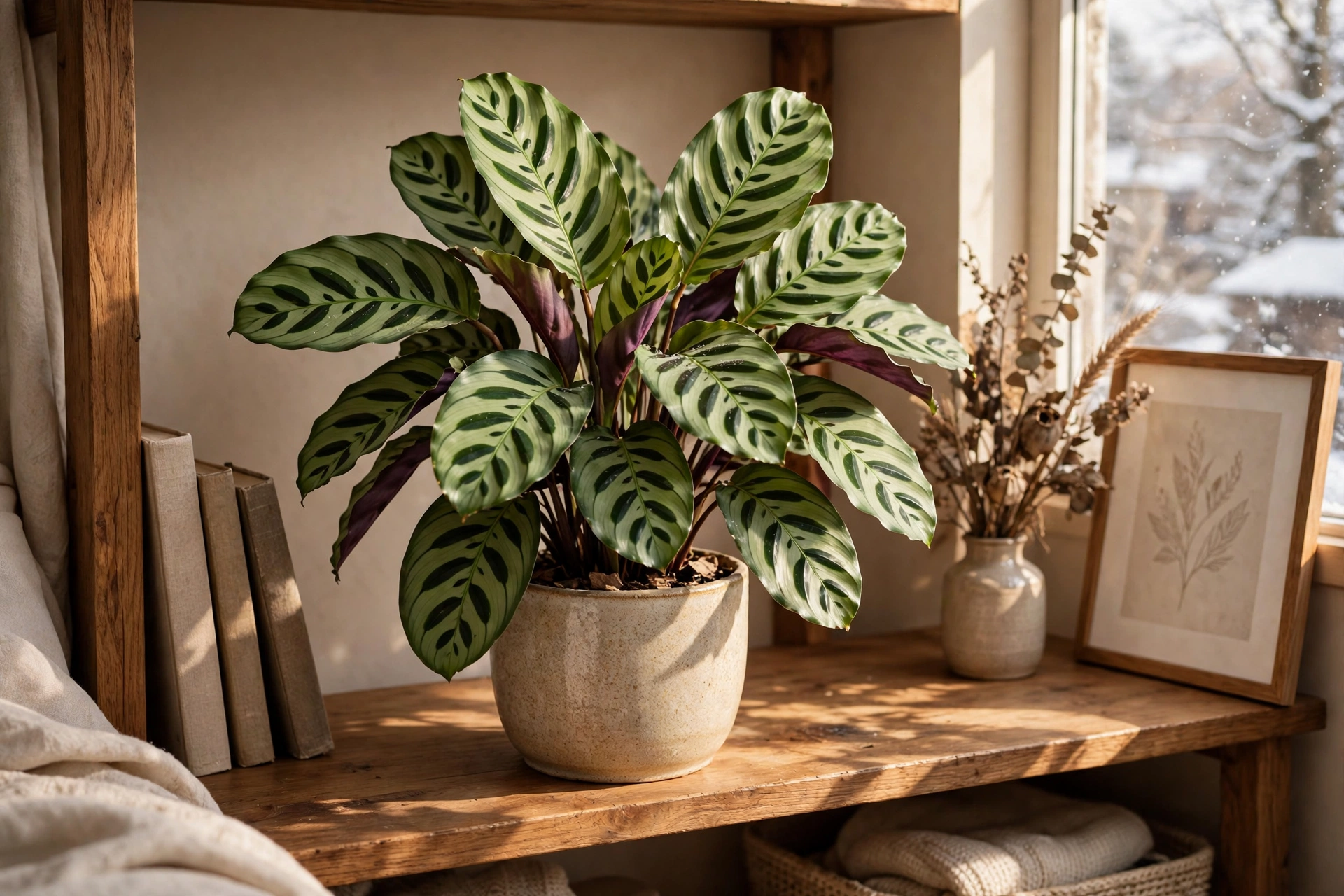
Peacock plant turns your dresser into a tiny art gallery, and it loves bedroom life! Its broad leaves wear feather patterns in green and cream, with deep purple undersides that flash when the leaves move. Bright indirect light keeps the pattern crisp, so a spot a few feet from an east window works great. Keep the soil evenly moist, and water with distilled or rainwater for the glossiest leaves! Moist air at 60 percent humidity keeps the leaves glossy and unfurled. NC State Extension lists peacock plant as non-toxic for cats and dogs, wonderful news for pet owners!
One tip: water with distilled or rainwater every time, since fluoride in tap water can brown the leaf edges over time!
4. Emerald Ripple Peperomia
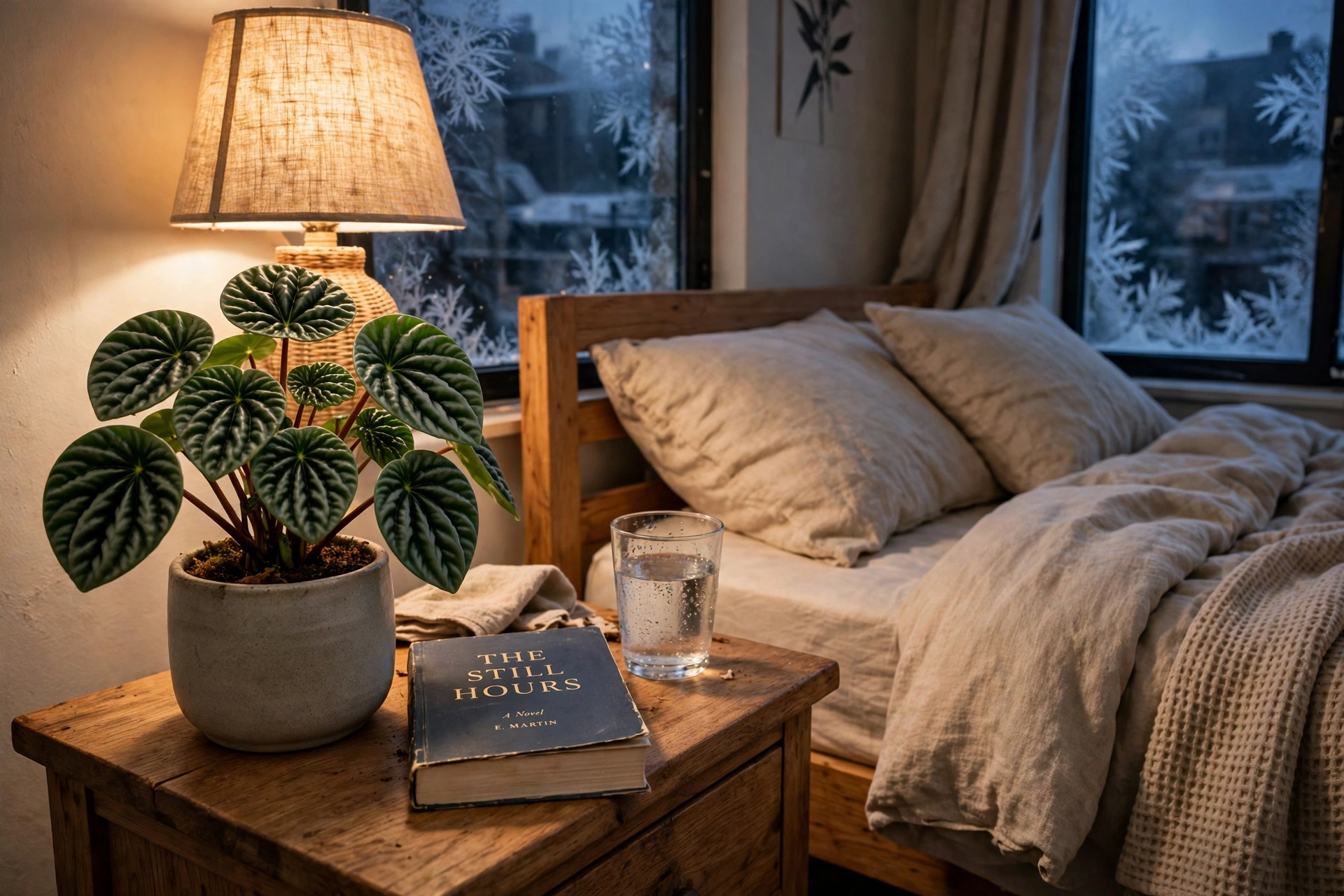
Emerald ripple peperomia is the little charmer that makes a nightstand feel complete! Its deeply crinkled heart-shaped leaves catch the light, and the whole plant stays compact at about 10 inches tall and wide. Bright indirect light keeps it full and glossy, so a spot near an east window works great. Water only when the top 1 to 2 inches of soil feel dry, since the thick leaves store water for dry spells. Average household air suits it, and it stays happy between 65 and 80 degrees. The ASPCA lists emerald ripple peperomia as non-toxic to cats and dogs, wonderful news for pet owners!
One tip: water from below with room-temperature water, since keeping the crinkled leaves dry keeps them spot-free and glossy all winter!
5. Venus Flytrap
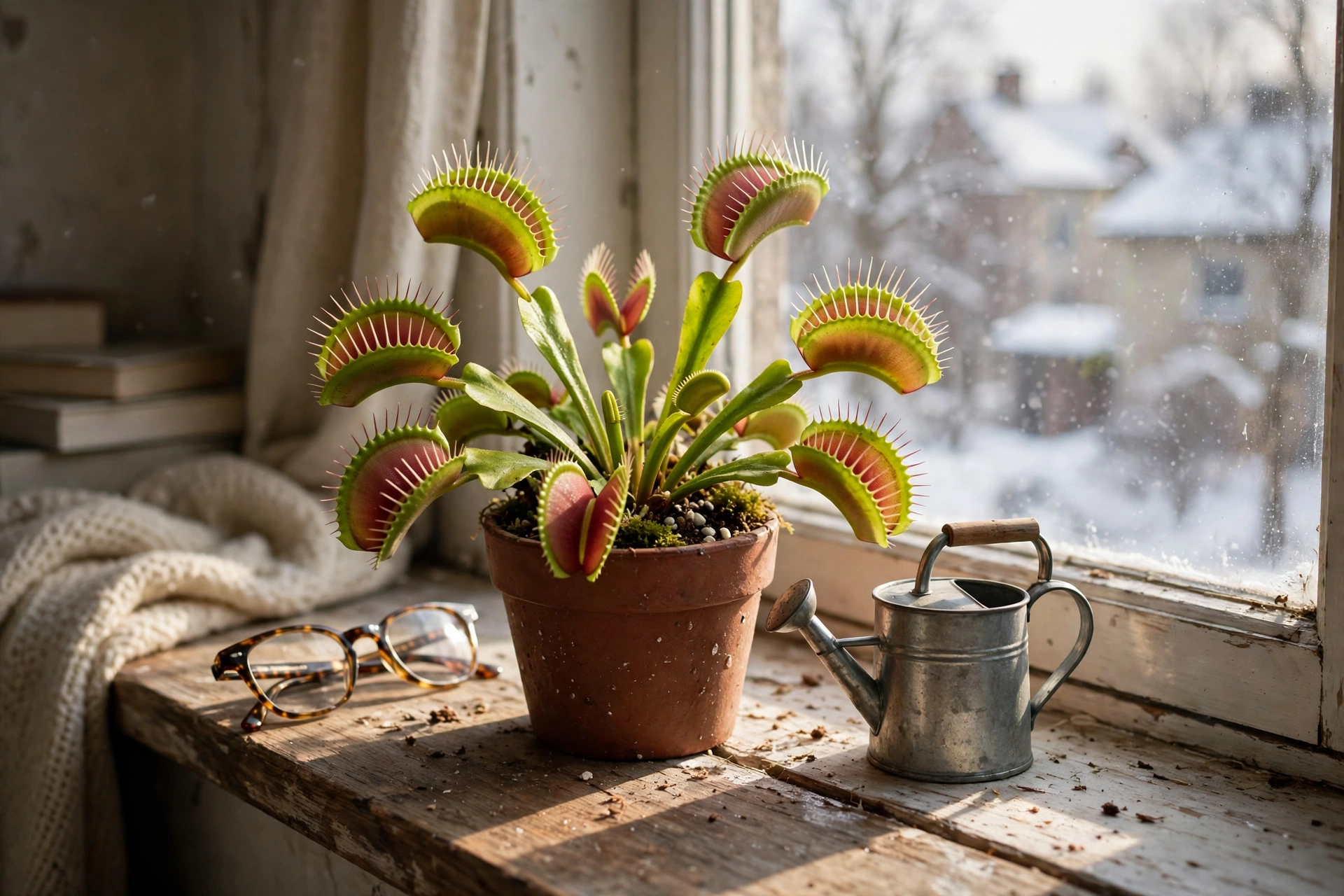
Venus flytrap is the bedroom conversation piece that actually does something! Its hinged traps snap shut around tiny flies, and strong light blushes them red inside. Your sunniest windowsill works great, since this plant wants as much direct sun as a window can give. Water only with distilled or rainwater, and keep the soil wet by standing the pot in a shallow tray while it grows. In winter the plant rests, and fresh traps return in spring! Curious pets can sniff the traps safely, though a big chew can still upset a pet’s stomach. The ASPCA lists Venus flytrap as non-toxic to cats and dogs, wonderful news for pet owners!
One tip: feed one trap a tiny live insect every week or two in spring and summer, since caught bugs are the only food this plant needs!
6. Piggyback Plant
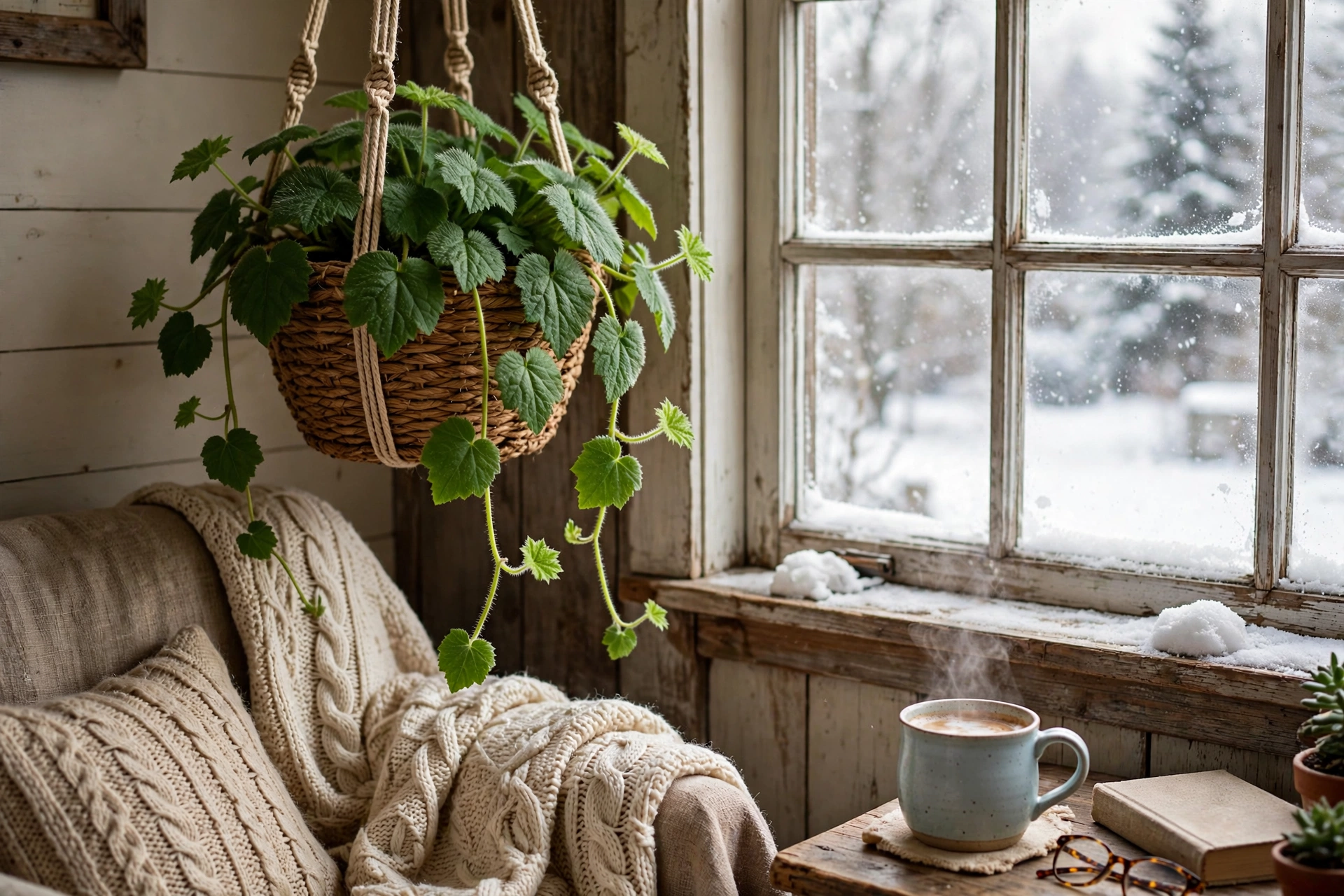
Piggyback plant grows baby plants right on its leaves, and yes, it is as fun as it sounds! New plantlets form at the base of each mature leaf, then root where they touch the soil. Bright indirect light keeps it lush, so an east or west window works great. Keep the soil evenly moist, and water less in winter when growth slows down. Cool rooms suit it, and moist air at 50 percent humidity or higher keeps the leaves fresh in a hanging basket. The ASPCA lists piggyback plant as non-toxic to cats and dogs, great news for pet households!
One tip: pin a leaf with a baby plantlet onto moist soil in a small pot, since the plantlet roots fast and grows into a gift plant!
7. Silver Table Fern
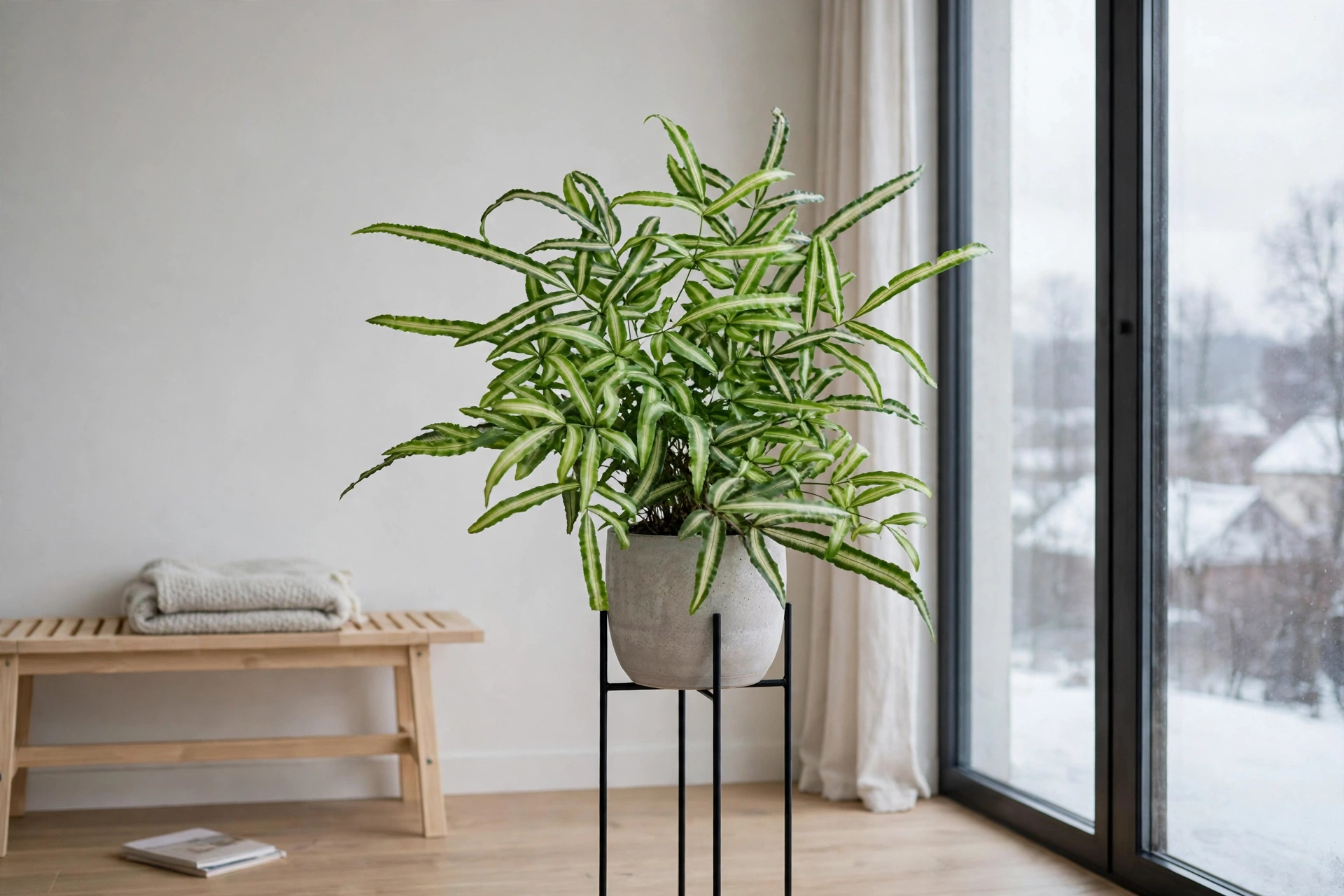
Silver table fern is the cool, calm classic your bedroom has been waiting for! Its ‘Albolineata’ fronds wear silvery-white stripes down each leaflet, and the whole plant stays neat on a side table. Bright indirect light keeps the stripes crisp, so a spot near a north window works great. Keep the potting mix lightly moist at all times, and water less in winter. Moist air at 50 percent humidity or higher keeps the fronds fresh and green. The ASPCA lists silver table fern as non-toxic to cats and dogs, wonderful news for pet owners!
One tip: snip away older outer fronds at the base, since tidy trimming keeps the plant looking fresh and neat!
8. Cape Primrose
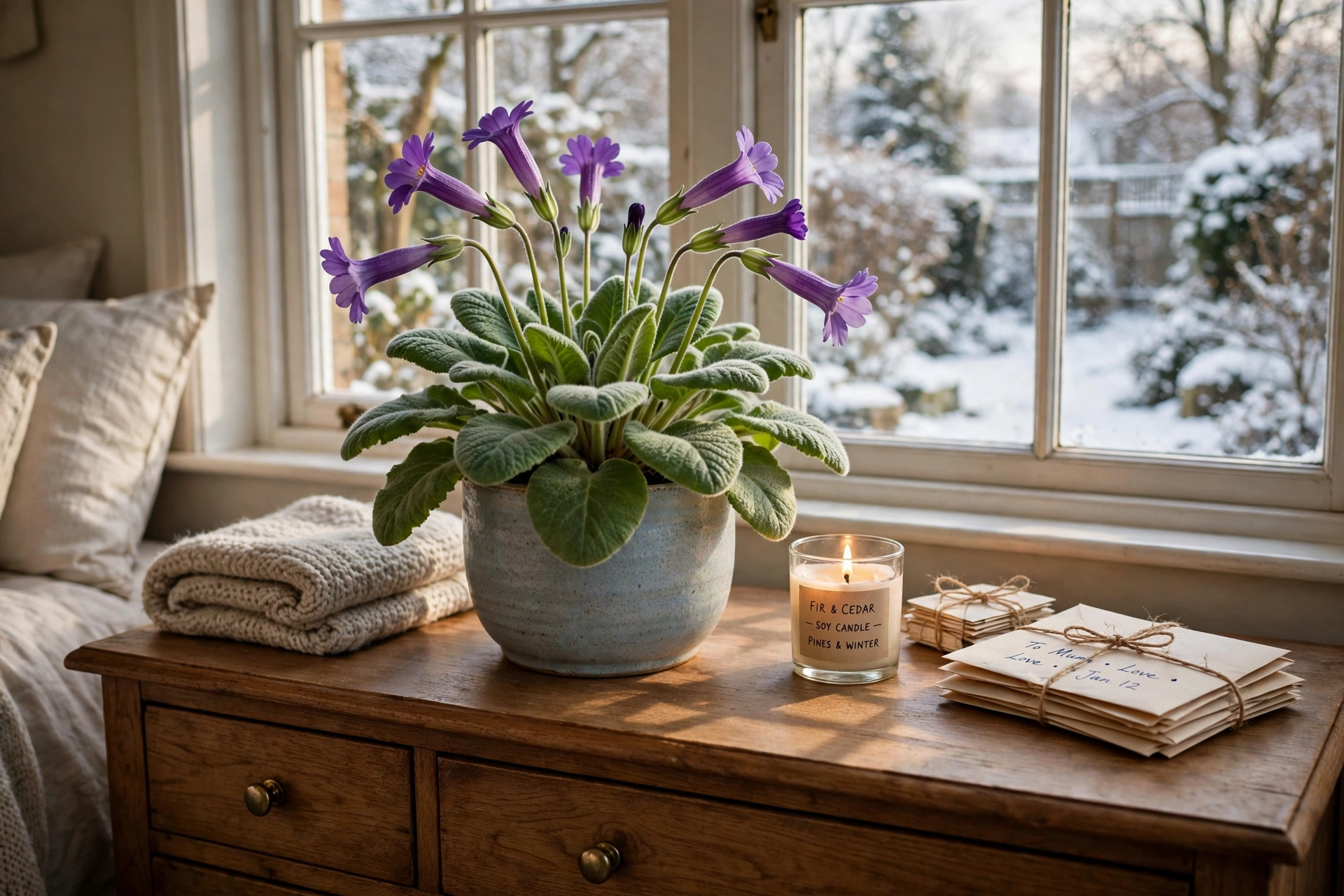
Cape primrose is the bloomer that keeps your bedroom cheerful for months! Its trumpet-shaped flowers rise above soft green leaves in shades of purple, pink, blue, white, and red. Bright indirect light keeps it flowering, so an east window works great. Water when the top inch of soil feels dry, and water less in winter when growth slows down. Cool room temperatures between 60 and 70 degrees suit it perfectly. The ASPCA lists cape primrose as non-toxic to cats and dogs, wonderful news for pet owners!
One tip: snip spent flower stalks at the base, since removing old blooms encourages fresh flowers to follow all season!
9. Purple Waffle Plant
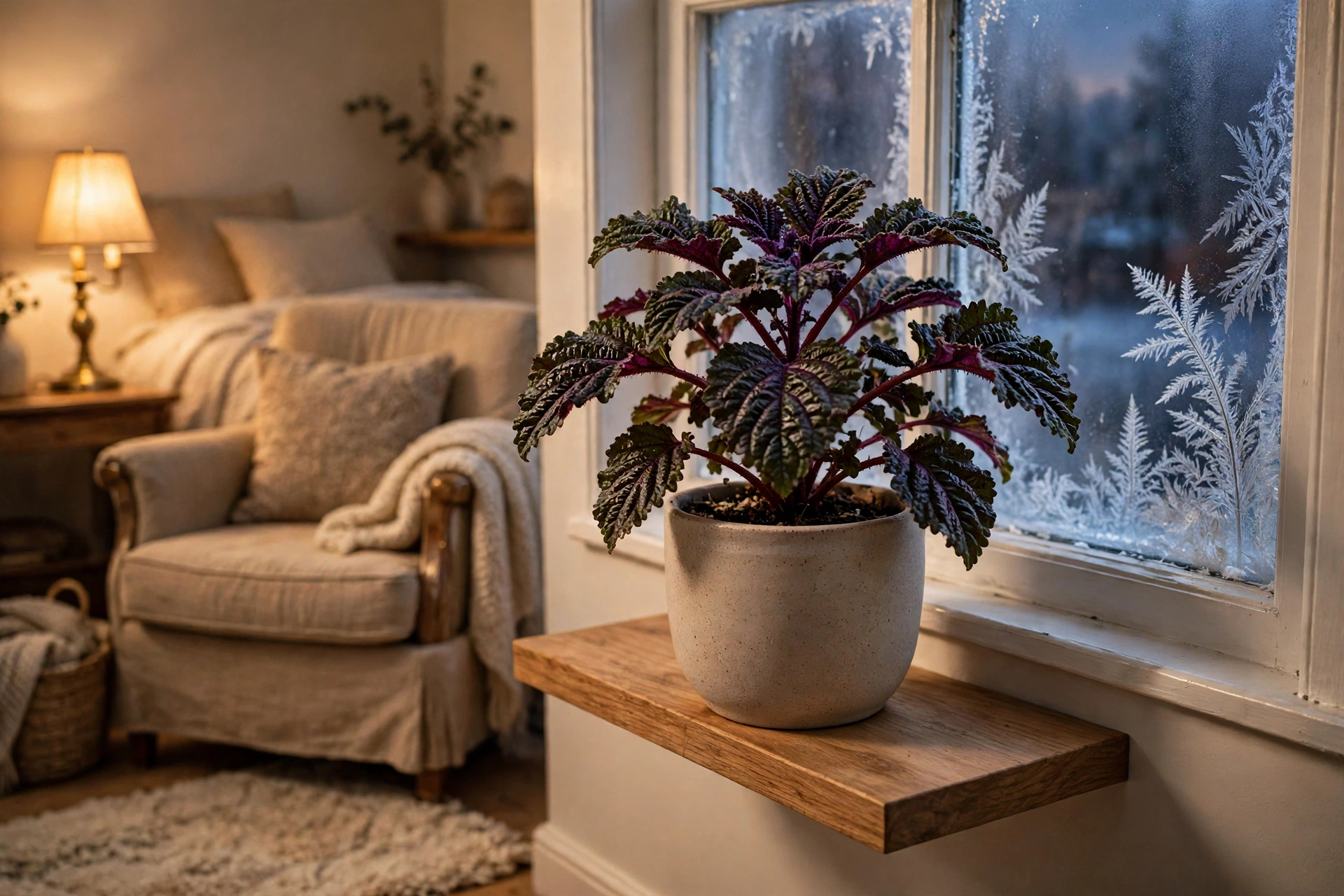
Purple waffle plant is the splash of color your bedroom shelf has been waiting for! Its crinkled leaves shine green on top and deep purple underneath, and the whole plant stays about 6 to 8 inches tall. Bright indirect light keeps the purple bold, so a spot near an east window works great. Keep the soil evenly moist, and water less in winter when growth slows down. Moist air at 50 percent humidity or higher keeps the leaves glossy and full. The ASPCA lists purple waffle plant as non-toxic to cats and dogs, great news for pet households!
One tip: grow it in a terrarium on the dresser, since the enclosed air stays moist and the purple glows!
10. Grape Ivy
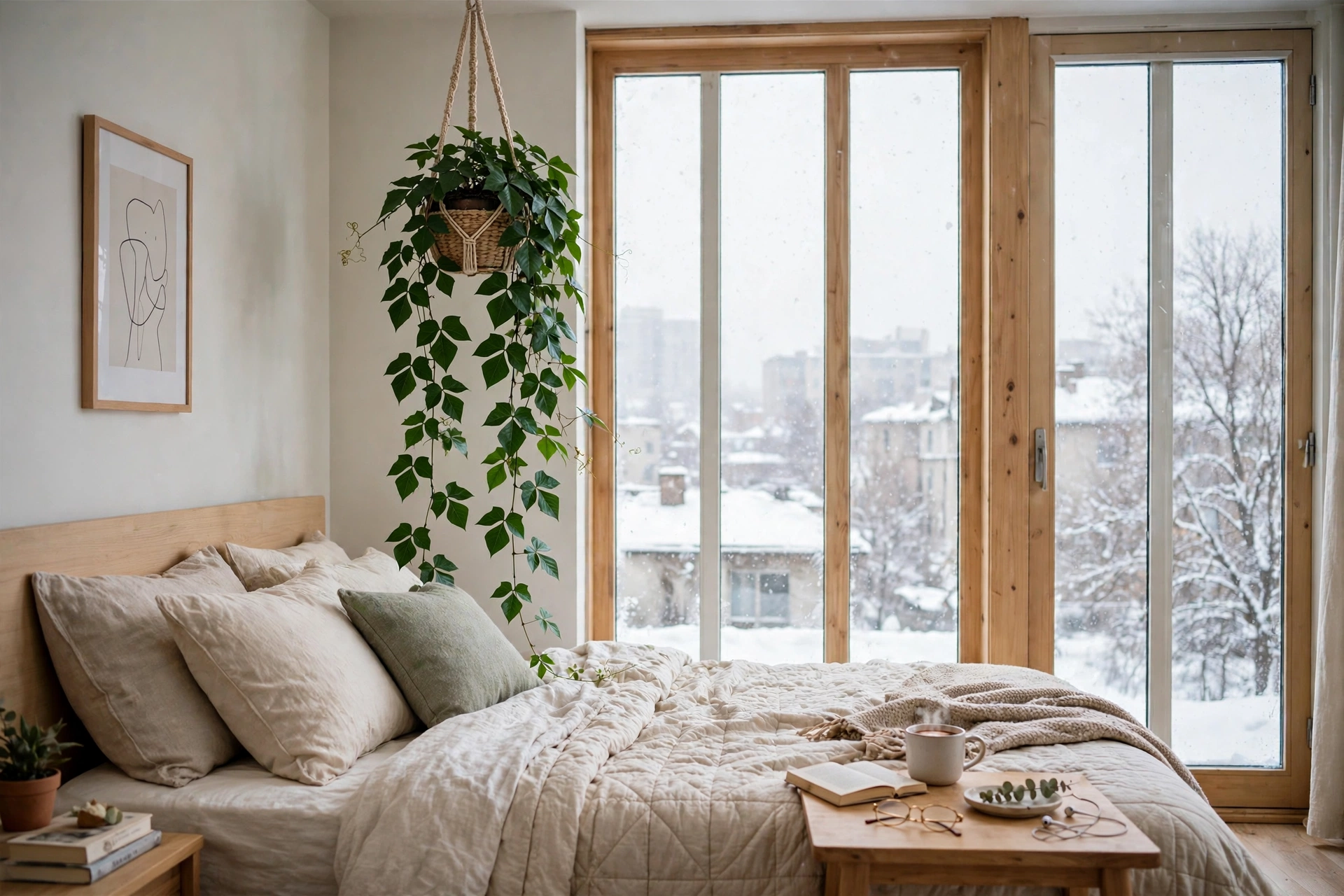
Grape ivy is the easy vine that turns a bare bedroom wall into a green curtain! Its glossy leaves have three diamond-shaped leaflets, and coiling tendrils grip a trellis or trail from a hanging basket. Bright indirect light keeps it lush, and it tolerates low humidity in dry winter rooms. Let the soil dry a little between waterings, and water less in winter when growth slows down. The ASPCA lists grape ivy as non-toxic to cats and dogs! Every pick here is a safer choice, and a watchful eye keeps pets and plants happy! Pair it with pet-safer plants for the living room for a pet-friendly home!
One tip: prune the vines to shape any time, since a quick trim keeps the green curtain full and tidy!