1. Golden Pothos (Epipremnum aureum)
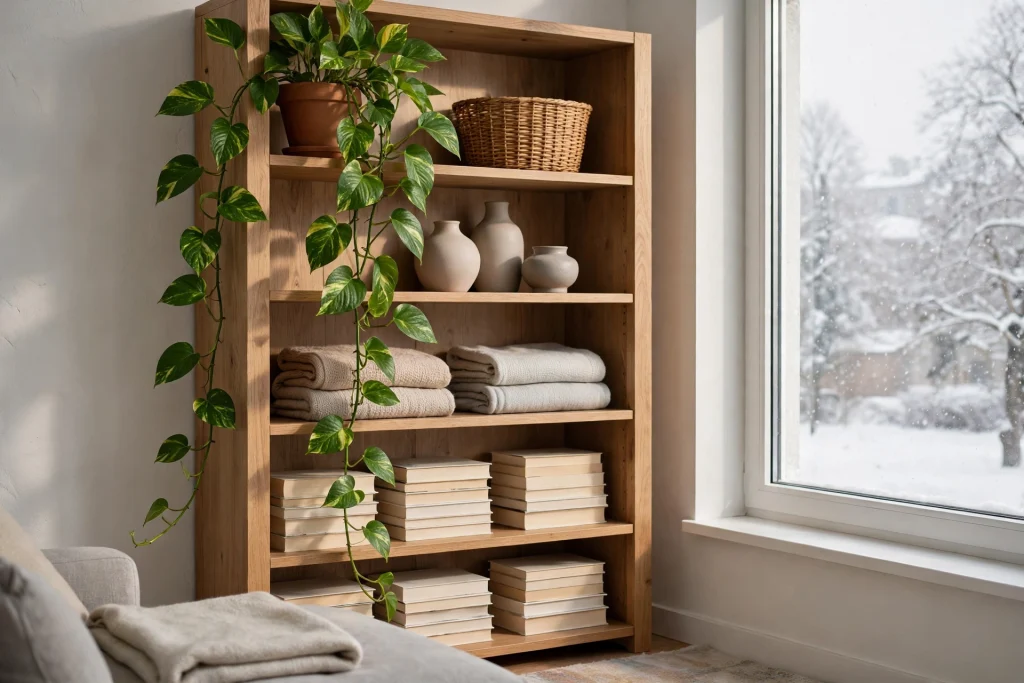
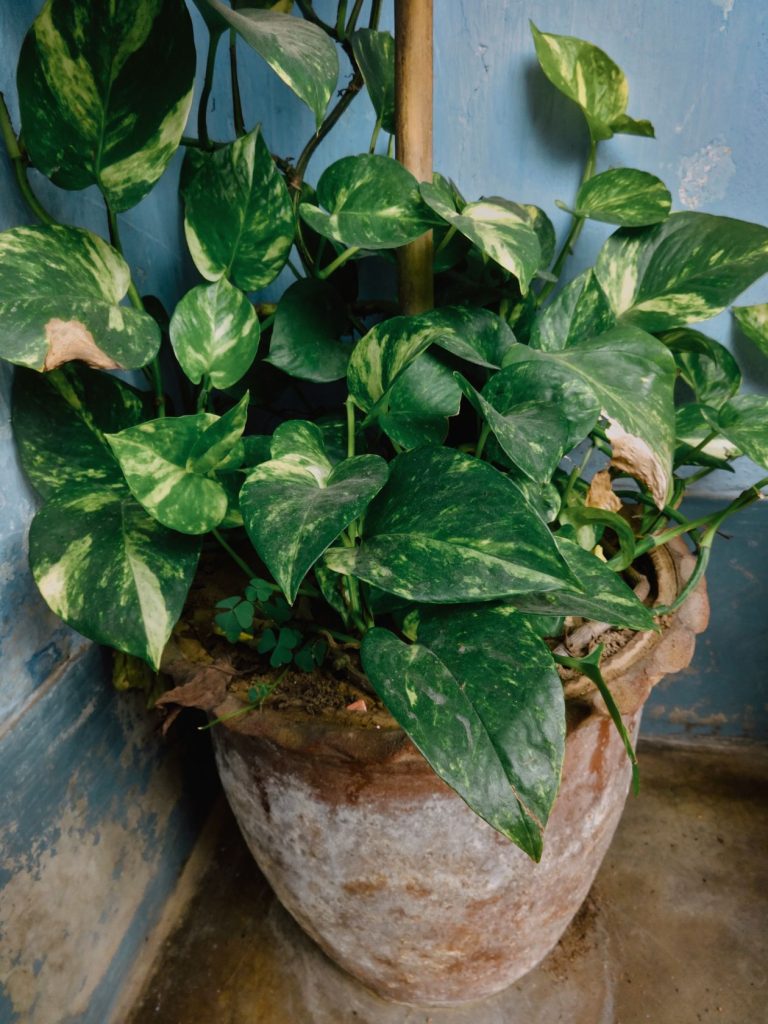
Golden pothos brings a cheerful cascade among trailing plants for bookcase shelves. Glossy heart-shaped leaves carry yellow variegation on cascading stems that soften book spines beautifully. Bright indirect light suits it best, and it can survive for long periods in low light. Let the well-drained potting mix dry out between waterings. Low light can fade the yellow variegation, so a dim corner slowly turns it plainer. A calm spot away from chewing pets keeps everyone happy, since ASPCA lists golden pothos as toxic to dogs and cats. Set the pot on a saucer and empty stray water so drips stay off your books. Your shelf gains fresh, lovely movement.
One tip: Wipe the leaves now and then with a soft rag to remove collected dust, and the glossy leaves look fresh and lovely again.
2. Heartleaf Philodendron (Philodendron hederaceum)
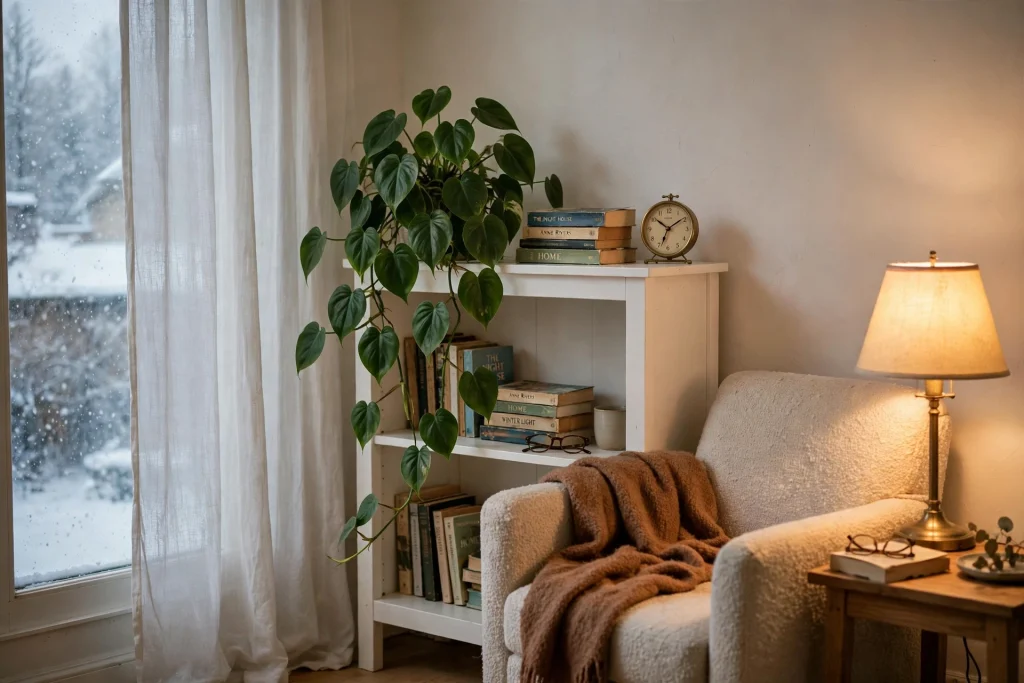
This sweet vine makes a bookcase feel warm and welcoming. Glossy heart-shaped leaves spill down on cascading stems in a lovely green curtain. Medium light suits it best, though it will tolerate low light. Keep the soil slightly moist, and slow down on watering in the winter. Average indoor temperatures suit it, and it can tolerate dry air even though it prefers medium humidity. A calm spot away from chewing pets keeps everyone happy, since ASPCA lists heartleaf philodendron as toxic to dogs and cats. Rest the pot on a saucer and guide stems along the shelf edge clear of book covers. Your shelves look cozier right away.
One tip: Move the pot back from cold window glass in winter, so chilly drafts stay away and the cozy shelf stays calm.
3. String of Pearls (Curio rowleyanus)
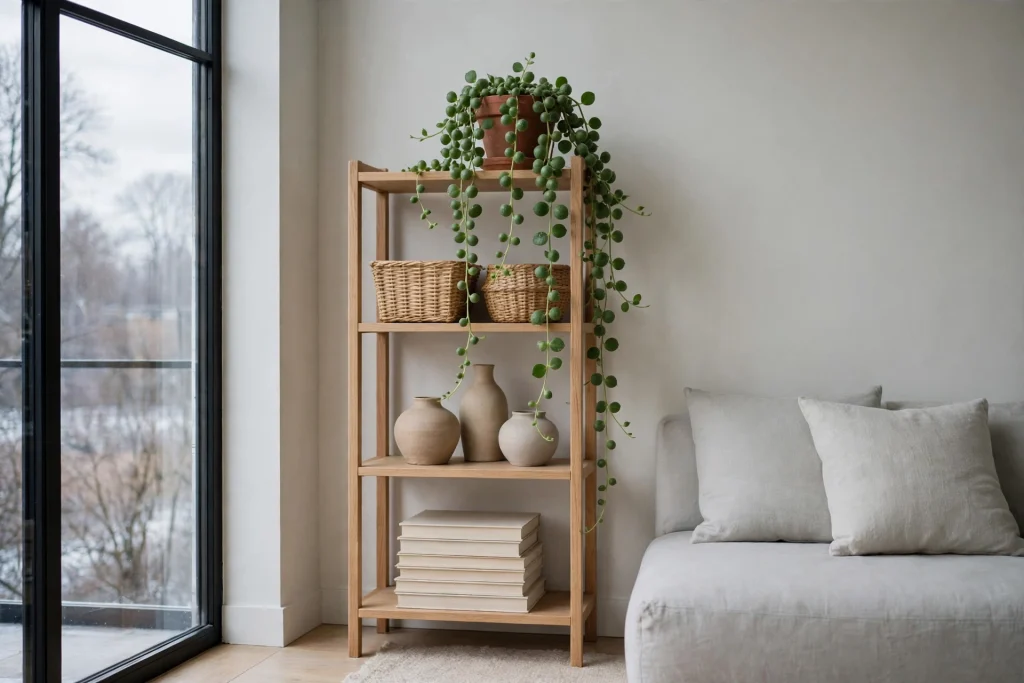
Few shelf plants look this playful, like green beads. Tiny pea-shaped leaves grow on trailing stems that spill downward over the side of the planter. Mature trailing stems reach 1 to 3 feet long, so strands stay neat and lovely. Bright indirect sunlight indoors suits it best, away from direct sun. Cactus potting mix, or soil mixed with sand or perlite, drains fast. It tolerates infrequent watering, but overwatering can cause root rot and it should never dry out completely. NC State lists this plant as toxic to people and pets, so a calm spot out of reach keeps everyone happy. Your bookcase gains a happy cascade.
One tip: Take a 3 to 5 inch stem cutting and cover a few nodes in potting mix instead of trying to revive an older plant.
4. String of Hearts (Ceropegia woodii)
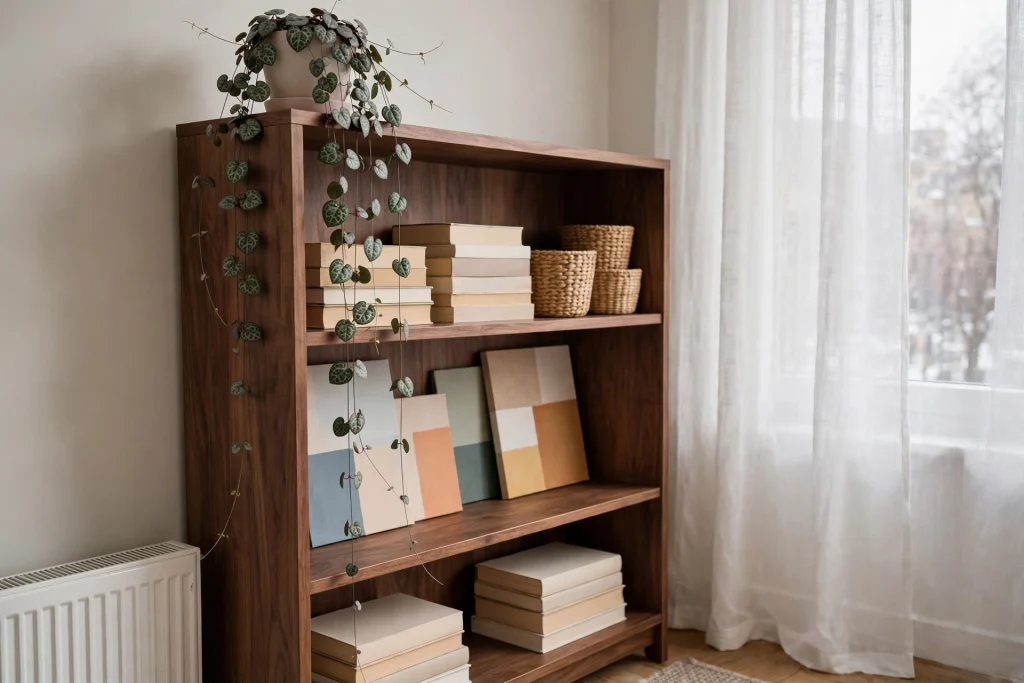
Tiny hearts on a string make this vine a sweet, cheerful shelf favorite. Dark green leaves are etched with silver on top and purple underneath, spaced along wiry stems. Stems drape over a container and hang down about 3 feet, suiting a tall bookcase beautifully. Bright indirect sunlight and well-drained sandy potting soil keep it growing well. Let it dry out completely between waterings, and reduce watering even further while it rests in winter. No ASPCA listing was found for Ceropegia woodii, but keep stems away from chewing pets. Repotting can wait happily, since this plant likes to be crowded in its pot. Your shelves gain a lovely, romantic cascade.
One tip: Lay a stem section so a bead-like tubercle touches soil, because tubercles root and produce another plant on contact, a happy little bonus.
5. English Ivy (Hedera helix)
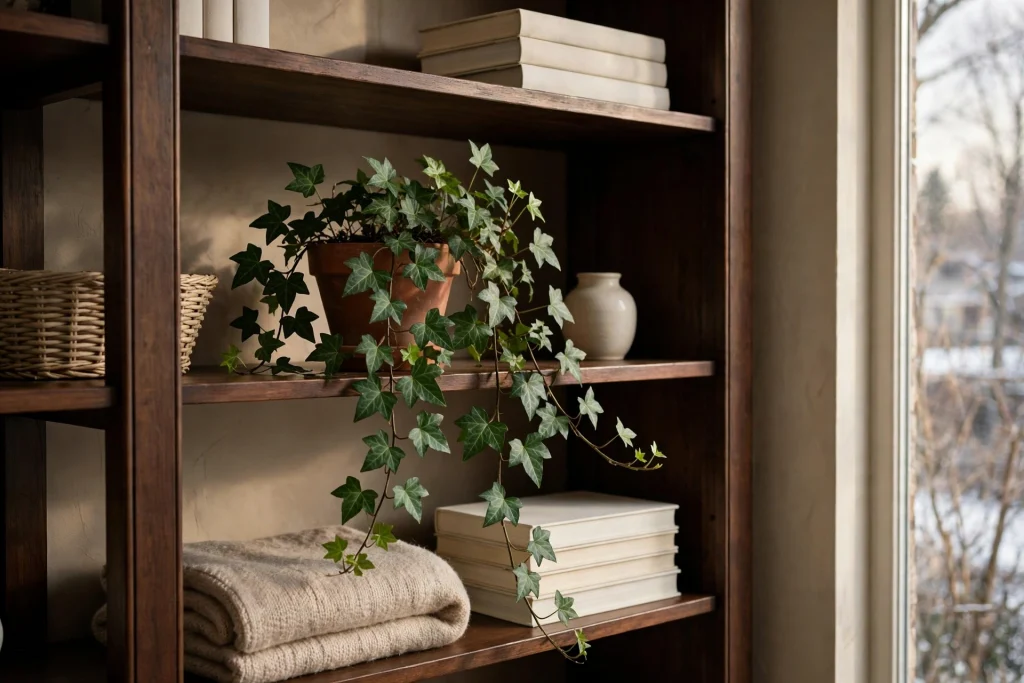
Glossy lobed leaves trail in a full curtain, giving happy shelves a fresh, cozy glow. Bright light without direct sun suits most ivy cultivars best indoors in a calm spot. Water it thoroughly, then let the soil dry about half an inch down before watering again. Cool to moderate room temperatures of 50 to 70 degrees Fahrenheit suit it during the day. Mites are common pests on indoor ivy, so check leaves often with gentle care. A calm spot away from chewing pets keeps everyone happy, since ASPCA lists English ivy as toxic to dogs and cats. NC State flags it as invasive in North Carolina, so keep it potted.
One tip: Empty the saucer soon after watering, because ivy should not stand in water on a wooden bookcase shelf, keeping books dry and shelves fresh, cozy, and happy.
6. Silver Inch Plant (Tradescantia zebrina)
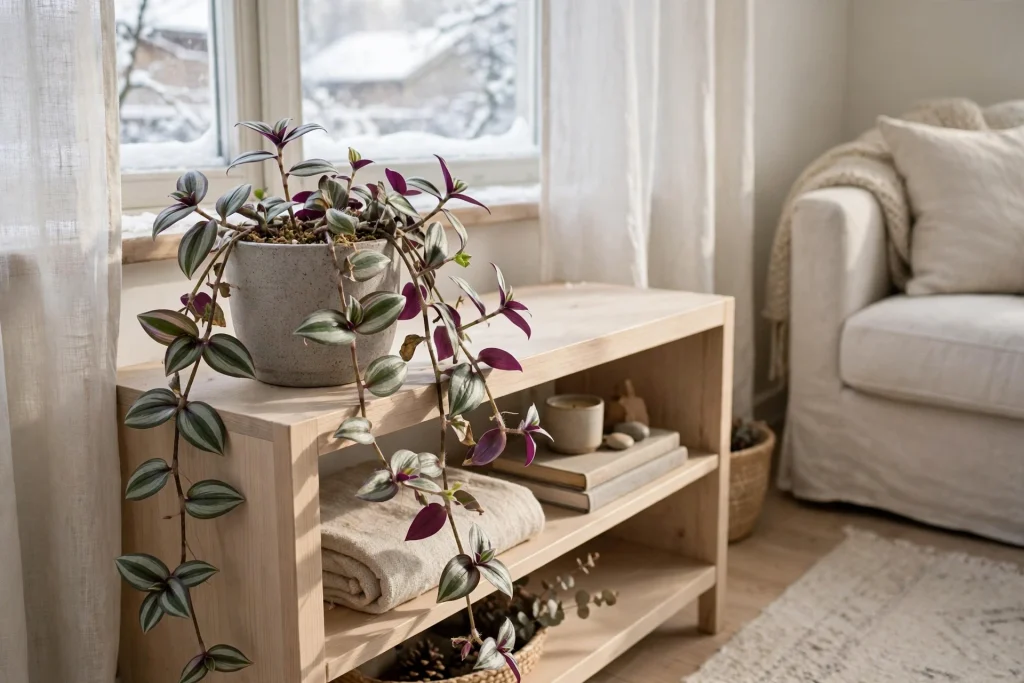
Joyful color makes this happy, cozy shelf favorite. Striped green, white and silver leaves show purple undersides as stems trail and creep over the shelf edge. Filtered sun suits it best, and full sunlight deepens color, though southern sun can wash it out. Low light makes stems lose their lower leaves, and remaining leaves can lose color, so choose brighter light. Water regularly, let the soil dry out between waterings, and reduce watering in winter. Temperatures between 65 and 75 degrees Fahrenheit suit it well. Its watery sap can cause skin irritation, so wear gloves for trimming and keep stems from chewing pets. Your shelves gain fresh, joyful, lovely color.
One tip: Trim leggy growth back in spring, because trimming promotes denser foliage and gives you stem cuttings to start fresh pots for happy, cozy displays.
7. Wax Plant (Hoya carnosa)
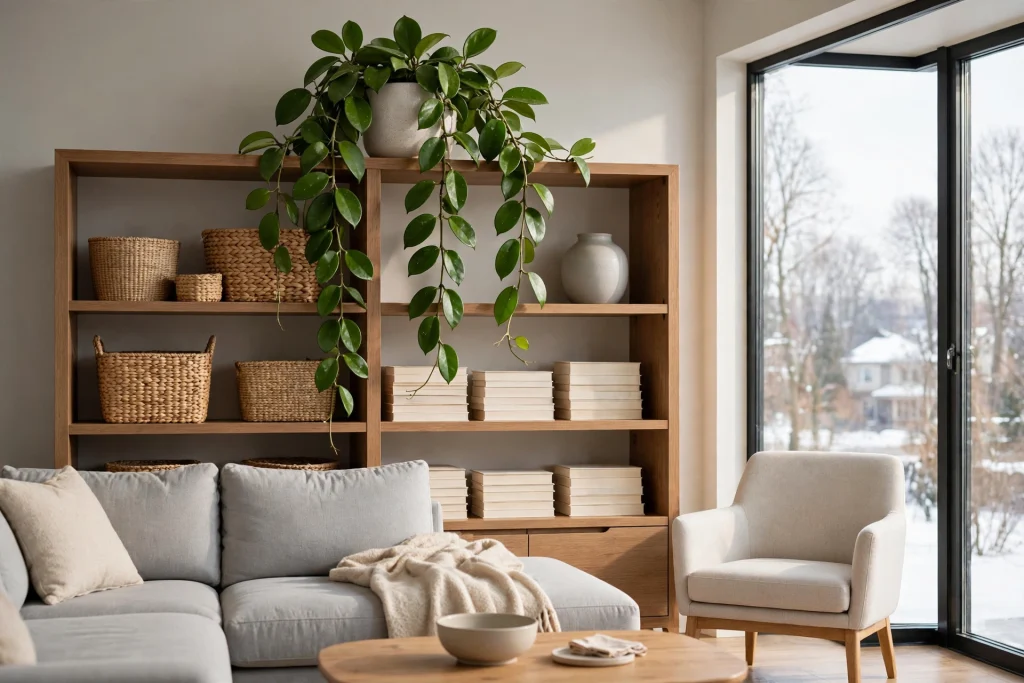
Thick waxy leaves give this vine a polished look beside lovely books. Vining stems trail or climb with fresh, cheerful movement. Bright indirect light year-round is ideal in a calm corner. Loose, fast-draining potting mix in a drained container on a saucer suits its roots best. Allow soil to dry between waterings, since soil too wet or too dry can drop leaves. High humidity makes it happy, and a tray of wet pebbles can help in dry winter air. Keep it away from cold glass and heat vents, and ASPCA lists wax plant as non-toxic to dogs and cats, a lovely plus. Your shelves gain a glossy, cozy, happy finish.
One tip: Leave the flower spur alone after blooms fade, because that same spur produces flowers again over several years of sweet, happy blooms.
8. Satin Pothos (Scindapsus pictus)
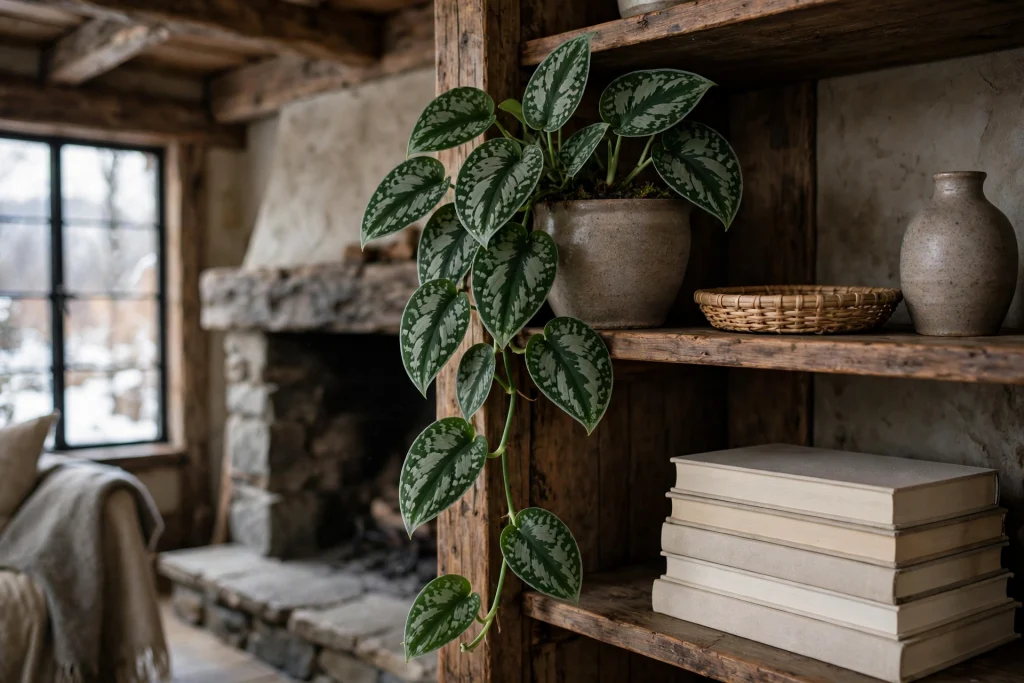
Silver blotches on rich dark green leaves look lovely. Leaf undersides stay softly paler without blotches. Indoor plants grow about 1.5 to 3 feet and can trail downward from a pot in a happy cascade. Bright indirect light suits it beautifully, with moist, well-drained soil in a pot on a saucer. Temperatures of 65 to 85 degrees Fahrenheit suit it, and cooler air is not tolerated well. Direct sunlight is not tolerated, so keep it back from window sun in a cozy spot. A calm spot away from chewing pets keeps everyone happy, since ASPCA lists satin pothos as toxic to dogs and cats. Your bookshelf gains fresh, cheerful shimmer.
One tip: Watch leaf shape for watering clues, because curling leaves may signal underwatering while yellow leaves may signal overwatering, keeping care calm, cozy, and happy.
9. String of Turtles (Peperomia prostrata)
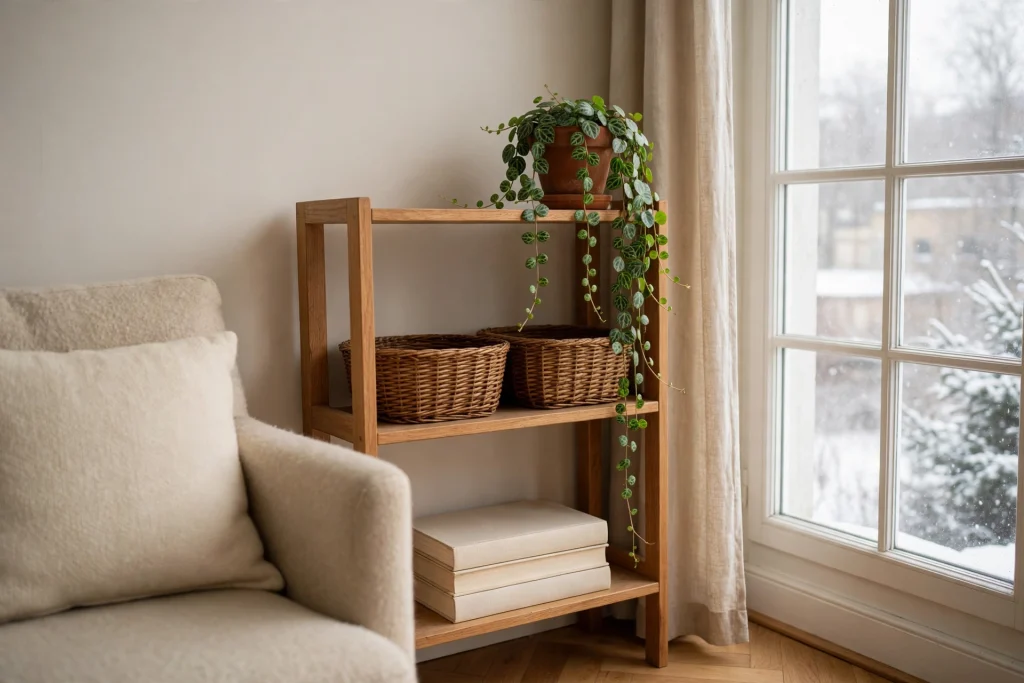
Tiny round leaves patterned like turtle shells make this vine cheerful. Marbled green leaves sit on delicate trailing stems that stay sweetly short. Stems reach about 12 inches at maturity, and the plant grows slowly, keeping shelves calm. Bright indirect light keeps the leaf color fresh and vibrant, though it can tolerate low light. Set its pot on a saucer, since evenly moist soil suits it but overwatering can cause root rot. Average to higher humidity helps it, and consistent temperatures of 68 to 75 degrees Fahrenheit are preferable. ASPCA lists trailing peperomia as non-toxic to dogs and cats, a lovely pet-home plus. Your shelf gains a fresh, cozy cascade.
One tip: Leave this plant pot-bound for a while, because string of turtles does well when its roots stay snug in the pot, keeping your cozy shelf happy and fresh.
10. Creeping Fig (Ficus pumila)
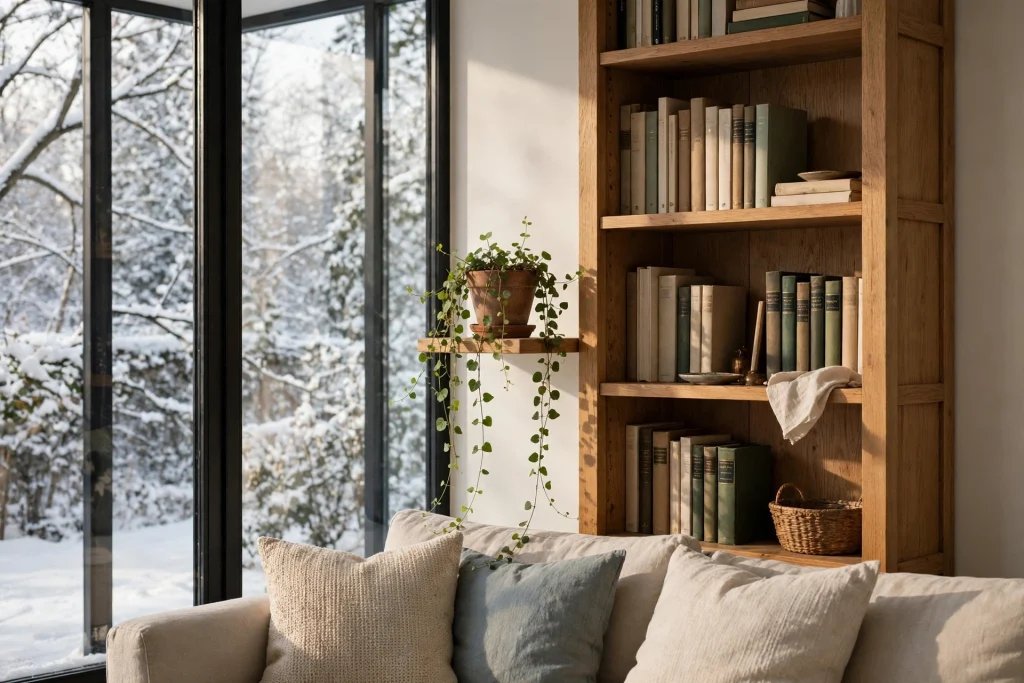
Small leaves look sweet, delicate, and cheerful against book spines. Trailing stems suit a cozy shelf edge, and it also climbs on surfaces. Short root clusters attach to walls or supports, so keep stems gently off book covers and porous surfaces. Bright indirect light or part shade suits it, avoiding afternoon sun. Set the pot on a saucer, water regularly while growing, then reduce watering from fall to late winter. High humidity helps it, and steady temperatures of 65 to 75 degrees Fahrenheit suit it. Pick a calm spot away from chewing pets, since heat vent and cold window drafts can cause leaf drop. Your bookcase gains a lovely cascade.
One tip: Wear gloves to prune stray stems before roots press into the shelf, because this fig can cement itself to porous surfaces, keeping care calm, cozy, and happy.