1. Air Plant
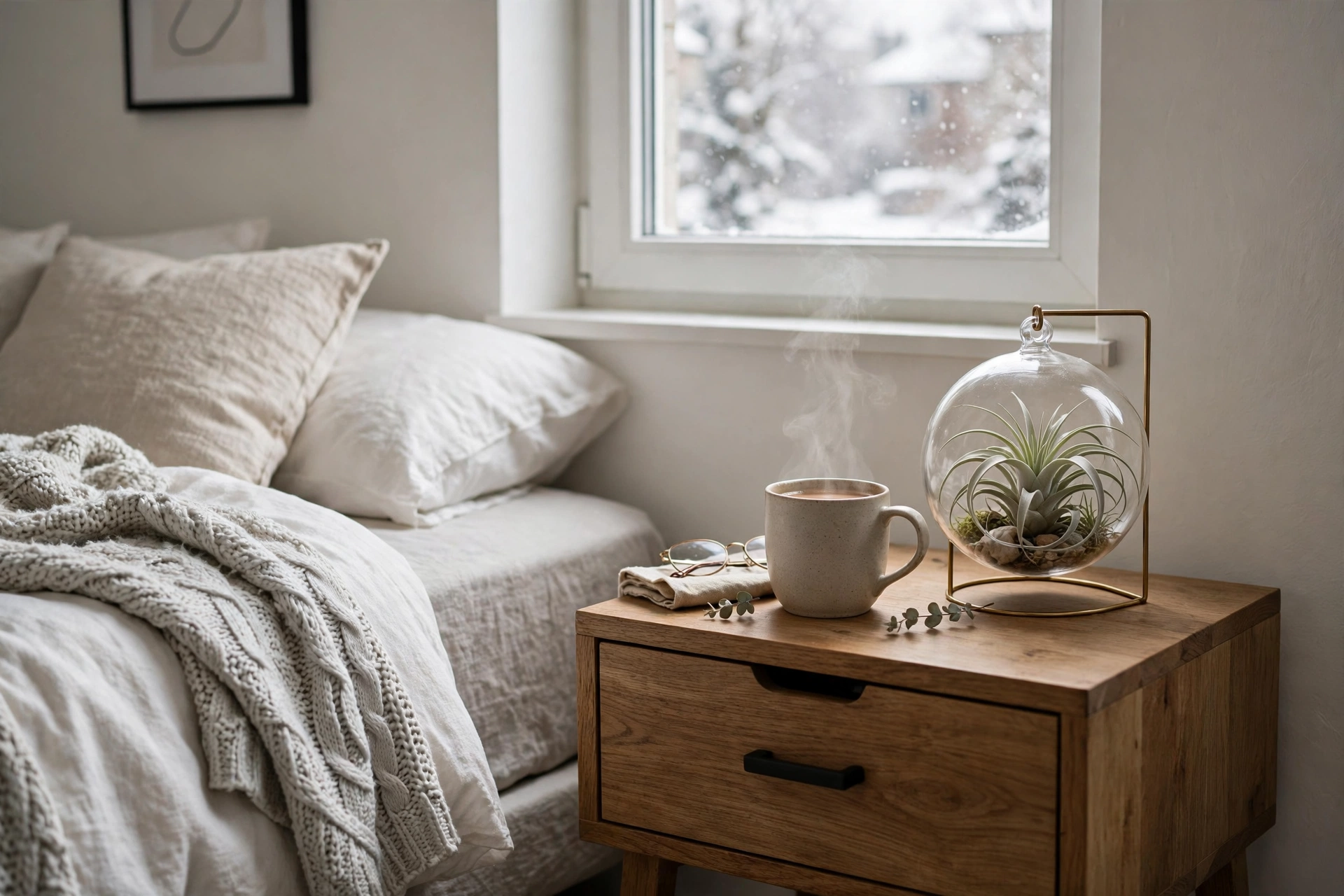
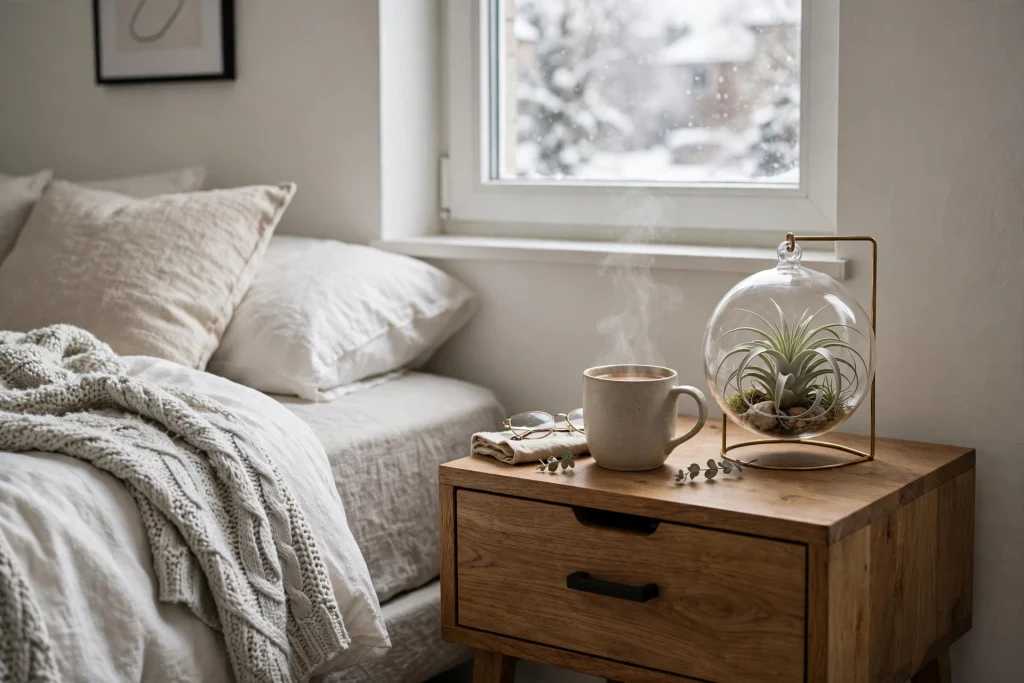
Okay, so here’s the thing! Air plants skip the soil completely, so your nightstand stays clean and tidy! Tillandsia ionantha grows as a little silvery rosette that fits in a shell, a dish, or a tiny glass globe beside your lamp! Bright indirect light keeps it compact and happy, so a spot near your bedroom window works well. Soak it in room-temperature water for 20 to 30 minutes every week or two, then set it upside down to dry within 4 hours. It loves temperatures between 65 and 85 degrees, which is exactly what most bedrooms offer! A little airflow around the rosette keeps it fresh and thriving all winter!
One tip: use rainwater or distilled water for every soak, since clean water keeps the silvery leaves spotless and bright!
2. Lithops (Living Stones)
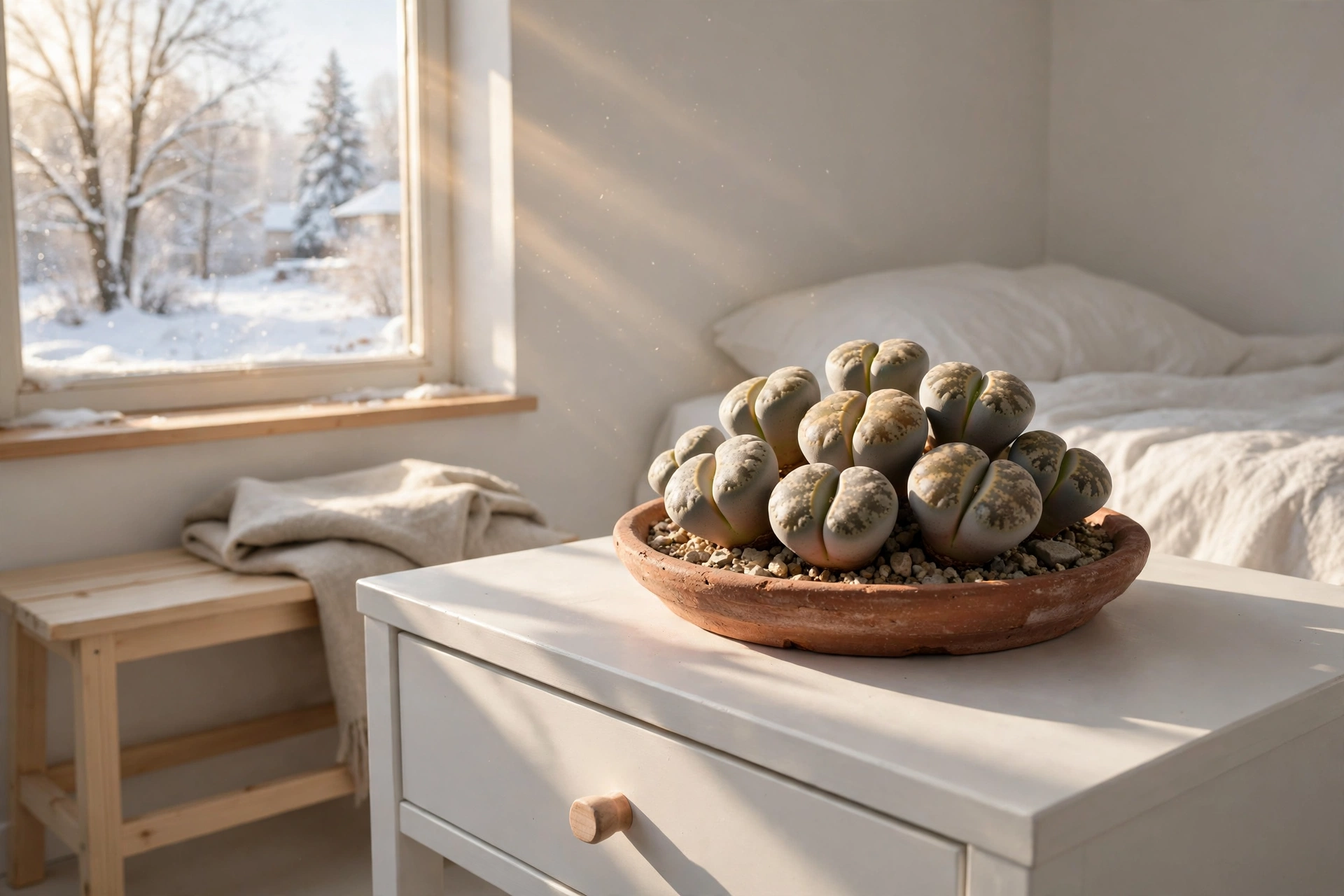
Lithops looks like a pebble that decided to be a plant, and the joke never gets old! Each pair of plump leaves stands 1 to 2 inches tall, so a cluster fits on the smallest nightstand corner. Bright direct sun for 4 to 6 hours a day keeps the stone patterns crisp and compact. Water only every 2 to 3 weeks while it grows, and skip watering in winter while it rests. Dry room air suits it, and keep it above 50 degrees. The ASPCA lists only one lithops species, Lithops naureeniae, as non-toxic to cats and dogs, and its pebble size makes it easy to tuck out of reach!
One tip: use a very gritty, fast-draining mix with extra perlite or sand, since lithops roots love dry feet and adore a quick-draining home!
3. Oxalis Triangularis (Purple Shamrock)
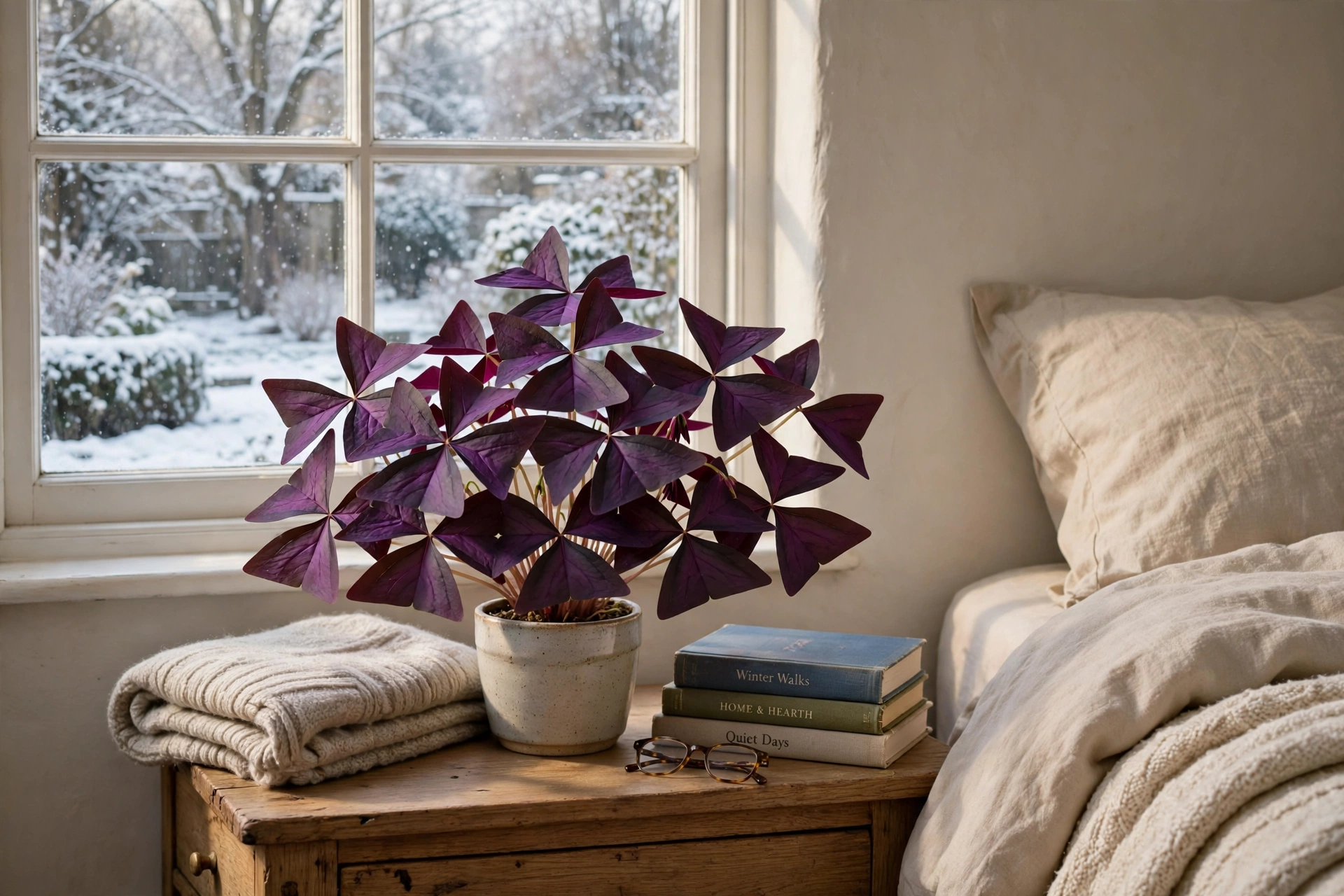
Purple shamrock is the nightstand plant that actually goes to bed when you do! Its deep purple, butterfly-shaped leaves fold up every evening and reopen with the morning light, which is pure magic to wake up to! Bright indirect light with a little gentle morning sun keeps the purple rich, deep, and absolutely gorgeous! Water when the top inch of soil feels dry, then stretch watering to every 2 to 3 weeks in fall and winter. Cool rooms between 60 and 75 degrees suit it best, which makes most bedrooms perfect! The ASPCA lists oxalis as toxic to cats and dogs, so a closed bedroom door keeps curious pets safe!
One tip: snip off faded leaves at the base, since a quick tidy keeps the clump fresh and lets new purple leaves shine!
4. Watermelon Peperomia
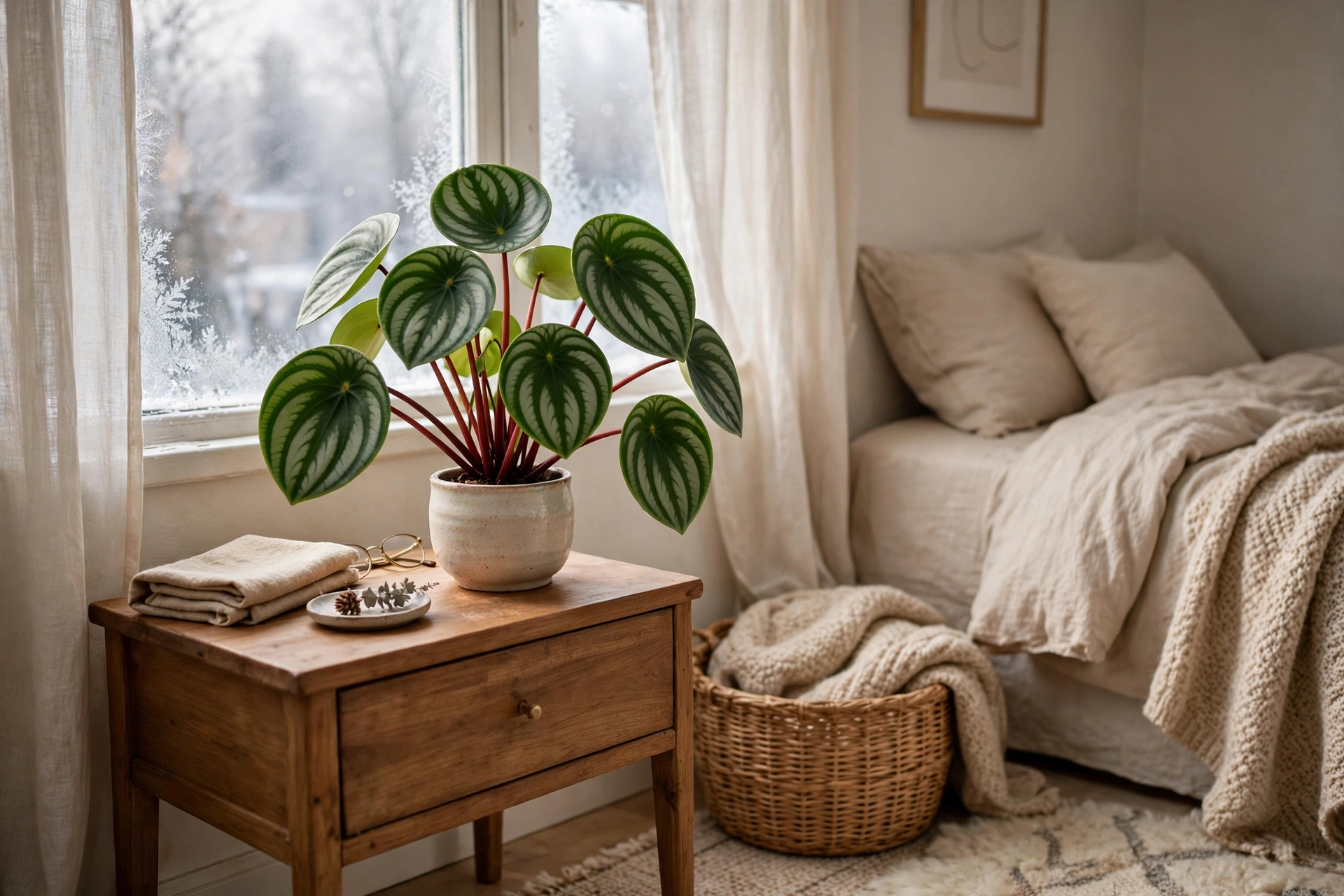
Watermelon peperomia looks like someone painted tiny watermelons and stuck them on red stems, and it is ridiculously charming! Its round leaves wear silver and dark green stripes, and the whole plant stays just 6 to 8 inches tall, which is perfectly nightstand-sized! Bright indirect light keeps the stripes bold, the plant compact, and the whole look delightful! Water when the top 1 to 2 inches of soil feel dry, and water less in winter when growth slows. Warm rooms between 65 and 80 degrees suit it best, away from cold drafts. The ASPCA lists watermelon peperomia as non-toxic to cats and dogs, wonderful news for pet owners!
One tip: keep it in a small, snug pot with drainage holes, since peperomia roots stay small and a cozy pot keeps the soil just right!
5. Rex Begonia
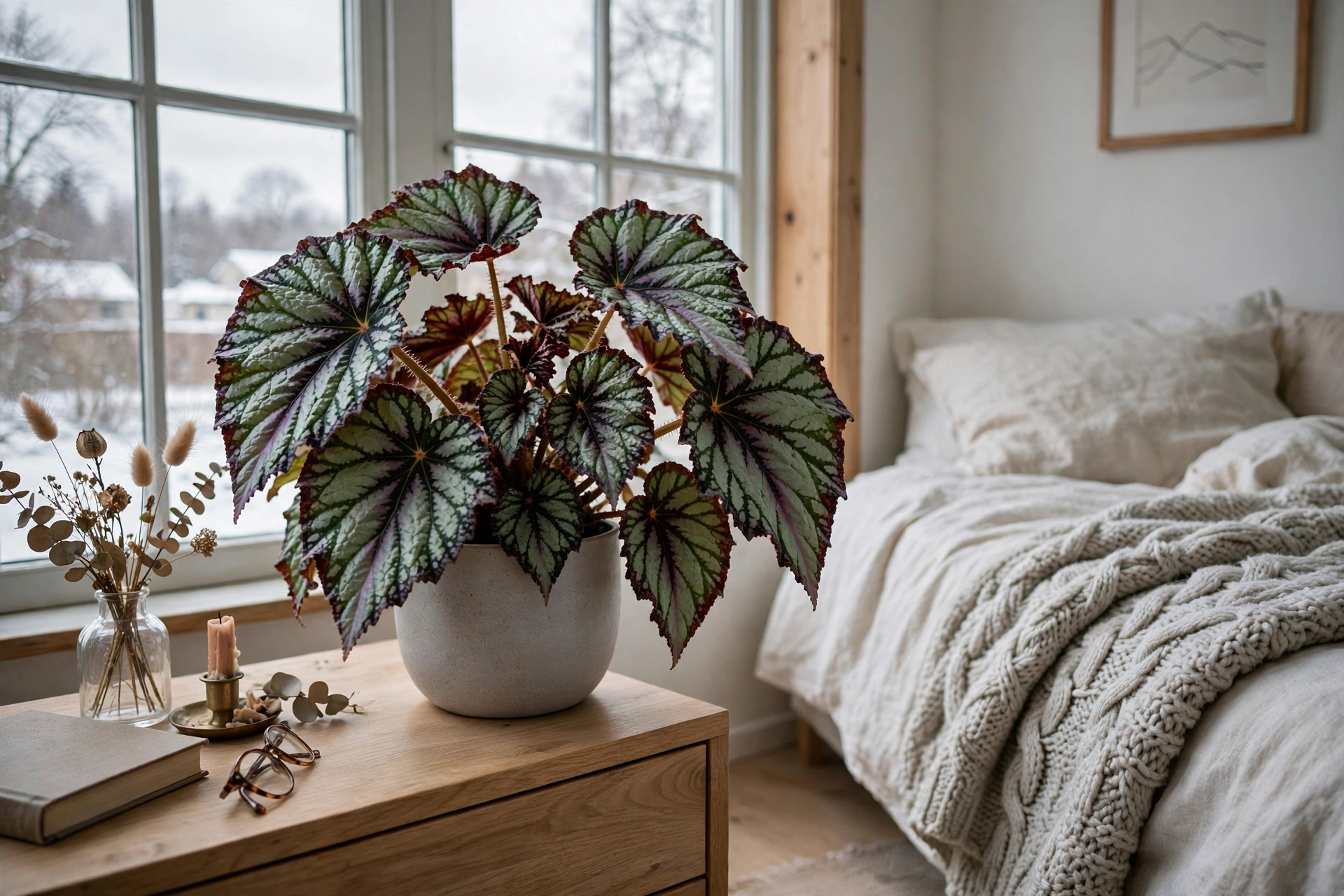
Rex begonia is the drama queen of foliage, and your nightstand is its stage! Its large leaves swirl with silver, burgundy, and deep green, and the plant stays 12 to 18 inches tall and wide. Bright indirect light keeps the colors rich and glowing, with no direct sun on the leaves. Water when the top inch of soil feels dry, roughly every 5 to 7 days, and stretch to every 10 to 14 days in winter. Humidity between 50 and 70 percent keeps the leaf edges smooth and glossy. The ASPCA lists rex begonia as toxic to cats and dogs, so a closed bedroom door keeps curious pets safe!
One tip: set the pot on a pebble tray filled with water, since the tray lifts humidity around the leaves and keeps them glossy without wetting them!
6. Miniature Rose
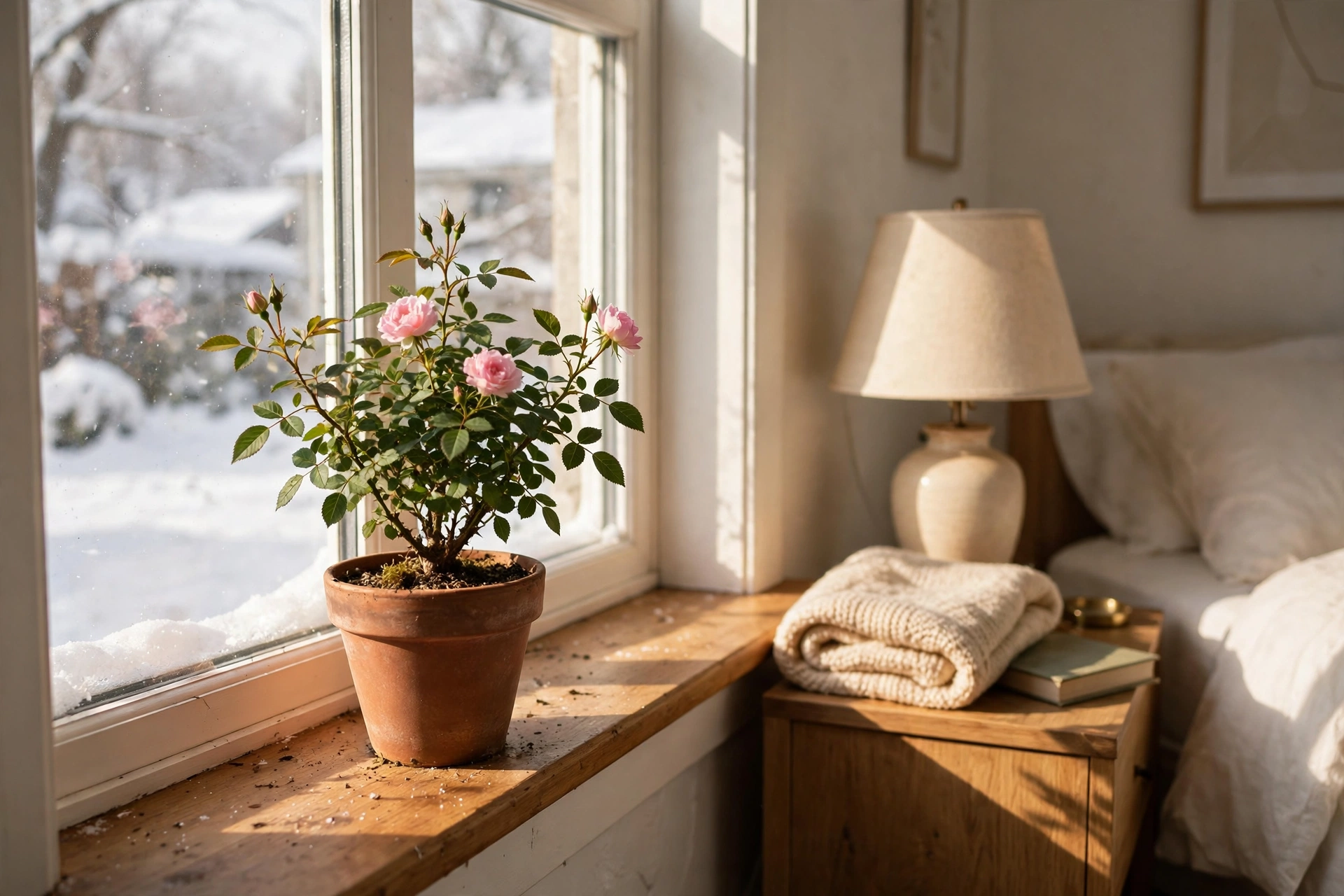
Miniature rose brings real roses to your nightstand, and yes, they smell wonderful! This tiny shrub stays 12 to 18 inches tall, with glossy leaves and fully double blooms about 1 to 2 inches wide. Very bright light with at least 6 hours of direct sun keeps it blooming in flushes every 5 to 7 weeks. Water when the top inch of soil feels dry, and keep the soil barely moist in winter while it rests. Room temperatures between 65 and 75 degrees suit it best. The ASPCA lists roses as non-toxic to cats and dogs, though the little prickles can scratch, so a little space keeps everyone happy!
One tip: snip off spent blooms with sharp scissors, since deadheading helps the plant bloom longer and keeps new buds coming!
7. Button Fern
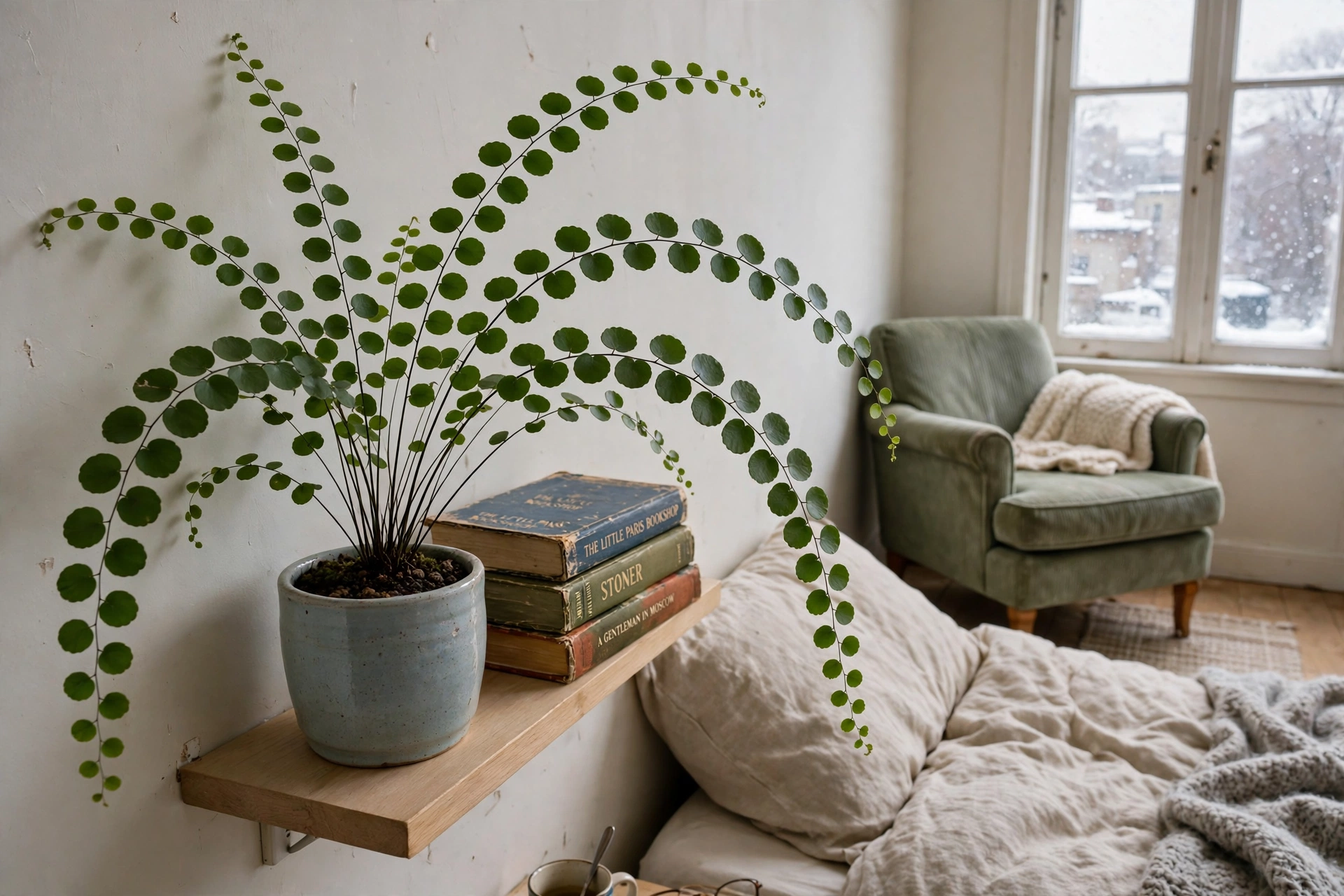
Button fern is the fern for people who think ferns are too fussy, and it proves them wrong! Its arching fronds carry round, leathery leaflets like little green buttons, and the plant stays about a foot tall and wide. Bright indirect light keeps the fronds lush and lovely, with no direct midday sun. Water when the top inch of soil feels dry, roughly every 5 to 7 days, and stretch to every 10 to 14 days in winter. Humidity near 50 percent suits it well, and it tolerates drier air better than most ferns. The ASPCA lists button fern as non-toxic to cats and dogs, wonderful news for pet owners!
One tip: let the soil dry a little more between waterings than you would for other ferns, since button fern loves soil that dries out between drinks!
8. Gasteria (Ox Tongue)
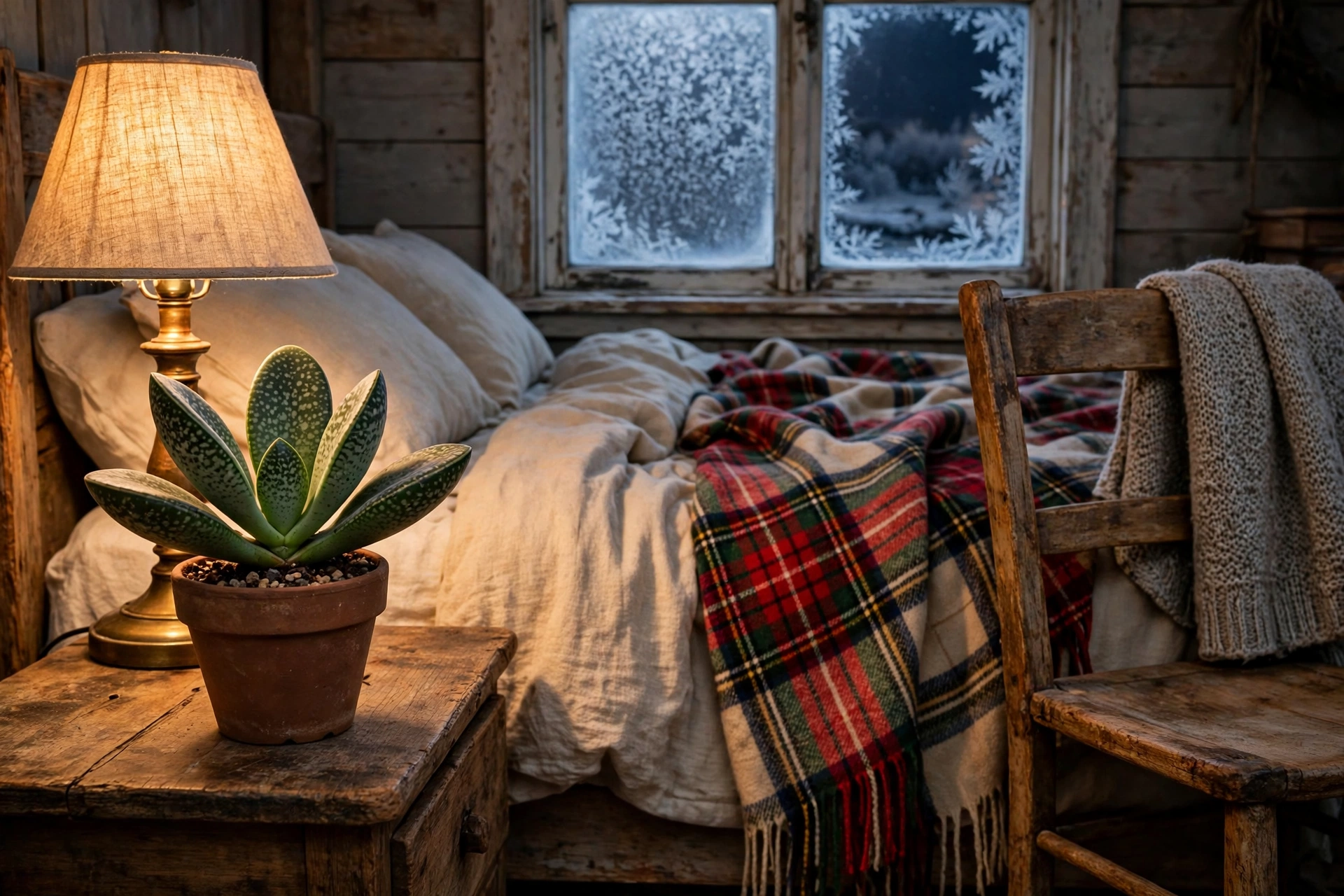
Gasteria is the succulent that actually loves your bedroom’s gentle light, and that is wonderfully rare! Its thick, tongue-shaped leaves stack in neat pairs, speckled with pale spots, and the plant stays about 10 inches tall and a foot wide, which is just right for a nightstand! Bright indirect light suits it best, since direct sun burns the leaves. Water about every two weeks, soaking the soil and letting it dry out completely between drinks. It stays happy above 50 degrees, and dry room air suits it perfectly. No toxicity is listed for gasteria, and its small pot sits easily out of nibbling range!
One tip: lift the pot before watering, since a light pot means dry soil and a heavy pot means the mix is still moist!
9. Bunny Ear Cactus
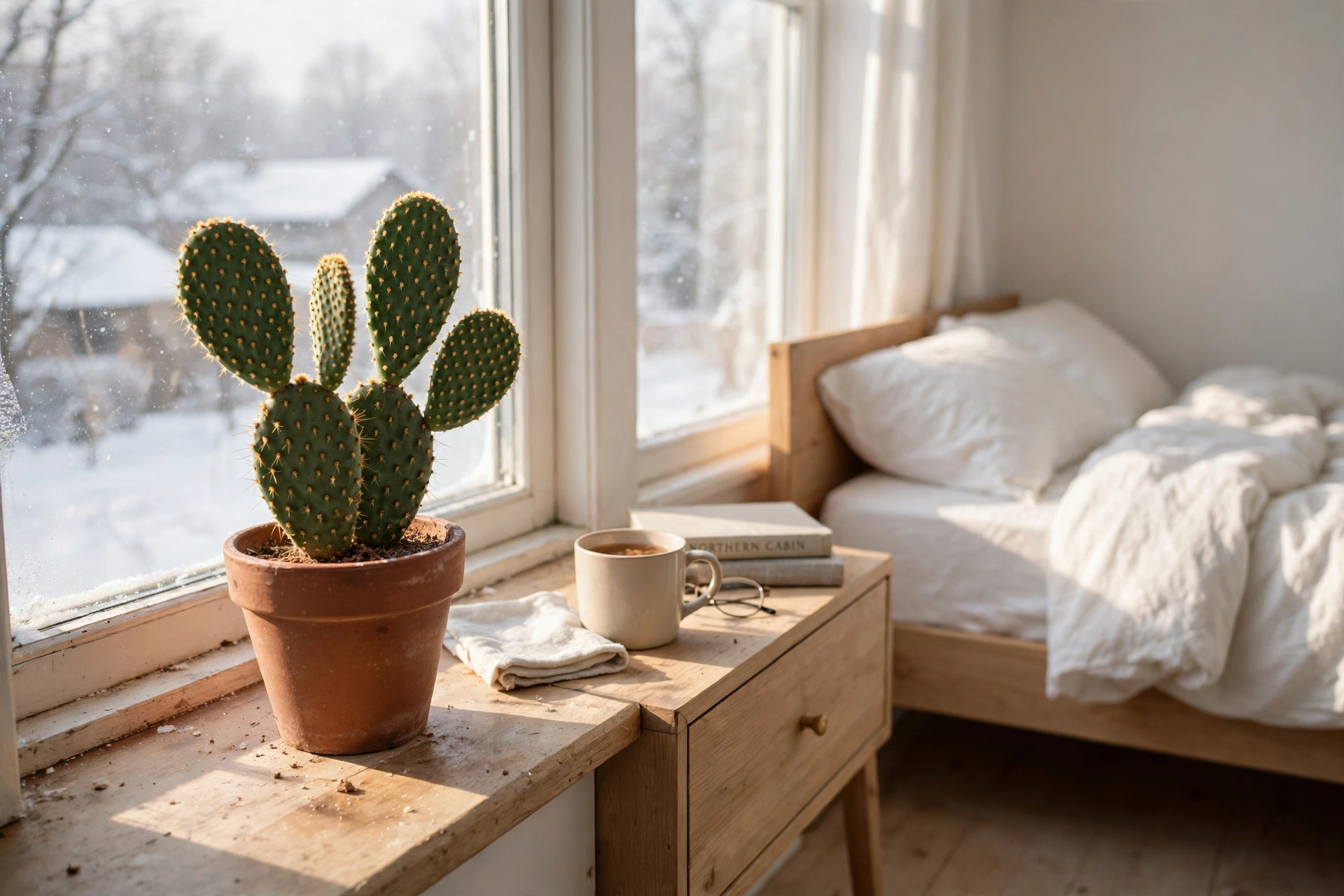
Bunny ear cactus looks like the cutest pet you never have to feed! Its flat pads look like bunny ears, dotted with golden tufts, and the plant grows slowly, so a young one stays nightstand-sized for years. Full sun with at least 6 hours of direct light keeps the pads firm, compact, and glowing! Water every 2 to 3 weeks in spring and summer, then cut back to once a month or less in winter. A cool, dry winter rest near 50 degrees suits it beautifully! The ASPCA lists bunny ear cactus as non-toxic to cats and dogs, and those golden tufts are barbed glochids, so a gentle touch wins!
One tip: use a folded cloth to move the pot, since the golden glochids detach at the lightest touch and stick to skin, so a cloth keeps it easy!
10. Alocasia ‘Polly’
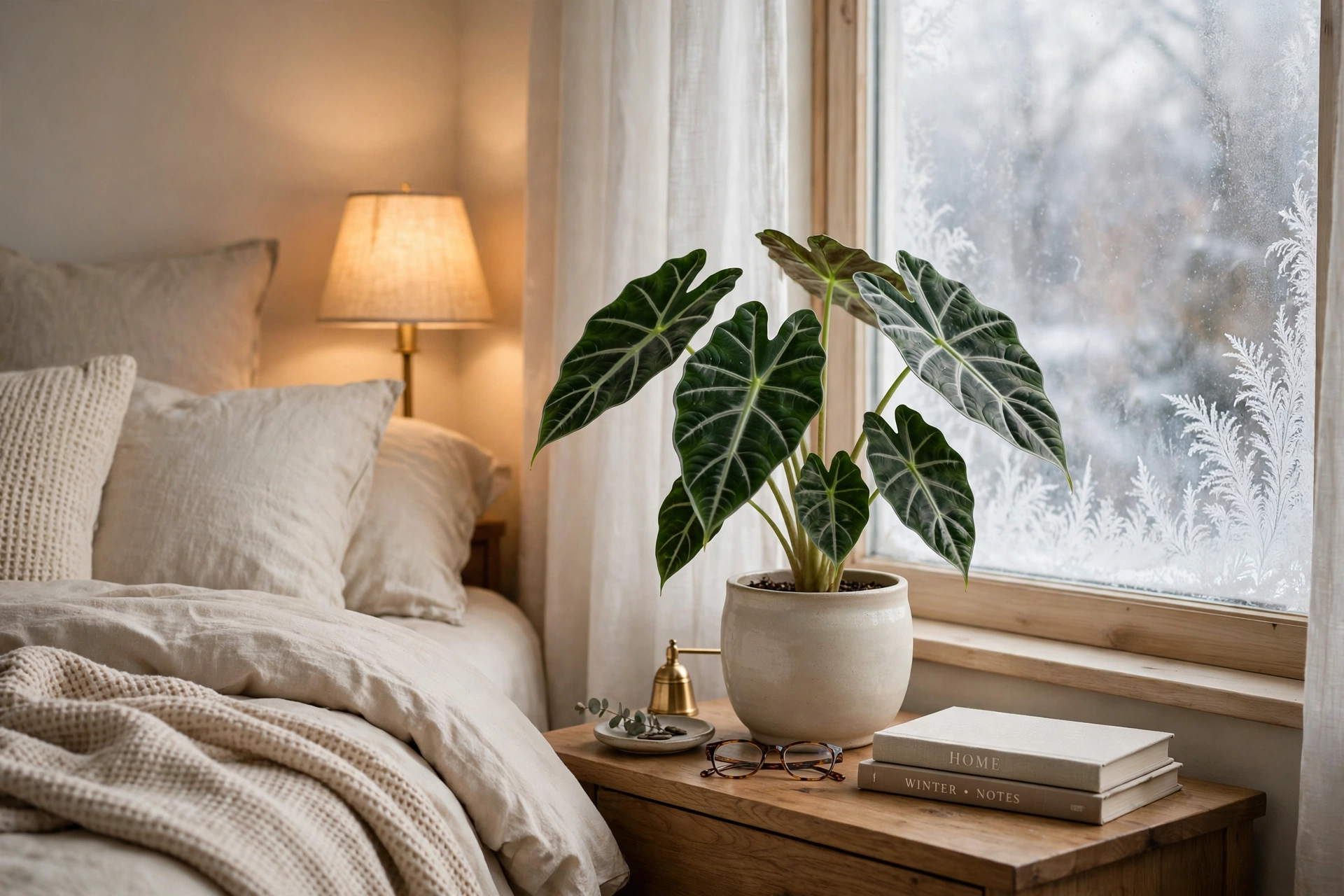
Alocasia ‘Polly’ is the supermodel of nightstand plants, and it knows it! Its dark green, shield-shaped leaves wear silvery veins and purple undersides, and the plant stays compact at 1 to 2 feet tall. Bright indirect light keeps the leaf colors bold, with no direct sun on the leaves. Water when the top 2 inches of soil feel dry, roughly every 5 to 7 days in the growing season. In winter, water much less while it rests. Humidity between 60 and 80 percent keeps the leaf edges smooth. The ASPCA lists the Alocasia genus as toxic to cats and dogs, so a closed bedroom door keeps curious pets safe!
One tip: give the pot a quarter turn at each watering, since the leaves lean toward the light and turning keeps the plant even!
11. Ginseng Ficus
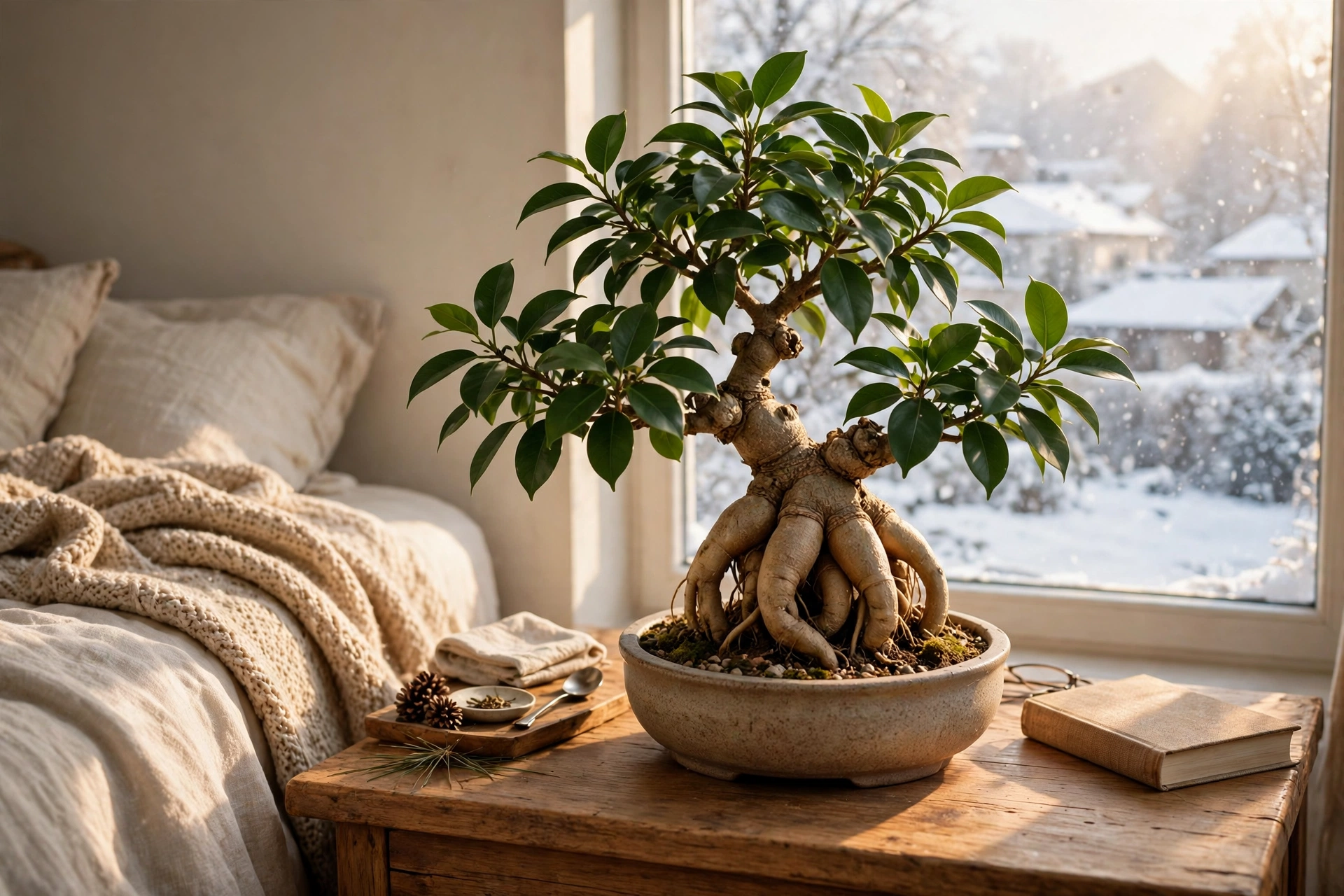
Ginseng ficus is a tiny tree with a big personality, and it steals your nightstand! Its swollen, knobby root base looks like a little potato, topped with a crown of glossy oval leaves, and pruning keeps it 8 to 20 inches tall. Bright indirect light with a little gentle morning sun keeps the crown full and lush. Water when the top inch of soil feels dry, roughly weekly in summer and every two weeks or more in winter. It stays happy above 60 degrees, and normal room air suits it fine. The ASPCA lists figs as toxic to cats and dogs, so a closed bedroom door keeps curious pets safe!
One tip: pick its spot once and leave it there, since moving this little tree often makes it drop leaves!
12. Pilea ‘Moon Valley’
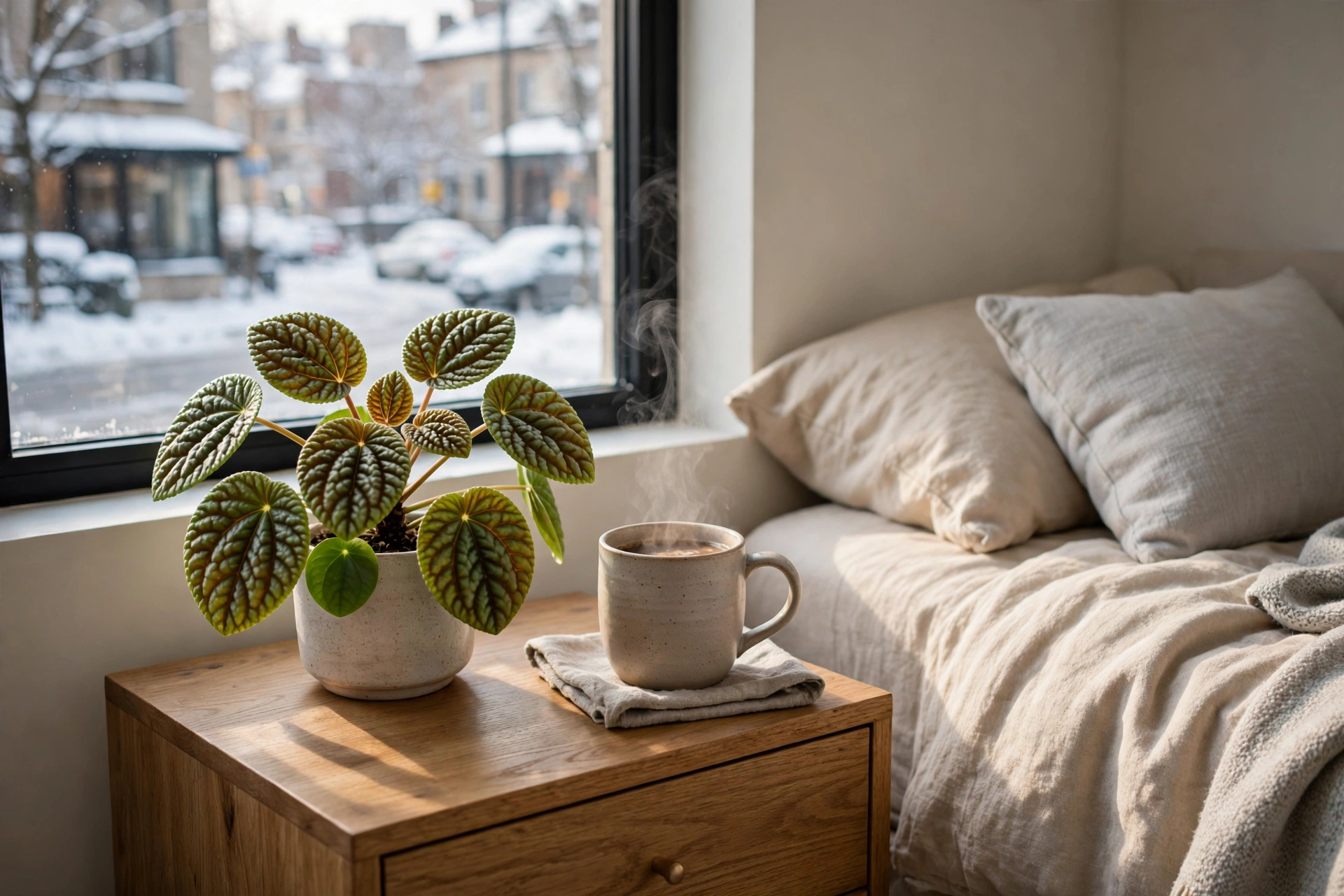
Pilea ‘Moon Valley’ looks like the moon’s surface turned into a plant, and it is weird in the best way! Its quilted leaves glow apple green with deep bronze veins, and the plant stays just 6 to 12 inches tall. Bright indirect light keeps the texture crisp and the colors rich, with no direct sun on the leaves. Water when the top inch of soil feels dry, roughly every 7 to 10 days, and water less in winter. Humidity above 50 percent keeps the leaves plump and happy. The ASPCA lists Pilea involucrata as non-toxic to cats and dogs, wonderful news for pet owners!
One tip: pinch the stem tips now and then, since pinching keeps the plant bushy and the cuttings root easily to share!