1. Trailing Dischidia Spilling From the Mantel Ends
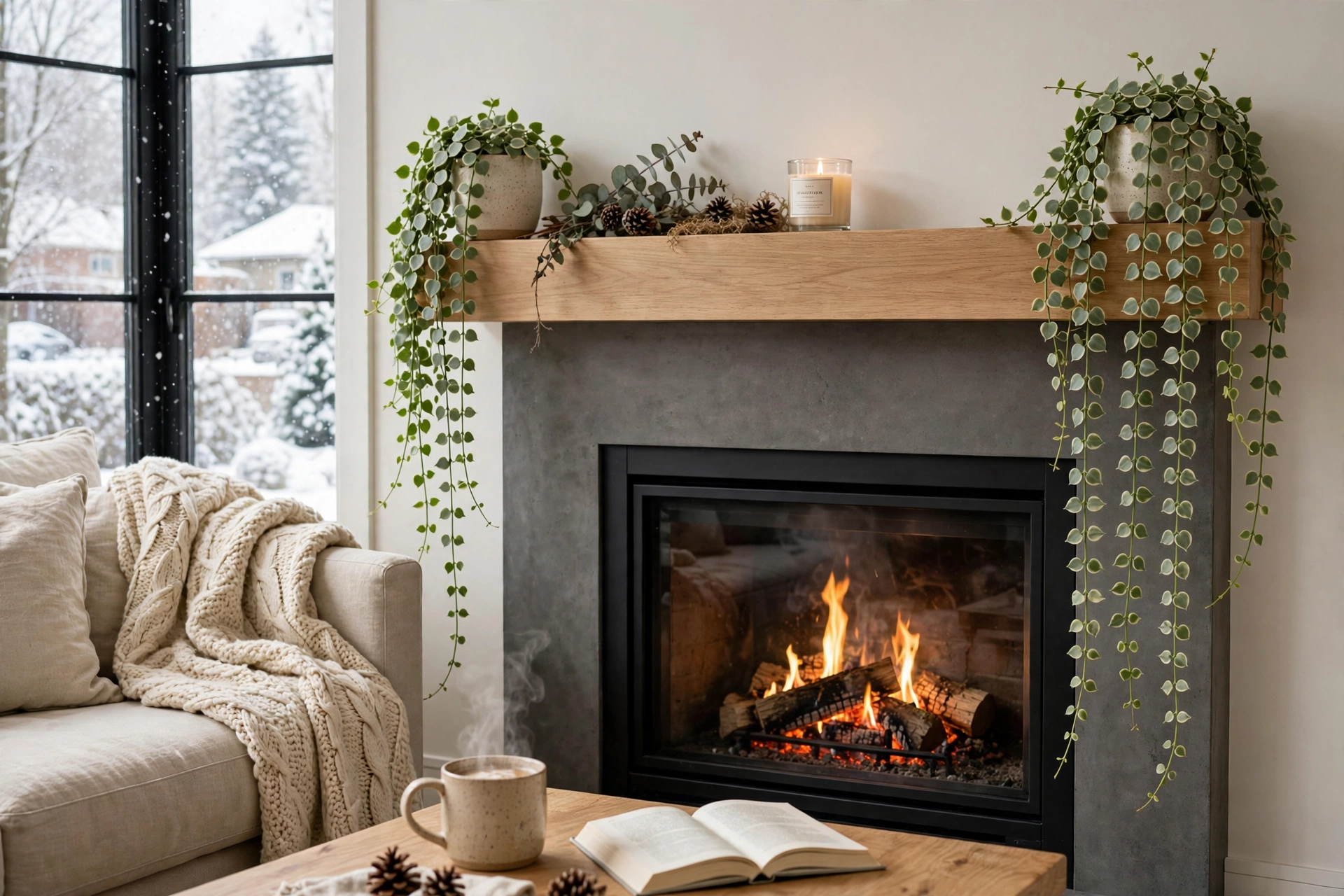
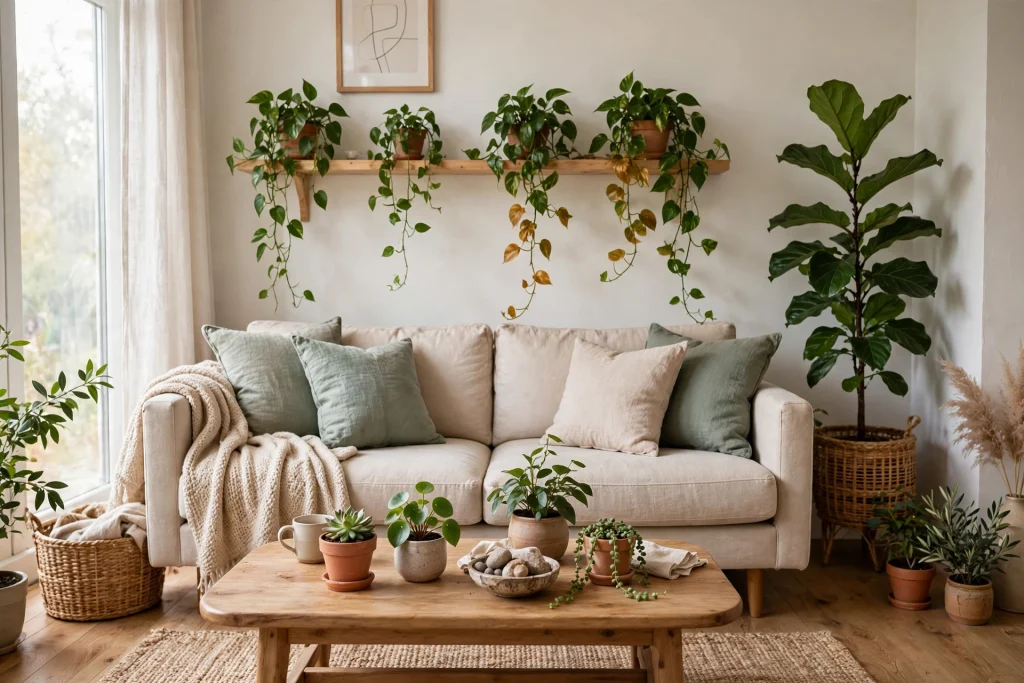
Okay, so here’s the thing! Dischidia ruscifolia wears hundreds of heart-shaped leaves on trailing stems, so it looks like a living garland for your mantel! Set one pot at each end and let the strands spill like a lovely waterfall! Bright indirect light with a little gentle morning sun keeps the hearts plump and green! Water when the top 2 to 3 inches of soil feel dry, and water less in winter! Warm rooms between 65 and 85 degrees suit it beautifully! Keep pots at least three feet from the firebox opening, and never let vines drift toward the flames. It is mildly toxic if nibbled, so keep pets away!
One tip: grow it in an airy orchid bark mix, since dischidia is a happy epiphyte that grips tree bark in the wild and hates soggy soil!
2. A Matched Pair of Poinsettias Flanking the Mirror
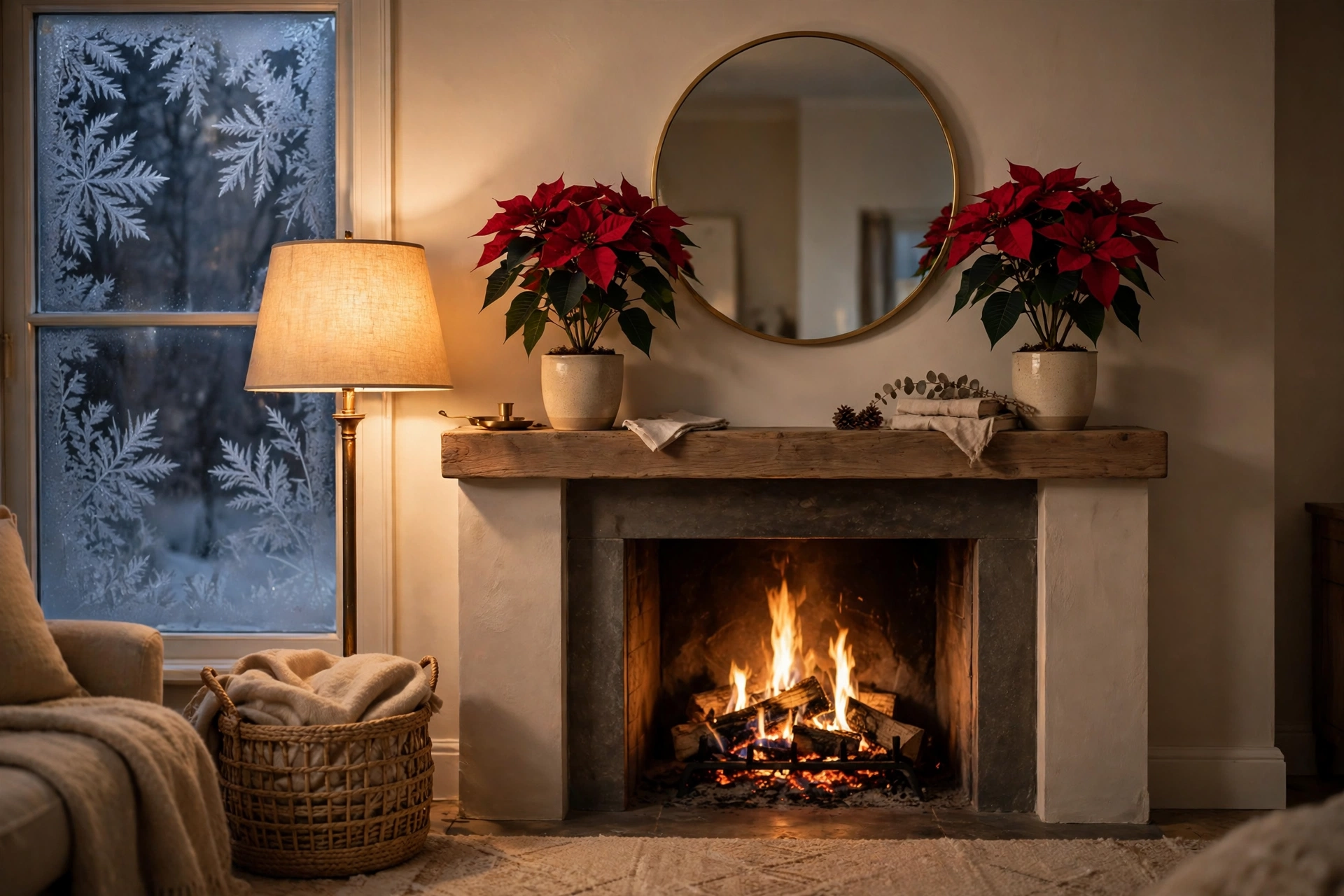
Nothing says winter like a matched pair of poinsettias standing guard beside your mantel mirror! Those red stars are not flowers at all, since the color comes from bracts, which are gorgeous modified leaves! Bright indirect light keeps the bracts bold and bright for weeks! Water when the soil surface feels dry, then drain the pot fully and never leave it standing in water! Room temperatures between 65 and 70 degrees suit it perfectly! Set the pair at the far ends of the mantel, away from the heat rising off the fire. The ASPCA lists poinsettia as toxic to cats and dogs, so a pet-free room keeps curious pets safe!
One tip: take the foil sleeve off before watering, since foil traps water around the roots and the plant really hates wet feet!
3. Paperwhite Narcissus in a Row of Glass Vases
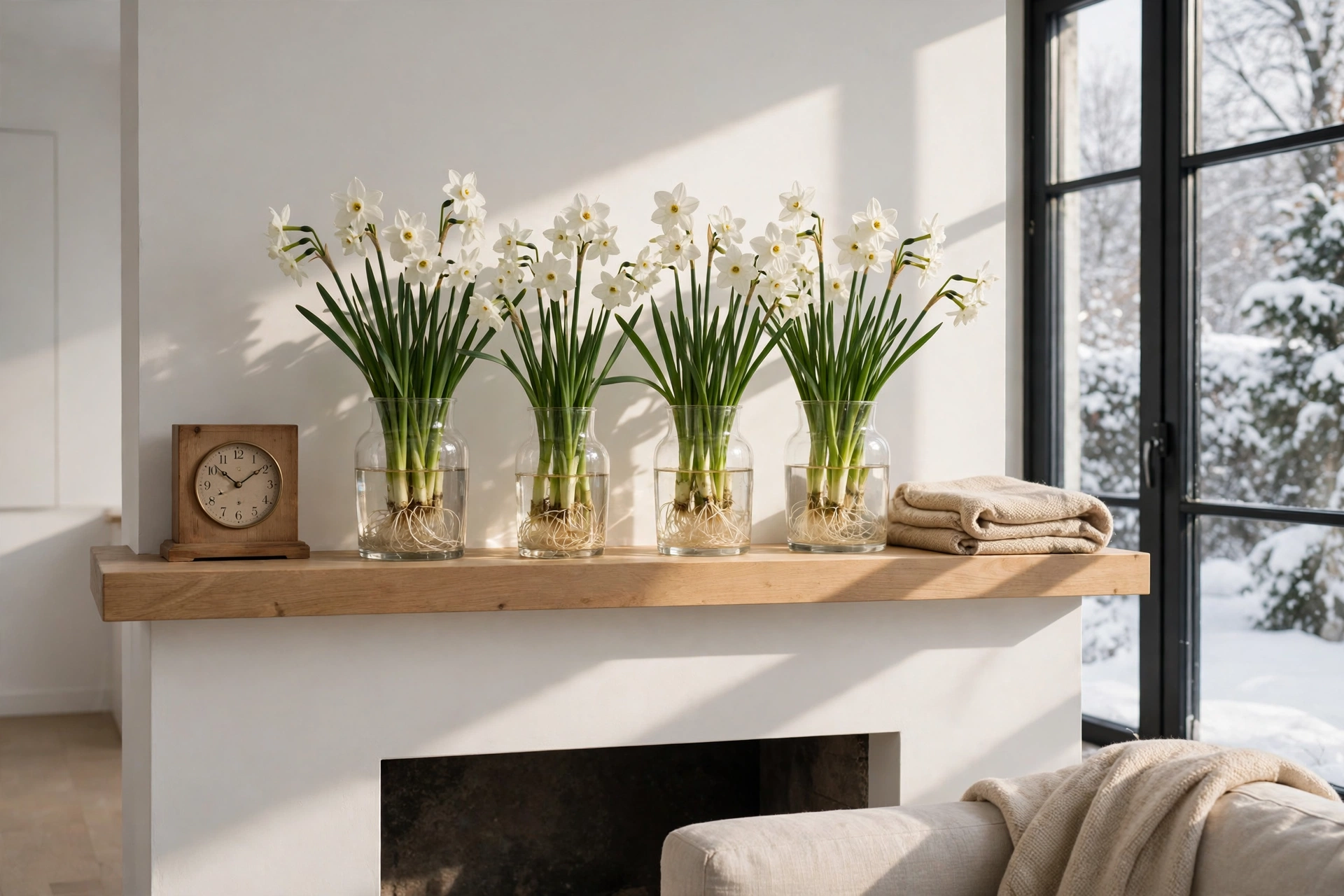
Paperwhites are the easiest winter flowers you will ever grow, and they smell amazing! These bulbs need no chilling at all, unlike tulips and hyacinths, so you can start them any time in winter! Set the bulbs on pebbles in pretty glass vases with water just touching the base of each bulb! Bright light and cool rooms between 60 and 65 degrees keep the stems short and sturdy! Fragrant white flowers open about 4 to 6 weeks after planting, on stems 12 to 18 inches tall. The ASPCA lists paperwhite narcissus as toxic to cats and dogs, so a pet-free room keeps curious pets safe!
One tip: start a new vase every two weeks, since each planting blooms for 2 to 3 weeks and staggered starts keep lovely flowers coming all winter!
4. A Staghorn Fern Mounted Above the Mantel
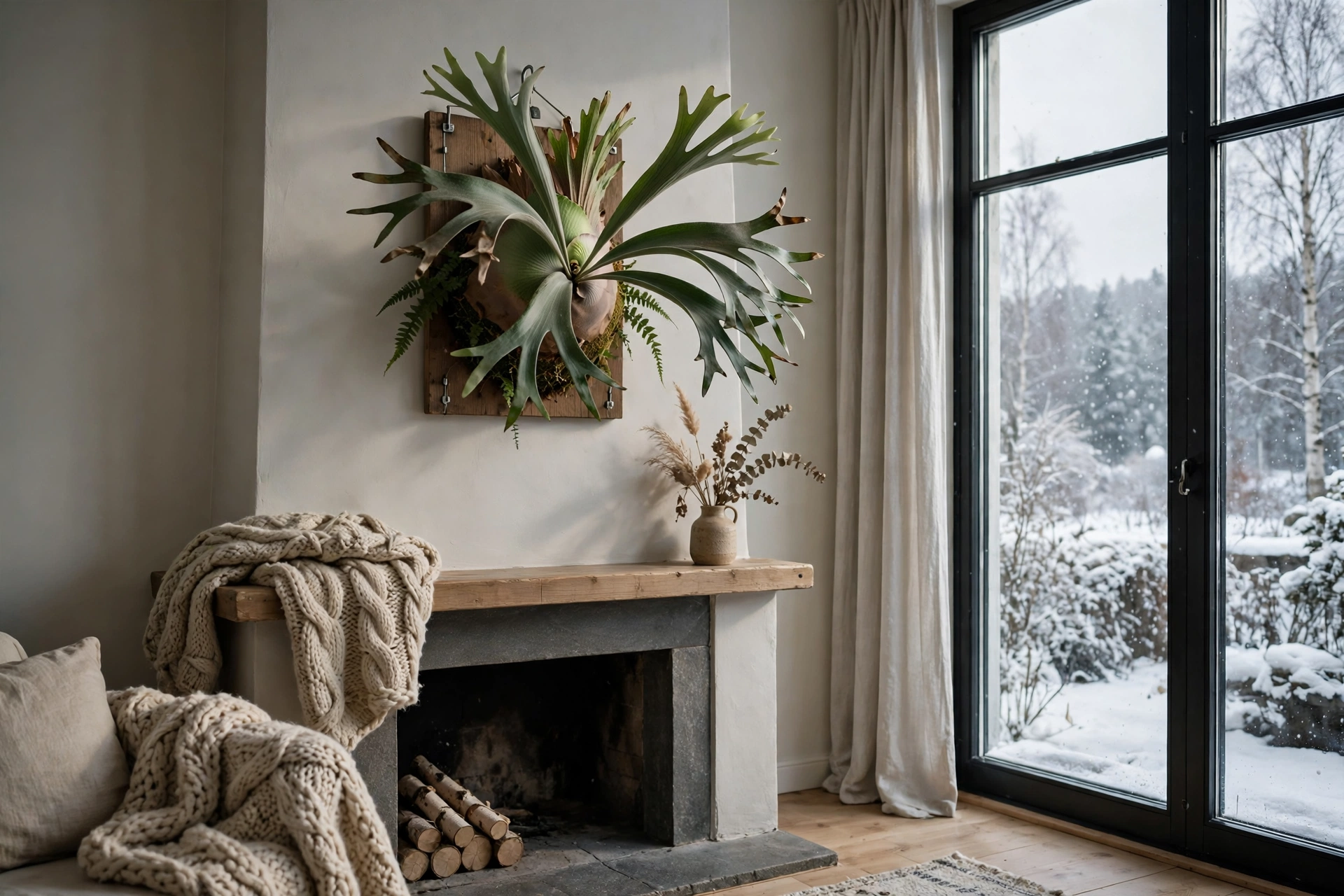
Seriously, a staghorn fern is living wall art, and your chimney breast is its gallery! This epiphyte grows on tree trunks, so it mounts happily on a wooden board with a pad of sphagnum moss instead of sitting in a pot! Its antler-shaped fronds fan out from flat shields, so leave the brown ones alone! Soft, bright light without direct sun keeps the fronds green and strong! Soak the mount in a sink for 10 to 20 minutes when the moss feels dry! Humidity around 50 percent or more suits it wonderfully! The ASPCA lists staghorn fern as non-toxic to cats and dogs, wonderful news for pet owners!
One tip: press your hand to the wall while the fire burns, since a hot wall means the fern belongs on a cooler wall!
5. Rosemary Topiaries Paired With Pillar Candles
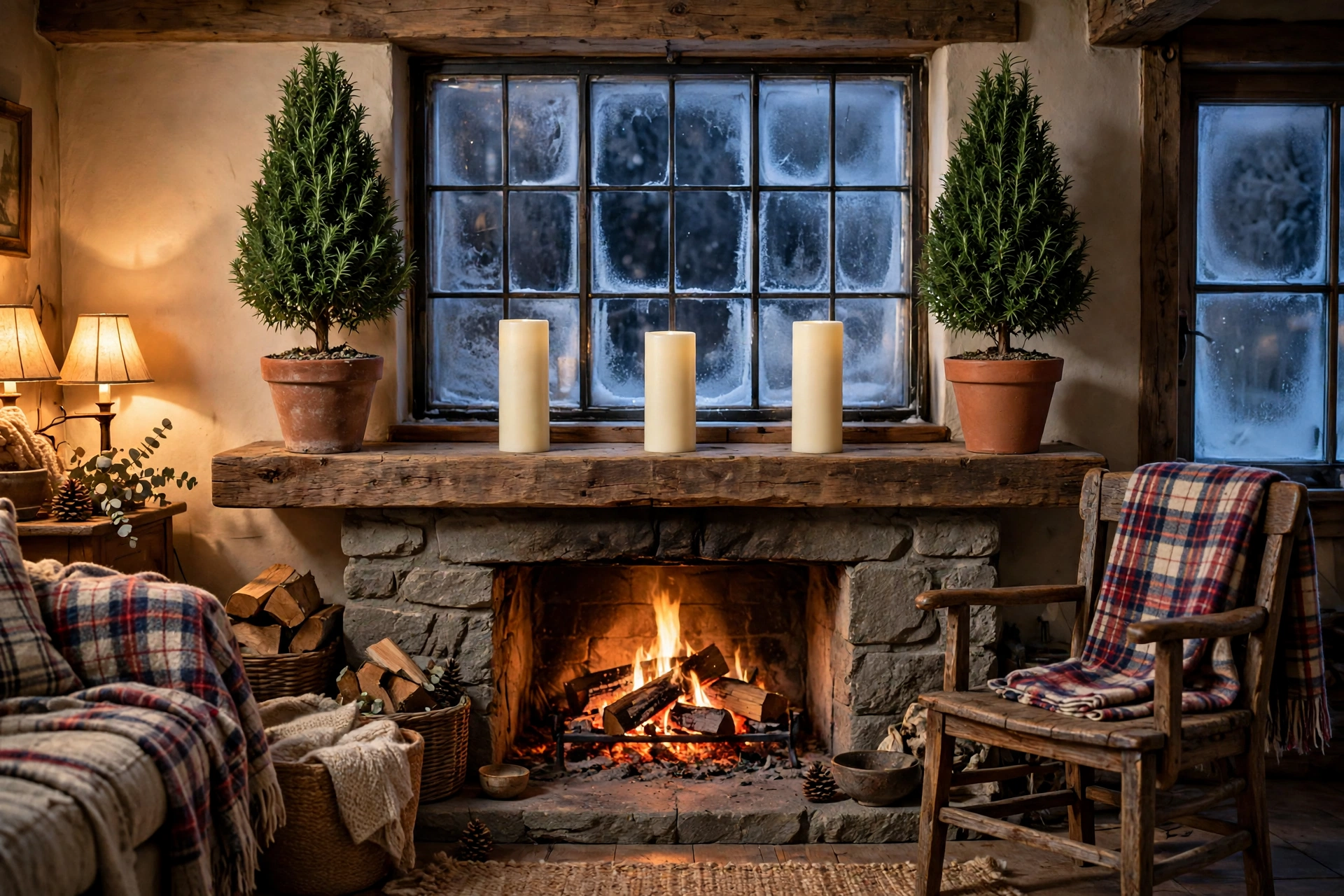
Rosemary topiaries look like tiny Christmas trees, and they smell like dinner! Shops sell rosemary pruned into neat little tree shapes every December! Full sun for at least 6 hours a day keeps the needles dense and fragrant! Water only when the top inch of soil feels dry, since soggy soil is the fastest way to lose this lovely herb! Cool rooms suit it best, so keep the pots at the mantel ends, away from the heat of the fire. Tall flameless pillar candles between the trees add glow with no open flame. The ASPCA lists rosemary as non-toxic to cats and dogs, wonderful news for pet owners!
One tip: snip a fragrant sprig for cooking whenever you like, since regular snipping keeps the topiary neat and the kitchen smells amazing!
6. Hyacinths in a Low Winter Trough
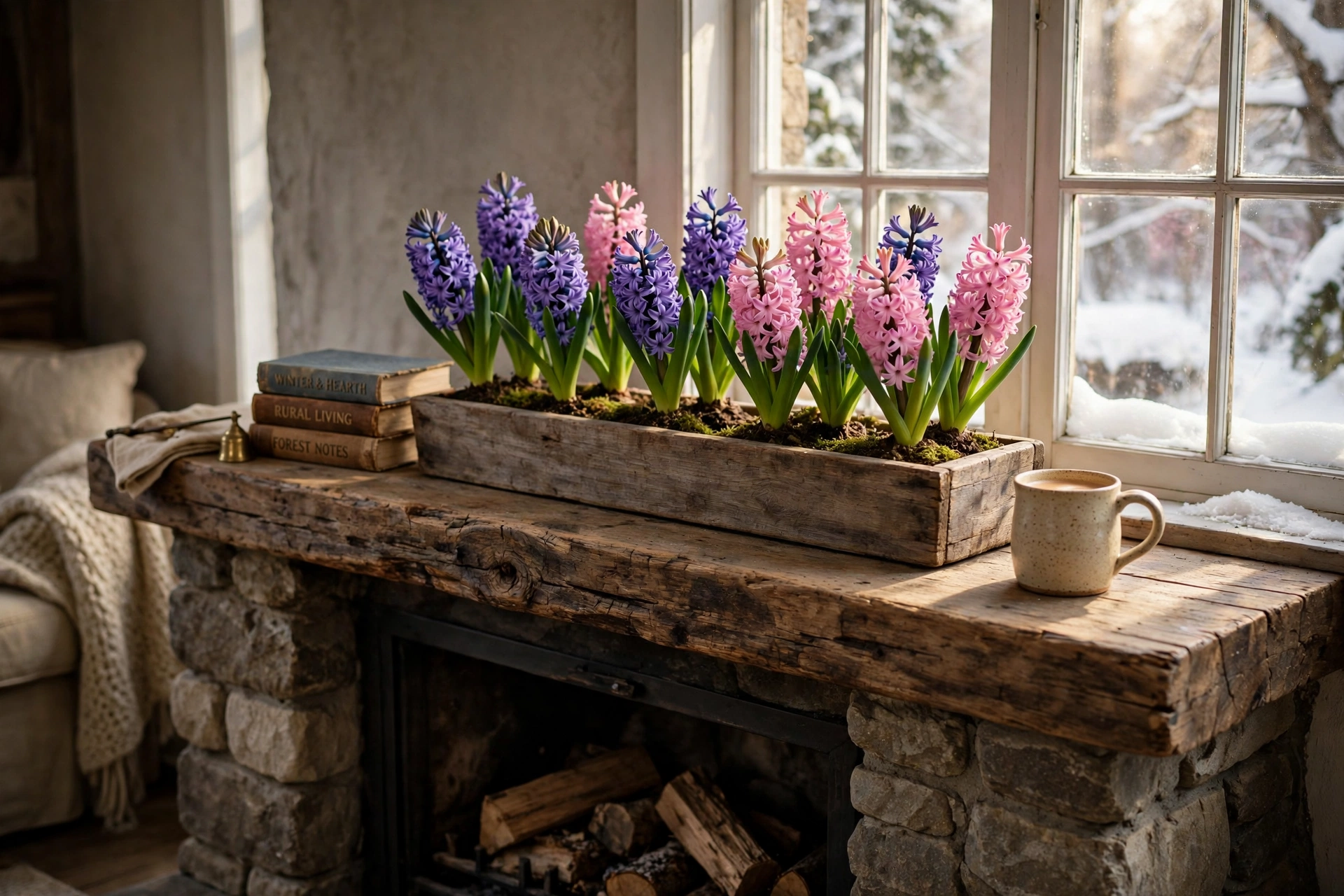
A low trough of hyacinths smells like spring crashed your winter party, in the best way! Pre-chilled bulbs bloom about 2 to 4 weeks after you move them into the light, so a trough started in early winter fills the mantel with gorgeous color! Bright light away from direct sun suits them best while they bloom! Cool rooms between 60 and 65 degrees suit them beautifully and stretch the blooms! Keep the soil evenly moist, and stake tall stems before the heavy flower heads tip the trough! The ASPCA lists hyacinth as toxic to cats and dogs, so a pet-free room keeps curious pets safe!
One tip: wear gloves when you handle the bulbs, since hyacinth bulbs can irritate skin and the bulbs hold the most toxins!
7. A Mini Terrarium Village on the Mantel
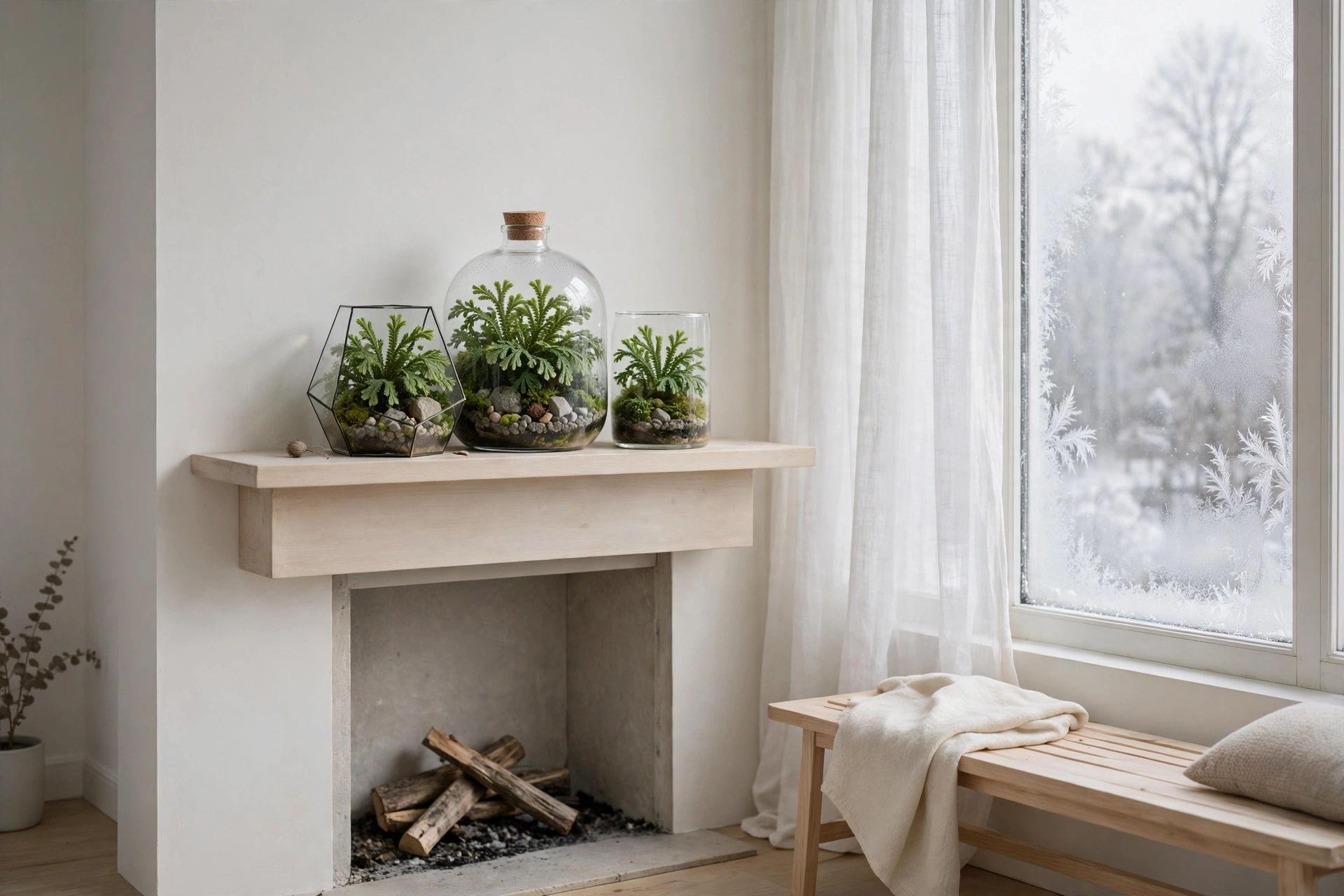
Okay, a tiny terrarium village is the cutest thing your mantel will wear all winter! Selaginella kraussiana looks like soft green moss, though it is not a moss at all, and it forms lovely dense mats up to 4 inches tall! Bright indirect light suits it perfectly, with no direct sun on the glass! A closed terrarium holds humidity above 80 percent, which is exactly what this little plant loves. Keep the soil evenly moist and the room between 60 and 75 degrees! The ASPCA lists Selaginella kraussiana as non-toxic to cats and dogs, wonderful news for pet owners!
One tip: lift the lid for a few minutes two or three times a week, since lovely fresh air stops condensation from building up inside the glass!
8. One Big Azalea as the Centerpiece
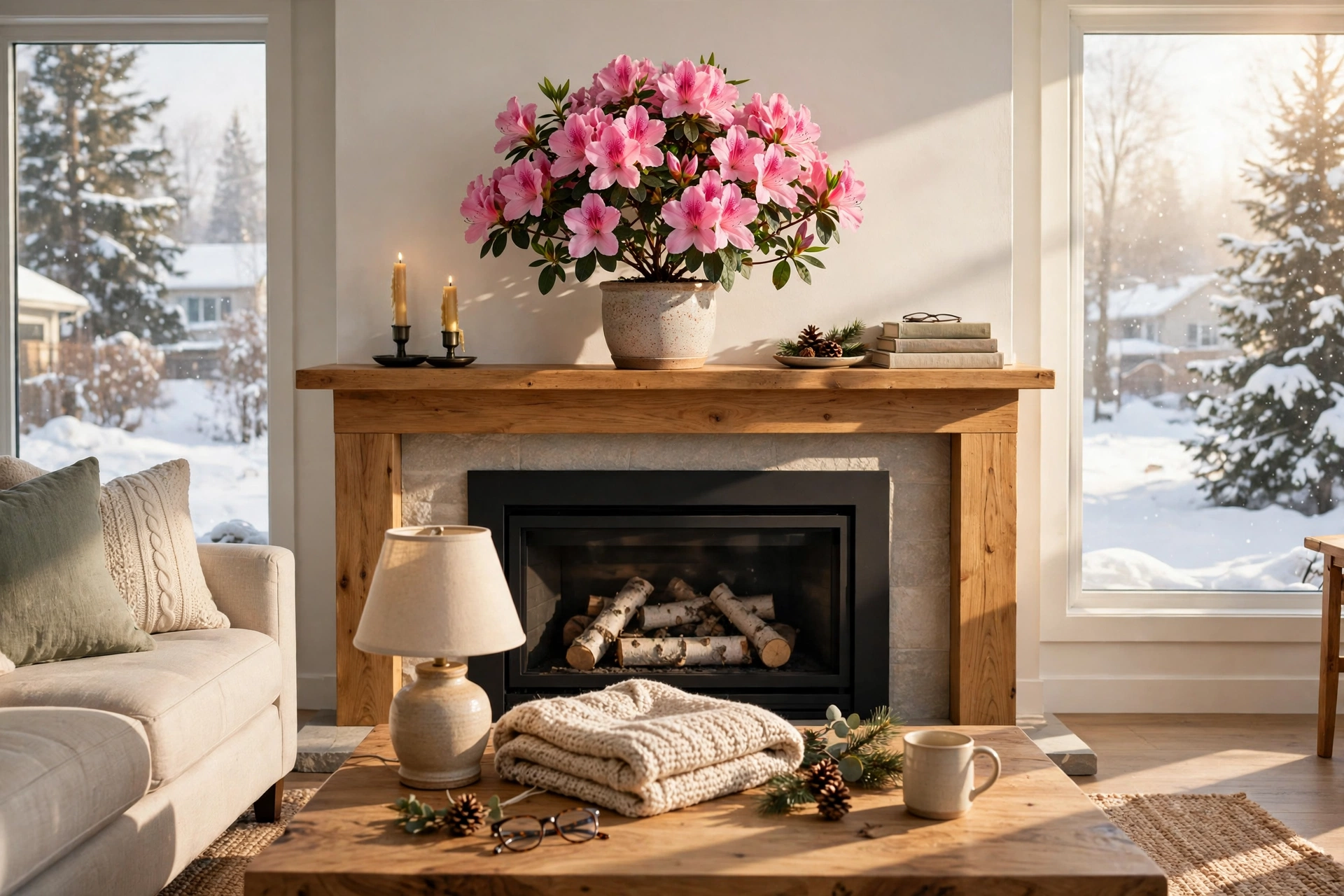
Honestly, one big azalea in full bloom stops the whole room, and it deserves the spotlight! Its gorgeous flowers open so thickly that they can hide the leaves completely, in pink, red, white, or purple! Bright indirect light for 4 to 6 hours a day keeps the blooms coming! A cool room between 60 and 65 degrees suits it beautifully and makes the flowers last longer! Keep the soil consistently moist, since an azalea should never dry out completely! The ASPCA lists the Rhododendron genus as toxic to cats and dogs, so a pet-free room keeps curious pets safe!
One tip: water with lovely rainwater or distilled water when you can, since azaleas dislike hard tap water and its minerals build up in the soil!
9. Stromanthe ‘Triostar’ for a Pop of Pink
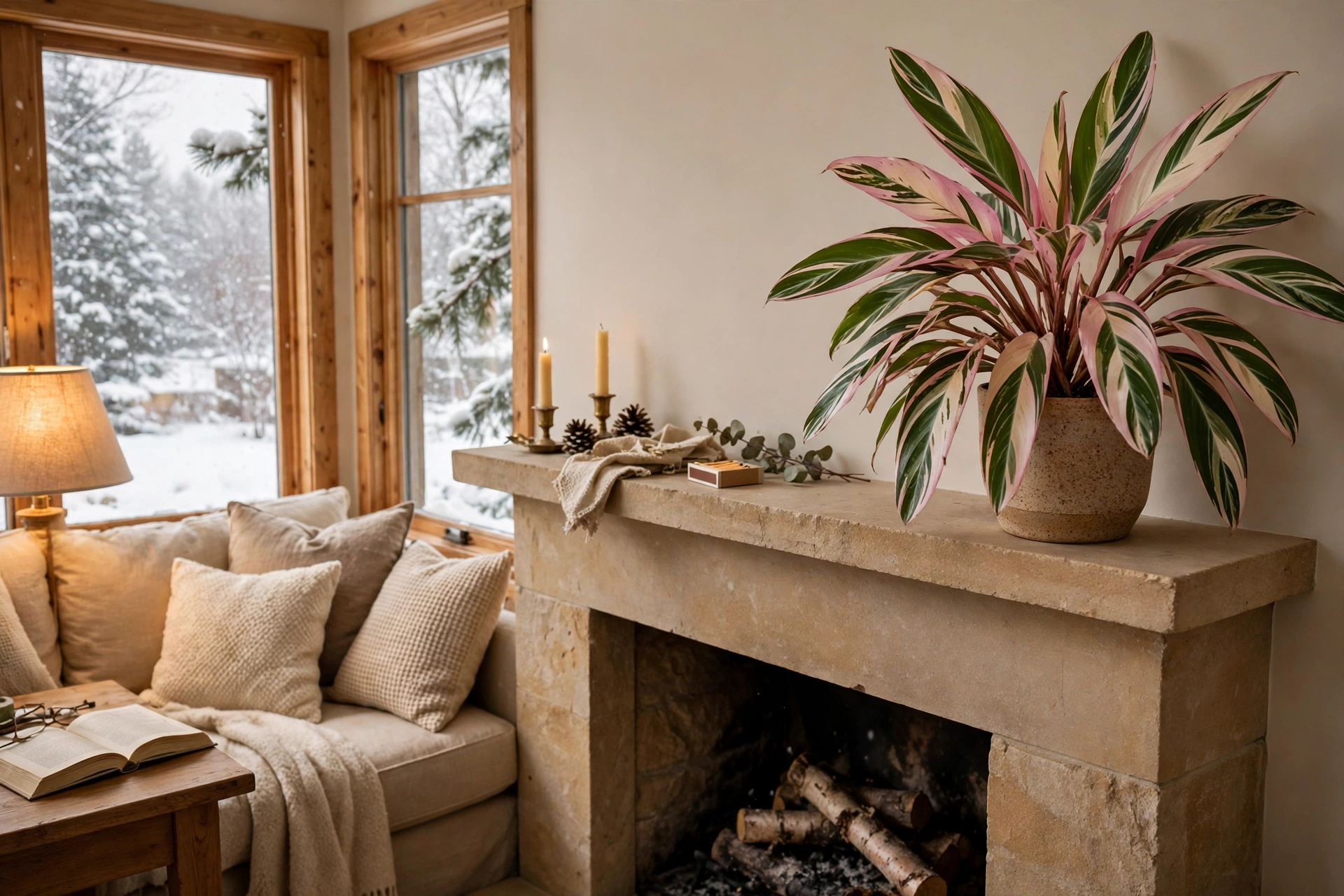
Stromanthe ‘Triostar’ looks like someone painted each leaf by hand, and the pink is unreal! Long leaves wear gorgeous streaks of pink, green, and cream on top, with deep magenta undersides that catch the light! Bright indirect light brings out the pink best, since direct sun scorches the pretty pale parts! Humidity between 50 and 70 percent keeps the leaf edges smooth, so a pebble tray or humidifier nearby helps. It stays happiest in warm rooms between 65 and 80 degrees! Let the top inch of soil dry between waterings, and use filtered water if your tap water is hard! No toxicity is listed for stromanthe!
One tip: give the pot a quarter turn every week, since the leaves lean toward the light and turning keeps the pink pattern lovely and even!
10. A Peace Lily Anchoring the Hearth End
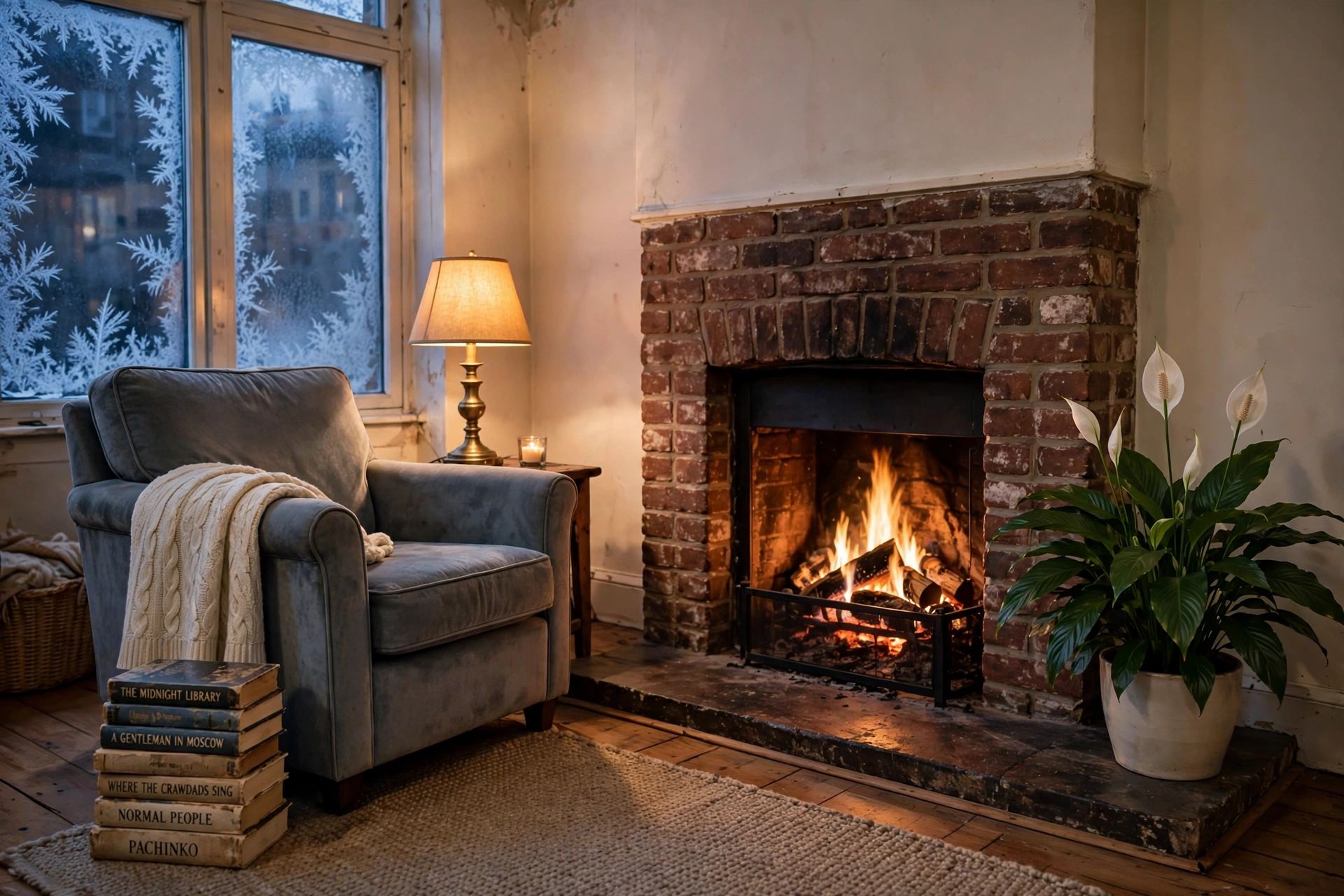
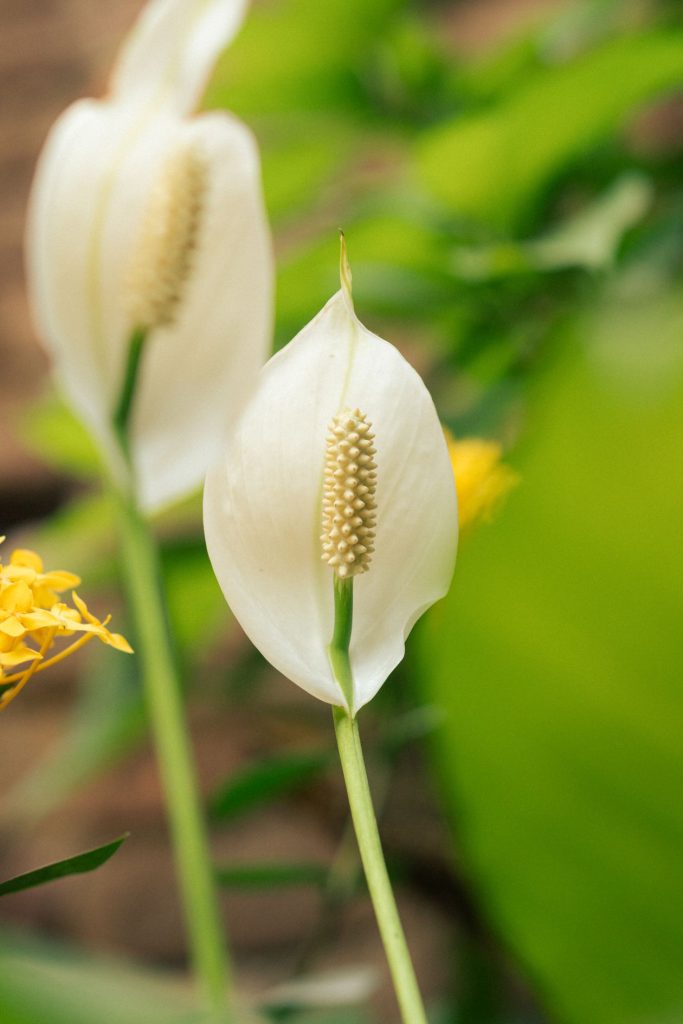
A peace lily at the hearth end grounds the whole fireplace wall like a beautiful green exclamation point! Most peace lilies grow 1 to 4 feet tall and wide indoors. Bright indirect light suits it best, though it tolerates low light and never wants direct sun. Drooping leaves mean it is thirsty, so water when the top inch of soil feels dry! Warm days between 68 and 85 degrees suit it wonderfully! Set it at least three feet from the firebox opening, on the hearth end. The ASPCA lists peace lily as toxic to cats and dogs, so a pet-free room keeps curious pets safe!
One tip: wipe the big glossy leaves with a damp cloth once a month, since clean leaves catch more light and soot from the fire settles fast!