Small rooms do not need small dreams. They need the right plants. A plant that stays compact gives you the green, the calm and the life, without eating the last free inch of your shelf. This list is different from most small plant roundups. Every plant here earns its place by its grown up size, not by the size of the pot it came in. Each one stays under a foot tall at maturity, or trails from a pot that stays small. Each entry tells you how big it really gets, what light and water it wants, and the one thing to watch. Pick two or three and your smallest room will feel full by the weekend.
What Compact Really Means (And Why the Nursery Pot Lies)
A plant in a four inch pot is not always a small plant. Many floor plants start life in a four inch pot. Fiddle leaf figs, monsteras and birds of paradise all look tiny on the nursery bench. Six months later they want your whole corner. The pot size tells you nothing about the grown up plant. The tag does, if you know where to look.
Three checks save you from most size surprises. First, look for the mature size on the tag. A good tag lists the height the plant reaches when fully grown. Second, look for a cultivar name in single quotes, like ‘Hahnii’, ‘Zenzi’, ‘N’Joy’ or ‘Minima’. Those quoted names mean a true dwarf that was bred to stay small. Third, check the growth rate. A slow grower forgives a small pot for years. A fast grower will test your patience by spring.
Watch out for the word dwarf on its own. Dwarf is a marketing word with no rules behind it. Some shops label young standard plants as dwarf, and those plants grow tall once you repot them. A true dwarf keeps its small size at maturity. The cultivar name in quotes is your best proof. If the tag has no cultivar name and no mature size, ask the shop for the botanical name and look it up before you buy.
Every plant on this list stays under twelve inches tall at maturity in a small pot, or trails from a pot that stays small. The sizes come from extension guides and nursery data. Your plant may vary a little with light and care, but none of these will surprise you with a sudden growth spurt.
The 12 Best Compact Plants at a Glance
| Plant | Mature Size | Light | Water | Pet Safe |
| Baby Rubber Plant | 8 to 12 in | Bright indirect, tolerates low | Weekly | Yes |
| Nerve Plant | 3 to 8 in | Bright to medium indirect | Keep lightly moist | Yes |
| Bird’s Nest Snake Plant | 6 to 8 in | Low to bright | Every 2 to 3 weeks | No |
| Zebra Haworthia | 3 to 5 in | Bright indirect | Every 2 to 3 weeks | Yes |
| Chinese Money Plant | 8 to 12 in | Bright indirect | Weekly | Yes |
| Jade Plant | 12 to 18 in in a small pot | Bright, some direct sun | Every 2 to 3 weeks | No |
| String of Pearls | Trails 1 to 3 ft, small pot | Bright, morning sun | Every 2 to 3 weeks | No |
| Air Plant | 2 to 4 in | Bright indirect | Soak weekly | Yes |
| African Violet | 6 to 9 in | Bright filtered | Weekly, from below | Yes |
| Echeveria | 3 to 5 in across | Full sun to bright | Every 2 to 3 weeks | Yes |
| Dwarf ZZ ‘Zenzi’ | 10 to 12 in | Low to bright indirect | Monthly | No |
| N’Joy Pothos | 8 to 12 in, vines to 18 in | Medium to bright indirect | Weekly | No |
1. Baby Rubber Plant (Peperomia obtusifolia)
The baby rubber plant is the friendliest start on this list. Its thick glossy leaves sit on sturdy stems, and it grows outward instead of upward. Indoors it settles at 8 to 12 inches tall in a small pot. It looks full fast, which is exactly what a small room needs.
It likes bright indirect light and it copes with lower light for months without complaint. Water when the top inch of soil feels dry, about once a week in most homes. Its leaves store water, so a missed watering is no drama. It stays compact because it grows slowly and branches on its own. No pruning is needed to keep its shape.
Watch out for one honest detail. The species can reach two feet in a big pot over several years. Keep it in a small pot and look for the ‘Minima’ cultivar if you want the smallest form. Soggy soil softens the stems, so a pot with drainage holes matters. Good news for pet owners. Peperomia is non toxic to cats and dogs.
2. Nerve Plant (Fittonia albivenis)
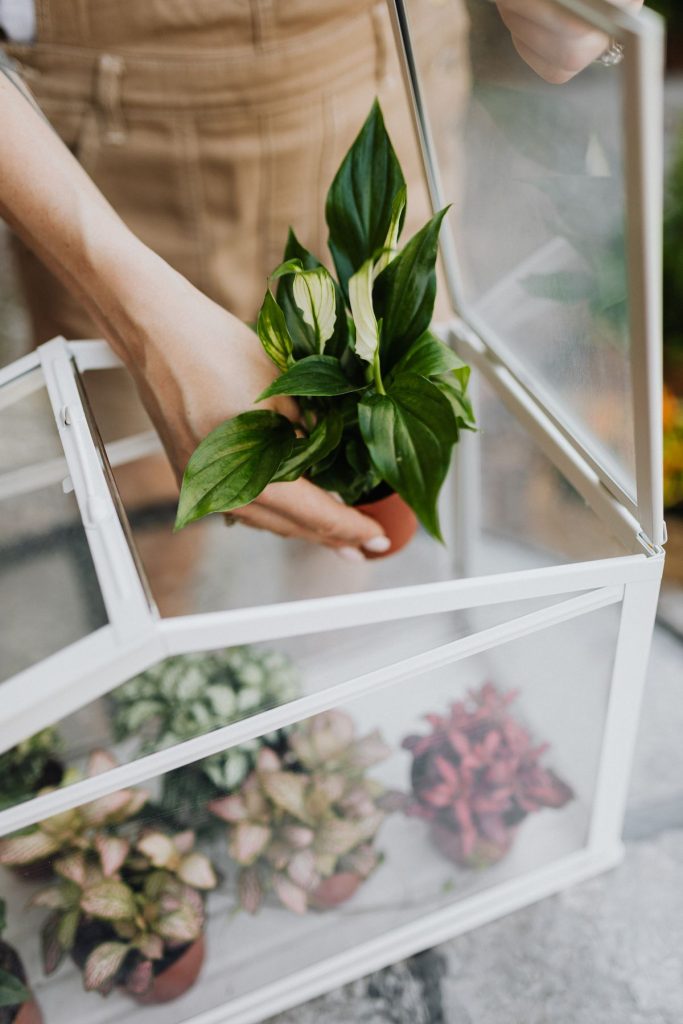
The nerve plant is small with a big personality. Its leaves carry bright pink, red or white veins that look hand drawn. It grows as a groundcover, so it spreads sideways and stays 3 to 8 inches tall. A four inch pot holds it happily for a long time.
Give it bright to medium indirect light. It even does well under fluorescent office lights, which makes it a great desk plant. Keep the soil lightly moist and it stays lush. It loves humidity, so a bathroom shelf with light is a perfect home.
Watch out for its drama. Let it dry out and it faints flat, looking completely dead. Water it and it stands back up within hours. It is the most honest plant you will own. It tells you exactly when it is thirsty. It is also safe for cats and dogs.
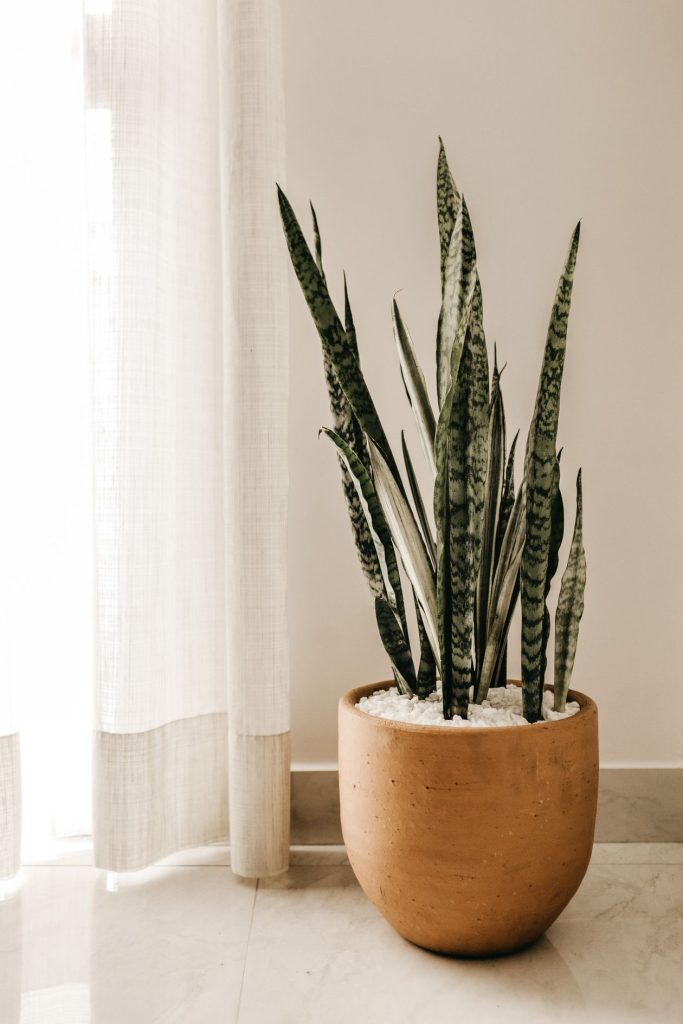
3. Bird’s Nest Snake Plant (Sansevieria ‘Hahnii’)
The bird’s nest snake plant is a true dwarf, not a young tall plant. Its stiff leaves grow in a tight rosette that tops out at 6 to 8 inches tall and about 8 to 10 inches wide. It looks like a small green starburst and it fits a nightstand, a desk or a narrow shelf.
It handles low light to bright light and it asks for very little water. Let the soil dry fully between drinks, about every two to three weeks. Its thick leaves store water, so it forgives a forgotten watering far better than most plants.
Watch out for the label. Dwarf snake plant is a marketing term with no rules behind it. Some shops sell young standard snake plants under that name, and those will grow tall once repotted. Look for the cultivar name ‘Hahnii’ on the tag. That name means a genetically compact plant. One more note. It is toxic to pets, so keep it where curious cats and dogs cannot chew it.
4. Zebra Haworthia (Haworthia fasciata)
Zebra haworthia is a tiny succulent with white stripes that look painted on. It forms a tight rosette just 3 to 5 inches tall, which makes it one of the smallest plants on this list. It fits a windowsill, a desk corner or a narrow shelf with room to spare.
Here is the surprise. Most succulents want full sun, but haworthia prefers bright indirect light. Direct afternoon sun can turn its leaves brown. Water every two to three weeks and let the soil dry fully between drinks. It grows slowly, so it stays in the same small pot for years.
Watch out for overwatering, the one thing that kills it. A gritty succulent mix and a pot with drainage holes keep it safe. It is non toxic to cats and dogs, which is rare for a succulent this good looking.
5. Chinese Money Plant (Pilea peperomioides)
The Chinese money plant is famous for its round coin shaped leaves, each one a flat disc on a thin stem. The whole plant forms a tidy umbrella that reaches 8 to 12 inches tall. It looks designed, like it was placed by a stylist, and it needs no help to hold its shape.
It likes bright indirect light and a weekly drink when the top inch of soil dries. Rotate the pot every week or two and it grows evenly instead of leaning toward the window. It stays compact because its stems are short and its leaves stay small.
Watch out for pups. A happy pilea sends up baby plants around its base. They crowd the pot over time, but they are easy to snip off and pot up as gifts. Think of them as free plants, not a problem. It is safe around pets, with no toxicity listed for cats or dogs.
6. Jade Plant (Crassula ovata)
The jade plant is the slow and steady member of this list. Its thick oval leaves and woody stems give it the look of a tiny tree. In a small pot it stays 12 to 18 inches tall for years. Given decades and a big pot it can reach three feet, but that is a long way off and fully in your control.
It wants the brightest spot you have, with a few hours of direct sun if possible. Four hours of direct sun keeps it compact and can blush the leaf edges red. Water every two to three weeks and let the soil dry fully between drinks. Wrinkled leaves mean thirsty. Soft yellow leaves mean too much water.
Watch out for low light. A jade in a dim corner stretches toward the window and its stems go weak and floppy. Light is the whole secret with this plant. Keep it away from pets, since jade is toxic to cats and dogs if eaten.
7. String of Pearls (Curio rowleyanus)
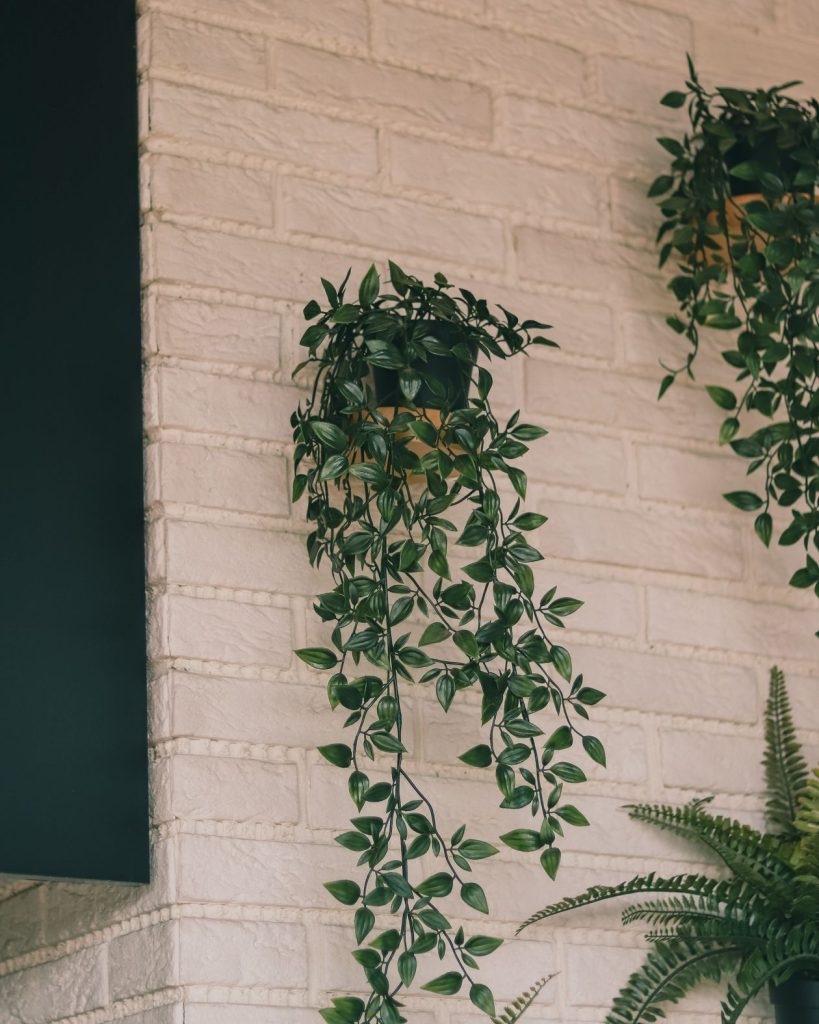
String of pearls is the only trailing plant on this list, and it earns its place. The pot stays small and shallow while the strands spill down like a beaded curtain. Each bead is a round leaf that stores water. Strands reach one to three feet long, so it gives you a lot of plant for very little shelf space.
It needs more light than most trailing plants. Bright indirect light with a few hours of gentle morning sun keeps the pearls plump and tight. The top of the pot needs light too. Hang it high and the crown sits in shadow, which thins the strands at the base. Water only when the pearls start to pucker, about every two to three weeks.
Watch out for the crown. Water sitting on top of the soil rots the stems where they meet the pot, and that rot spreads fast. Bottom watering is the safest fix. Set the pot in a saucer for 10 to 15 minutes and let it drink from below. It is toxic to pets, so hang it out of reach. If you want display ideas, our guide to hanging planters for small spaces has easy options that work.
8. Air Plant (Tillandsia ionantha)
The air plant needs no pot and no soil, which makes it the smallest footprint on this list. A healthy rosette is just 2 to 4 inches across. It drinks through its leaves, so it lives happily in a shell, on a piece of driftwood or in an open glass globe.
Give it bright indirect light and a weekly soak. Submerge it in room temperature water for 20 to 30 minutes, then shake it out and dry it upside down. It must dry within a few hours. Good air movement matters as much as water.
Watch out for trapped water. Water sitting in the center of the rosette is the usual cause of rot. Never seal it in a closed jar for long. An open spot with moving air keeps it safe. It is non toxic to cats, dogs and people, and it even flowers with a bright red bract when mature.
9. African Violet (Saintpaulia)
The African violet is the classic small flowering plant, and it has earned that title over decades. Soft fuzzy leaves form a rosette 6 to 9 inches across, and it blooms for months at a time in pink, purple, white or blue. Few compact plants give you flowers like this one does.
It likes bright filtered light and it grows well under ordinary fluorescent lights, which is why it thrives on office desks. Water from below once a week and keep the leaves dry. A saucer under the pot does the job. Miniature cultivars like ‘Little Maya’ stay even smaller if your space is truly tiny.
Watch out for cold water on the leaves. It leaves pale spots that do not fade. Room temperature water in the saucer avoids the problem entirely. It is non toxic to cats and dogs, so it is safe on a low shelf.
10. Echeveria (Echeveria elegans)
Echeveria looks like a small sculpture. Its pale blue green leaves layer into a perfect rosette just 3 to 5 inches across. The Mexican snowball variety stays neat and symmetrical for years, which makes it a lovely desk centerpiece.
It wants more light than most desk plants. Full sun to bright light keeps the rosette tight and the colors crisp. Water every two to three weeks and let the soil dry fully between drinks. A gritty succulent mix and a pot with drainage holes are non negotiable.
Watch out for stretching. An echeveria in low light reaches for the window and loses its tight shape. Move it to your brightest sill and new growth comes back compact. It is non toxic to cats and dogs.
11. Dwarf ZZ Plant ‘Zenzi’ (Zamioculcas ‘Zenzi’)
The standard ZZ plant grows three to four feet tall, which is far too big for this list. The ‘Zenzi’ cultivar is a different story. Its zigzag stems pack tight together and top out at 10 to 12 inches. It has the same glossy dark leaves and the same tough attitude in a desk sized package.
It handles low to bright indirect light and it stores water in thick rhizomes under the soil. Water just once a month and let the soil dry fully between drinks. It is one of the most forgiving plants you can own, which makes it a great first plant for a small space.
Watch out for overwatering. Soggy soil rots the rhizomes and the plant collapses without warning. When in doubt, wait another week. Keep it away from pets. It contains calcium oxalate, which irritates mouths if chewed.
12. N’Joy Pothos (Epipremnum ‘N’Joy’)
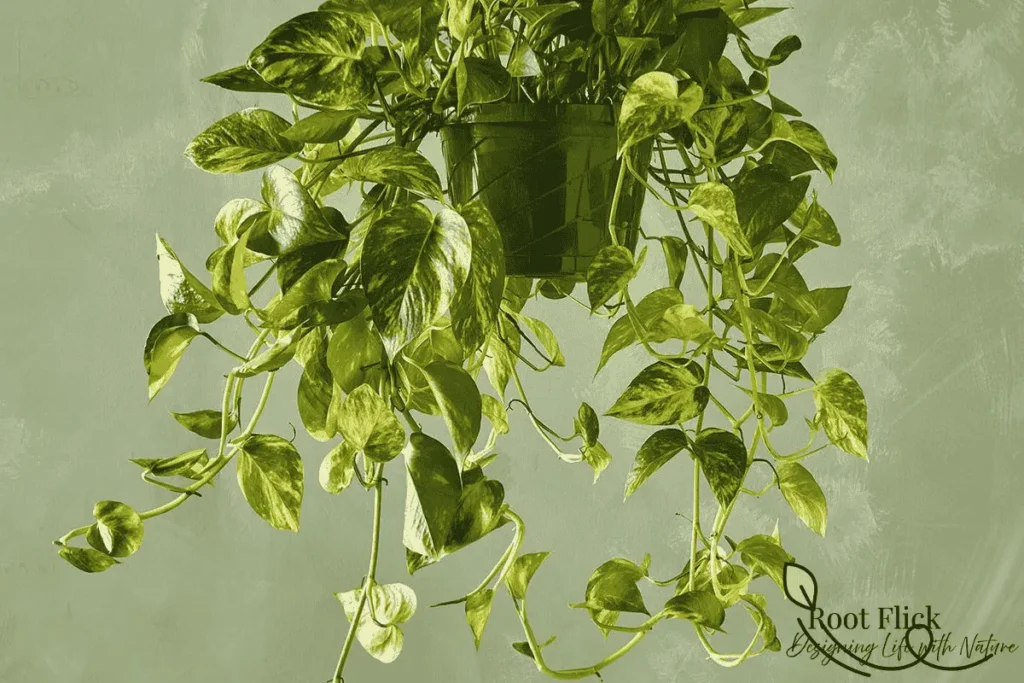
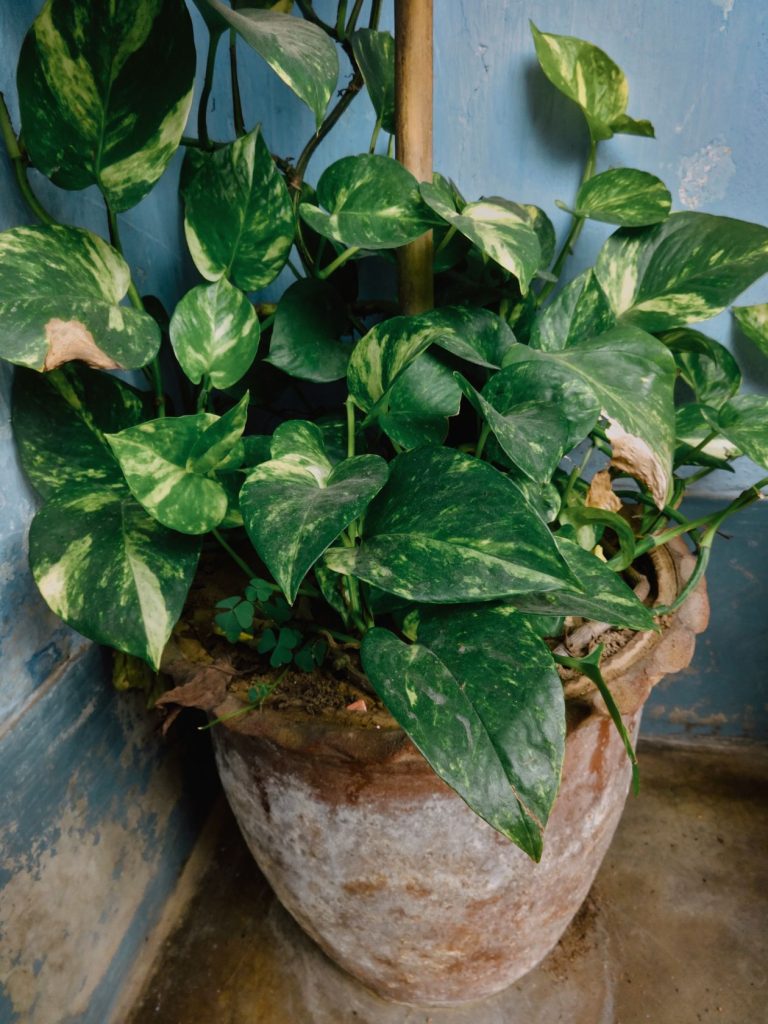
Golden pothos can trail eight feet and fill a wall. N’Joy stays compact. Its leaves are smaller, its internodes are shorter, and its vines rarely reach more than 18 inches before the plant branches back on itself. In a small pot it sits at 8 to 12 inches tall with a tidy trailing edge.
It likes medium to bright indirect light and a weekly drink when the top inch dries. The green and white variegation is the whole show, and good light keeps it crisp. Pinch the vine tips and it branches into a fuller plant instead of one long strand.
Watch out for low light. In a dim corner N’Joy loses its white variegation and its leaves turn plain green. Move it closer to a window and new leaves come back variegated. It is toxic to cats and dogs, so a high shelf is the safest spot.
How to Keep Any Plant Compact
Picking a compact plant is half the job. The other half is keeping it that way. Four habits do most of the work, and none of them takes more than a few minutes a year.
First, pot size. A pot that is only one to two inches wider than the root ball keeps growth in check. A big pot invites a growth spurt and holds wet soil that rots roots. Repot only when roots circle the bottom, and go up just one size.
Second, prune with a purpose. Snip leggy stems just above a leaf node and the plant branches below the cut. You get a fuller plant, not a taller one. Late winter or early spring is the best time, just before growth starts. Never remove more than a quarter of the plant at once. If you want the full method, our indoor citrus tree pruning guide walks through where to cut and what to leave alone.
Third, root pruning. Every two to three years, slide the plant out and trim about a quarter of the outer roots, then replant in the same pot with fresh soil. Trim the top by about the same amount. The plant stays the same size and gets fresh soil to grow in.
Fourth, light and food. Enough light prevents stretching. A half strength feed once a month in spring and summer is plenty. Feeding all year pushes soft fast growth that outgrows the spot.
| Plant Height | Pot Diameter | Repot When |
| Under 6 in | 3 to 4 in | Roots circle the bottom |
| 6 to 12 in | 4 to 6 in | Water runs straight through |
| 12 to 18 in | 6 to 8 in | Plant wobbles or topples |
| Trailing plants | 4 to 6 in, shallow | Strands thin at the crown |
5 Mistakes That Make Small Plants Outgrow Their Spot
These five mistakes cause most small space plant problems. All five are easy to fix once you spot them.
1. Buying a Young Standard Plant
That cute plant in a four inch pot might be a baby monstera. Check the mature size on the tag before you buy. A plant with no size on the tag is a gamble. Ask the shop for the botanical name and look it up at home.
2. Repotting Into a Big Pot
A big pot feels generous. To a plant it is an invitation to grow fast. Roots fill the space first, then the top follows. Go up just one to two inches at a time and your plant stays in proportion.
3. Starving It of Light
A plant in a dim corner stretches toward the nearest window. The stems get long and weak, the leaves spread thin, and the compact shape is gone. Move it closer to the light and new growth comes back tight. Light is the cheapest growth control you own.
4. Feeding All Year
Fertilizer is growth fuel. Feeding through winter pushes soft leggy growth when the plant should be resting. Feed at half strength from spring to early autumn and skip winter entirely.
5. Never Pruning
Plants branch where you cut them. A plant you never prune grows one long stem. A plant you pinch twice a year grows into a full bushy shape. Two minutes with clean scissors in spring changes the whole look.
Where to Put Them
A compact plant earns its place when it sits where you see it every day. Desks, shelves, windowsills and bedside tables are the natural homes for this list. Group two or three together and they look like a tiny garden instead of a lonely pot.
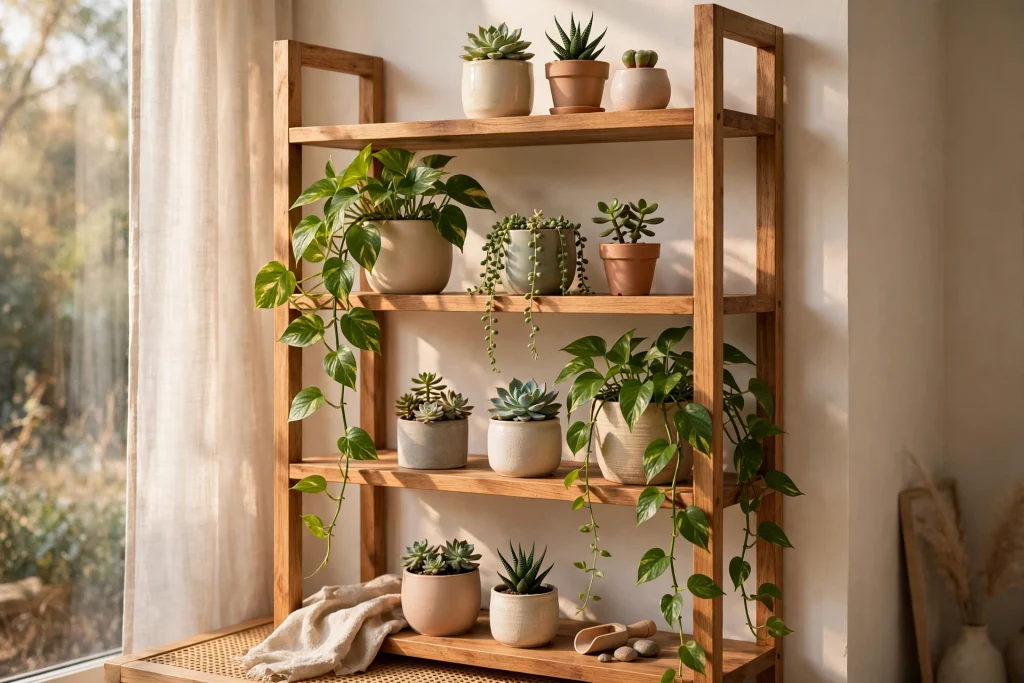
Shelves deserve a plan. Put the tallest plant at the back, trailing plants at the edge, and leave breathing room between pots. Our guide to plant shelf styling ideas shows how to make a shelf look designed instead of cluttered.
Think vertically too. Trailing plants and air plants use wall space your floor plants cannot reach. Hanging planters free up the shelf entirely. Our indoor garden layouts for small spaces guide has room by room plans for tiny homes.
FAQs About Compact Plants for Small Spaces
What is the smallest indoor plant that stays small?
Air plants and haworthia are the tiniest here. A Tillandsia ionantha rosette is 2 to 4 inches across and needs no pot at all. Zebra haworthia stays 3 to 5 inches tall. Both fit a desk corner with room to spare.
Do small plants stay small forever?
True dwarfs do. Cultivars like ‘Hahnii’, ‘Zenzi’ and ‘N’Joy’ are bred to stay compact at maturity. Standard species in small pots stay small for years but may slowly outgrow the spot. Pot size and pruning keep them in check.
Can I keep a plant small by leaving it in a small pot?
Yes, up to a point. A snug pot slows growth and that is a real tool. But a rootbound plant still needs fresh soil and a root trim every two to three years. A tiny pot with old soil is neglect, not care.
Which compact plants are safe for cats and dogs?
Peperomia, fittonia, pilea, haworthia, echeveria, African violet and air plants are all non toxic to pets. Snake plant, pothos, string of pearls, jade and ZZ are toxic or irritating if chewed, so keep those on high shelves.
Which compact plant needs the least light?
The dwarf ZZ ‘Zenzi’ and the bird’s nest snake plant handle low light best. Both cope with a north facing room or a desk away from the window. Even they grow better with some bright indirect light.
How often should I water compact plants?
It depends on the plant, not the size. Succulents like haworthia, echeveria and jade want water every two to three weeks. Leafy plants like peperomia, pilea and fittonia want a weekly drink. Always check the soil first. Small pots dry fast, but wet roots rot fast too.
Why is my small plant suddenly growing tall and leggy?
Low light is the usual cause. The plant stretches toward the nearest window and the stems go weak. Move it to brighter light and pinch the leggy tips. New growth comes back compact and full.
Can compact plants live in a bathroom with no window?
A windowless bathroom is tough for any plant. Fittonia and African violet cope best under a bright bathroom light left on for part of the day. For a truly dark bathroom, rotate two plants and swap them every week or two so each gets real light.
Do compact plants clean the air?
Not in any meaningful way. A few small plants cannot change the air in a room. The famous NASA study used sealed chambers, not living rooms. Grow them because they look good and lift your mood. That is reason enough. Our look at whether NASA air purifying plants really work explains what the study actually found.
What is the easiest compact plant for a beginner?
The dwarf ZZ ‘Zenzi’ is the hardest to kill. Monthly watering, any light except direct sun, and it still looks polished. The bird’s nest snake plant is a close second. Start with one of those and add a peperomia once you feel confident.
Small Plants, Big Payoff
Small plants ask for little and give a lot. A shelf of compact green turns a plain room into a place that feels alive. Start with two or three from this list, give them the right light, and let them do their quiet work. Your smallest room might become your favorite one.