1. String of Hearts
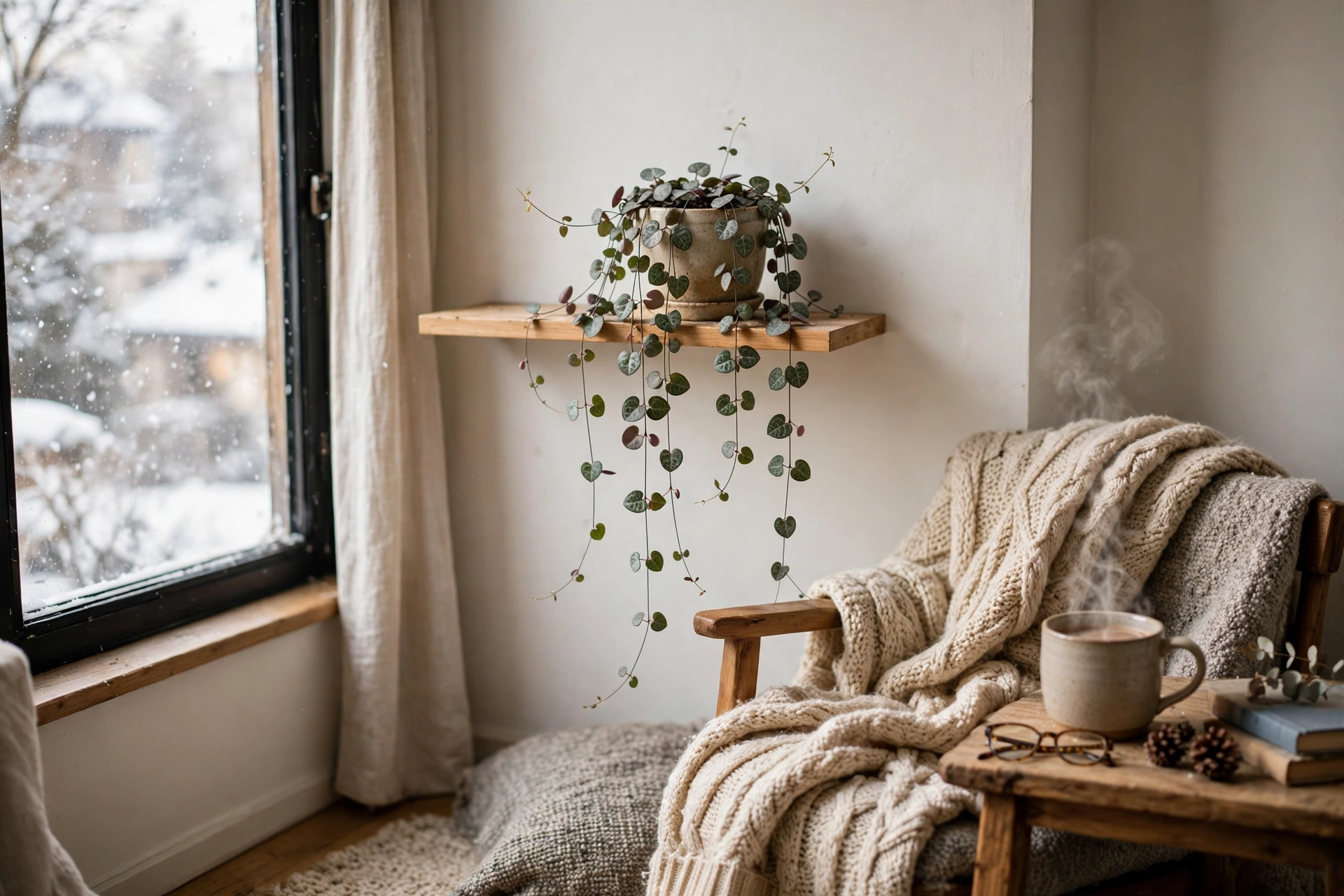
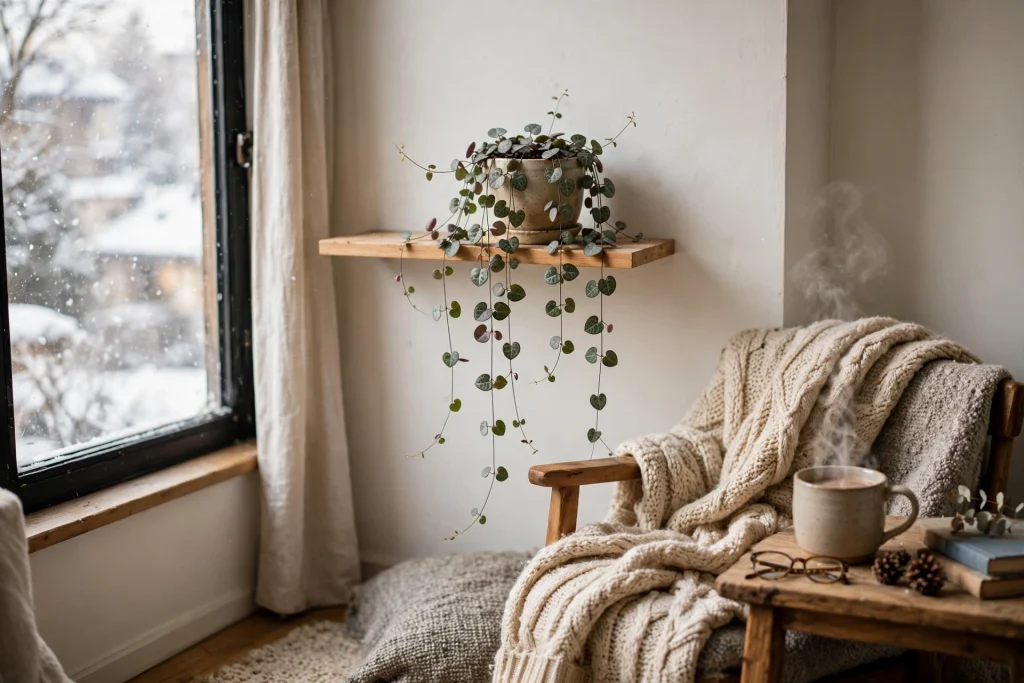
Okay, so here’s the thing! String of hearts turns a plain shelf into the prettiest spot in the room, and it barely asks for anything back. Its thin vines spill over the edge, and every tiny heart-shaped leaf wears a silver pattern with a purple underside. Bright indirect light keeps the leaves close together and the pattern crisp and vivid. Water only when the top 1 to 2 inches of soil feel dry, and stretch watering to every three weeks in winter. The ASPCA lists it as non-toxic to cats and dogs, so curious pets are safe around those dangling vines!
One tip: drape the vines over the shelf edge instead of letting them pool on the shelf, since hanging strands catch more light and look far better!
2. Burro’s Tail
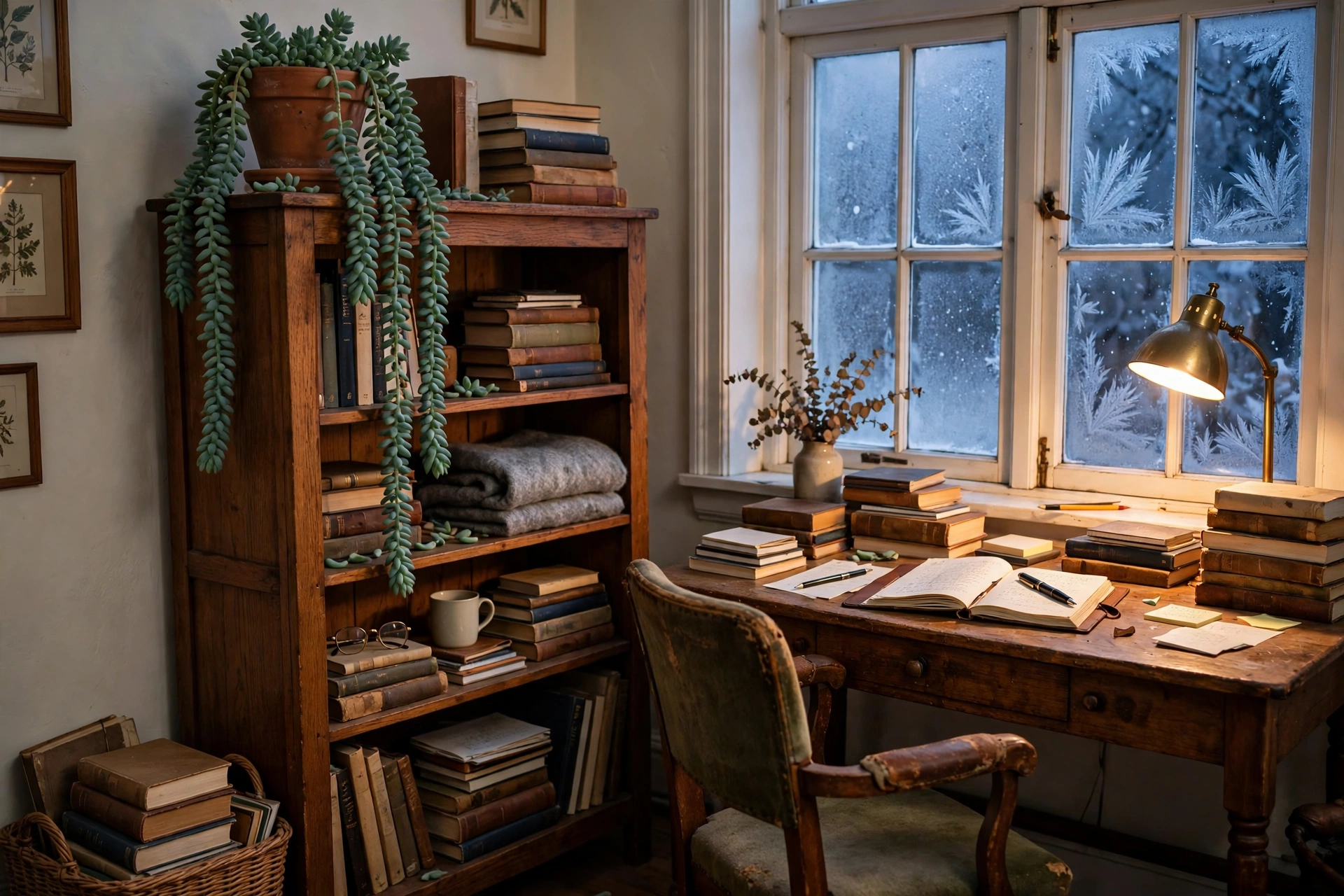
Burro’s tail is the drama queen of shelf plants, and I say that with love! Its thick stems hang in ropes of plump blue-green leaves, and a mature plant trails 2 to 3 feet. Bright light keeps the leaves tight and plump, and a few hours of gentle direct sun suits it best. Let the soil dry out completely between waterings, roughly every two to three weeks, and keep it above 55 degrees through winter. Those plump leaves are delicate, so pick its perfect spot once and let it shine there! Pet owners can relax, since the ASPCA lists burro’s tail as non-toxic to cats and dogs.
One tip: lay any fallen leaves on dry soil, since each plump leaf can root and grow into a brand-new plant!
3. String of Turtles
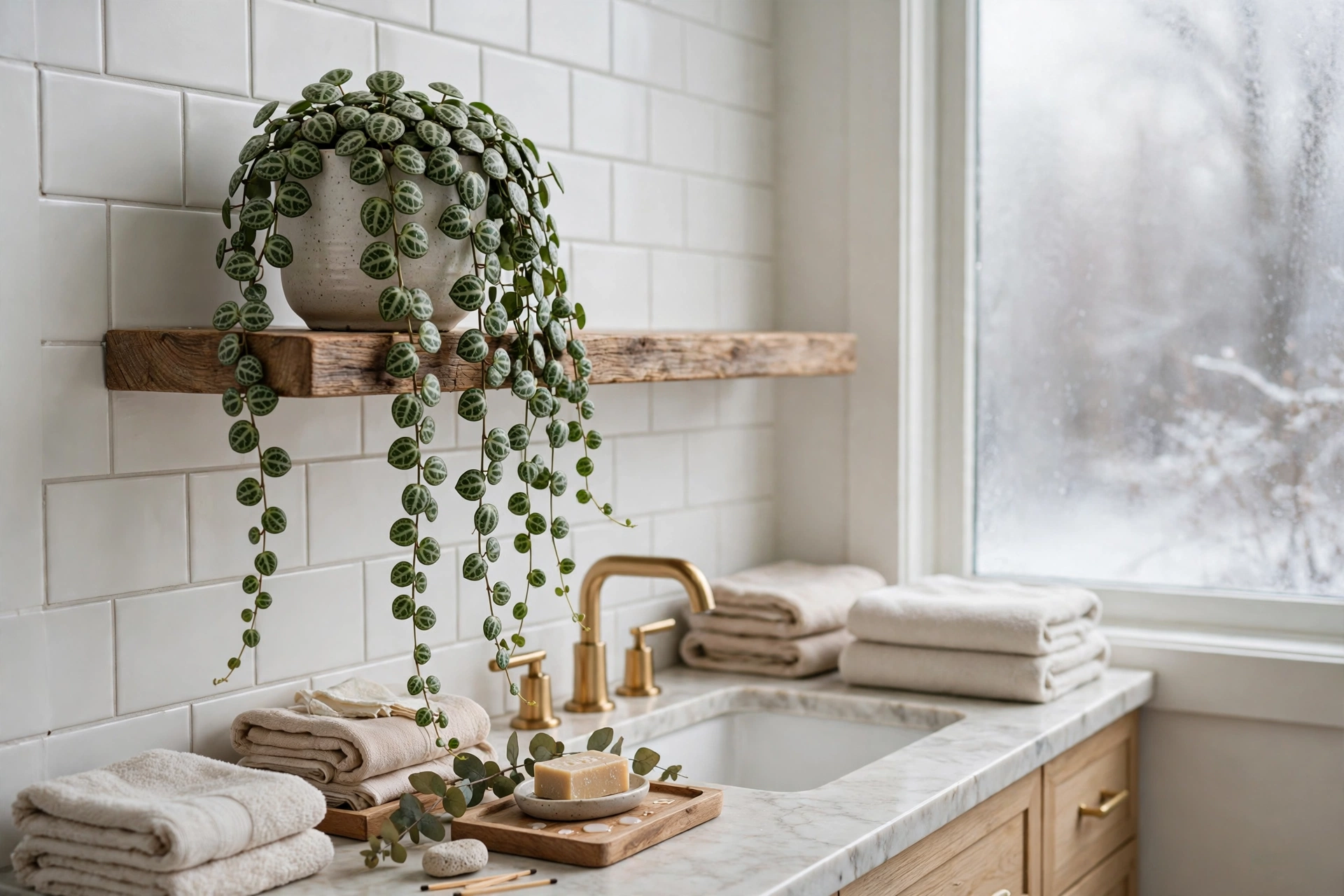
String of turtles is proof that small can steal the whole show! Each round leaf is smaller than your thumbnail and wears a pale turtle-shell pattern. Thin red stems trail about a foot over the shelf edge. Plenty of indirect light keeps the pattern crisp and the stems neat. Water once the top 1 to 2 inches of soil feel dry, and ease off in winter. Moist air near 50 percent humidity keeps the leaves plump, so a bathroom shelf suits it well. Keep it between 68 and 75 degrees, away from cold drafts. The ASPCA lists it as non-toxic to cats and dogs, wonderful news for pet owners!
One tip: skip the mister and set the pot on a pebble tray, since dry leaves stay healthy and the tray lifts humidity instead.
4. Tradescantia Zebrina
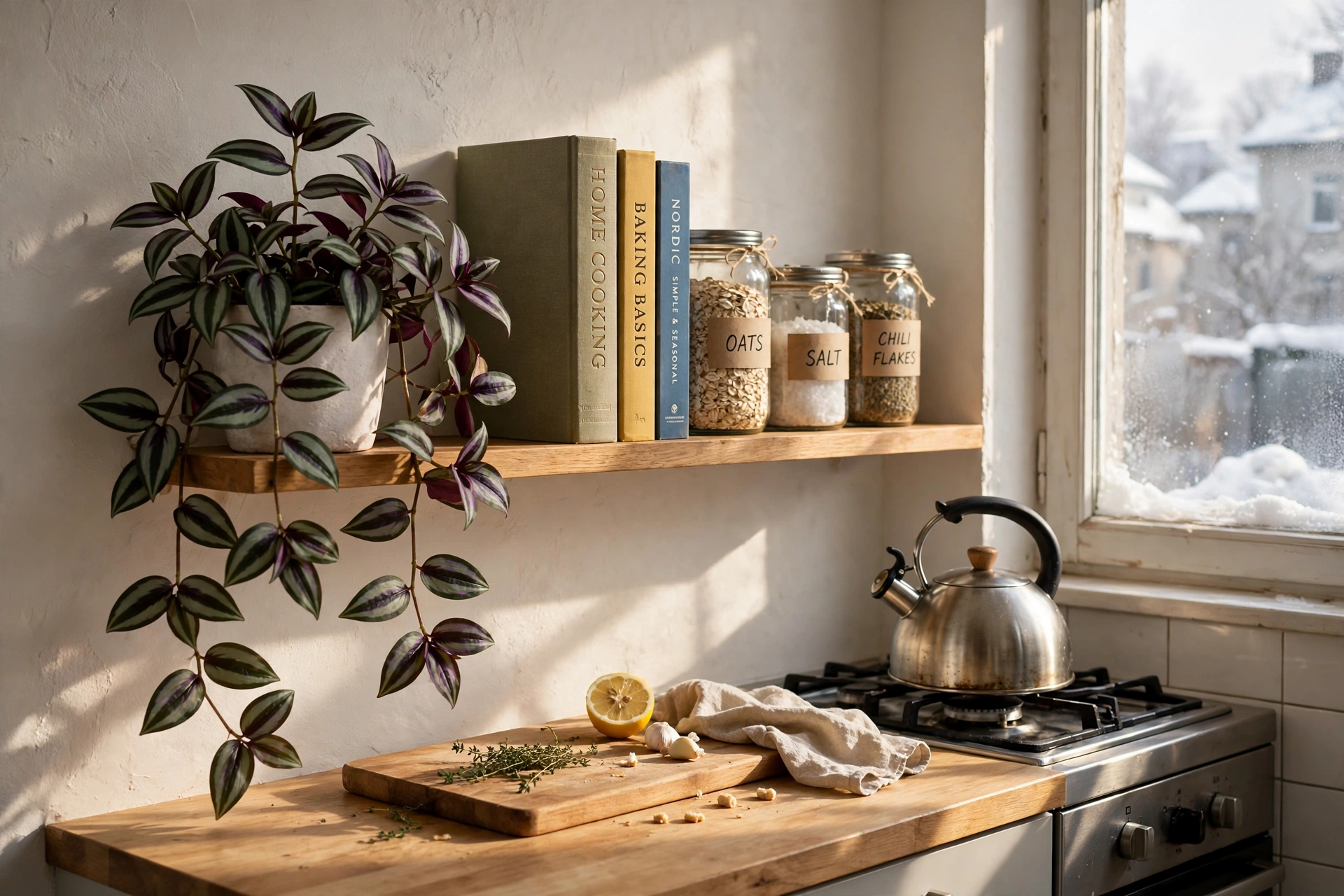
Tradescantia zebrina is the overachiever of trailing plants, and it grows so fast you can almost watch it! Its pointed leaves wear bold silver stripes over deep purple, and the stems spill several feet. Strong light keeps those stripes vivid and the purple deep. Water when the top of the soil feels dry, and ease off in winter when growth slows. A quick pinch of the tips keeps the stems full and lush! Warm rooms suit it best, so keep it above 50 degrees and it stays happy. The ASPCA lists inch plant as toxic to cats and dogs, so hang it high where it looks its best!
One tip: poke trimmed stem tips straight back into the pot, since they root fast and fill the top in weeks!
5. Fishbone Cactus
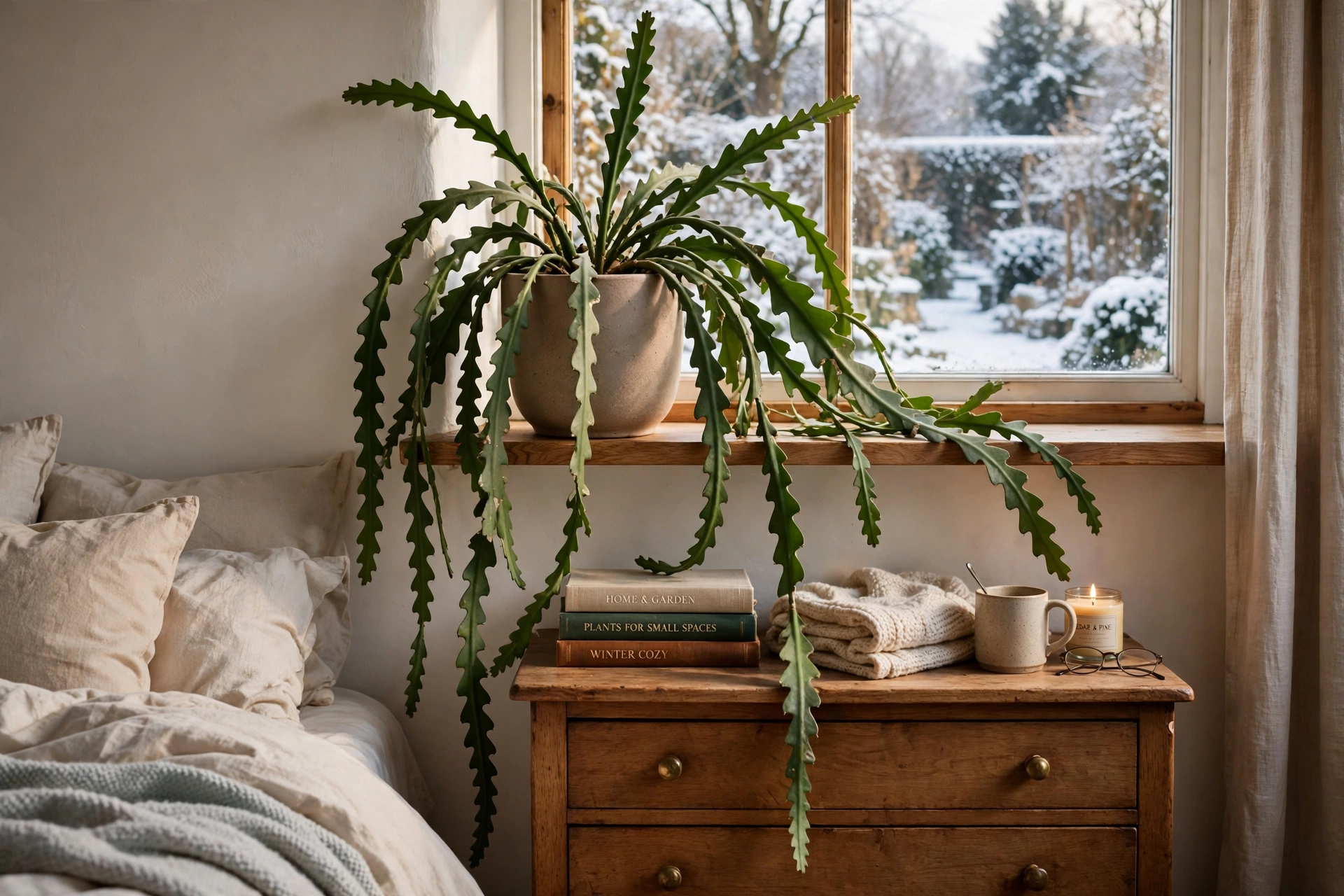
Fishbone cactus looks like it wandered in from a geometry lesson, and I mean that as a compliment! Its flat stems zigzag like a fish skeleton and spill over a shelf edge. Bright filtered light keeps the stems thick and the zigzags crisp and bold. Water when the top 1 to 2 inches of mix feel dry, and stretch the gap in winter when growth slows. This rainforest cactus likes moist air, so a pebble tray helps. Warmth between 60 and 80 degrees suits it, in a cozy spot away from cold glass. The ASPCA lists the Epiphyllum genus as non-toxic to cats and dogs, wonderful news for pet owners!
One tip: check the stem notches for mealybugs in winter, since a quick peek keeps the zigzags healthy and gorgeous!
6. Lipstick Plant
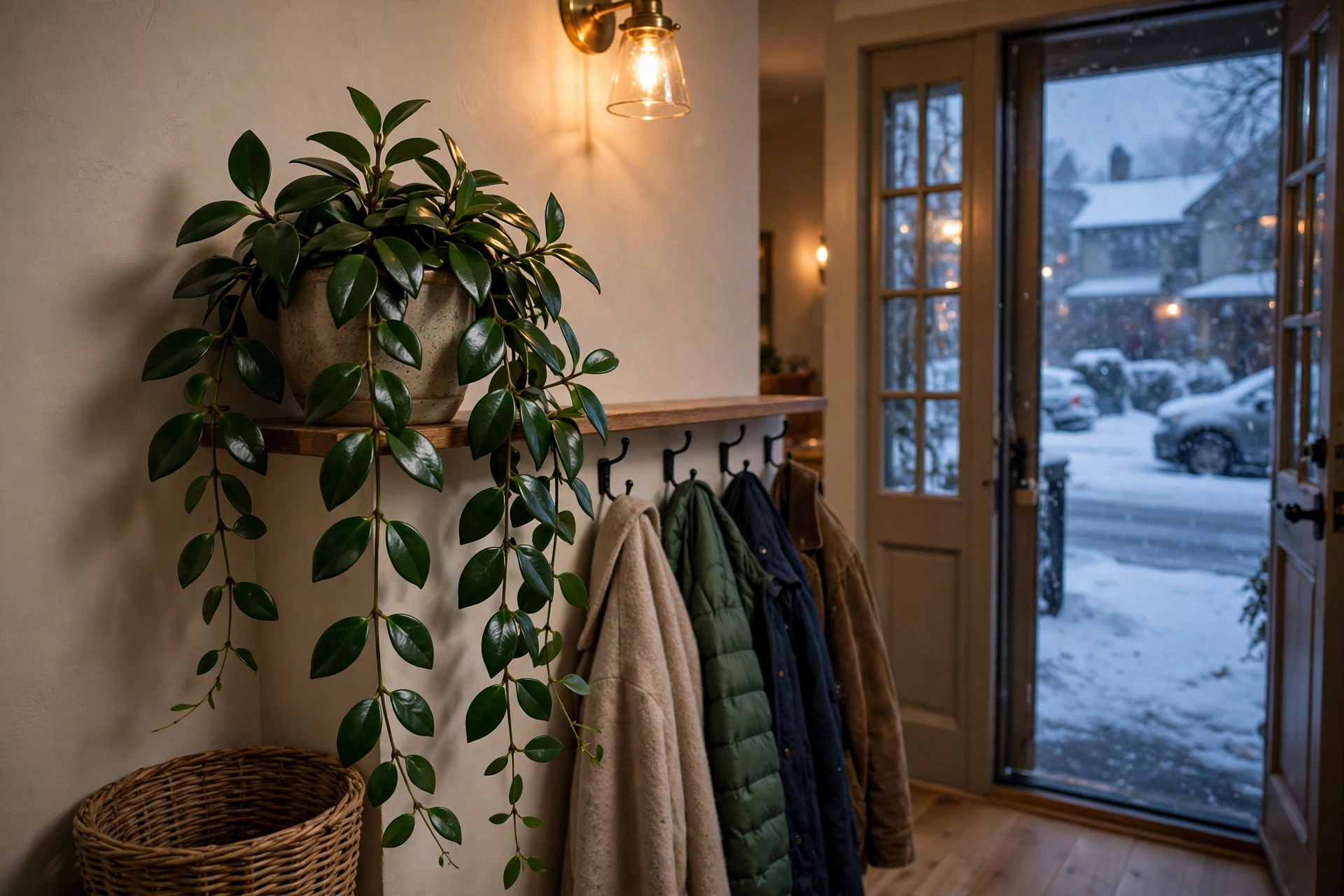
Lipstick plant is the glamorous one on the shelf, and its flowers are the reason! Red tubular blooms push out of dark buds like lipstick from a tube, and the glossy leaves trail in a lush cascade. Bright indirect light keeps it blooming all season. Water freely while it grows, then water sparingly in winter when it rests. Keep it above 60 degrees, in a cozy spot away from cold drafts. Moist air keeps the buds happy, so group it near other plants. The ASPCA lists lipstick plant as non-toxic to cats and dogs, wonderful news for pet owners!
One tip: trim long stems right after flowering, since a quick cut makes the plant branch and bloom even better next time!
7. Baby Tears
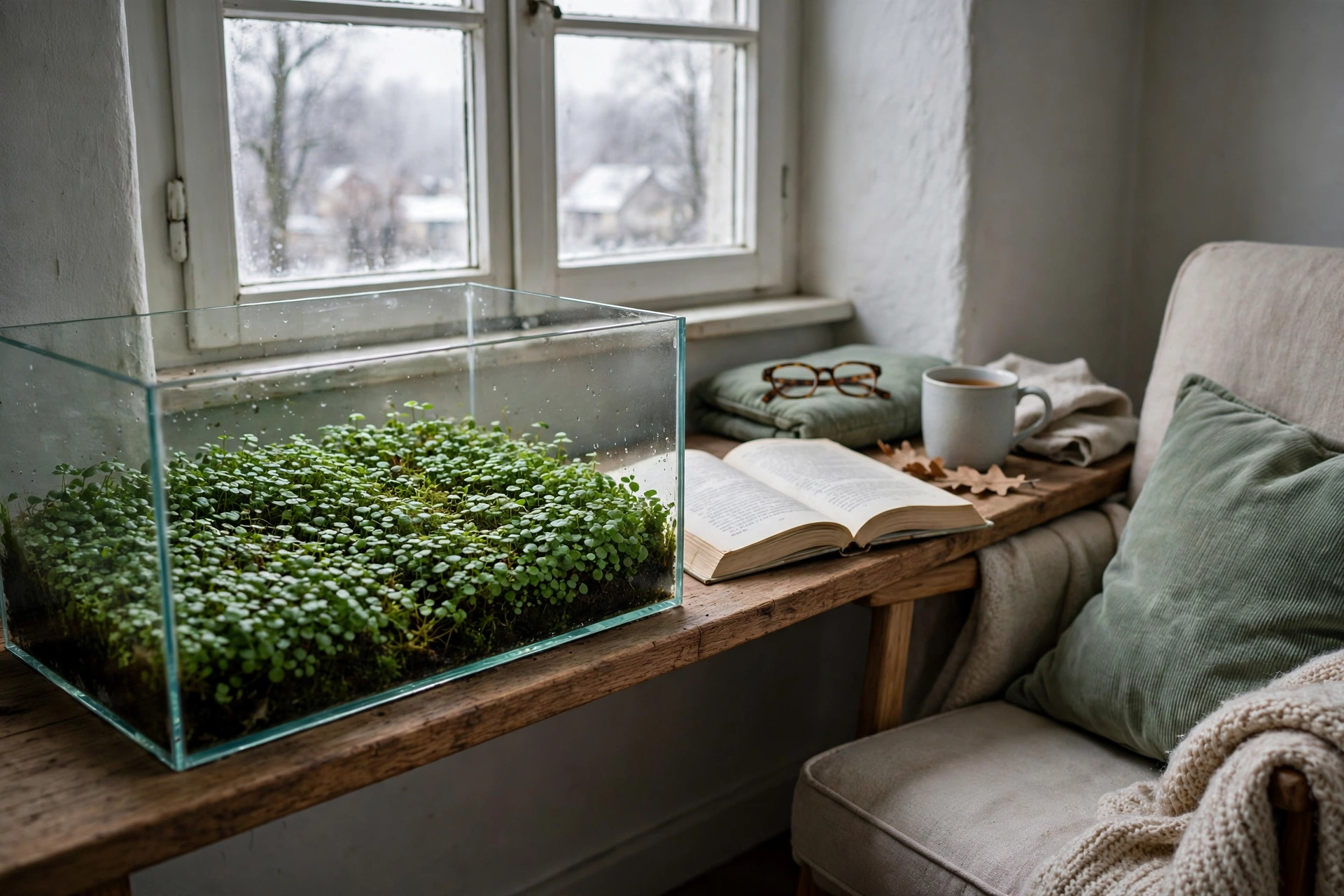
Baby tears is the thirstiest plant on this list, and honestly, it wears it well! Its tiny round leaves pack into a soft green carpet 2 to 4 inches tall, and the mat spills up to 2 feet wide. Bright indirect light keeps the mat dense and full. Keep the soil evenly moist, since steady drinks keep the mat green and happy! Humidity above 60 percent keeps it lush, so a terrarium or steamy bathroom suits it best. Cool rooms suit it too, so keep it away from heat vents and it stays gorgeous. The ASPCA lists baby tears as non-toxic to cats and dogs, wonderful news for pet owners!
One tip: water from the bottom by setting the pot in a shallow dish, since bottom watering keeps the delicate mat fluffy and full!
8. Echeveria
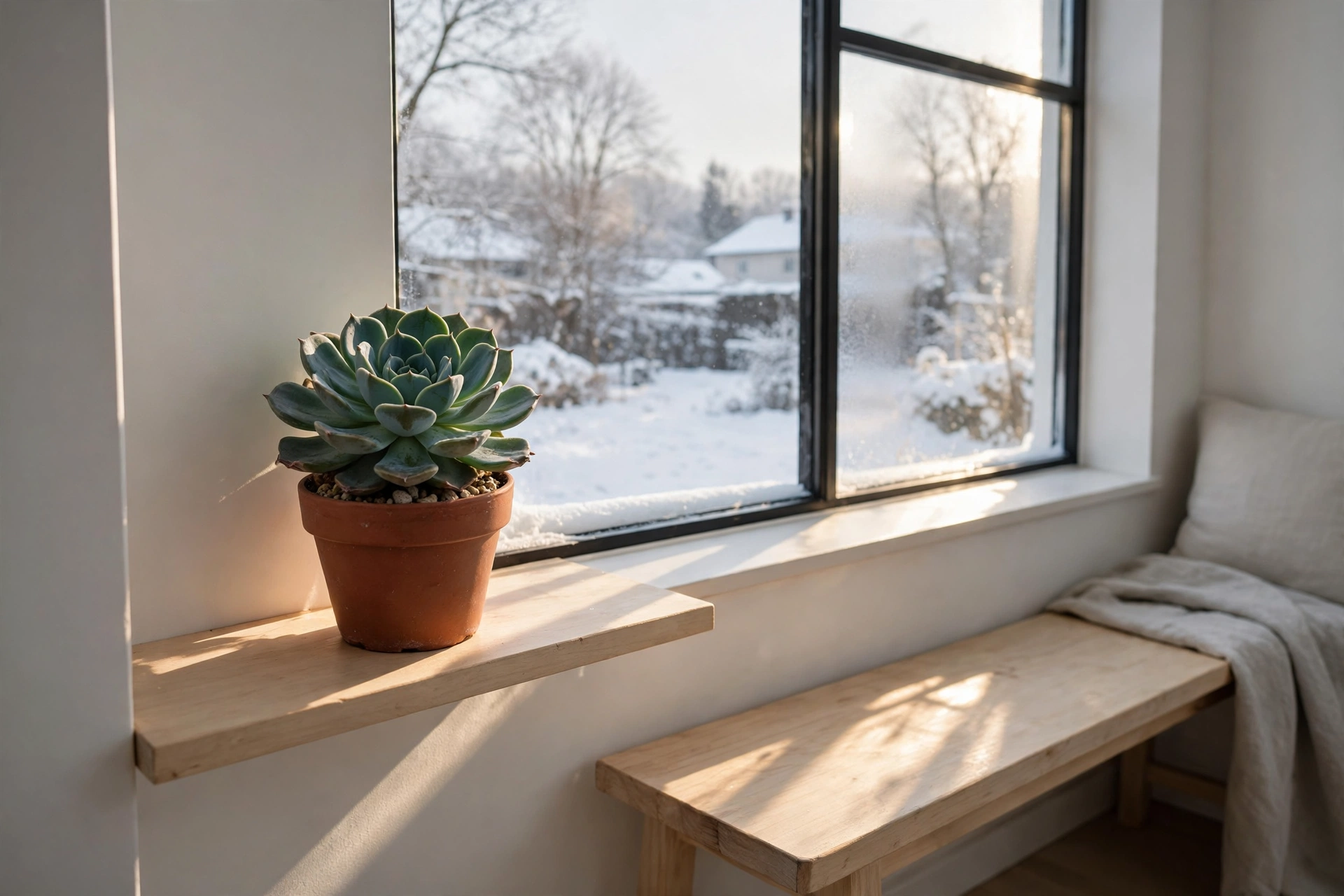
Echeveria is the plant that looks like a flower and refuses to wilt! Its thick leaves stack into a tight rosette 3 to 6 inches across, and the whole plant sits neatly on the narrowest shelf. Bright light is non-negotiable, and it wants several hours of direct sun to stay compact and colorful. Your sunniest shelf keeps the rosette tight and vivid! Water only when the soil has dried out completely, roughly every two to three weeks, and even less in winter. Keep it above 40 degrees, and a frost-free spot keeps it happy! The ASPCA lists echeveria as non-toxic to cats and dogs, wonderful news for pet owners!
One tip: pour water at soil level and never into the rosette, since a dry rosette stays healthy and gorgeous!
9. Kalanchoe
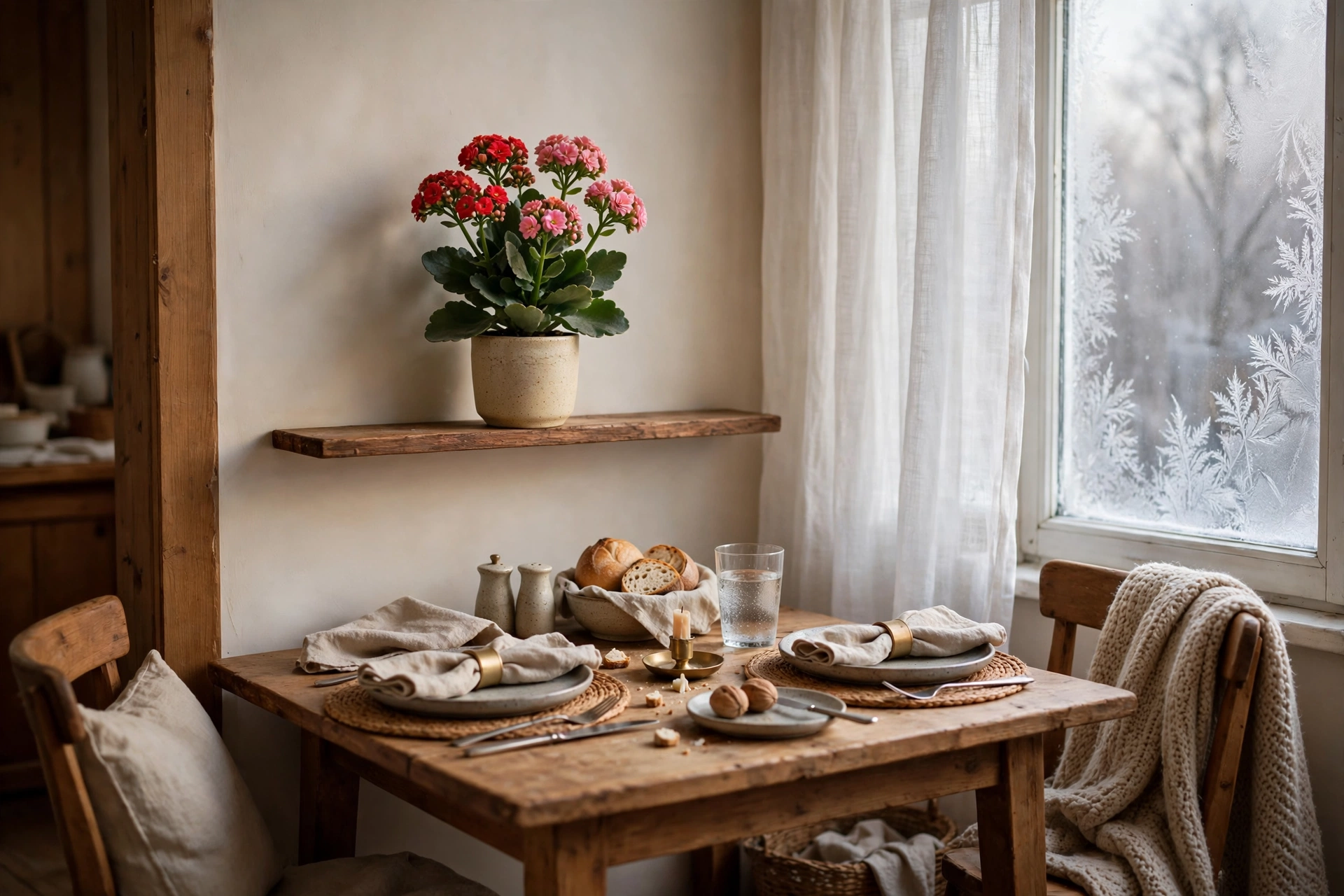
Kalanchoe is the shelf plant that throws a party in the middle of winter! Its clusters of small red, pink, orange, or yellow flowers sit on a compact succulent only 6 to 18 inches tall, and the blooms last for weeks. Bright light keeps it compact and flowering, and a few hours of gentle direct sun suits it best. Let the soil dry between waterings, then water deeply, and water less in winter. Cool nights make the flowers last longer, so a cool room suits it well. The ASPCA lists kalanchoe as toxic to cats and dogs, so keep it high where the blooms shine brightest!
One tip: give it 14 hours of total darkness each night for six weeks in fall, since long nights set the buds for winter blooms!
10. Mistletoe Cactus
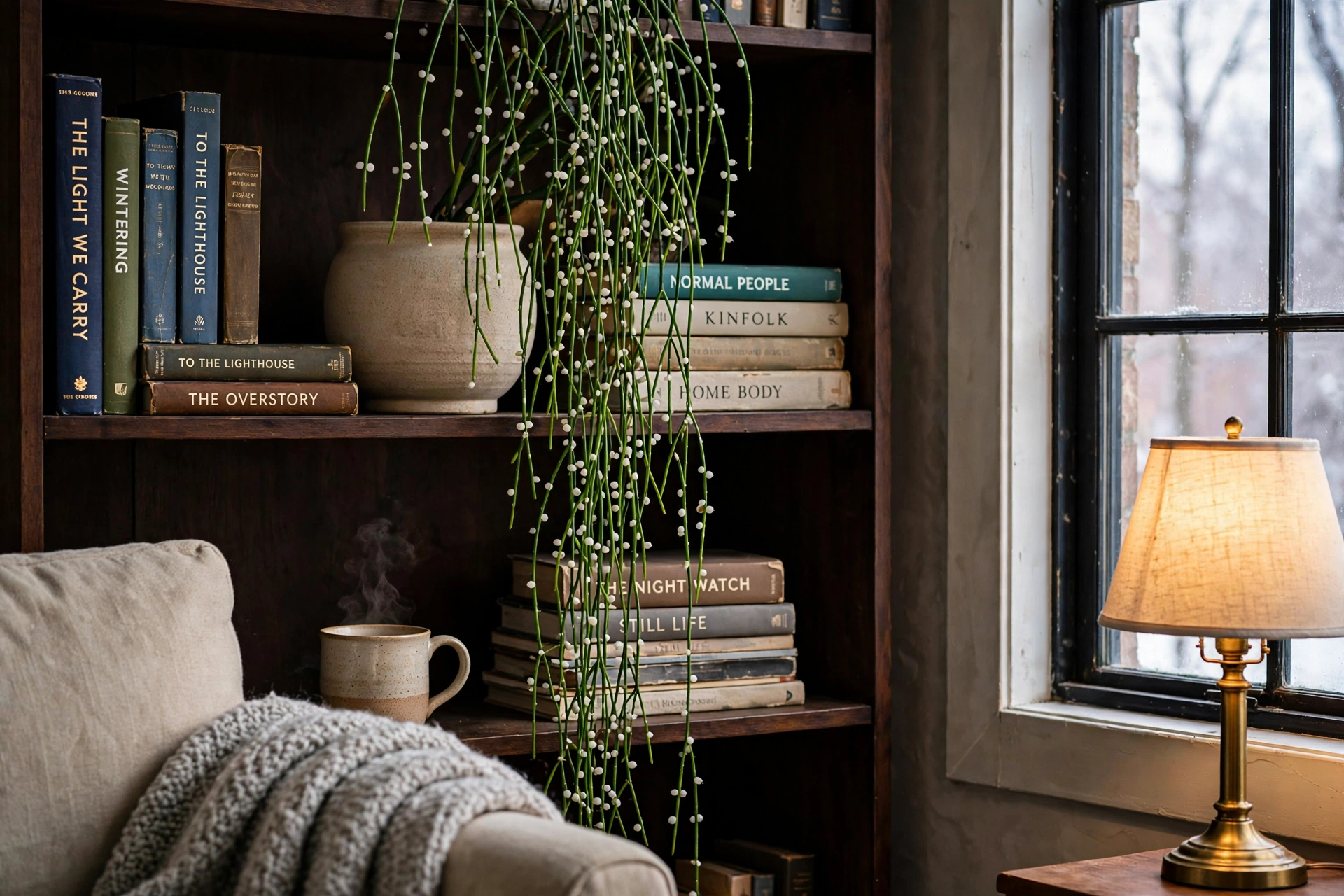
Mistletoe cactus is the cactus that breaks every cactus rule, which is exactly why it shines on a shelf! Its pencil-thin, spineless stems trail 3 to 6 feet in soft green cascades, with tiny white berries after the small cream flowers. Bright filtered light keeps the stems green and gorgeous! Water once the top of the mix feels dry, ease off in winter, and keep a little moisture in the mix. Humidity near 50 percent keeps the stem tips green and fresh. Keep it above 50 degrees, away from cold drafts. The ASPCA lists mistletoe cactus as non-toxic to cats and dogs, wonderful news for pet owners!
One tip: tuck broken stem pieces back into the pot, since they root easily and make the cascade fuller within weeks!