1. Hanging Pothos Curtain by the Window
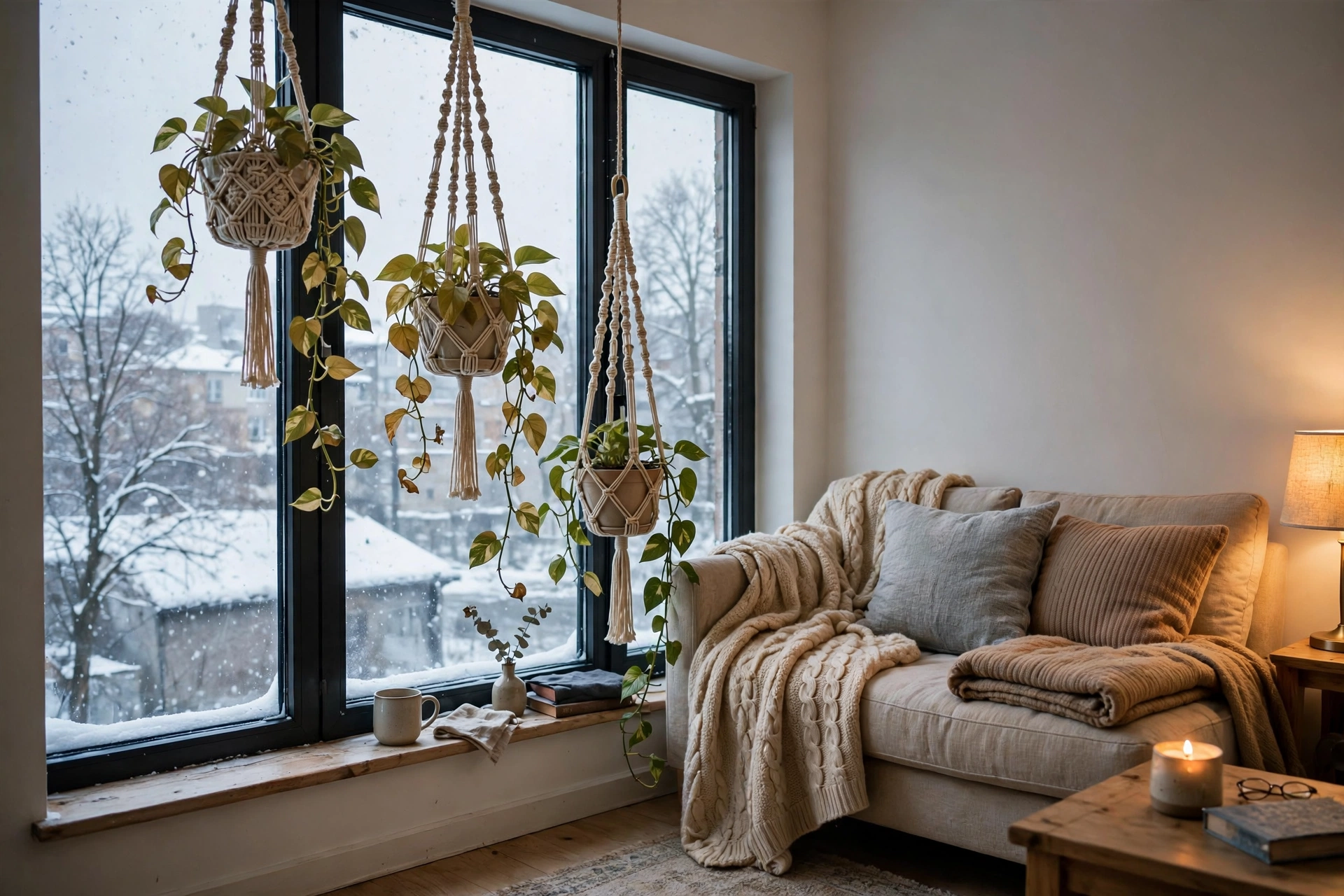
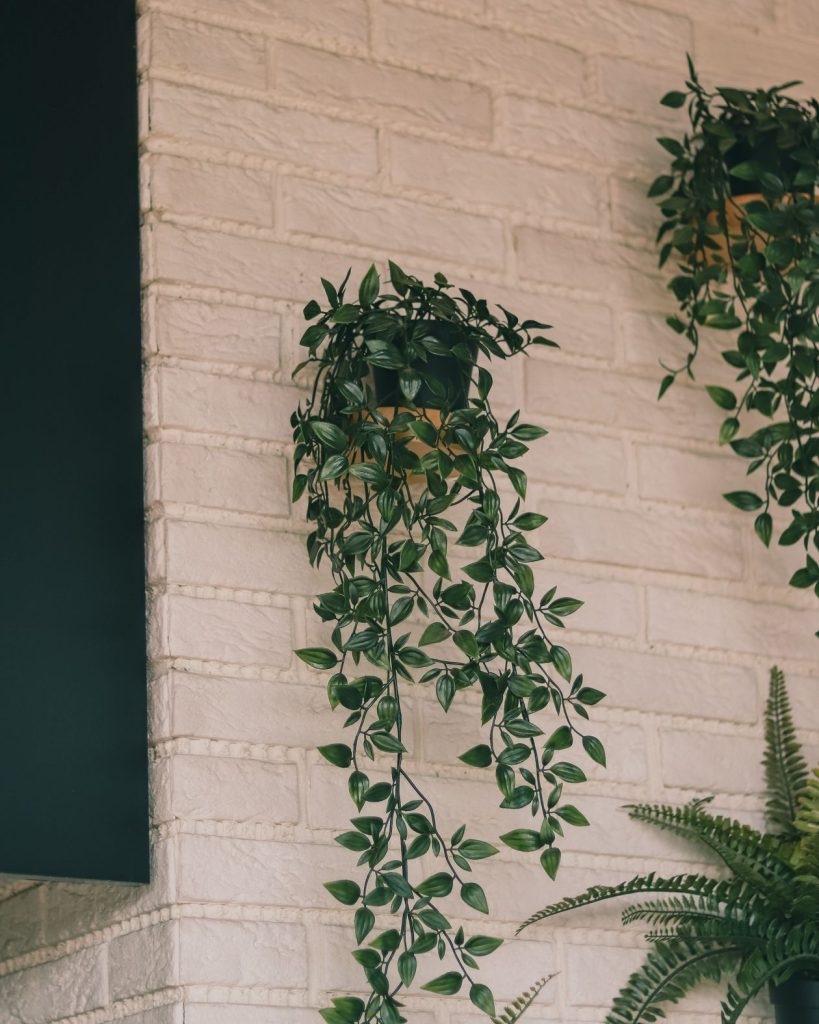
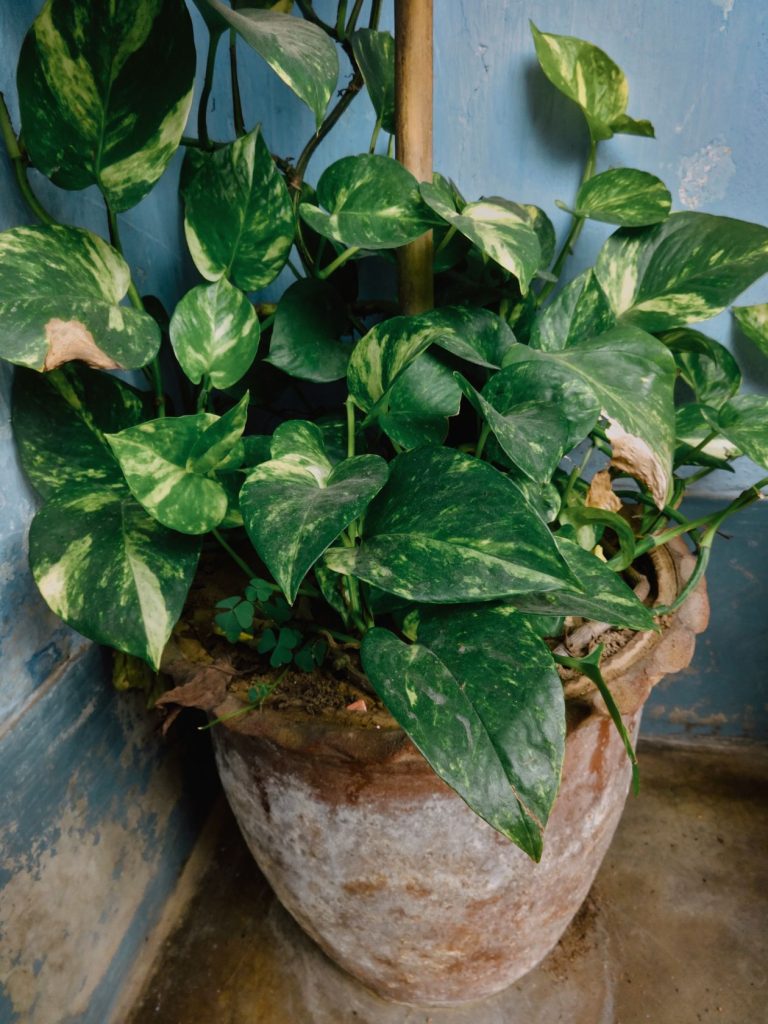
Okay, so here’s the thing. I adore my hanging pothos curtain, which made my window the prettiest spot, using zero floor space. Golden pothos vines trail 6 to 8 feet indoors, and three baskets at different heights make a gorgeous curtain. Bright indirect light keeps the yellow markings crisp, and the plant tolerates lower light, though the markings soften there. Let the soil dry between waterings, then water thoroughly, and water less in winter. Hang the baskets a few inches from the glass, where leaves stay warm and happy. The ASPCA lists pothos as toxic to cats and dogs, so a lovely high spot keeps every pet safe and happy.
One tip: trim the longest vines back to a leaf joint in spring, since a quick haircut keeps the curtain full, lush, and lovely.
2. Floating Shelf Trio Above the Desk
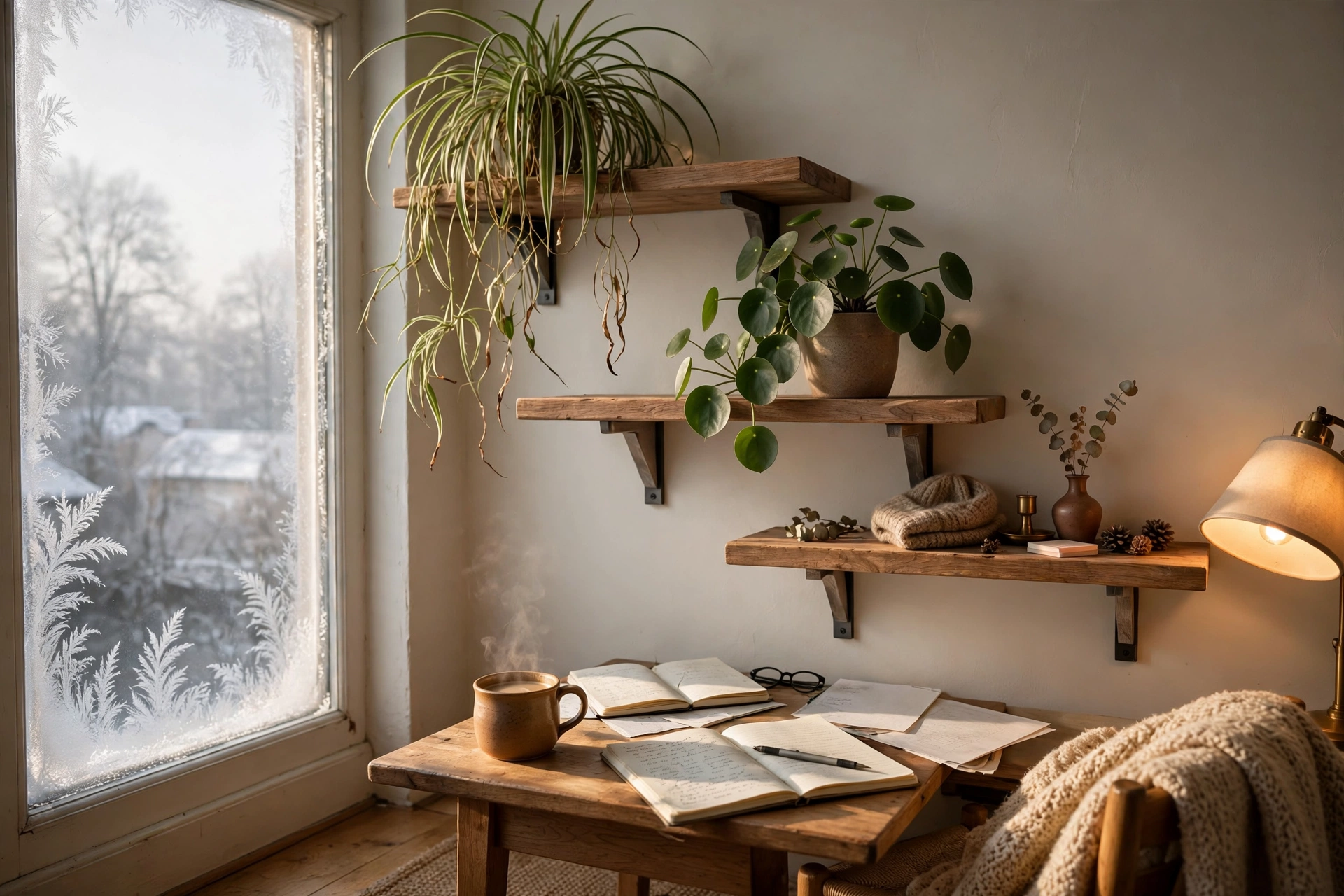
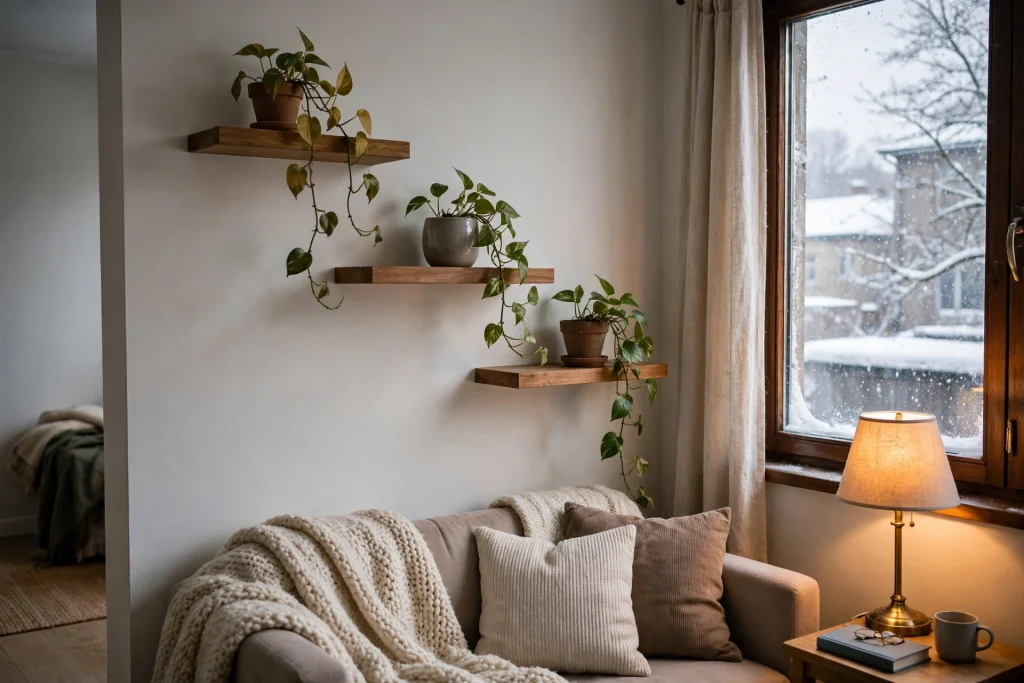
Seriously, three floating shelves turned my desk wall into the happiest little garden, using zero desk space. A spider plant spills gorgeous leaves from the top shelf, while a pilea peperomioides sits below with lovely coin leaves. Spider plants reach 12 to 24 inches tall and wide, and pileas stay compact for a narrow shelf. Medium to bright indirect light suits them both, and a spot away from direct sun keeps every leaf fresh and happy. Water when the top soil feels dry, and water less in winter. The ASPCA lists spider plants and pilea species as non-toxic to cats and dogs, so pet homes can relax and enjoy.
One tip: rotate the pilea a quarter turn each week, since it leans toward the light and a little spin keeps it full, even, and lovely.
3. Windowsill Garden for Violets and Basil
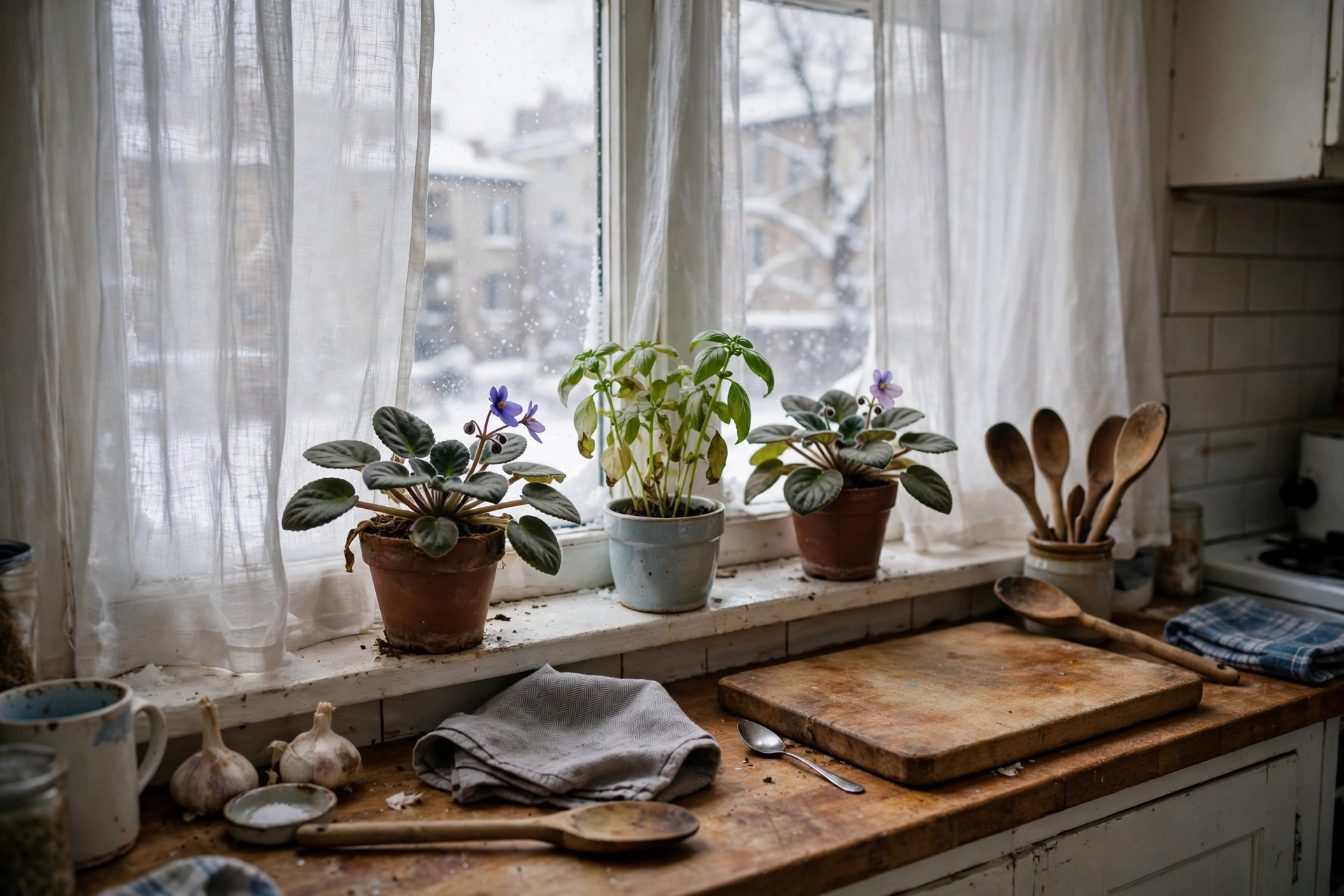
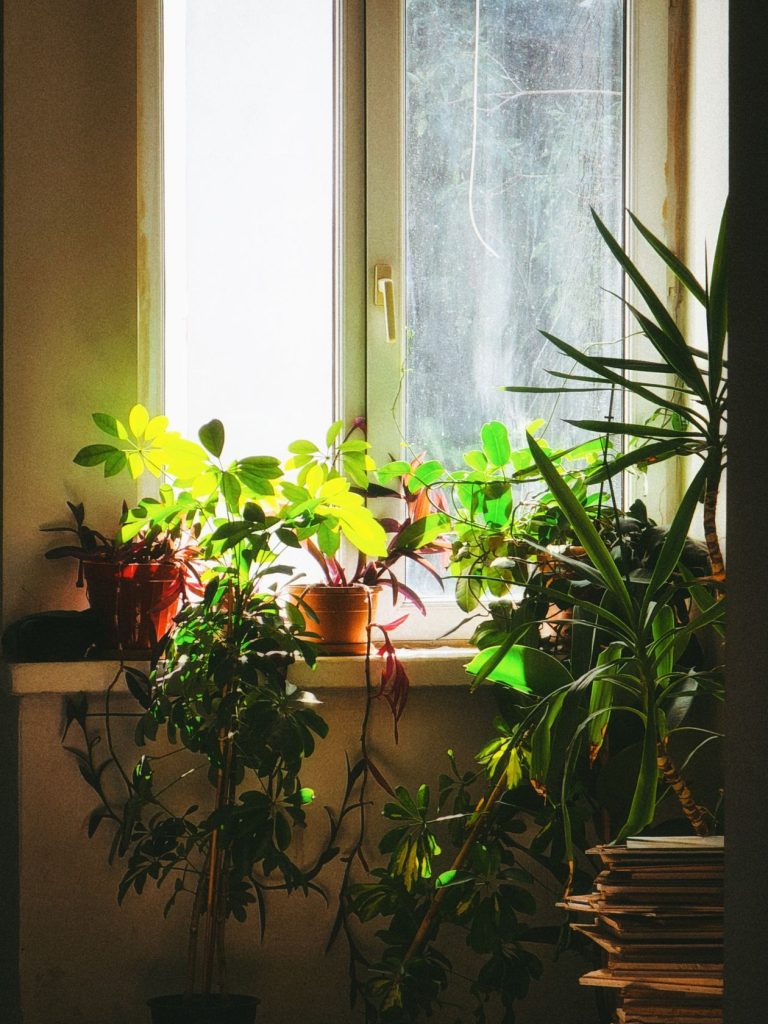
A sunny kitchen windowsill is pure delight, and mine got its glow-up when African violets plus basil moved in. African violets stay 6 to 9 inches tall and wide, so three pots fit a narrow sill. Bright indirect light suits them best, and an east window works, while a spot away from hot sun keeps leaves fresh and happy. Basil wants the warmest, brightest spot, and stays happiest above 50 degrees, so keep a few inches back from cold glass. Water violets with room-temperature water, keeping it off their fuzzy leaves. The ASPCA lists African violets and basil as non-toxic to cats and dogs, so pets stay safe and happy.
One tip: set the pots on a shallow tray, since a tray catches drips and keeps your sill dry, spotless, and lovely.
4. Ladder Shelf in a Dead Corner
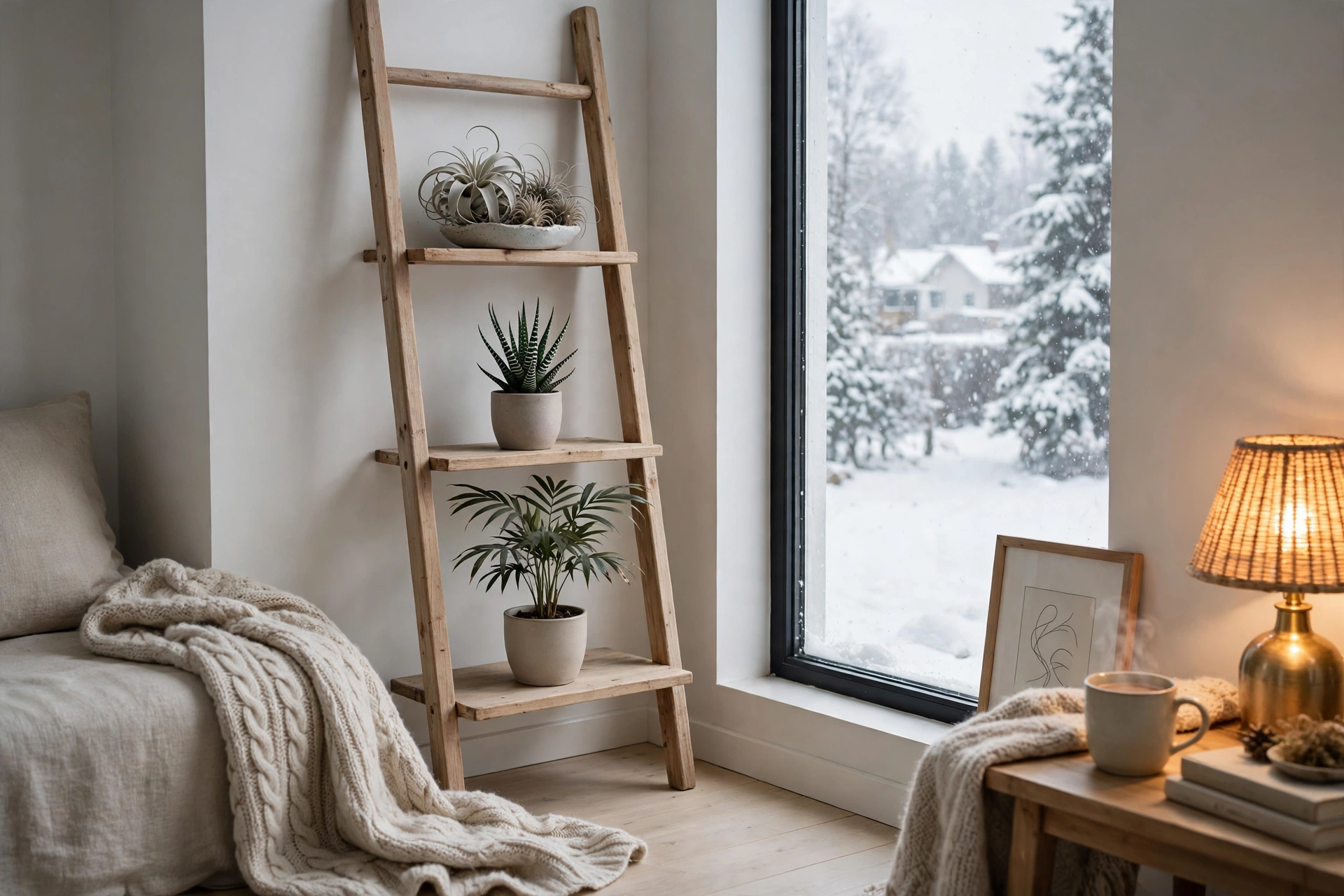
Every apartment has a corner awaiting its moment, and mine became the happiest plant spot. A tall ladder shelf leans against the wall, holding five or six plants in a pot’s footprint. Put a young parlor palm on the bottom shelf, since it stays 1 to 2 feet tall for years, tolerating low light. Zebra haworthia and a couple of air plants fill the upper shelves, needing very little water in winter. Bright indirect light suits the shelf a few feet from a window. Parlor palms and haworthia are ASPCA non-toxic, and air plants are not listed as toxic, so the shelf is safe, happy, and lovely for pets.
One tip: anchor the ladder shelf to the wall with a strap, since a snug strap keeps the shelf steady and safe. Everyone stays happy, even with curious pets around.
5. Wall-Mounted Pocket Planter Grid
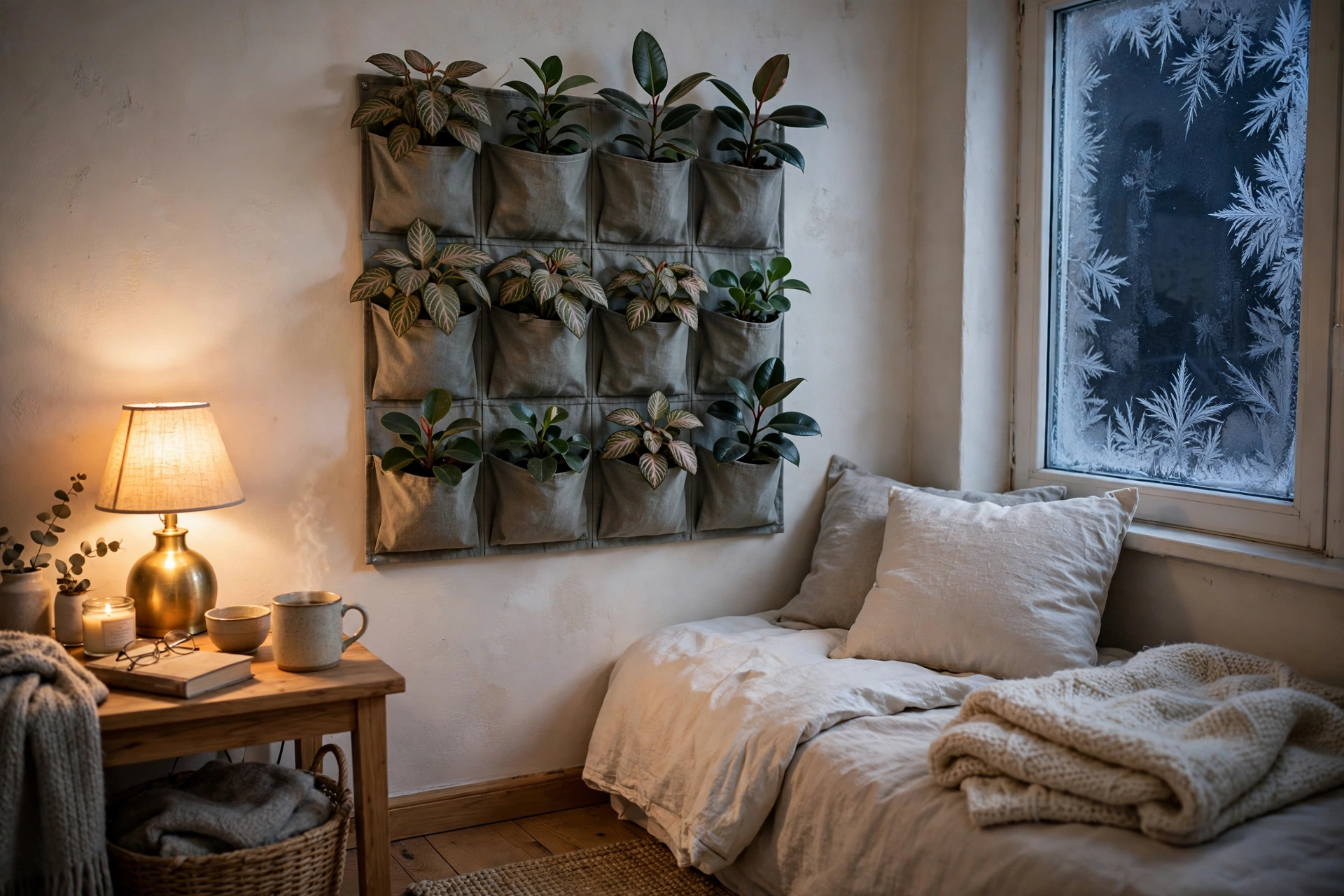
I mean, why stop at one plant when a whole wall awaits a gorgeous garden? A fabric pocket planter turns a wall into a vertical garden, using zero floor or shelf space. Each pocket holds one small plant, so twelve pockets give a dozen plants on one wall. Fittonia and baby rubber plants shine here, staying compact in bright indirect light. Nerve plants love humidity and their leaves dip when thirsty, then perk up fast after a drink, happy plants. Water each pocket lightly, letting the mix dry between waterings. The ASPCA lists fittonia and peperomia as non-toxic to cats and dogs, so the wall stays cheerful, happy, and pet-friendly.
One tip: line the back of the planter with a plastic sheet, since the sheet keeps the paint fresh and clean behind damp pockets. Your wall stays lovely.
6. Over-the-Door Herb Rail
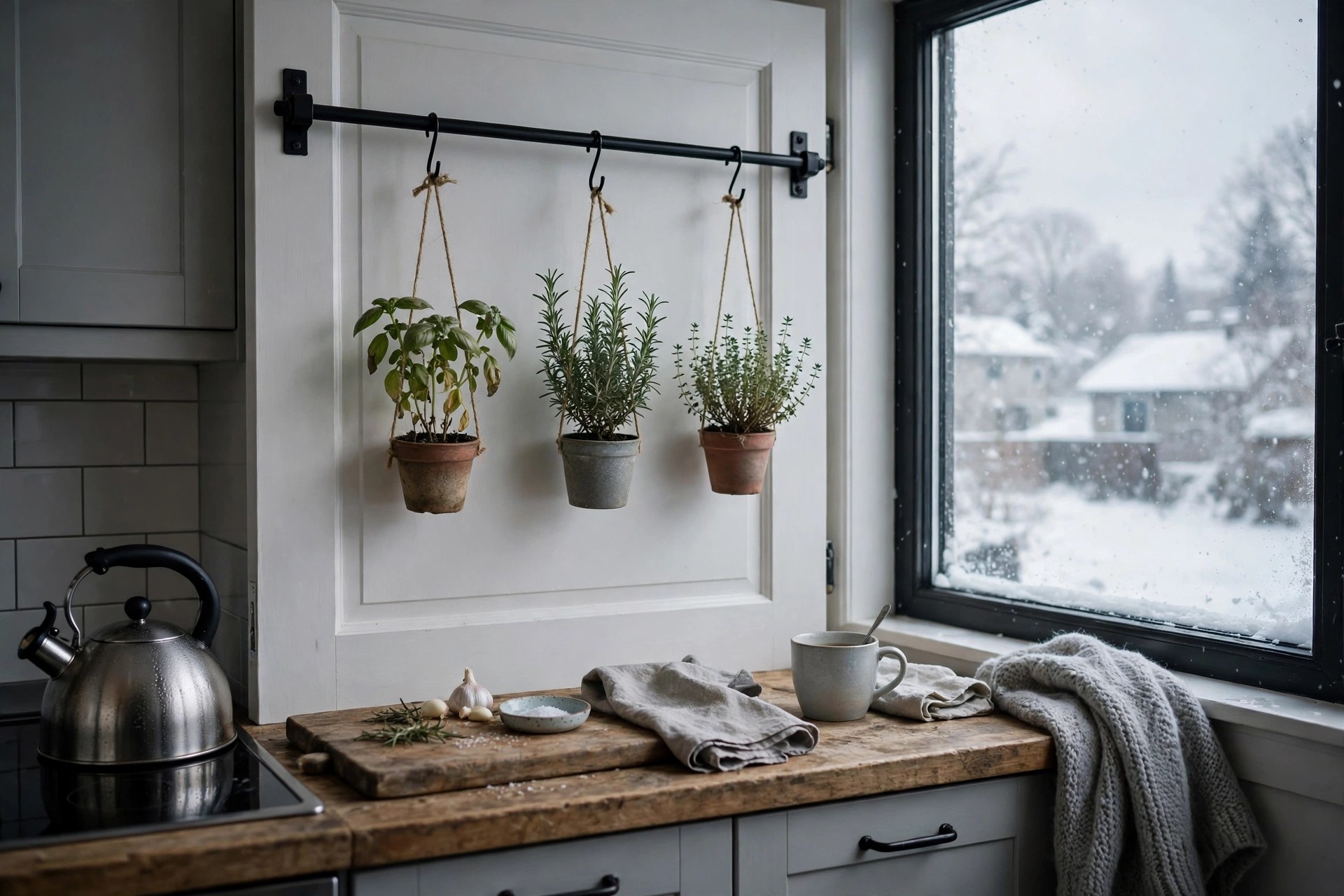
I love how the back of the kitchen door holds a tiny herb garden, and it makes cooking feel wonderful. Hang three or four small pots from hooks, and basil, rosemary, and thyme sit within reach while you cook. Basil wants warmth and strong light, so pick the door nearest a bright window, keeping pots above 50 degrees. Rosemary and thyme prefer to dry out a bit between waterings, which suits a busy cook. Mint skips this rail, since the ASPCA lists mint as toxic to cats and dogs. The ASPCA lists basil, rosemary, and thyme as non-toxic to cats and dogs, so the rail is happy, lovely, and pet-friendly.
One tip: label each pot with a cute tag, since thyme and rosemary look alike when young. A tag helps you grab the right one every time.
7. Rolling Bar Cart Plant Station
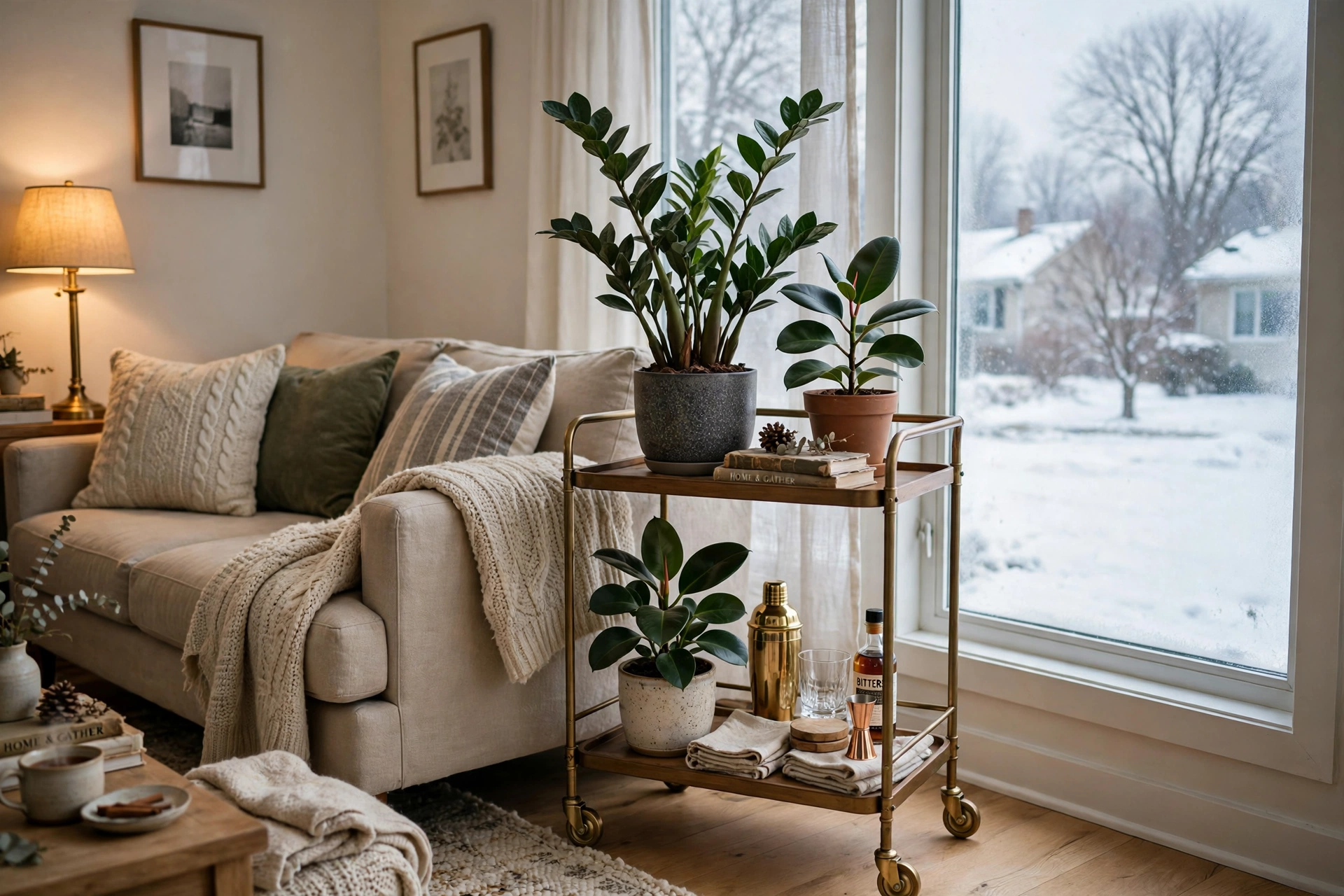
Rolling bar carts are wonderful for people who chase the best light. Yes, that is me. Load the tiers with pots, then wheel the garden toward the window on lovely winter mornings. A ZZ plant anchors the bottom tier, tolerating very low light and storing water in thick rhizomes. Baby rubber plants fill the top tier, their thick leaves storing water, so both happily forgive missed waterings. Let the mix dry out completely before watering, and in winter once a month is enough for the ZZ. The ASPCA’s houseplant guide calls ZZ plants toxic to cats and dogs, so park the cart out of paw reach and everyone stays happy.
One tip: lock the cart wheels once it is parked, since locked wheels keep the garden exactly where you want it, safe and sound.
8. Desk-Top Succulent Tray
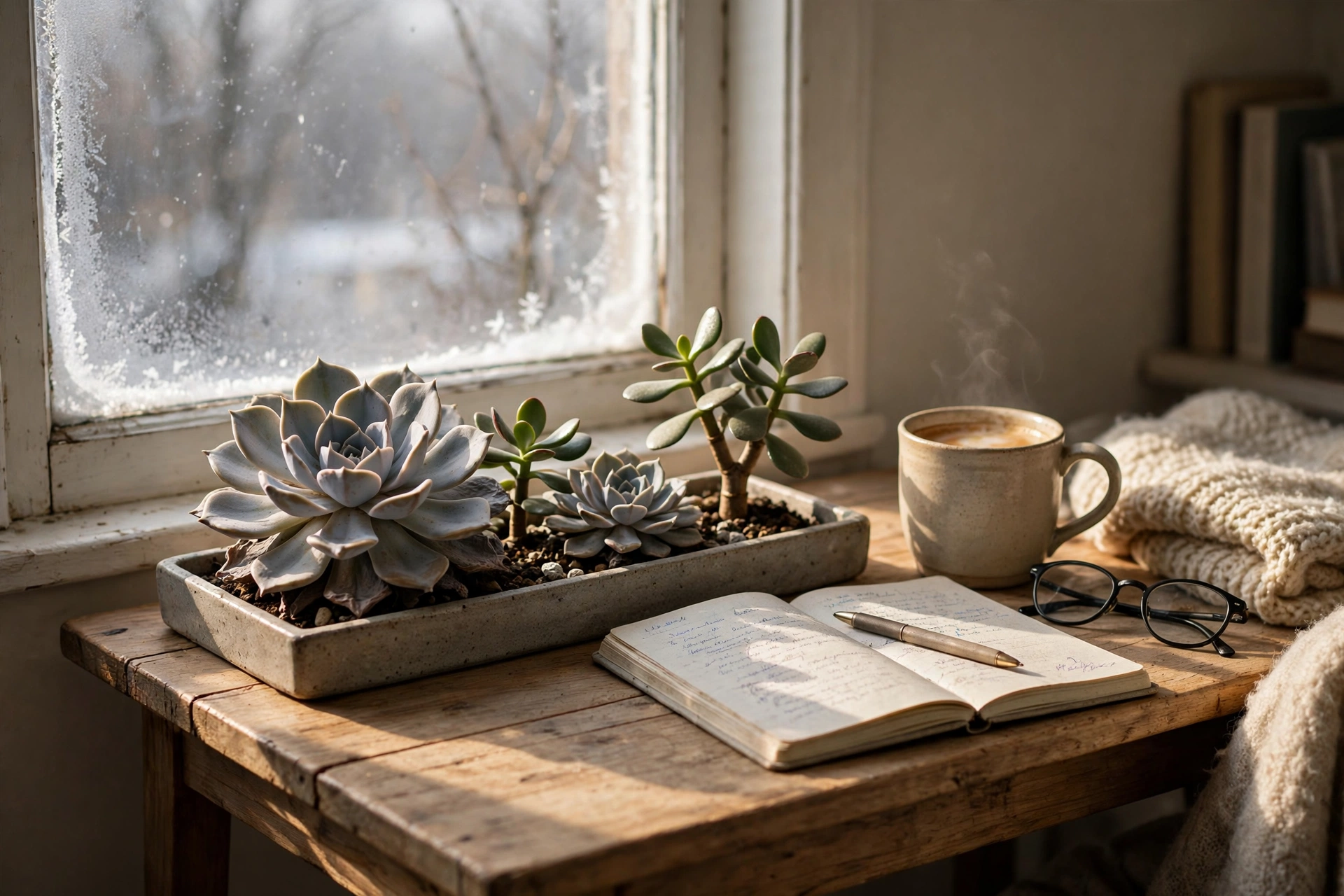
My desk-top succulent tray is a tiny desert garden I love, asking for so little and giving so much. Echeveria rosettes and a jade plant share one tray, and both want the brightest spot on your desk, a few feet from a sunny window. Succulents store water in their leaves, so let the mix dry fully between waterings and water even less in winter. Keep the tray away from cold glass and heating vents, since a cozy spot keeps the plants glowing and happy. The ASPCA lists echeveria as non-toxic to cats and dogs, but jade plants are toxic, so a high spot keeps the tray safe and everyone happy.
One tip: use a tray with a drainage hole or a layer of pebbles, since dry roots keep succulents plump, happy, and lovely.
9. Bathroom Shelf Humidity Corner
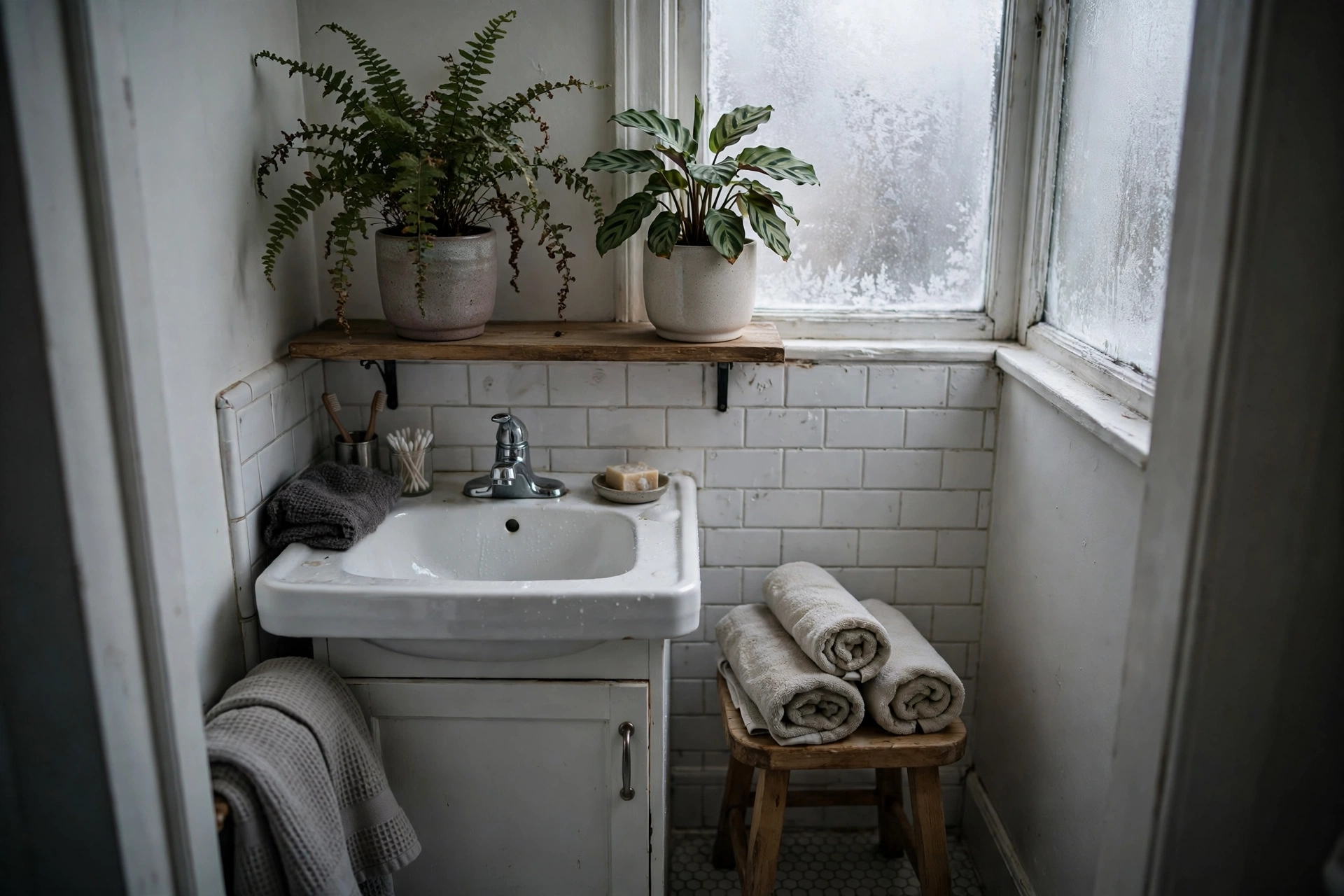
Honestly, my bathroom is a tropical paradise all winter, and the humidity-loving plants adore it there. A Boston fern and a calathea share a shelf above the sink, and both love the moist air from hot showers. Ferns want bright indirect light and soil that stays lightly moist, so a frosted bathroom window suits them well. Calatheas fold their patterned leaves up at night, which always feels a little bit magical. Keep both away from cold drafts and standing water, and they reward you with lush, happy leaves. The ASPCA lists Boston ferns and calatheas as non-toxic to cats and dogs, so the corner is safe for curious pets.
One tip: hang the fern a little higher than the calathea, since its fronds spill downward and need room to drape.
10. Narrow Console Table Plant Row
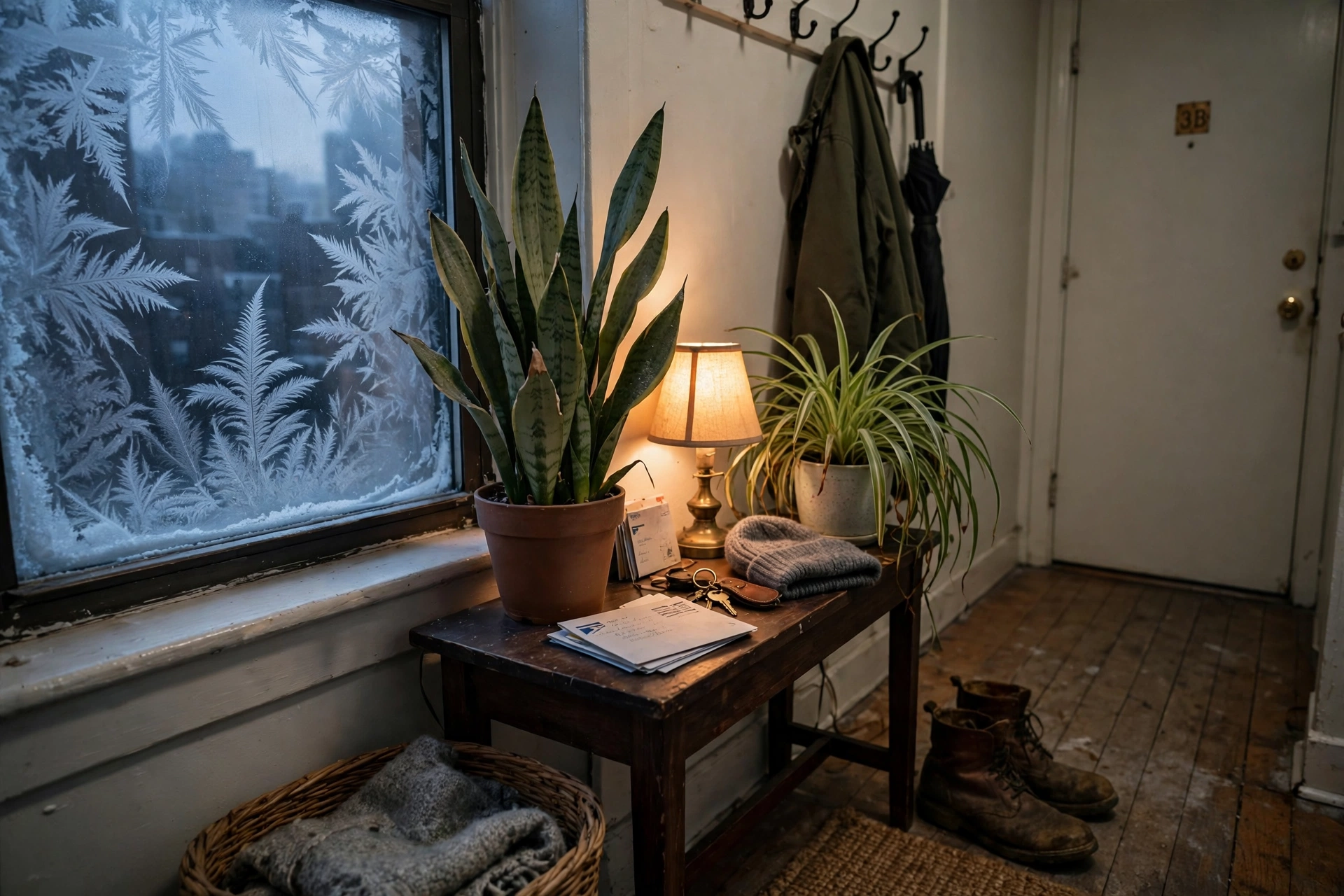
My hallway became my favorite little gallery once a console table moved in. Line up a snake plant and a spider plant along the back edge, and the table holds keys and mail. Snake plants grow straight up, so one plant fills bare wall without crowding the walkway. Spider plants like medium to bright indirect light, and a hallway near a window works. Let the soil dry fully between waterings for the snake plant, and water the spider plant when the top feels dry. The ASPCA lists snake plants as toxic to cats and dogs, while spider plants are non-toxic, so a high spot keeps every paw safe and happy.
One tip: put the snake plant at the far end, since its upright leaves leave plenty of room as you pass.
11. Bookshelf Green Styling
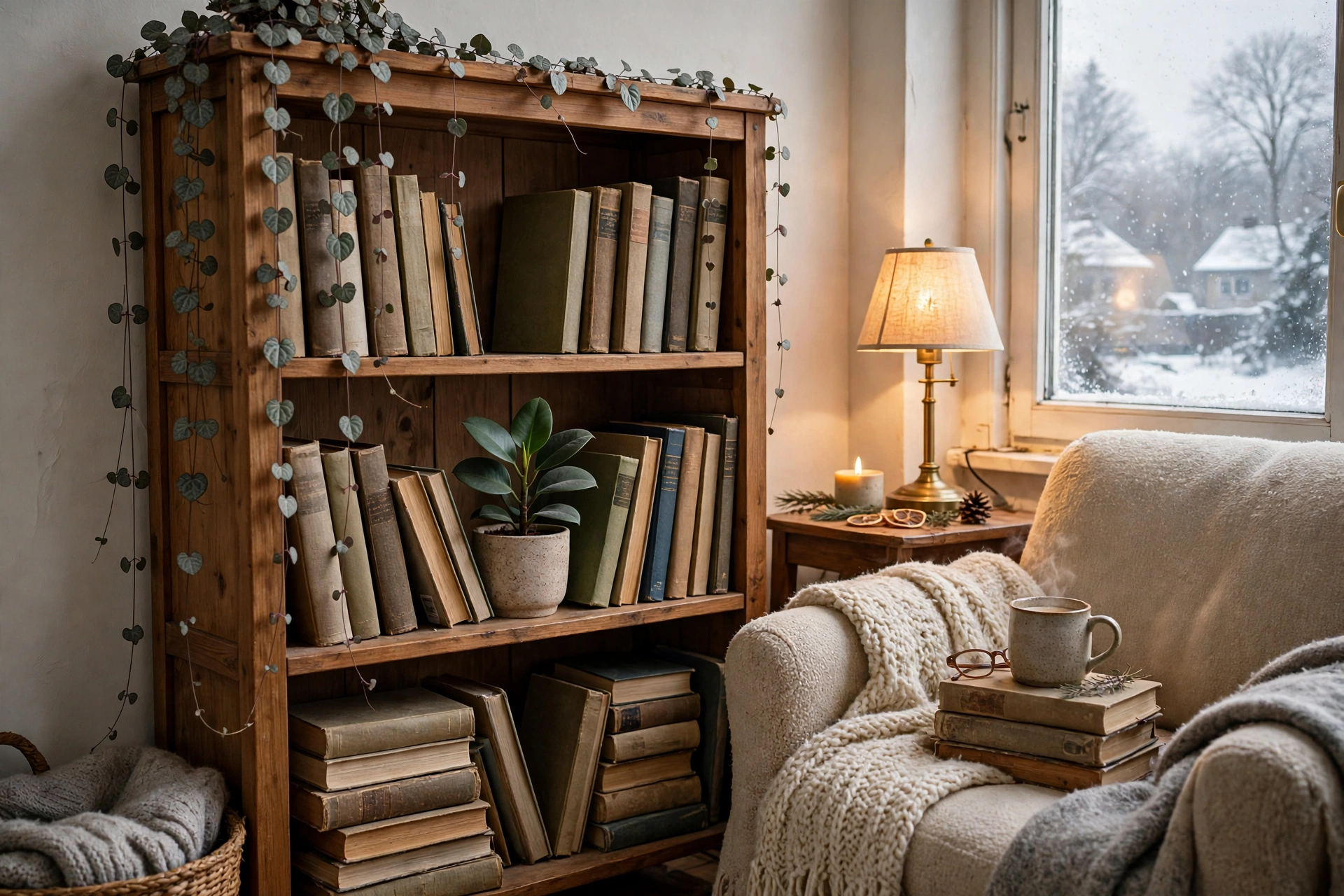
I love how plants tucked between my books made the shelf look styled and fresh. A string of hearts trails from the top shelf, where its silver-marbled heart leaves spill down past the spines. Baby rubber plants fill a middle shelf, and their thick glossy leaves hold their shape for months. Bright indirect light suits both plants, and a shelf a few feet from a window works. Let the top 1 to 2 inches of soil dry before you water the peperomia, since its thick leaves store water. The ASPCA lists peperomia as non-toxic to cats and dogs, so the bookshelf is pet-friendly too.
One tip: leave a hand-width gap between the trailing vines and the books, since a little breathing room keeps every cover crisp and clean.
12. Ceiling-Hook String of Pearls
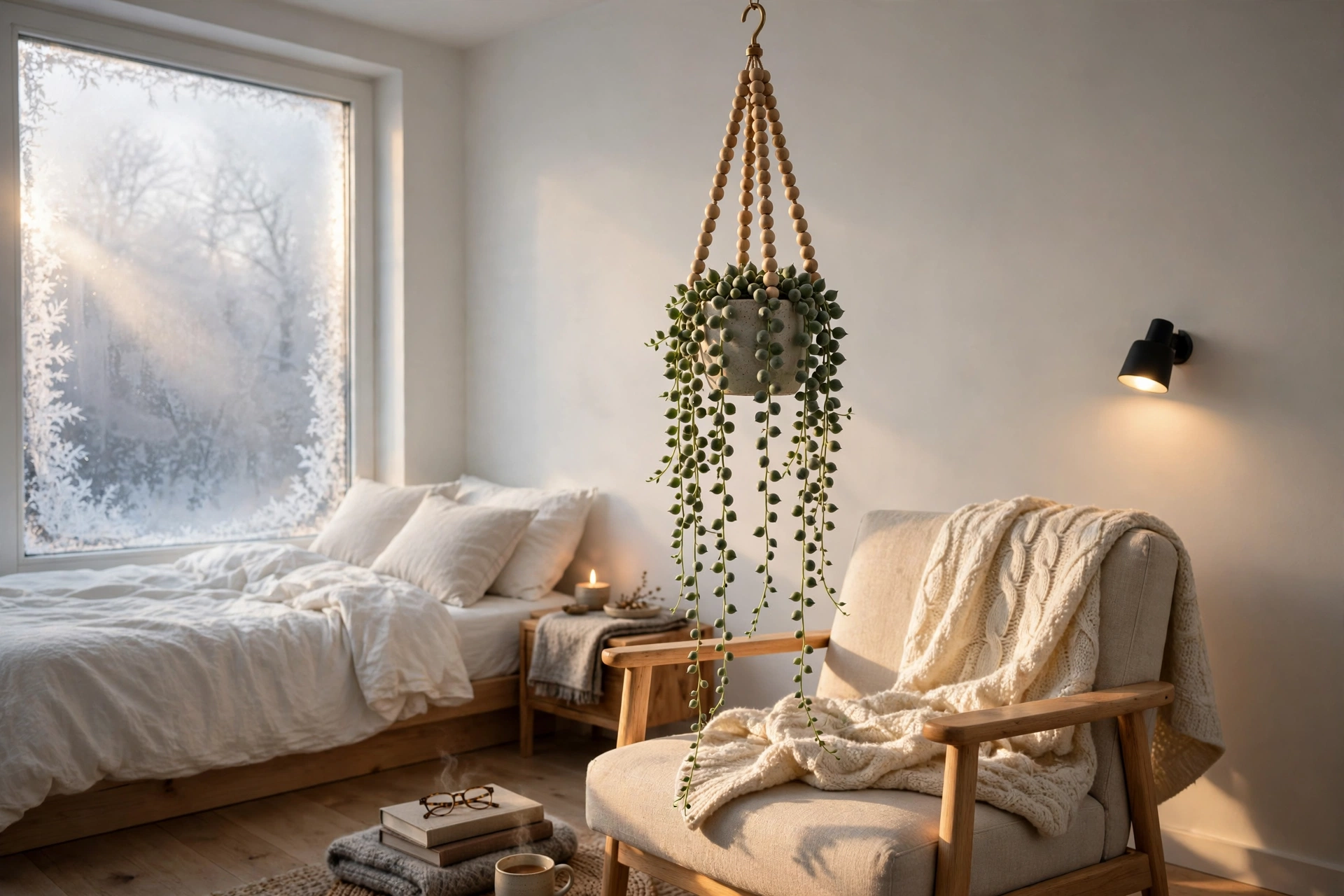
The space above my reading chair is pure joy, since a ceiling hook made it the prettiest spot. String of pearls hangs in long beaded strands, its pea-sized leaves storing water like tiny marbles. Bright light suits it best, so hang the basket near an east or west window for sun. Water only when the mix has dried almost fully, and keep it nearly dry in winter, since dry soil keeps roots healthy. Hanging high keeps the strands above curious paws, which is exactly the point. NC State Extension lists string of pearls as mildly toxic to cats and dogs, so hanging it high keeps every paw safe and happy.
One tip: check the ceiling anchor holds at least twice the wet weight, since a soaked hanging basket is heavier than it looks.
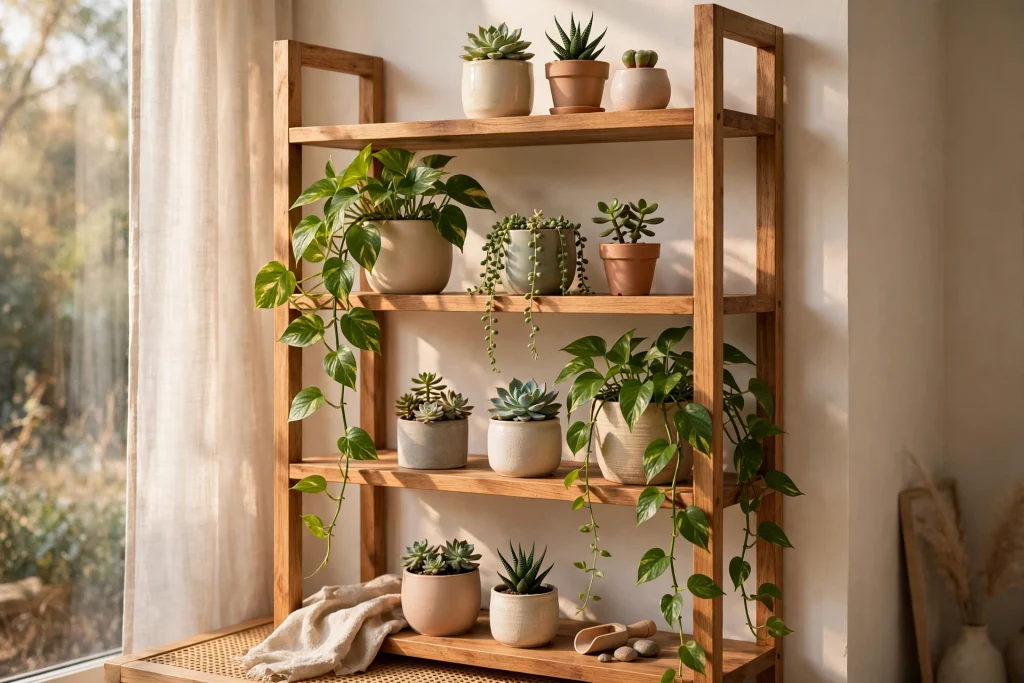
13. Tiered Plant Stand by the Sofa
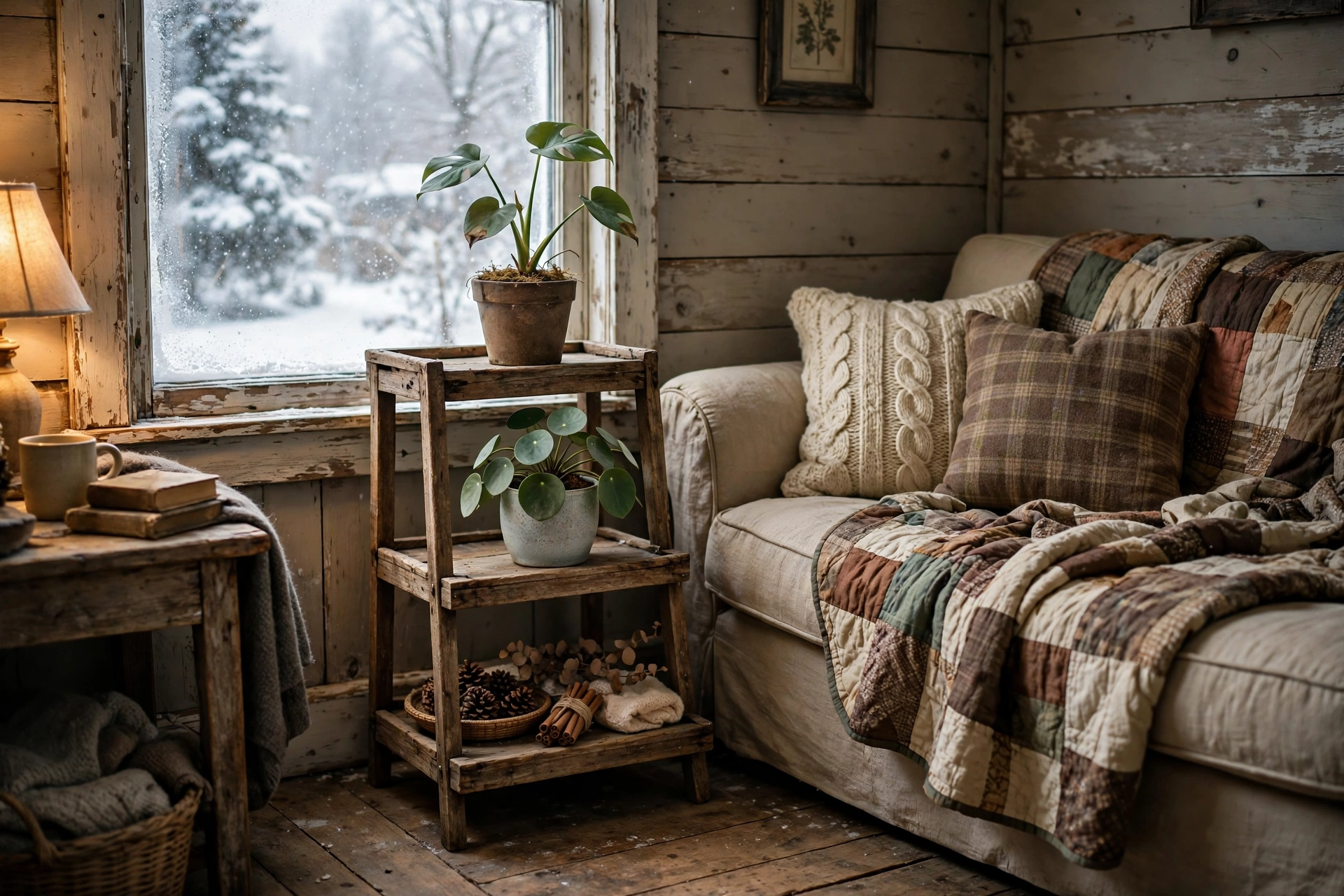
Okay, picture this: a plant collection in one square foot, on a three-tier stand beside the sofa. Young monstera anchors the bottom tier, its split leaves bringing gorgeous tropical energy. Bright indirect light keeps it happiest, and moist air helps splits open fast, so group it near other pots. Pilea peperomioides on the top tier adds lovely round coin leaves and stays compact for a narrow shelf. Water when the top soil feels dry, and water less in winter when growth slows. The ASPCA lists monstera as toxic to cats and dogs, while pilea species are non-toxic, so the bottom tier keeps it out of paw reach and everyone happy.
One tip: rotate the monstera a quarter turn each week, since it leans toward the window and a little spin keeps it neat, balanced, and lovely.
14. Pegboard Wall Garden by the Entry
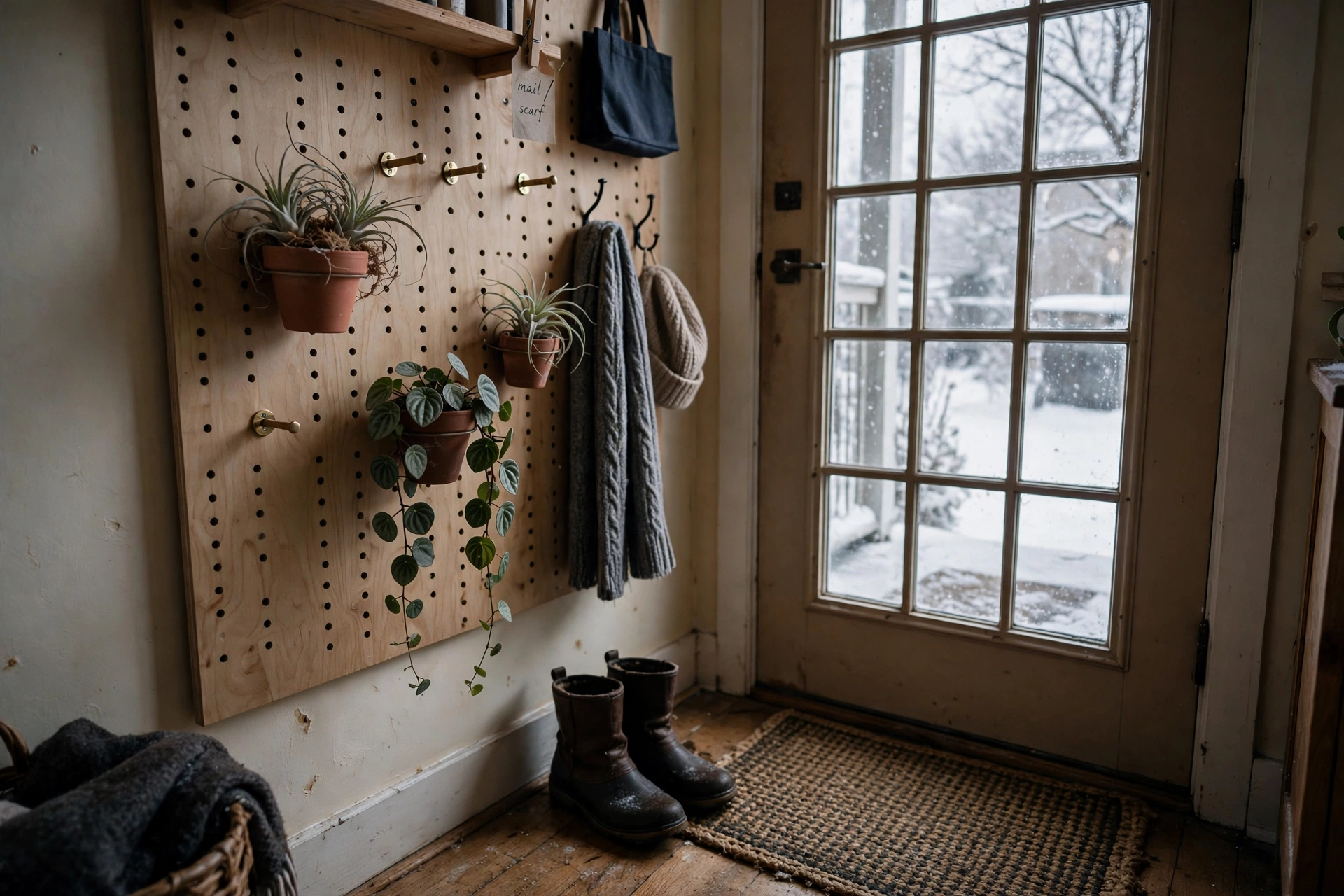
I adore my pegboard wall garden, a display I see every time I come home. Hang small pots and air plant holders from hooks, and rearrange them on a whim. Air plants need no soil, and a weekly soak plus bright indirect light keeps them happy. String of turtles trails from the top hooks, and its tiny round leaves look like beads. Keep the board a few feet from the door, since a little distance keeps plants cozy and happy. The ASPCA lists peperomia, including string of turtles, as non-toxic to cats and dogs, and air plants are not listed as toxic. Curious pets stay safe and happy around it.
One tip: use locking hooks or small zip ties, since secure hooks keep every pot safe and snug. Everyone stays happy, even with a wagging tail nearby.
15. Glass Terrarium on a Side Table
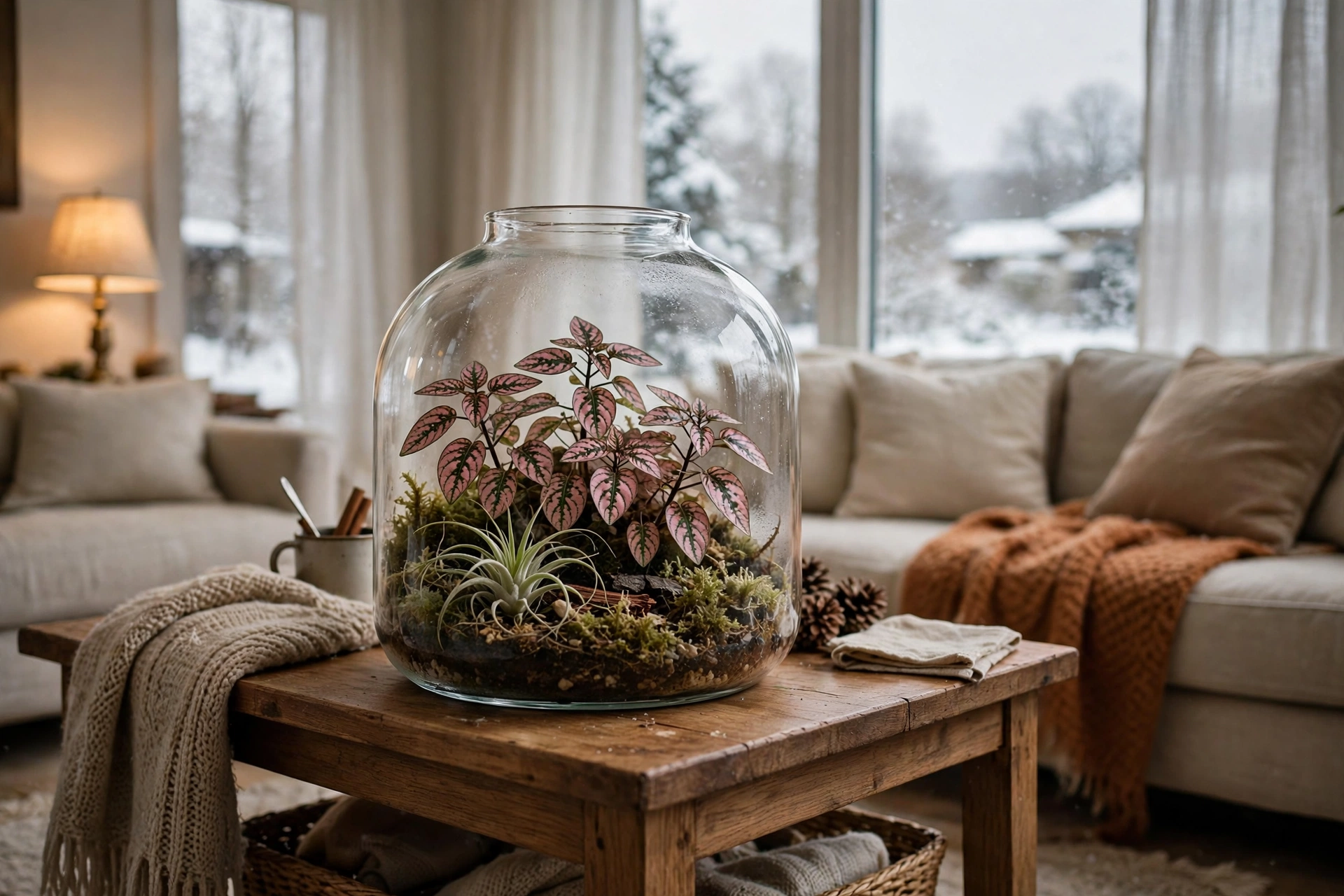
Seriously, the tiniest landscape in my apartment lives in a glass terrarium, taking less space than a mug, and I love it. Polka dot plants bring pink speckled leaves, and a small air plant perches on driftwood over moss. Bright indirect light suits the whole scene, since direct sun heats a closed terrarium fast. Mist the moss when dry, and leave the lid ajar a few hours if the glass fogs. Terrariums hold humidity well, lovely news in a dry heated apartment. The ASPCA lists polka dot plants as non-toxic to cats and dogs, and air plants are not listed as toxic. Every pet stays safe and happy around it.
One tip: water with a small spray bottle instead of a jug, since a gentle mist gives the tiny terrarium exactly the drink it needs. It stays lovely.