1. A Fireplace Mantel Draped in Golden Pothos
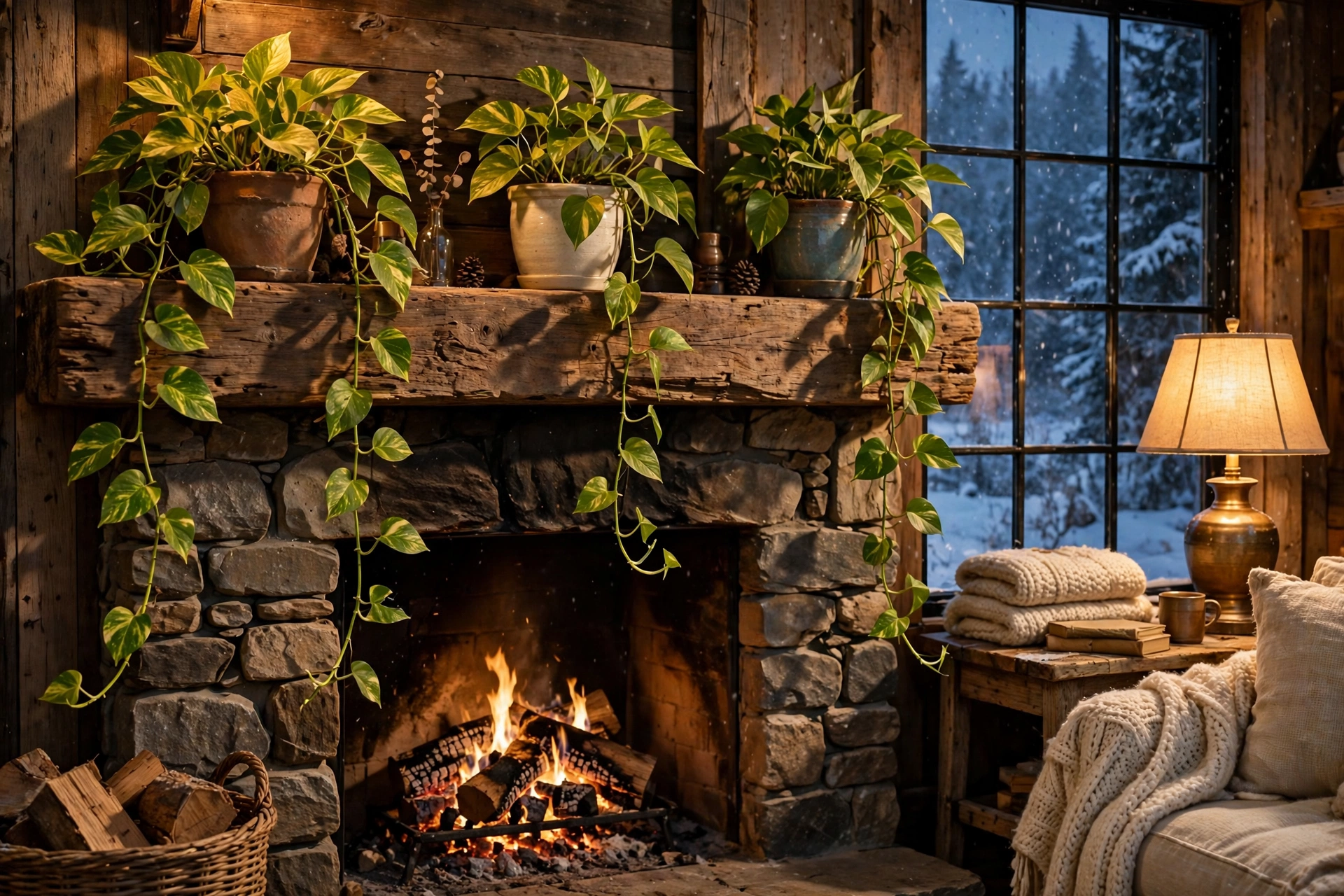
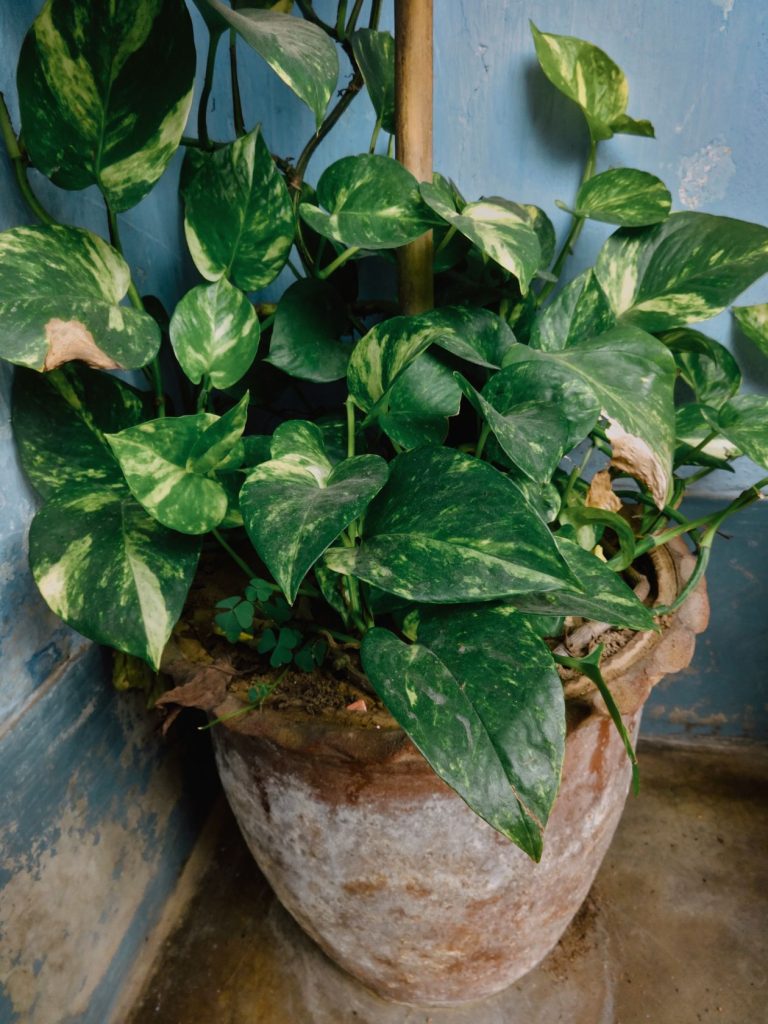
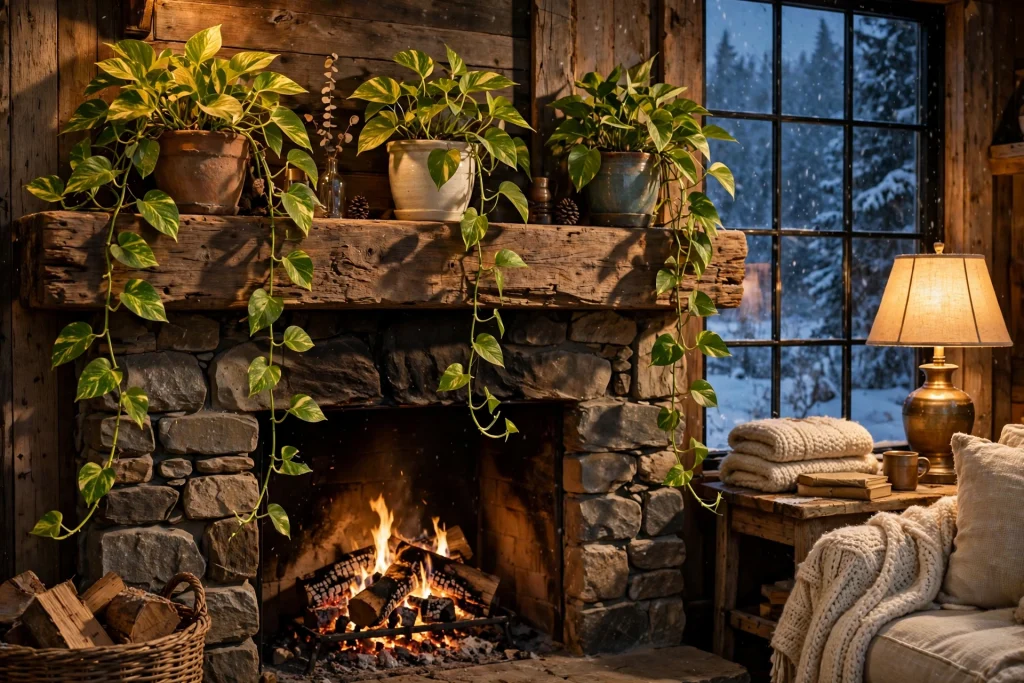
Okay, so here is the thing! Your fireplace mantel is waiting for its moment, and golden pothos is about to give it one. Drape two or three pots along the mantel and let the vines spill down the sides like green ribbons. Golden pothos handles low light and only needs water once the soil dries out, so the warm, dry air near a fireplace suits it so well. Keep the pots a few feet from the firebox itself, since a little space keeps the vines safe and happy. The ASPCA lists golden pothos as toxic to cats and dogs, so keep the vines high, where they look their best!
One tip: trim any vine that wanders toward the firebox, since a quick snip keeps the whole mantel safe, tidy, and gorgeous.
2. A Window Seat Garden Set Back From the Cold Glass
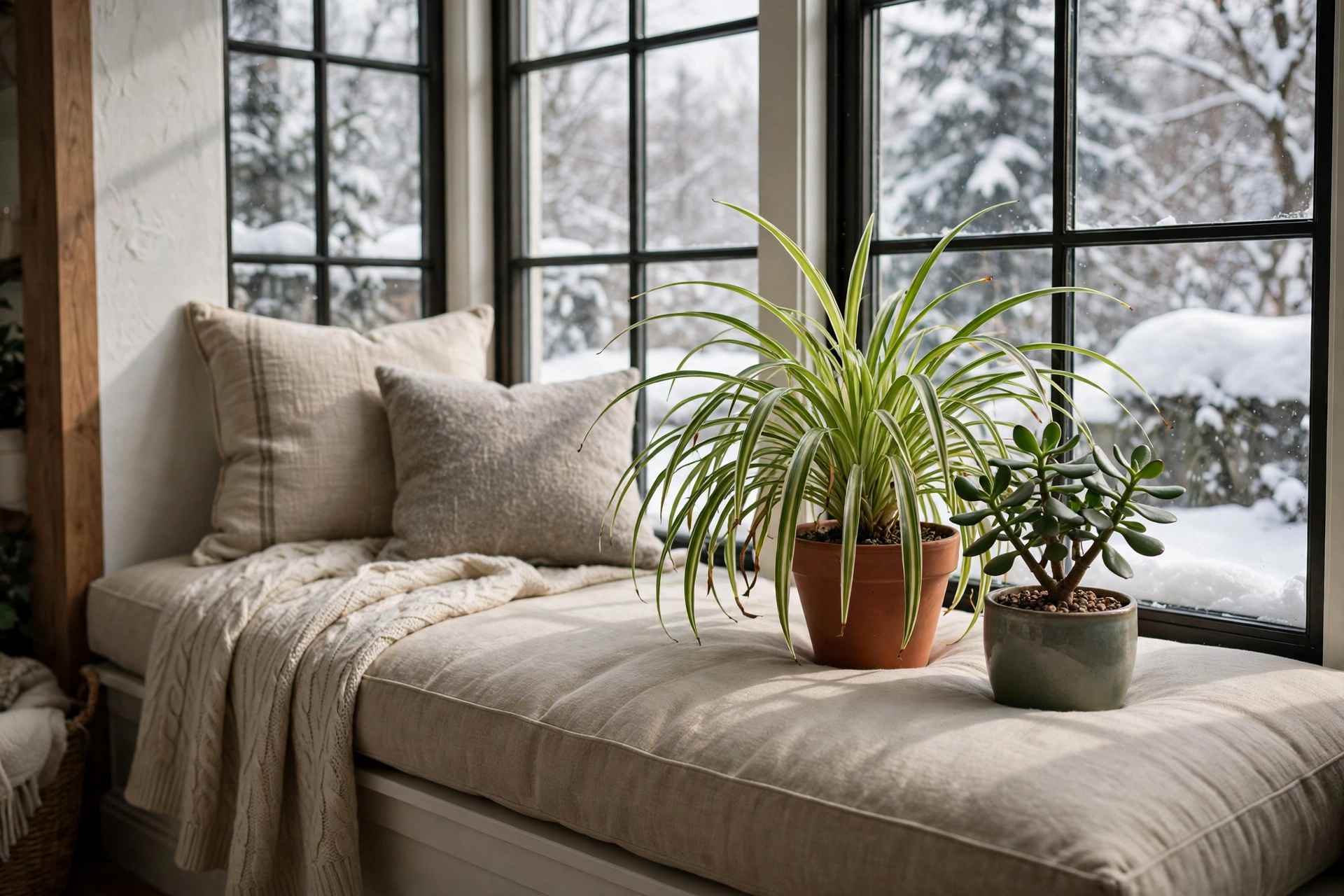
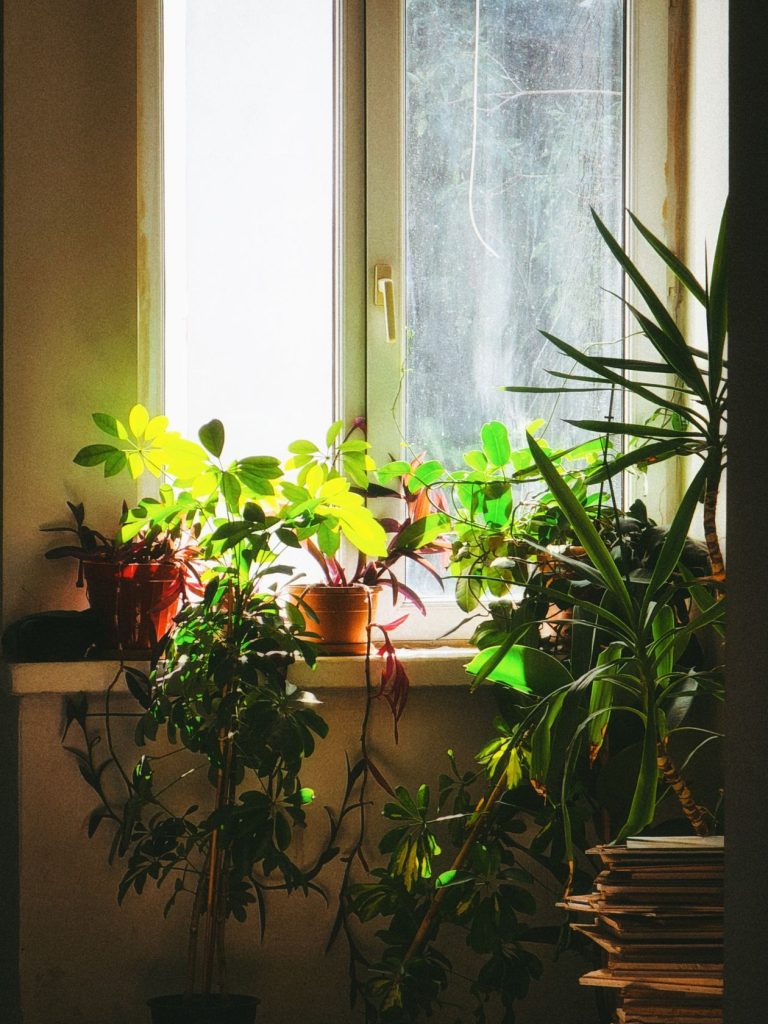
Seriously, window seats were made for plants! A spider plant and a small jade plant make a great pair, with arching leaves on one side and plump leaves on the other. Set both pots back from the glass, since a cozy gap keeps the leaves happy all winter. Spider plants love medium light and gentle sun, while jade plants want hours of bright light daily. Water the spider plant when the top inch dries, and let the jade dry out fully between drinks. The ASPCA lists spider plants as non-toxic to cats and dogs, while jade plants are toxic, so keep the jade high, where it catches the light!
One tip: slide a folded towel under the pots on frosty nights, since a cozy layer keeps the pots warm and happy.
3. A Reading Nook Anchored by a Parlor Palm
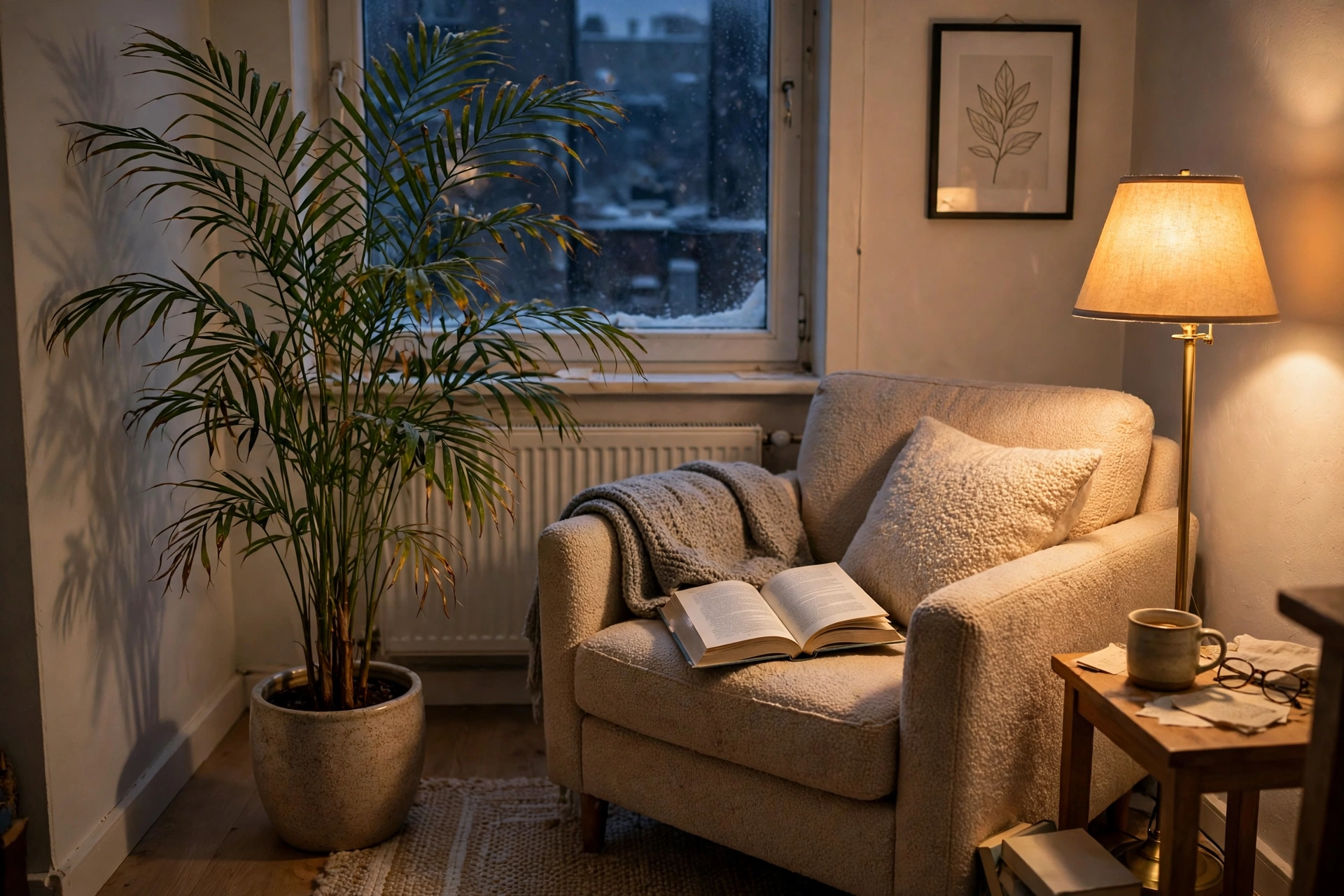
I mean, every living room needs one corner where you can curl up with a book, and a parlor palm makes it feel like a garden! Park a tall parlor palm beside your armchair, add a floor lamp, and the nook has a whole personality. Parlor palms grow slowly to about 4 feet indoors, so one plant fills the space just right. Low to medium indirect light suits it well, and gentle light keeps the fronds lush. Water when the top of the soil feels dry, and keep the room above 60 degrees. The ASPCA lists parlor palms as non-toxic to cats and dogs, wonderful news for pet owners!
One tip: turn the pot a quarter turn each week, since a little turn keeps the palm even, tidy, and gorgeous.
4. A Coffee Table Tray of Tiny Plants
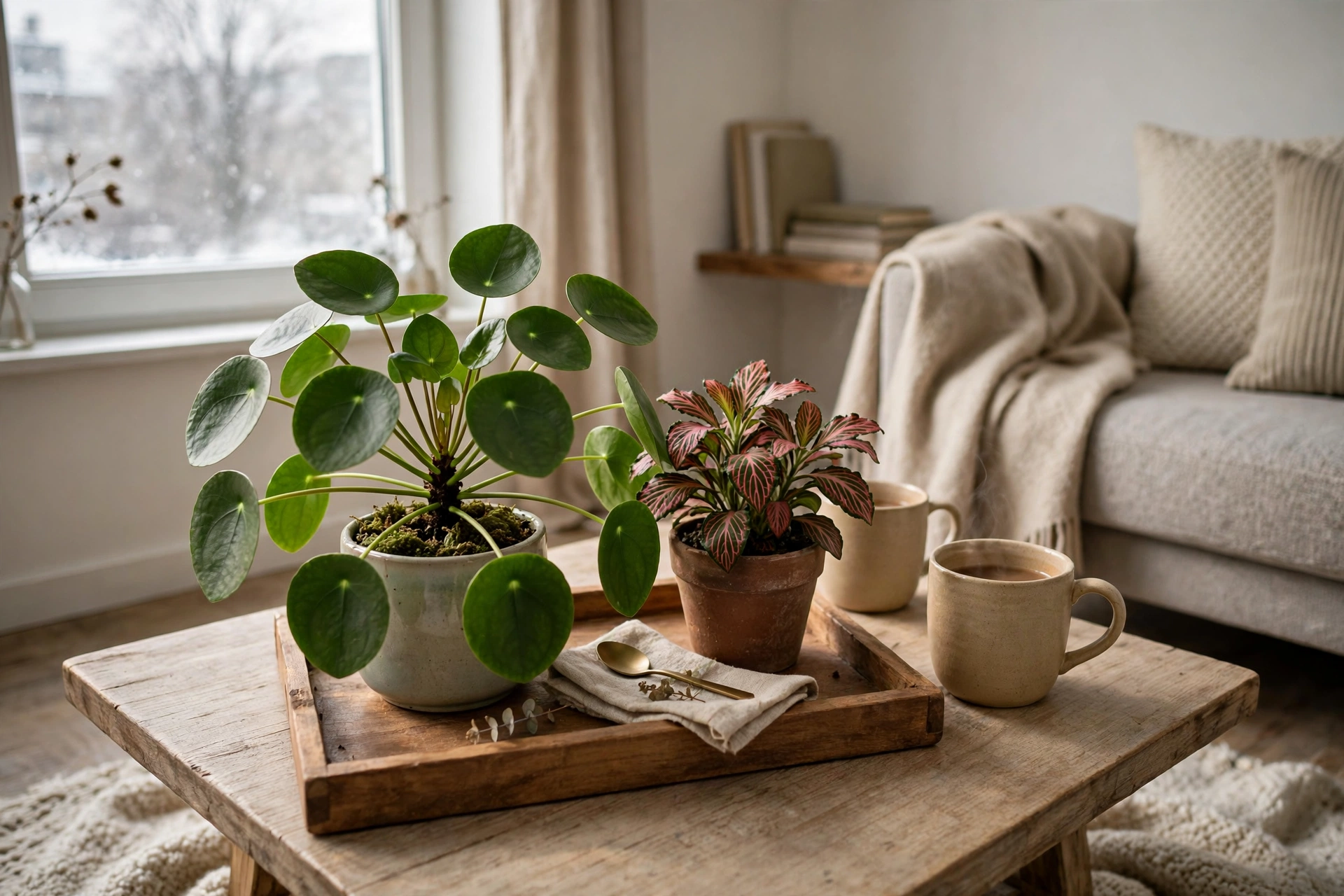
And do not even get me started on coffee tables, because yours deserves a little star treatment! A wooden tray changes everything. Set a pilea and a nerve plant inside it, and the table looks styled and ready for company. Pilea grows 8 to 12 inches tall with round coin-shaped leaves, while the nerve plant stays under 6 inches with tiny veined leaves. Both want bright indirect light and a cozy spot away from heating vents. Water the pilea when the soil dries a little, and keep the nerve plant evenly moist. The ASPCA lists both plants as non-toxic to cats and dogs, which is great news for pet owners!
One tip: lift the whole tray when you wipe the table, since moving two pots at once beats chasing them one by one.
5. A Hanging Plant Corner Beside the Sofa
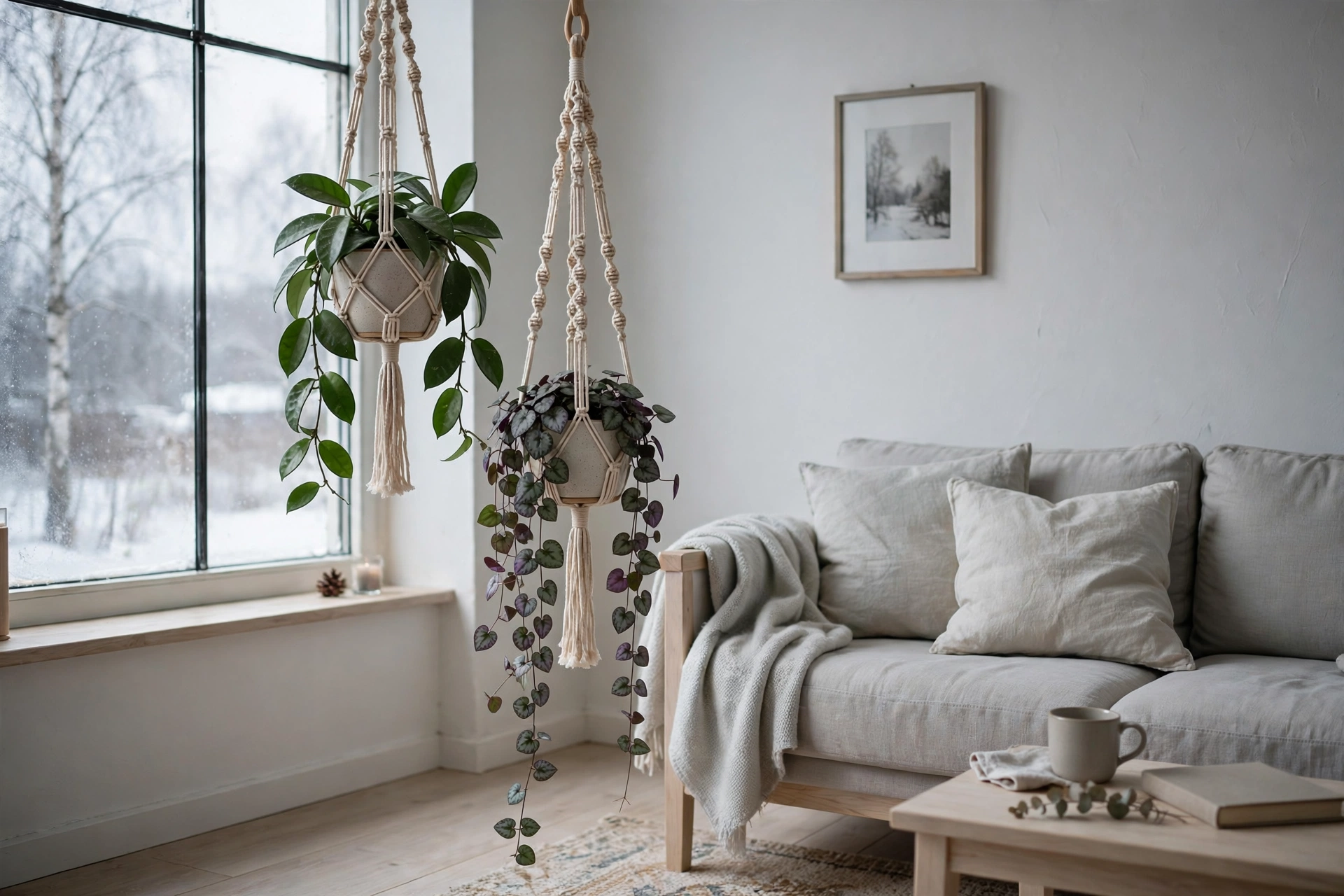
Okay, the corner beside your sofa is begging for drama, and hanging planters deliver it! Hang a hoya carnosa and a string of hearts at two heights, and you get a green curtain! Hoya leaves are thick and waxy, and the plant can bloom with star-shaped flowers on the same spurs year after year. String of hearts trails delicate vines with tiny silver-marked leaves, and loves bright indirect light with soil that dries fully between waterings. The ASPCA lists hoya carnosa as non-toxic to cats and dogs, and no toxicity is listed for string of hearts. Lovely news for pet owners, and the perfect excuse to hang one more!
One tip: use a ceiling hook rated for the wet weight, since a strong hook keeps your green curtain hanging safe and happy for years.
6. Floating Shelves Above the Sofa With Trailing Vines
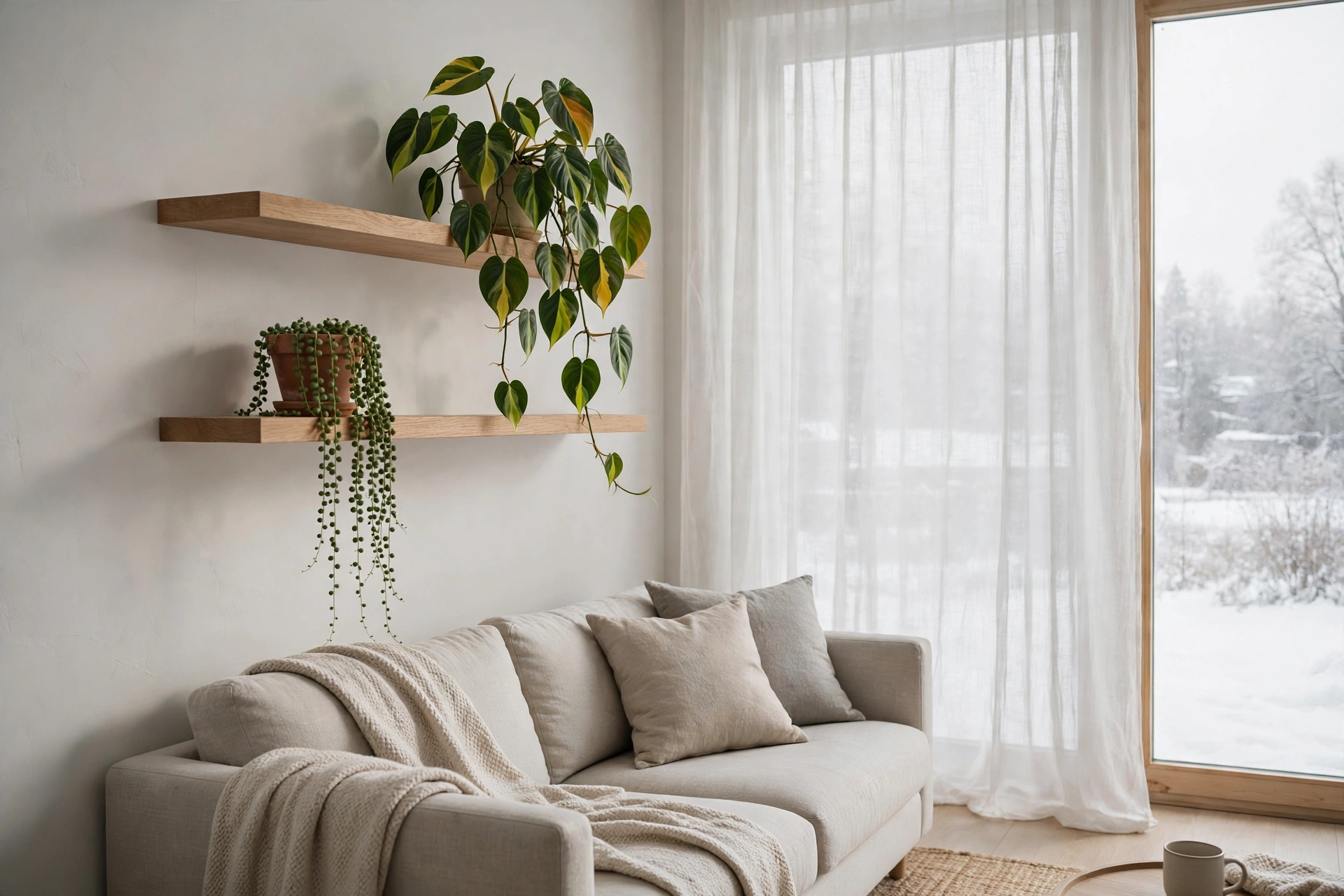
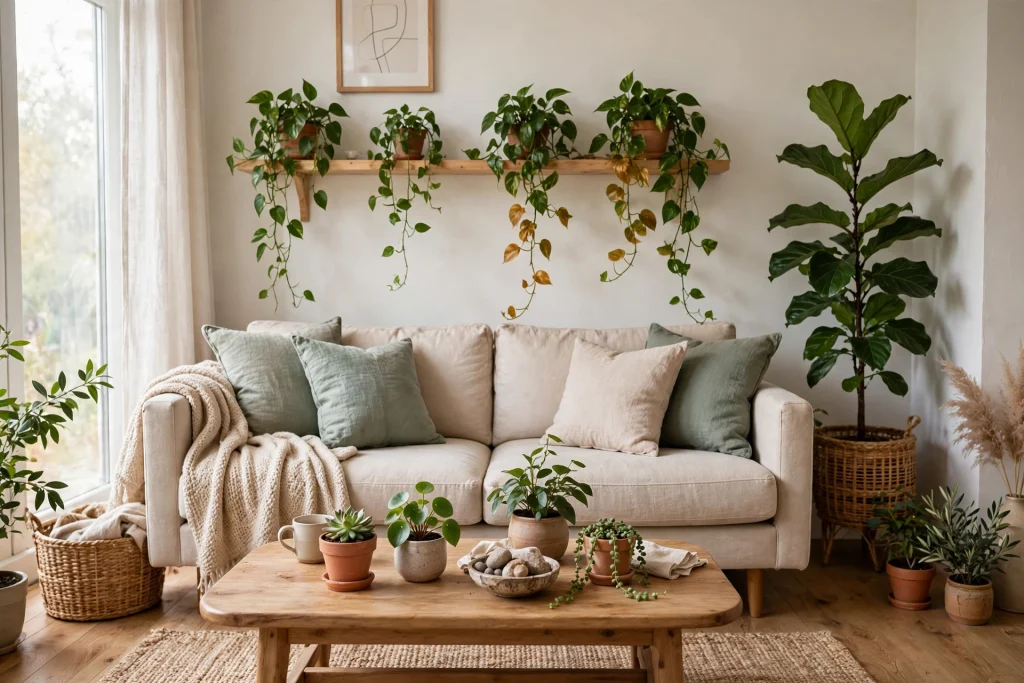
Honestly, the wall above your sofa is dreaming of trailing plants, and two floating shelves make it happen! Philodendron Brasil spills lime-striped leaves over the edge, while string of pearls hangs in beaded strands that catch the light. Bright indirect light keeps the variegation bold, and string of pearls loves bright light with well-drained soil. Water the philodendron when the top inch dries, and let the pearls dry out fully. The ASPCA lists philodendron as toxic to cats and dogs, and NC State calls string of pearls mildly toxic too. Up high on the shelves, they stay safe and look absolutely stunning all winter!
One tip: screw the shelves into wall studs, since sturdy shelves keep your gorgeous vines hanging safe and secure for years.
7. An Amaryllis Stealing the Show on the Side Table
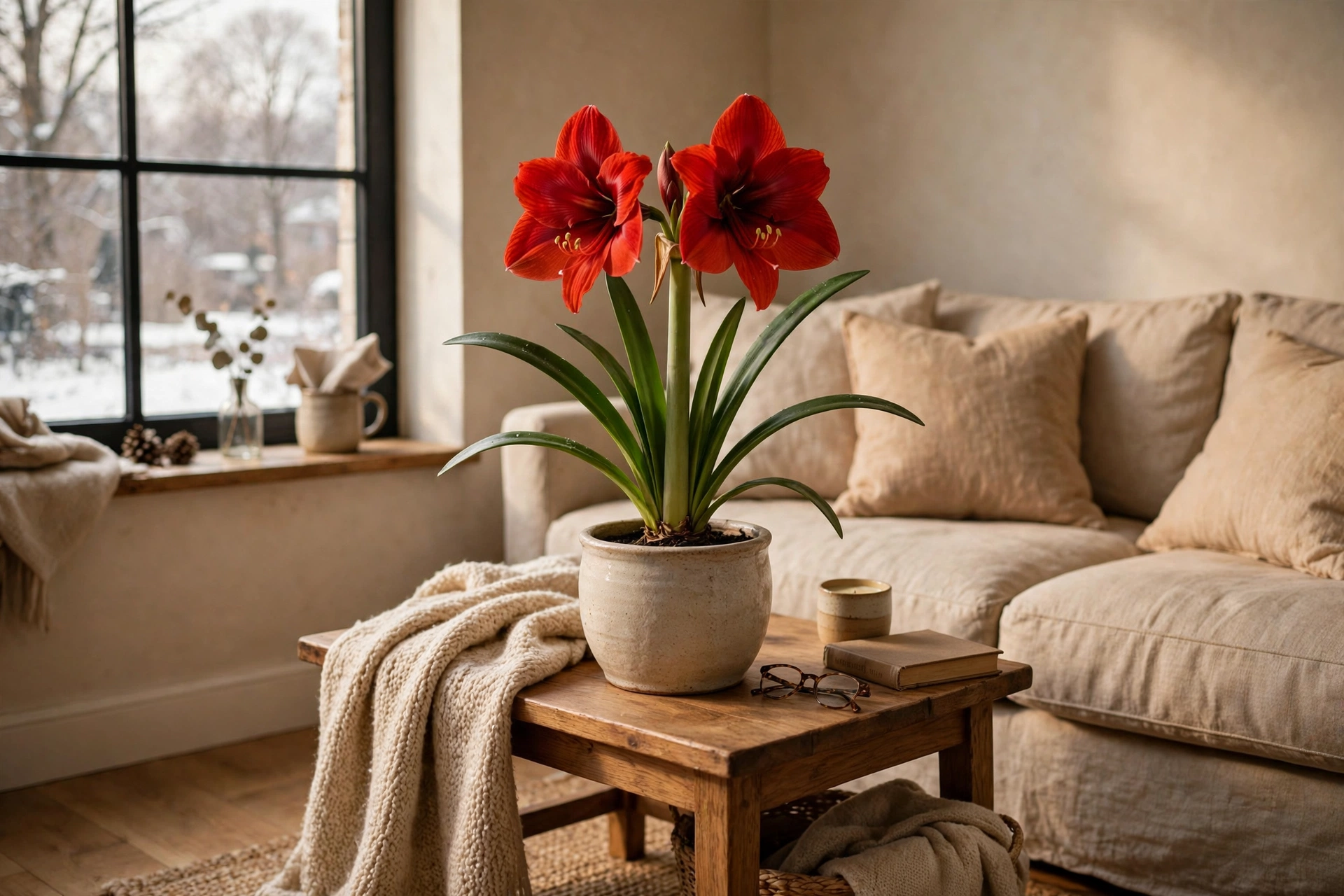
Trust me, a bare bulb looks like nothing, and then the amaryllis sends up a stalk of huge trumpet flowers! An amaryllis on the side table gives your living room a winter centerpiece that blooms while the garden outside sleeps. Plant the bulb between October and January with the top third above the soil, and expect flowers in 6 to 8 weeks. Give it your brightest spot, then move it somewhere cooler once flowers open. Water lightly until growth starts, then water when the top inch dries. The ASPCA lists amaryllis as toxic to cats and dogs, so keep the bulb up high, where it shines like a star!
One tip: stake the stalk with a thin bamboo cane, since a little support keeps the whole show standing tall and gorgeous.
8. A Christmas Cactus Blooming on the Windowsill
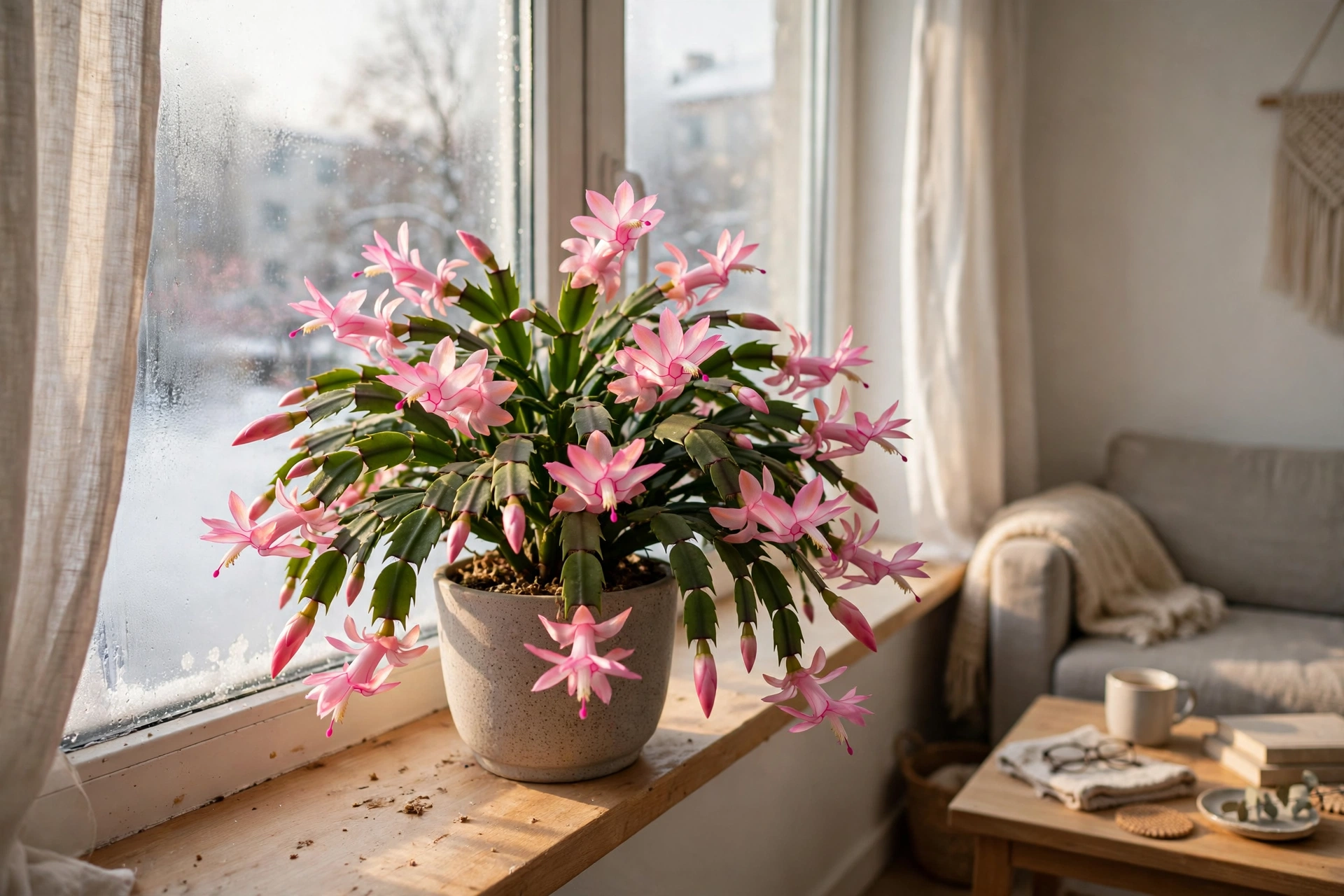
December is the month your living room craves color, and a Christmas cactus delivers it right on schedule! Its flat stem segments end in pink, red, or white flowers that open in late December, when days are shortest. Set the pot on a bright windowsill, inches back from the glass, where stems stay cozy all winter. Christmas cacti are short-day plants, so cool nights of 55 to 65 degrees and long autumn evenings set buds. Keep the soil evenly moist while it blooms, and let extra water drain. The ASPCA lists Christmas cactus as non-toxic to cats and dogs, wonderful news for pet owners, and pure joy in December!
One tip: leave the pot right where it is once buds appear, since a settled plant keeps every single gorgeous bud.
9. A Tiered Plant Stand Beside the TV
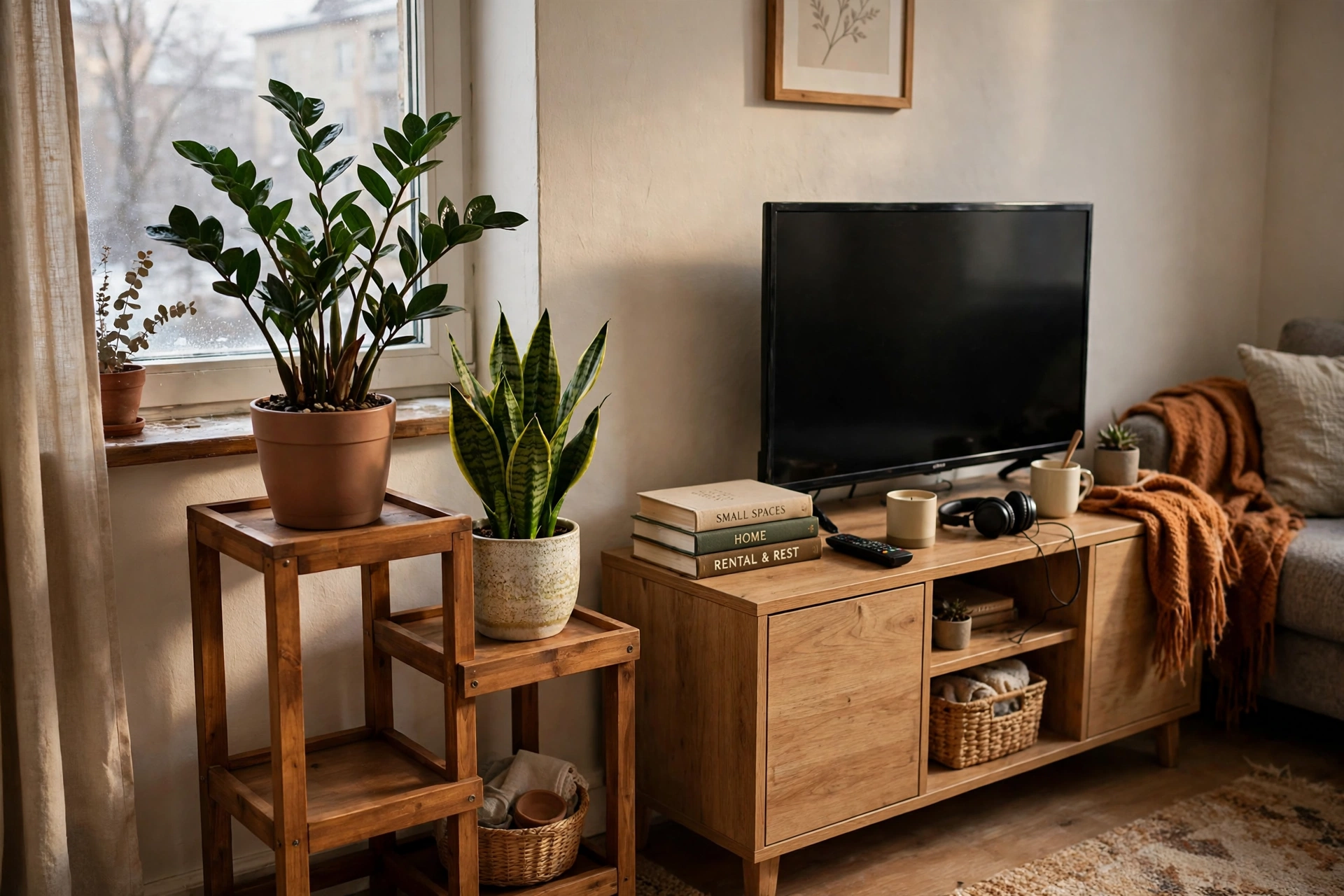
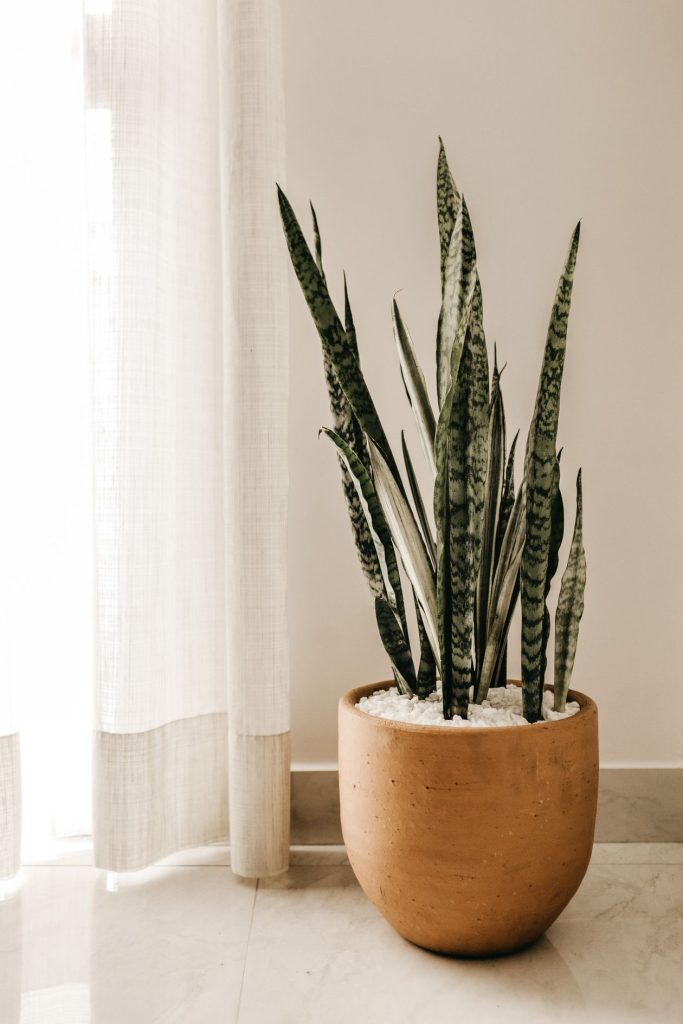
The space beside your TV is wasted, and a tiered plant stand turns it into the best corner! Put a ZZ plant up top and a snake plant below, and the stand decorates itself. ZZ plants reach 2 to 4 feet tall with glossy leaflets, and snake plants send up stiff sword-shaped leaves. Both tolerate low light and survive weeks without water, so the dim spot beside the TV suits them. Water only when the soil dries out fully, and water even less in winter. Pet owners should know both plants are toxic to cats and dogs, so keep the stand out of chewing range and let it shine.
One tip: keep the stand a few feet from the TV vents, since a little space keeps the leaves fresh and gorgeous.
10. A Cozy Corner Cluster of Tall and Low Plants
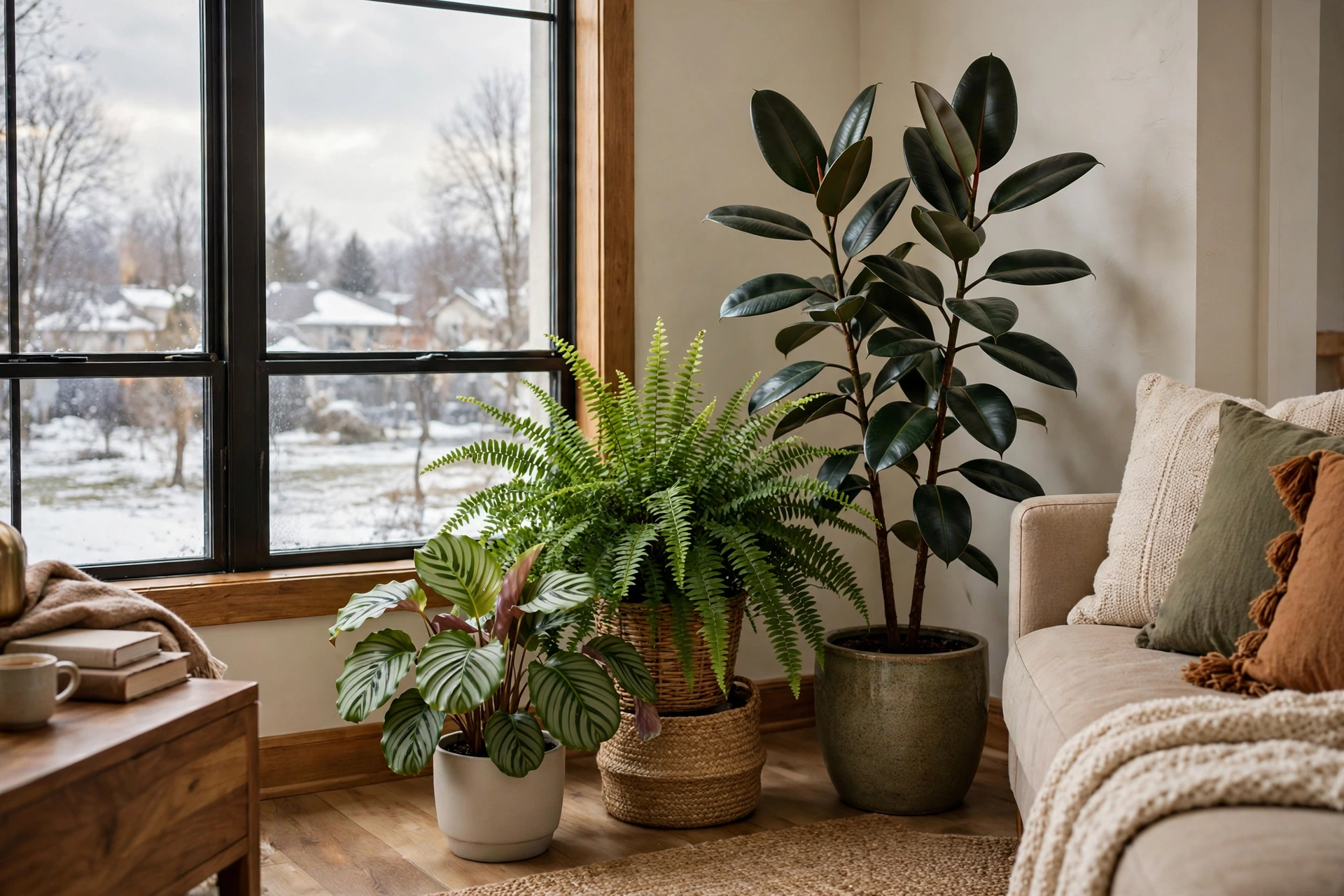
A single plant in a corner is lovely, and three plants in a corner look like you hired a designer! Group a tall rubber plant, a Boston fern, and a calathea together, and the corner fills with layers of green. The rubber plant adds height with big glossy leaves, the fern spills soft fronds, and the calathea brings patterned leaves near the floor. Bright indirect light suits all three, and the group shares humidity in dry heated air. Water the rubber plant when the top inch dries, and keep the fern and calathea evenly moist. Rubber plants are toxic to cats and dogs, while the fern and calathea are non-toxic.
One tip: put the tallest plant at the back, since a stepped lineup lets every leaf catch the light from the window.
11. A Glass Terrarium Glowing on the Console Table
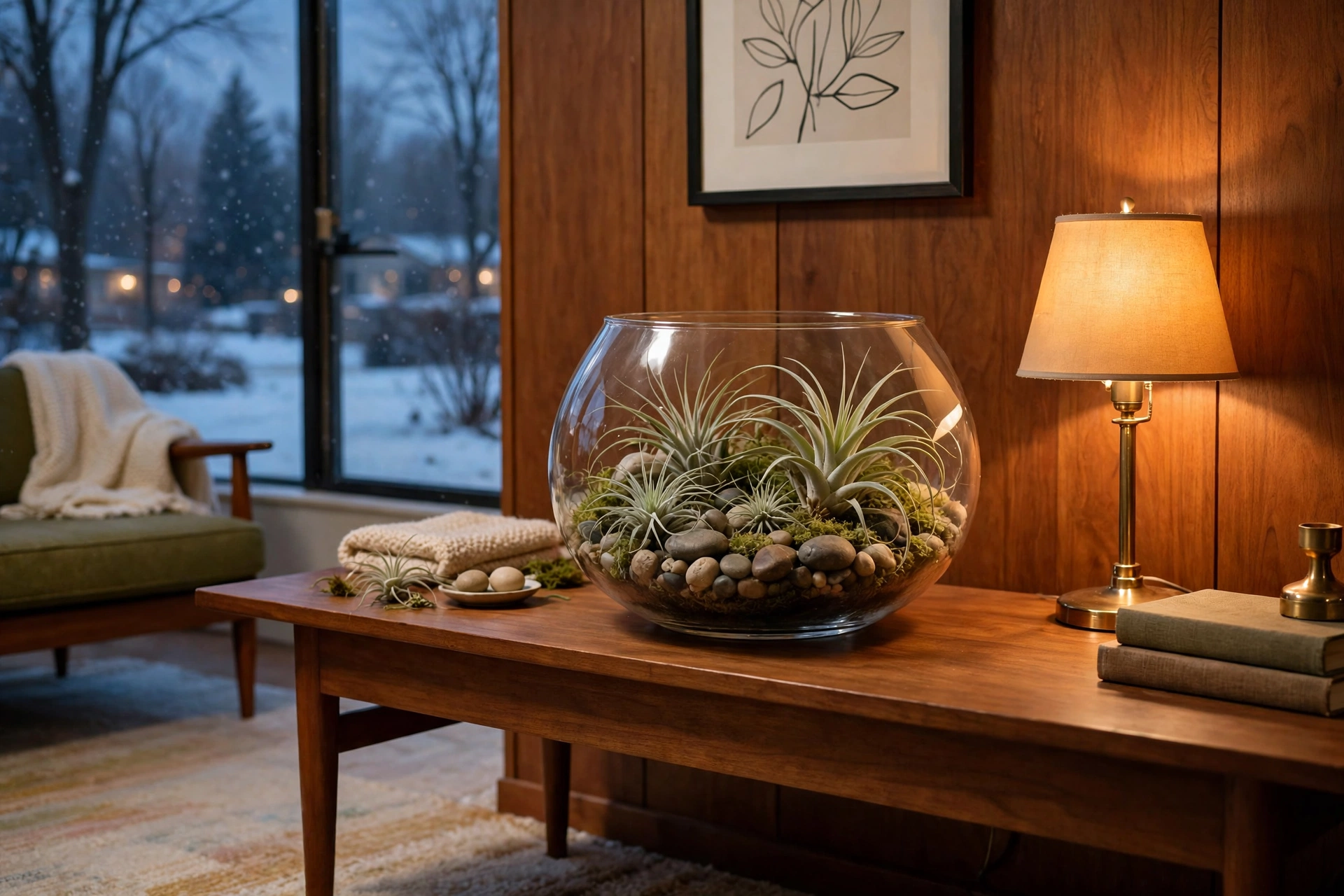
Your console table is the first thing guests see, and a glass terrarium makes it look planned! Fill an open glass bowl with air plants, moss, and smooth pebbles, and you have a tiny winter landscape that needs no soil at all. Air plants drink through their leaves, so a weekly soak of 20 to 30 minutes keeps them happy. Bright indirect light suits them best, and gentle light keeps the thin leaves fresh and green. Let each plant dry fully after its soak, since dry leaves stay healthy and happy. No toxicity is listed for air plants, so this display is a gentle pick for pet homes.
One tip: lift the air plants out for their weekly soak, since a quick lift keeps the moss dry and gorgeous.
12. A Norfolk Island Pine as Your Living Winter Tree
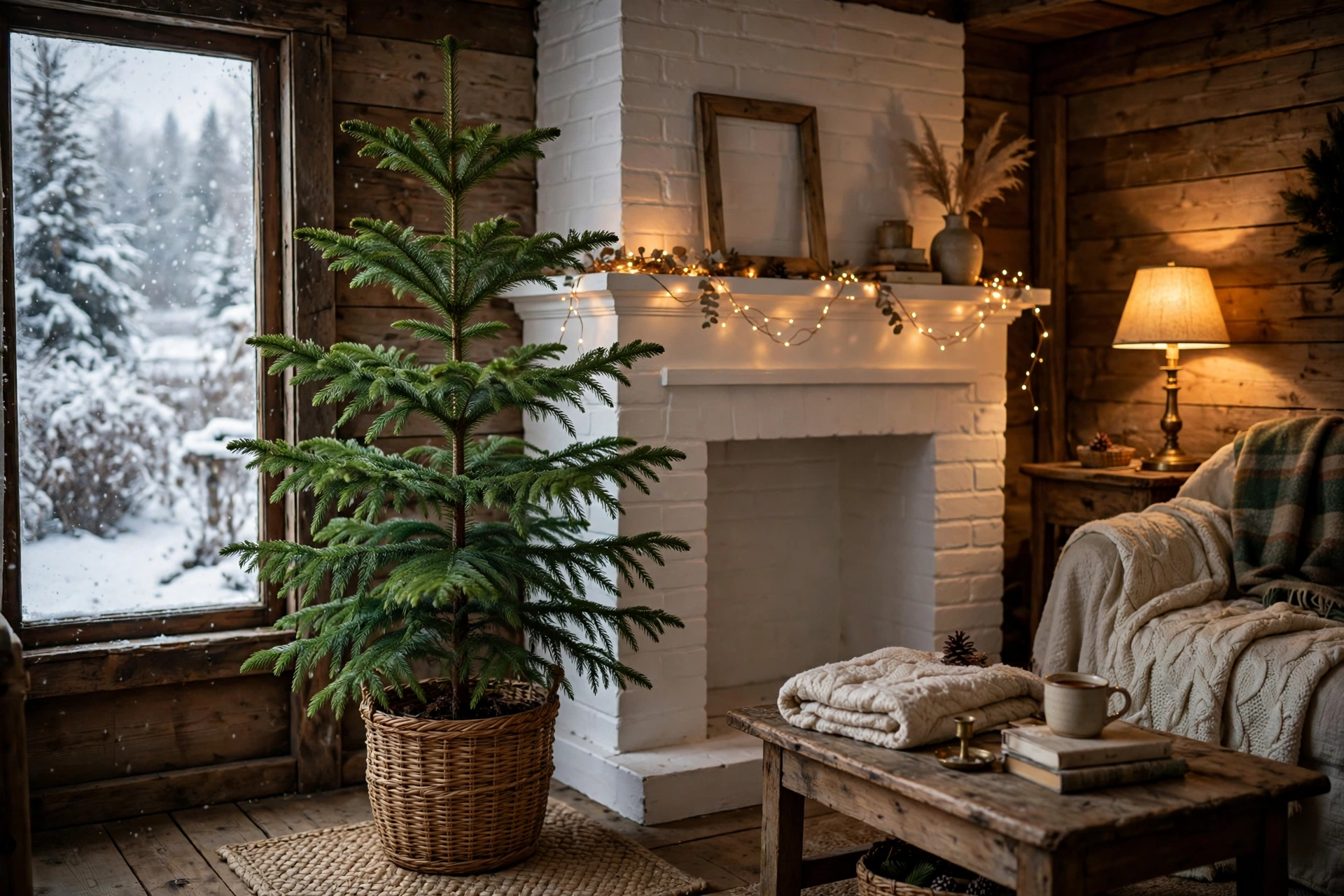
Forget the fake tree in the attic, because a Norfolk pine gives you a living tree that stays green all year! Set it in a woven basket beside the fireplace, add tiny lights, and your living room has a winter tree with zero assembly drama. Norfolk pines grow slowly, about 6 inches a year, and indoor plants can reach 9 feet over many years. Bright light suits it best, and a cool room of 55 to 65 degrees keeps it happiest. Water regularly in spring and fall, then water sparingly in winter. The ASPCA lists Norfolk Island pine as non-toxic to cats and dogs, wonderful news for pet owners!
One tip: never cut the top of the tree, since an untouched top keeps growing upward for years and years.
13. Basket Planters Greeting You at the Entryway
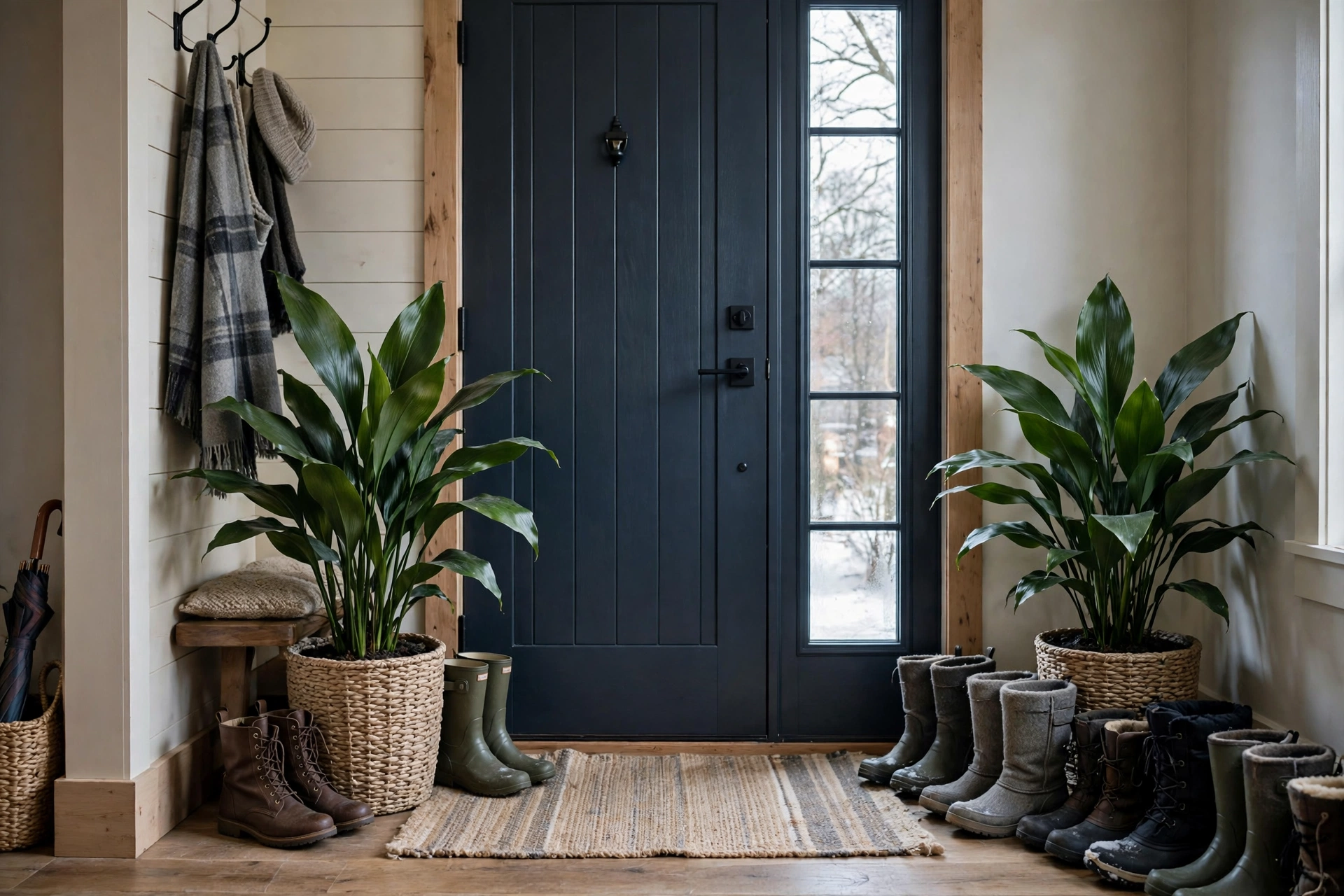
The entryway is where your home makes its first impression, and cast iron plants make it a gorgeous one! Two woven baskets with cast iron plants turn that awkward strip into a proper welcome. These plants grow 1 to 3 feet tall in a slow clump, and they handle cool rooms down to about 45 degrees. Low light suits them best, and gentle light keeps the dark leaves glossy and green. Let the top 2 inches of soil dry between waterings, and in winter you may water only every few weeks. Cast iron plants are listed as non-toxic to cats and dogs by the ASPCA, wonderful news for pet owners!
One tip: keep the baskets a few feet inside the door, since a sheltered spot keeps the plants happy all winter.
14. A Grow Light Corner That Saves Your Darkest Spot
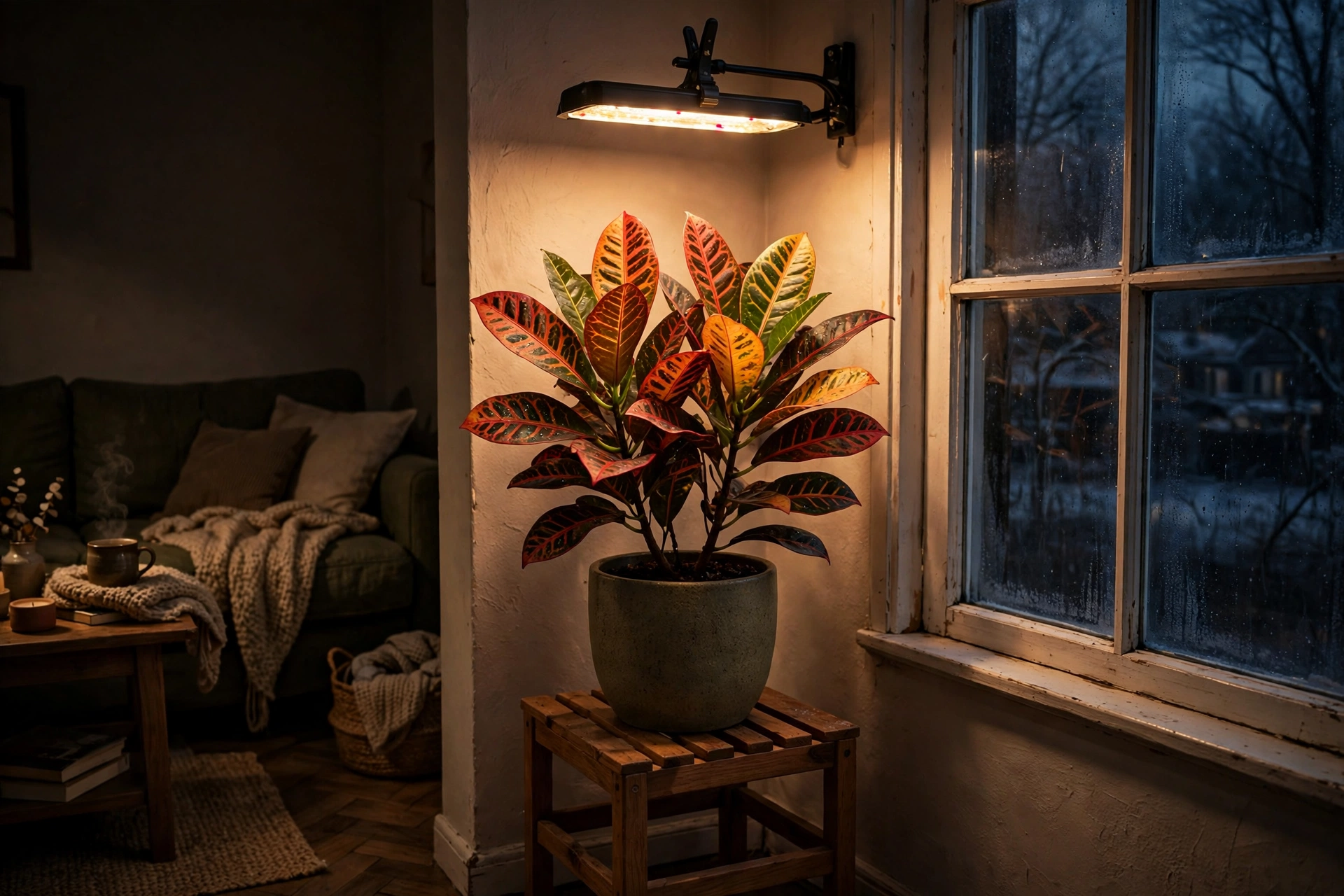
Every living room has a corner with almost no light, and a grow light turns it into prime real estate! Set a croton on a plant stand under a warm bulb, and the dark corner has color. Crotons need bright light to keep their red, orange, and yellow leaves vivid, and dim rooms turn them green. Run the light by day and switch it off at night, since a steady rhythm keeps the plant growing. Keep the soil moist, and keep the plant in a warm room away from drafts. NC State lists croton as toxic to cats and dogs, so keep it out of reach and let it shine.
One tip: put the light on a timer, since a timer keeps the schedule steady even when you forget all week.
15. Trailing Vines Softening the Bookshelf
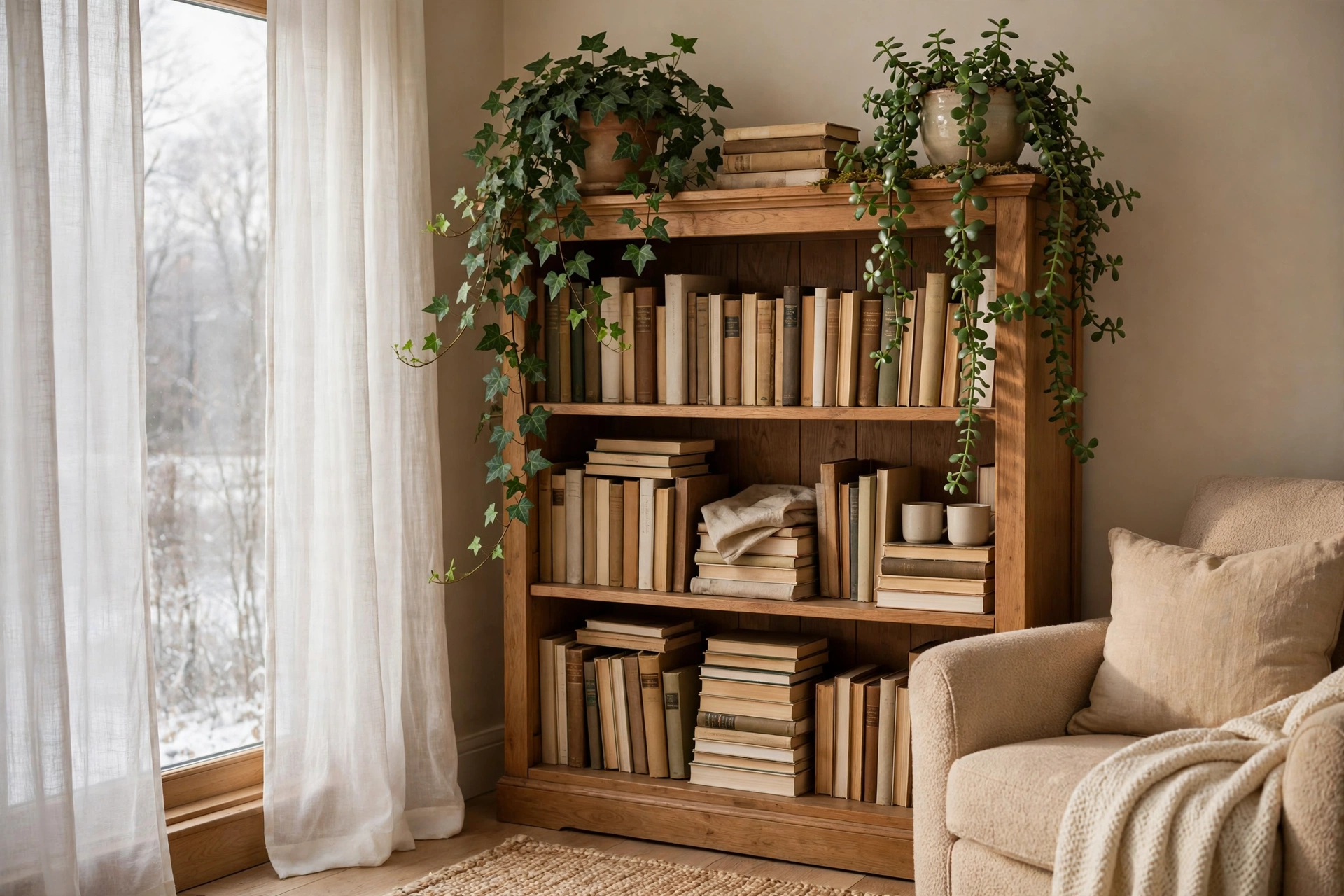
Bookshelves can look a little plain, and trailing vines are the fastest fix in the book! Let English ivy and trailing jade spill from the top shelf, and the whole bookcase turns soft and green. English ivy trails 3 to 8 feet with lobed leaves, and it actually loves the cool rooms most houseplants complain about. Trailing jade adds tiny round leaves on thin stems that reach about 12 inches. Bright indirect light suits both, and the ivy wants cool air between 50 and 70 degrees. The ASPCA lists English ivy as toxic to cats and dogs, while trailing jade is non-toxic, which pet owners love!
One tip: check the ivy leaf undersides for spider mites each month, since a quick peek keeps the vines healthy and gorgeous.