1. Oregano Brings Pizza Night to Your Kitchen Counter
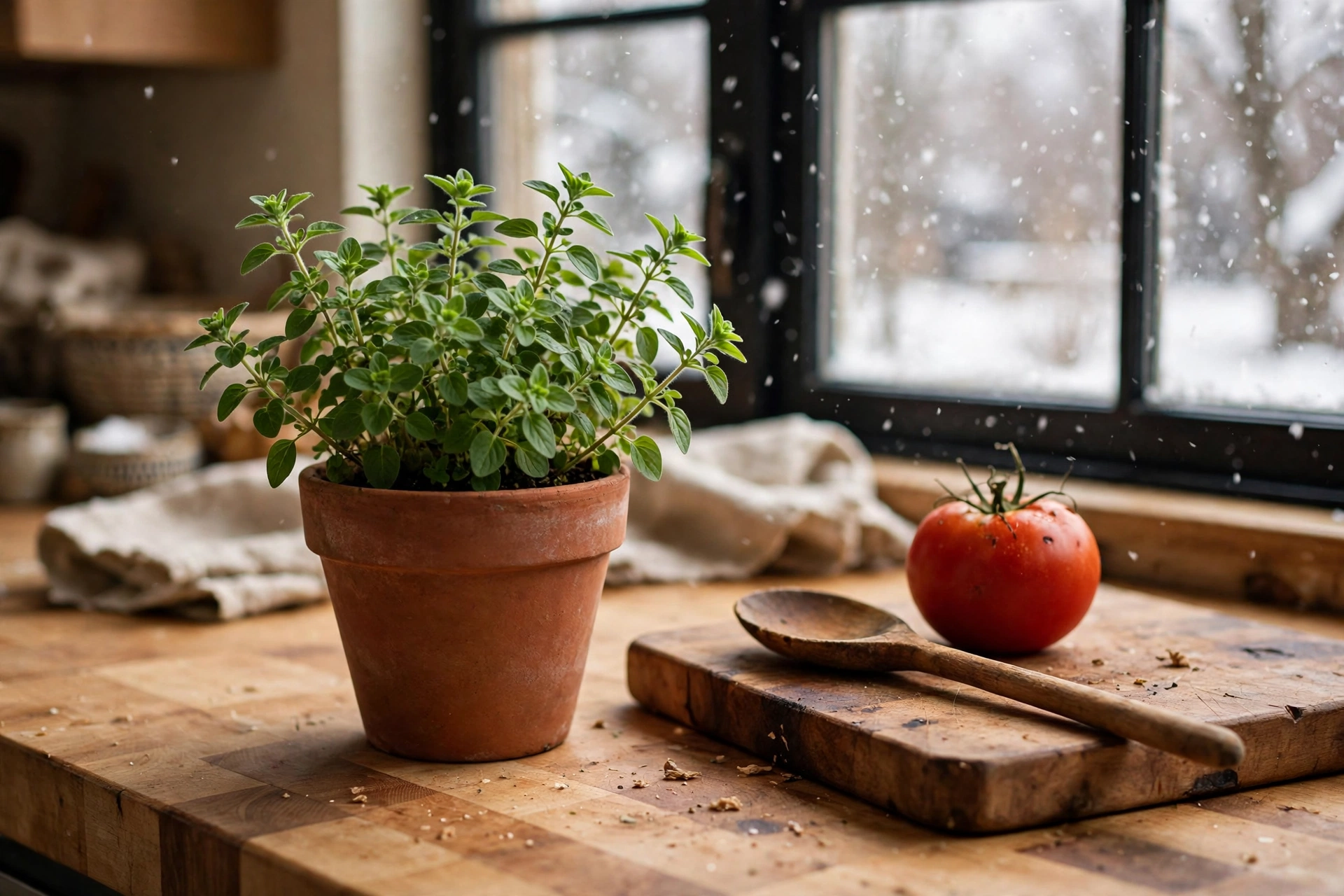
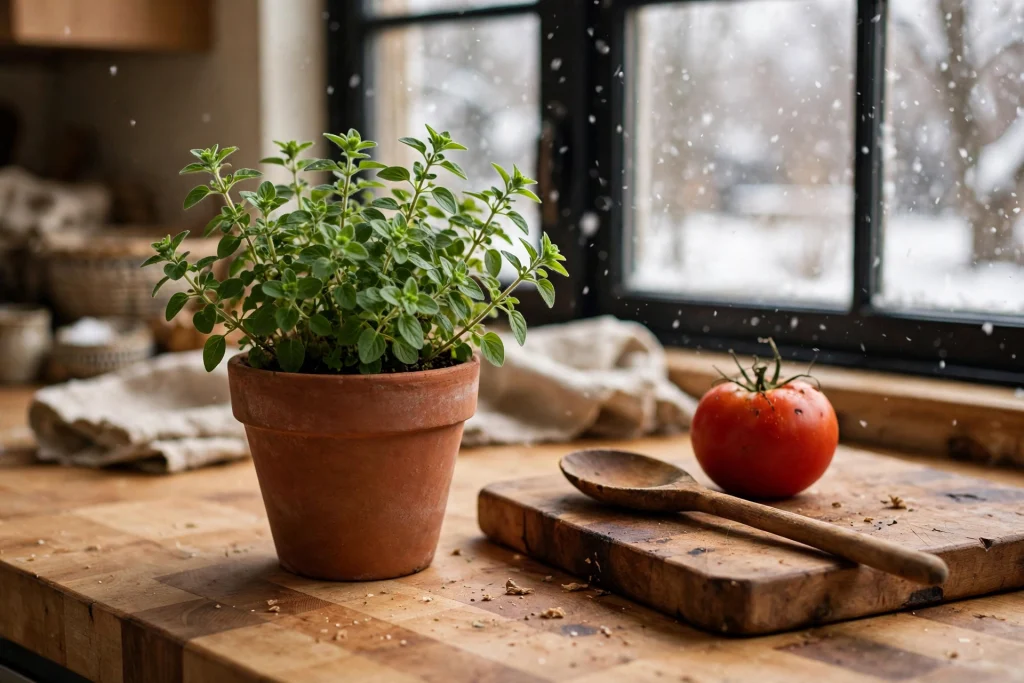
Oregano earns its happy counter spot the first time you snip fresh leaves over hot pasta! This hardy herb carries small, peppery leaves and spreads 18 inches wide, so start it in a 6-inch pot! Give it 6 to 8 hours of direct sun a day, since weak light fades the flavor! Water gently only when top inch of soil feels dry, about every 7 to 10 days! Warm cozy room suits it best, between 65 and 75 degrees! Pinch the tips often, so a mini herb garden stays bushy instead of tall and bare! Pet owners should know the ASPCA lists Greek oregano as toxic to cats and dogs!
One tip: snip the top few inches before the plant flowers, since the leaves taste strongest just before bloom, and keep the pot out of reach of nibbling pets for happy cooking!
2. Dill Stands Tall at the End of the Counter
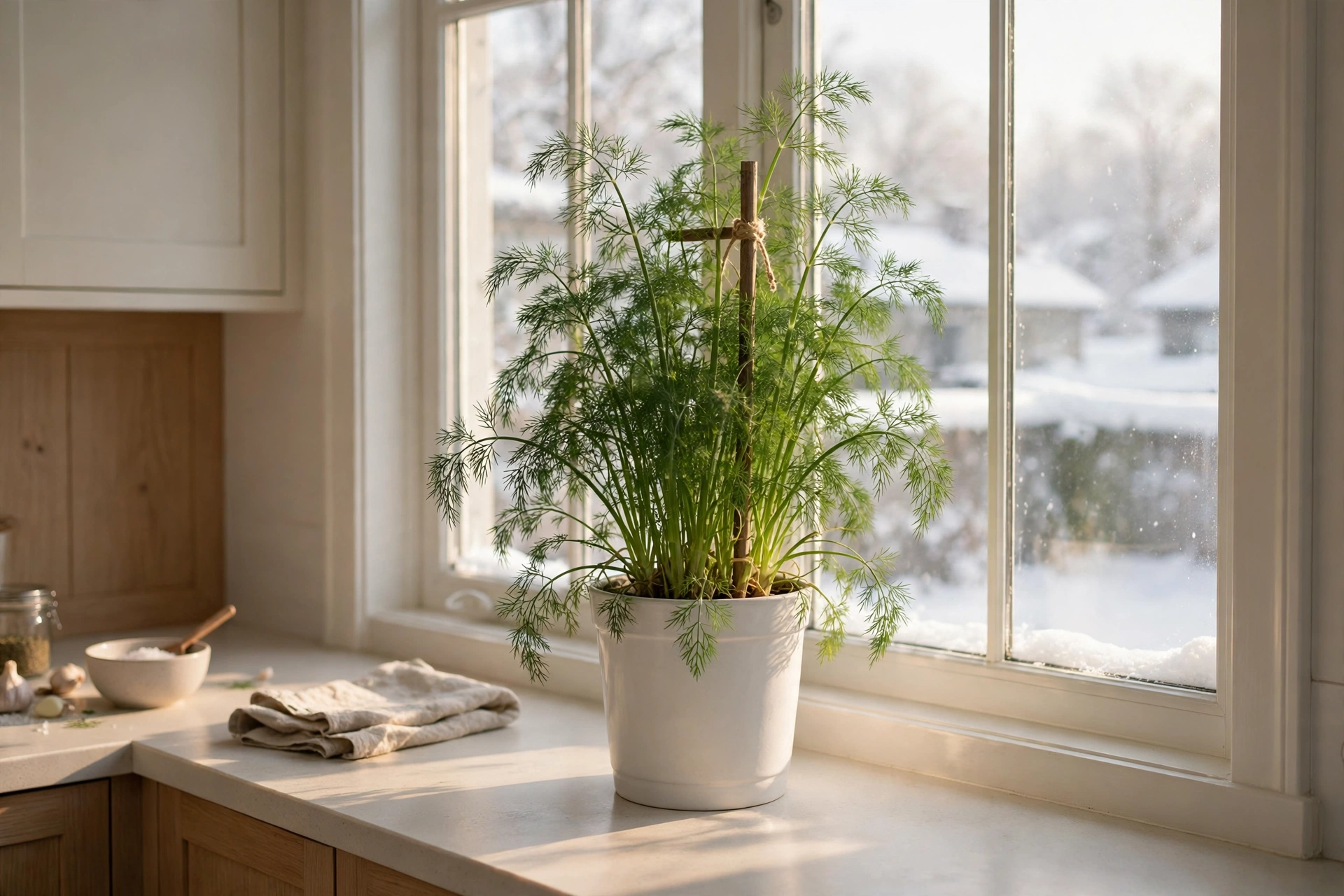
Dill brings cheerful feathery fronds and a fresh flavor to fish, salads, and pickles! Dwarf Fernleaf stays 12 to 18 inches tall, so it suits the counter end best! Sow seeds straight into a pot at least 12 inches deep, since the taproot hates moving! Give it 6 to 8 hours of direct light, plus a grow light in winter, for happy fronds! Water deeply once or twice a week, keeping the soil consistently moist below the surface! Warmth between 60 and 75 degrees suits it, and harvesting herbs starts once it reaches 8 inches tall! Happily, the ASPCA lists dill as non-toxic to cats and dogs!
One tip: sow a fresh pinch every 3 to 4 weeks, since dill bolts fast and new batches keep happy harvests coming! Turn the pot weekly for straight, compact fronds!
3. Chervil Loves the Cool, Shady End of the Counter
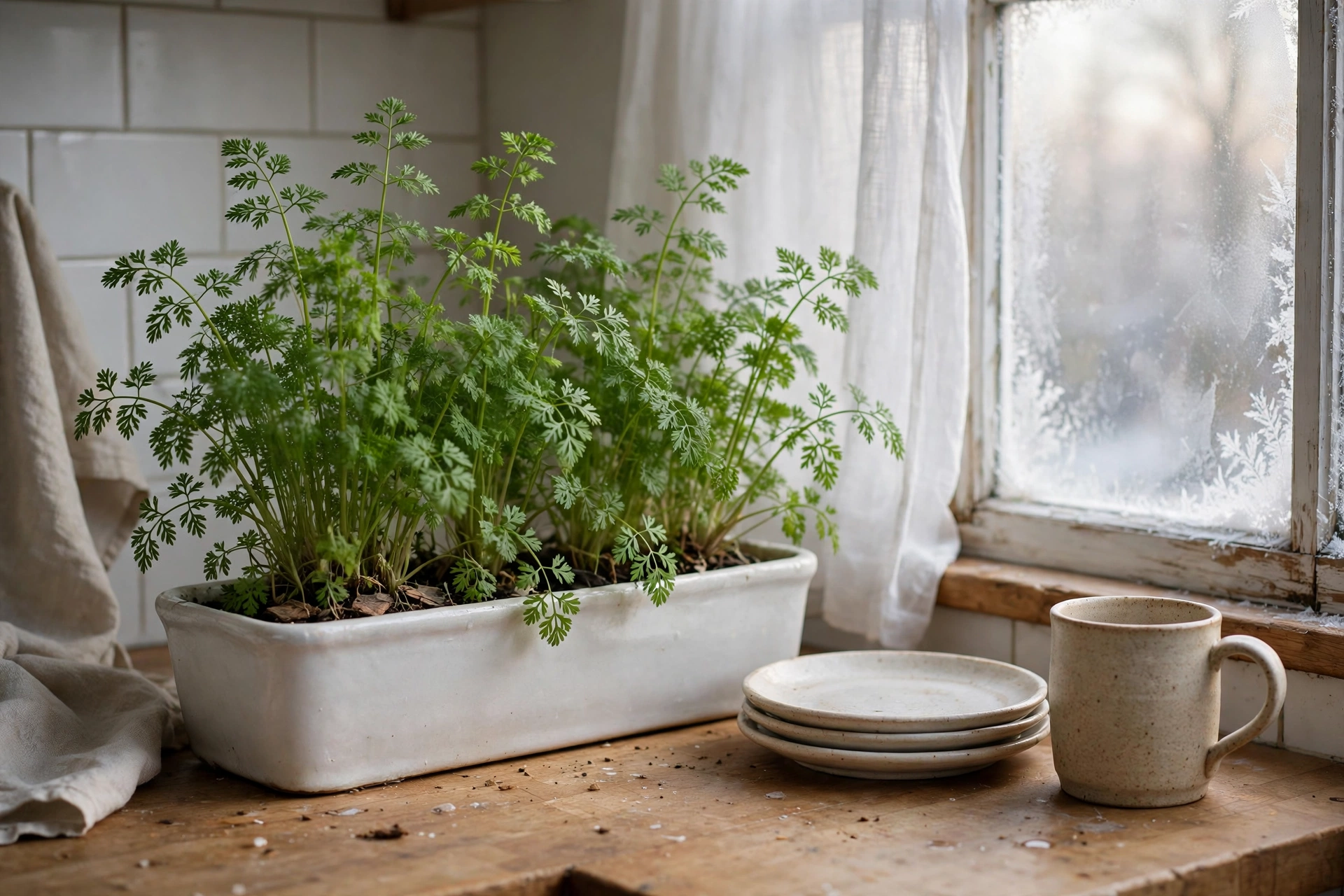
Chervil tastes like parsley with a whisper of anise, and its lacy leaves look like cheerful ferns! This cool-season annual loves partial shade, so an east window beats a hot south sill! Keep the soil evenly moist for happy leaves, since dry soil turns the leaves bitter! Cool cozy air suits it best, between 60 and 70 degrees, and sustained heat above 75 bolts it! Sow seeds straight into a pot at least 10 inches deep, since its long taproot hates moving! Start snipping leaves about 8 weeks after sowing, once plants stand 4 inches tall! Happily, the ASPCA lists chervil as non-toxic to cats and dogs!
One tip: snip only the outer leaves and leave the center growing, then sow fresh seed every few weeks for steady happy harvests!
4. Catnip Loves the Sunny End of the Counter
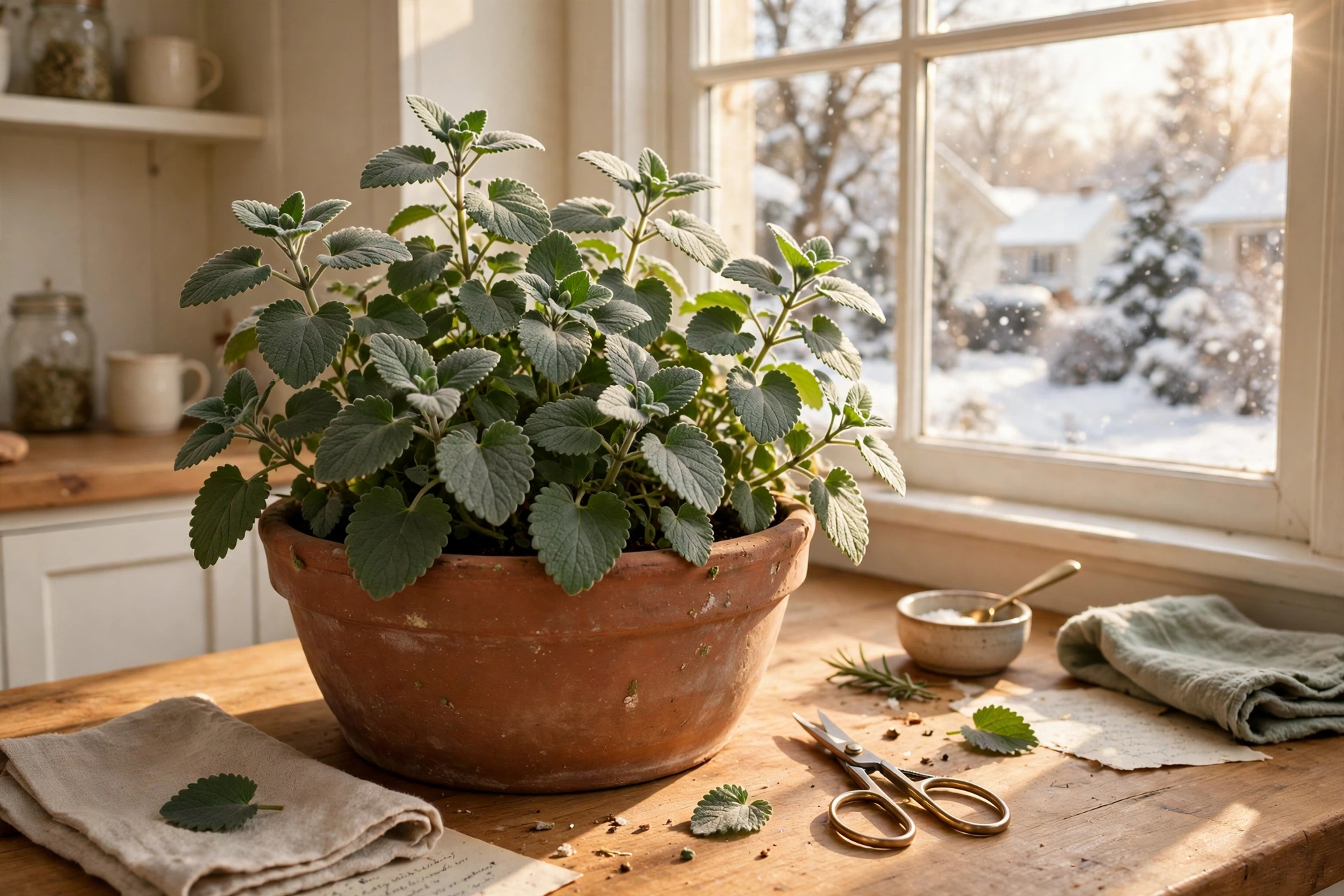
Catnip turns your kitchen counter into your cat’s favorite spot! Pure joy glows in that sunny corner! This mint-family perennial reaches 3 feet tall with lovely gray-green leaves, and its scent makes about two of three cats roll! Give it at least 6 hours of direct sun daily from a south window! Water when the top inch feels dry, and pinch tips often! Warmth between 60 and 70 degrees suits it best! Snip sprigs at 6 inches tall, and let cats sniff only briefly! The ASPCA lists catnip as toxic to cats. Eating too much can cause vomiting and diarrhea. Sweet, sunny, cheerful, and loved, it sparkles with joy!
One tip: Choose a wide pot, at least 10 inches across, with drainage holes, since catnip spreads wide and hates wet feet, for joyful roots!
5. Stevia Sweetens Tea Straight From the Counter
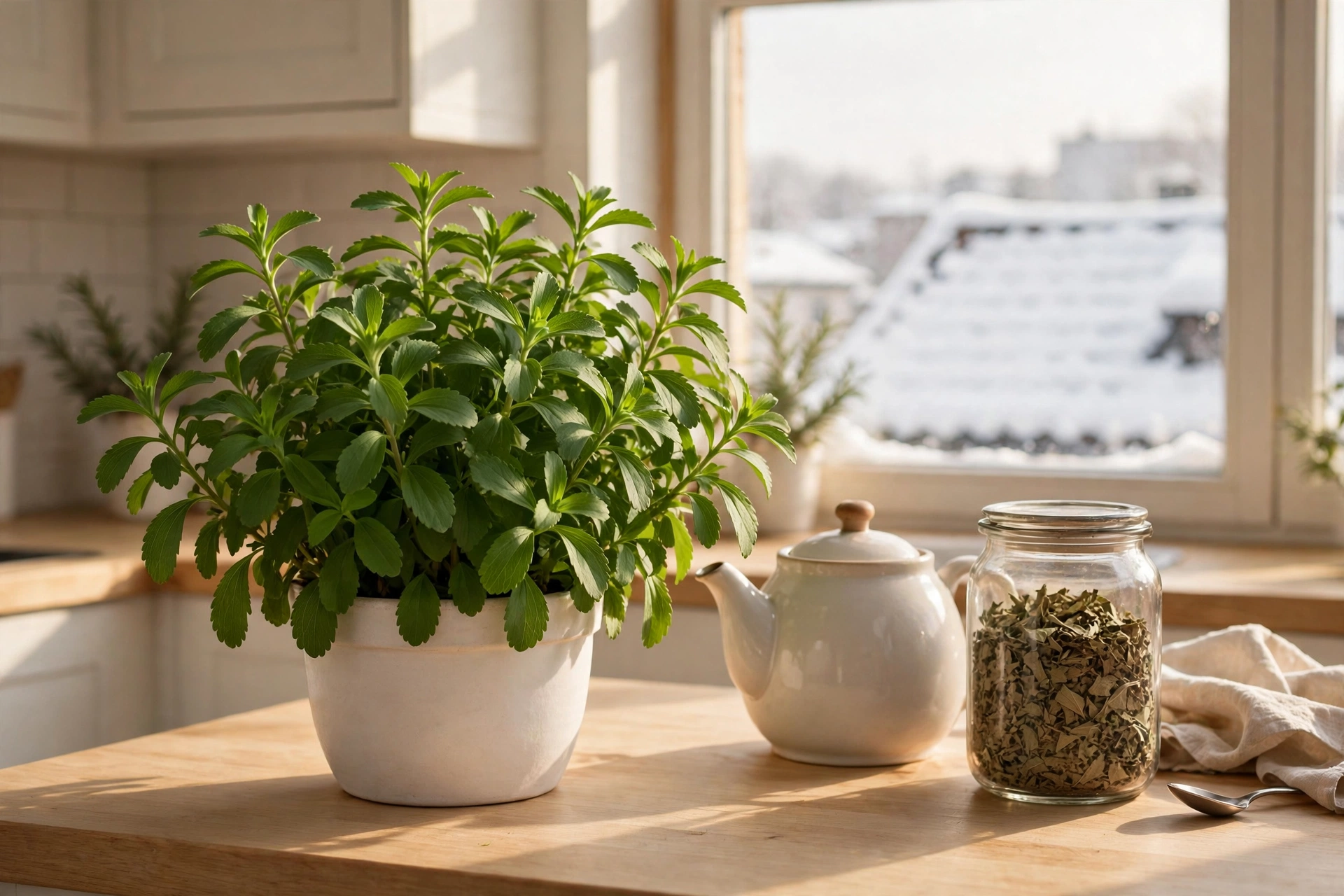
Stevia sweetens your tea straight from the counter with delight! Its leaves taste many times sweeter than sugar, sunny sweetness! This tender perennial from Paraguay and Brazil reaches 12 to 24 inches tall and wide! Give it at least 6 hours of direct sun daily, since shade stretches stems! Water when the top inch feels dry, and never leave the pot standing in water! Warmth between 60 and 85 degrees suits it; cold below 50 sets it back! Leaves taste sweetest before flowering, so cut stems 90 days after planting, like other herbs that grow year-round indoors! Sweetest of all, the ASPCA lists stevia as non-toxic to cats and dogs!
One tip: Pinch the tips every 3 to 4 weeks while the plant grows, since pinching keeps it bushy with more lovely leaves!
6. Cape Sundew Catches Fruit Flies by the Fruit Bowl
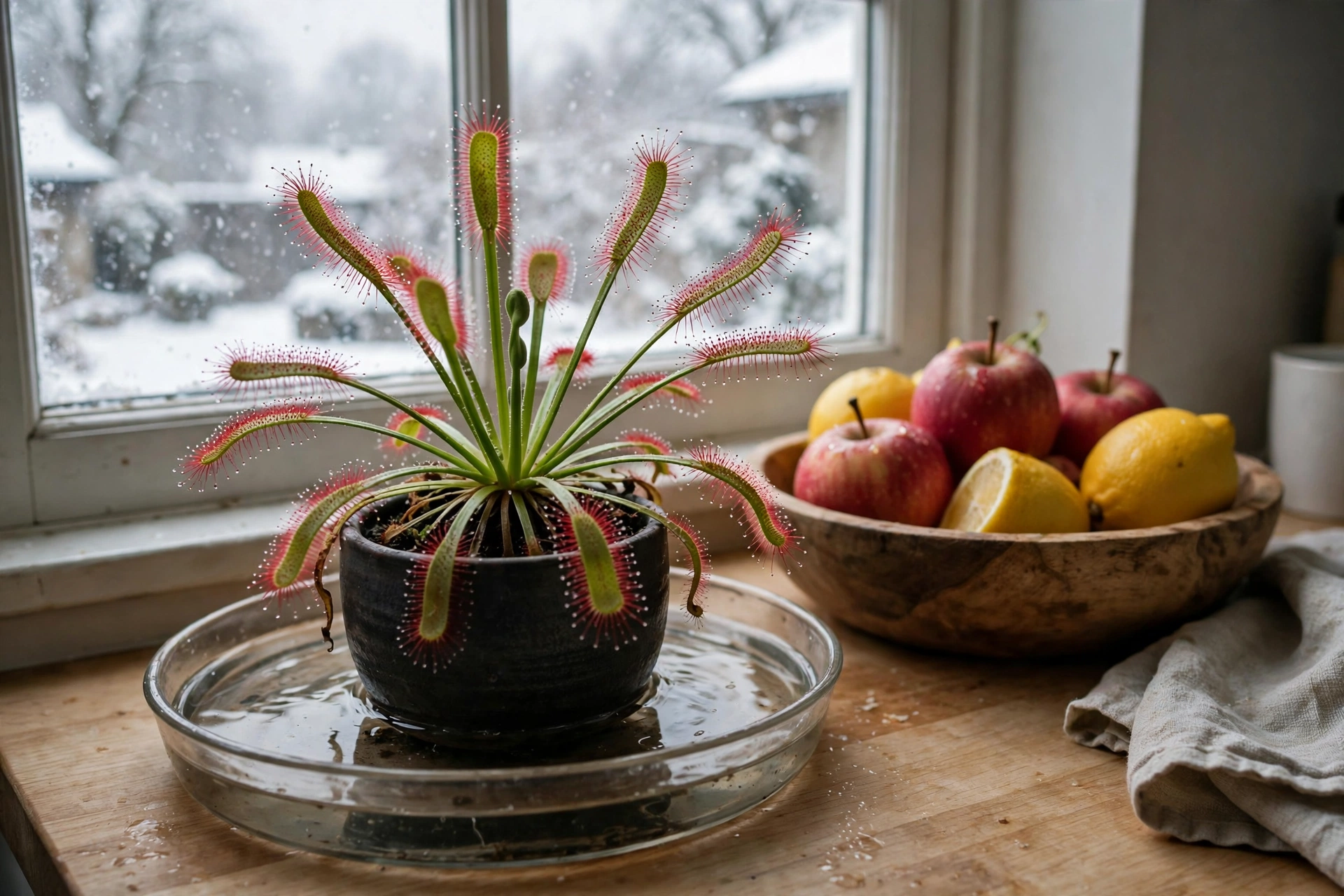
Cape sundew earns its delightful counter spot catching fruit flies by your fruit bowl! This small carnivorous plant wears narrow leaves covered in sticky red tentacles glistening like dew! Give it at least 6 sunny hours of direct sun daily, since weak light fades the red! Water only with rainwater, distilled water, or reverse-osmosis water! Tap water minerals can kill it. Stand the pot in a shallow tray of pure water, so soil stays constantly damp! Warmth between 60 and 75 degrees suits it, and normal room air keeps the tentacles sticky! Pet owners should keep sticky leaves out of reach of curious cats and dogs! Joyful, sunny, sparkling wonder!
One tip: Never feed it meat or root fertilizer. Minerals harm its roots, and it catches its own tiny insects, sparkling with life!
7. Rat-Tail Cactus Spills Like a Green Waterfall
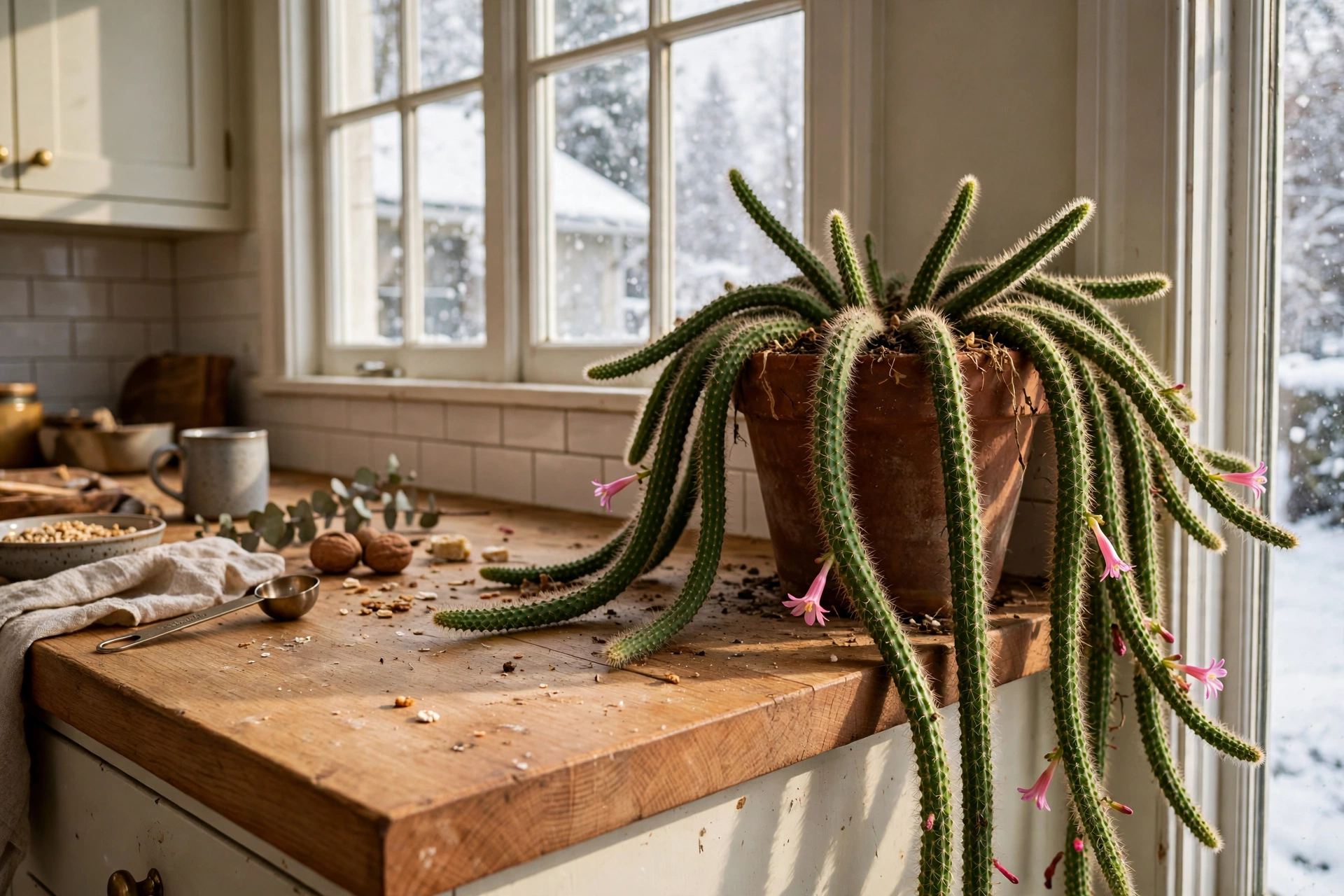
Rat-tail cactus turns a dull counter end into a green waterfall, with slim stems spilling over! This trailing cactus from Mexico grows stems 3 to 6 feet long, each lined with bristly spines! Full sun suits it best, with bright light even through the winter rest! A simple watering schedule for indoor succulents works here, so soak when the top inch feels dry! It likes warmth between 65 and 80 degrees, but keep it above 45 degrees in winter! Pink, tubular flowers open on mature stems in late spring after a cool winter rest! Good news for pet people, rat-tail cactus is generally considered non-toxic to cats and dogs!
One tip: water when the top inch dries in summer, then keep it much drier in winter! Wear gloves when you move it, since the bristly spines can prick!
8. Haworthia Cooperi Glows Like Glass Grapes
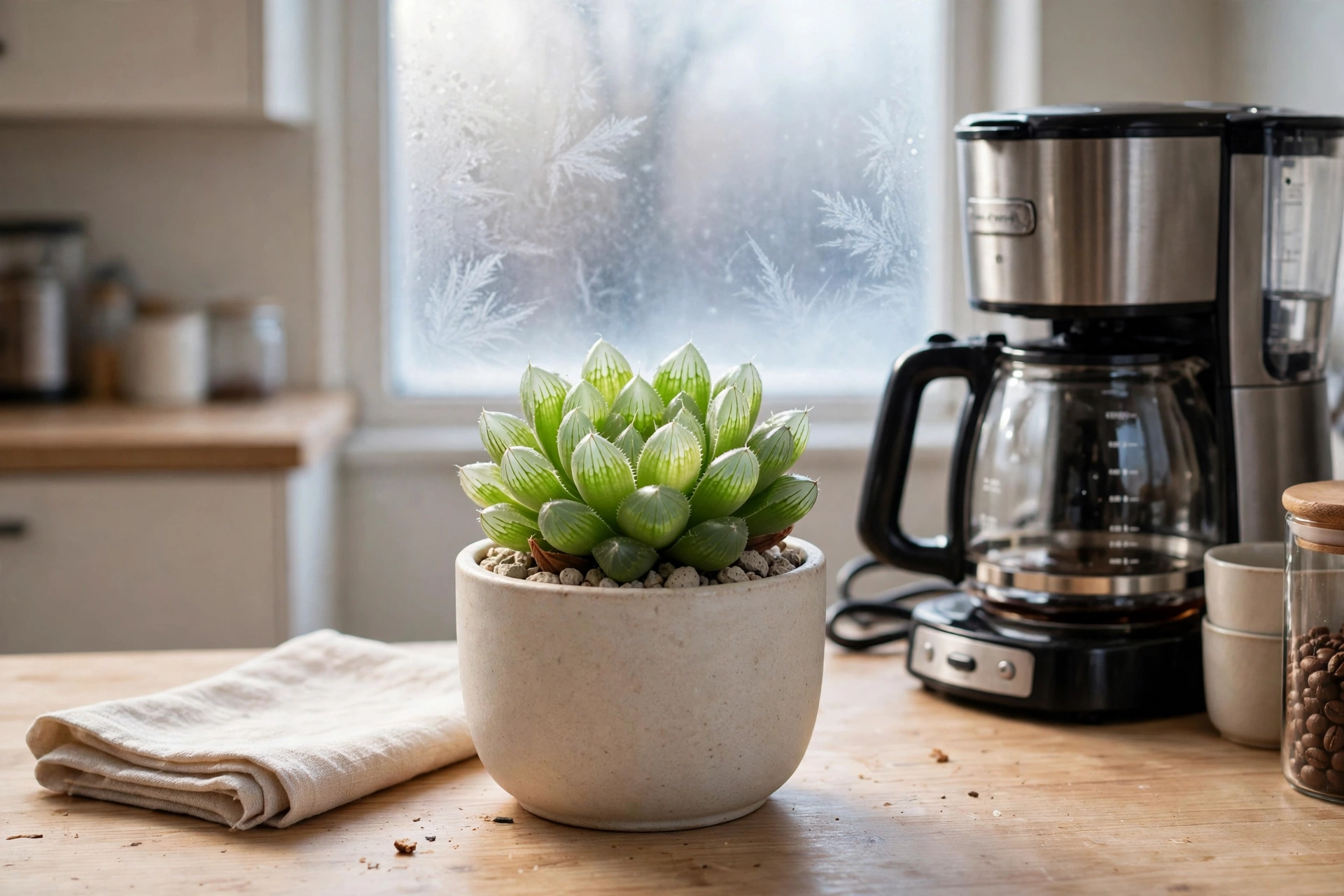
Haworthia cooperi looks like a cluster of tiny glass grapes, with plump, see-through leaves! This slow grower stays 2 to 3 inches tall and spreads 4 to 6 inches wide, so a small pot fits crowded counters! Bright, indirect light suits it best, and harsh midday sun can scorch the glassy leaf tips! Water only when the soil feels completely dry, then soak it and let it drain! Rooms between 65 and 80 degrees suit it! Never let water pool in the heart of the rosette, since trapped water invites rot! Pet owners will like that the ASPCA lists haworthias as non-toxic to cats and dogs!
One tip: water at the edge of the pot only, since a dry rosette heart stays healthy and the glassy leaves keep glowing!
9. Hart’s Tongue Fern Greens Up a Shady Corner
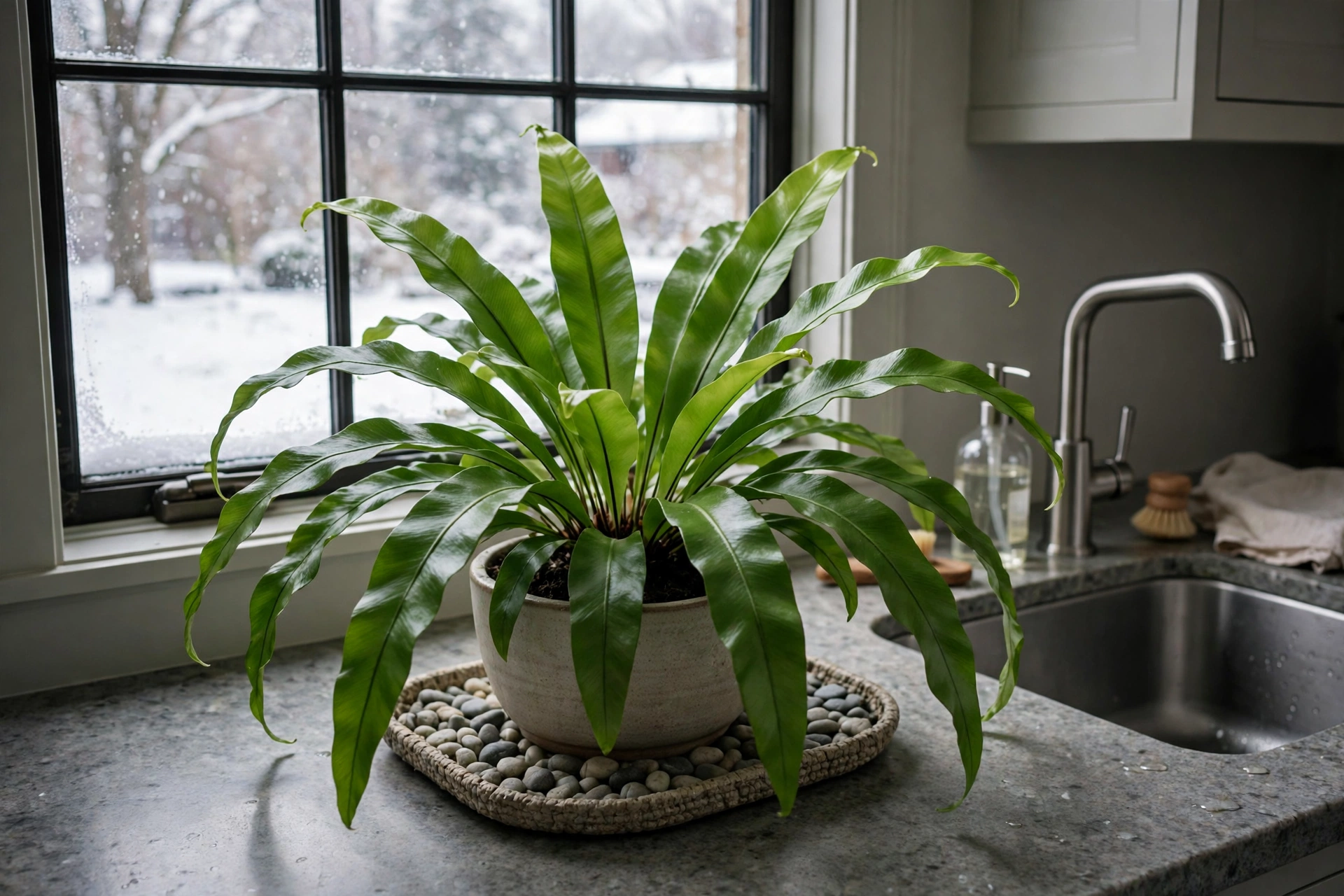
Hart’s tongue fern brings cool, glossy green to the shady end of the counter! This slow grower wears smooth, strap-like fronds that reach 12 to 20 inches tall and wide! Low to medium indirect light suits it best, and direct sun scorches the glossy fronds! Keep the soil moist by watering when the top inch feels dry, about once a week! Warmth between 60 and 70 degrees suits it, and humidity of 50 to 70 percent keeps it fresh! Its neat rosette suits narrow shelves in shaded corners! Pet owners will like that no toxicity is reported for hart’s tongue fern in cats and dogs!
One tip: set the pot on a pebble tray, since extra moisture helps the fronds stay green! Slow growth means a small pot lasts for years!
10. Peanut Cactus Packs Spring Flowers Into a Small Pot
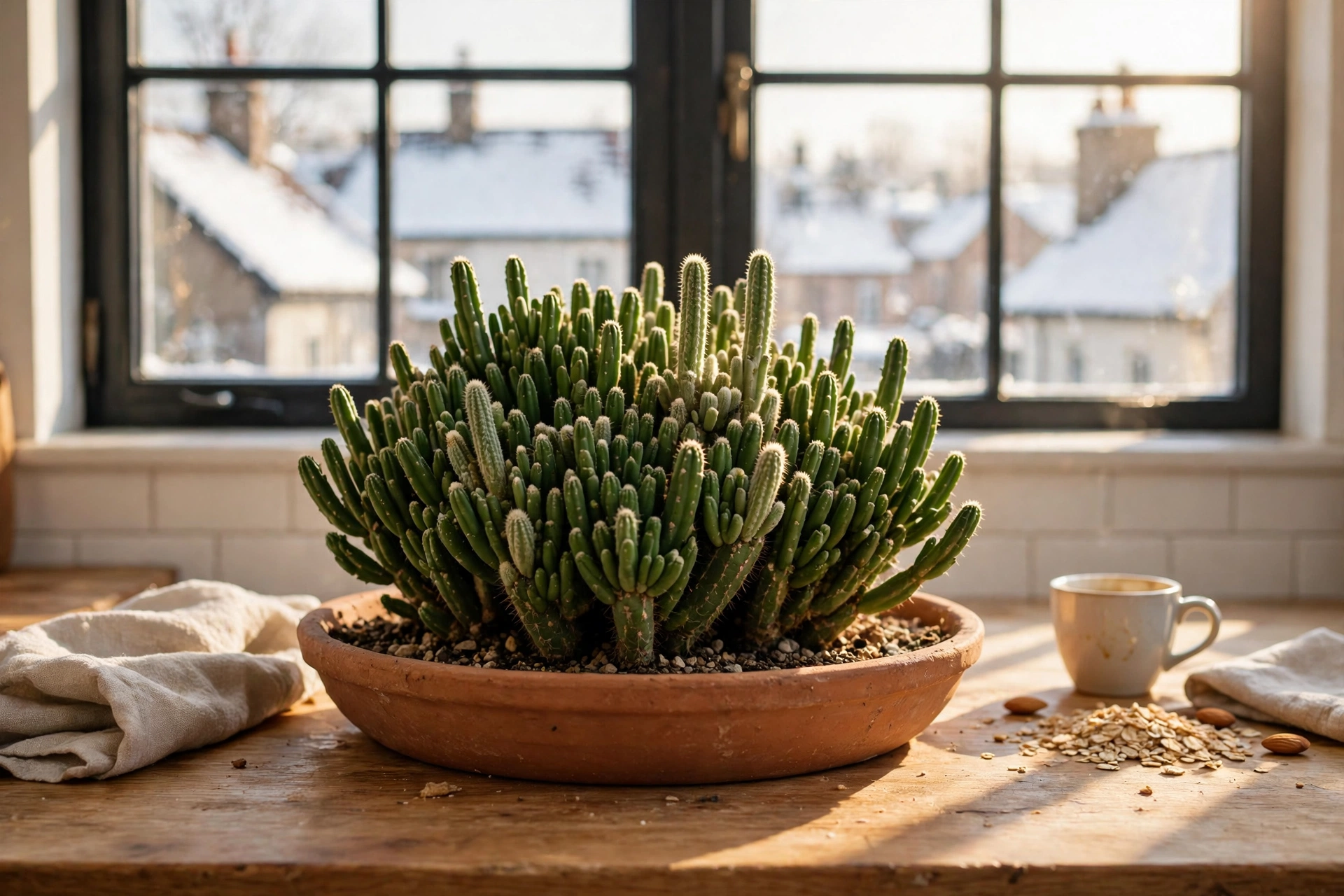
Peanut cactus packs a spring flower show into a small pot! This clumping cactus spreads finger-like stems 4 inches tall and 2 feet wide! Give it at least 6 hours of direct sun a day, since bright light keeps the stems compact! Water only when the soil feels completely dry, about every 2 to 3 weeks in summer! Warmth between 60 and 75 degrees suits it, and a 40 to 55 degree winter rest sets up spring flowers! Dozens of orange-red flowers open in late spring, though each bloom lasts just a day or two! Pet owners will like that peanut cactus is considered non-toxic to cats and dogs!
One tip: keep the winter rest cool and dry, with just a sip of water once a month, since a warm, watered winter grows lanky stems with few flowers!