1. Frosty Fern in Adhesive Wall Planters
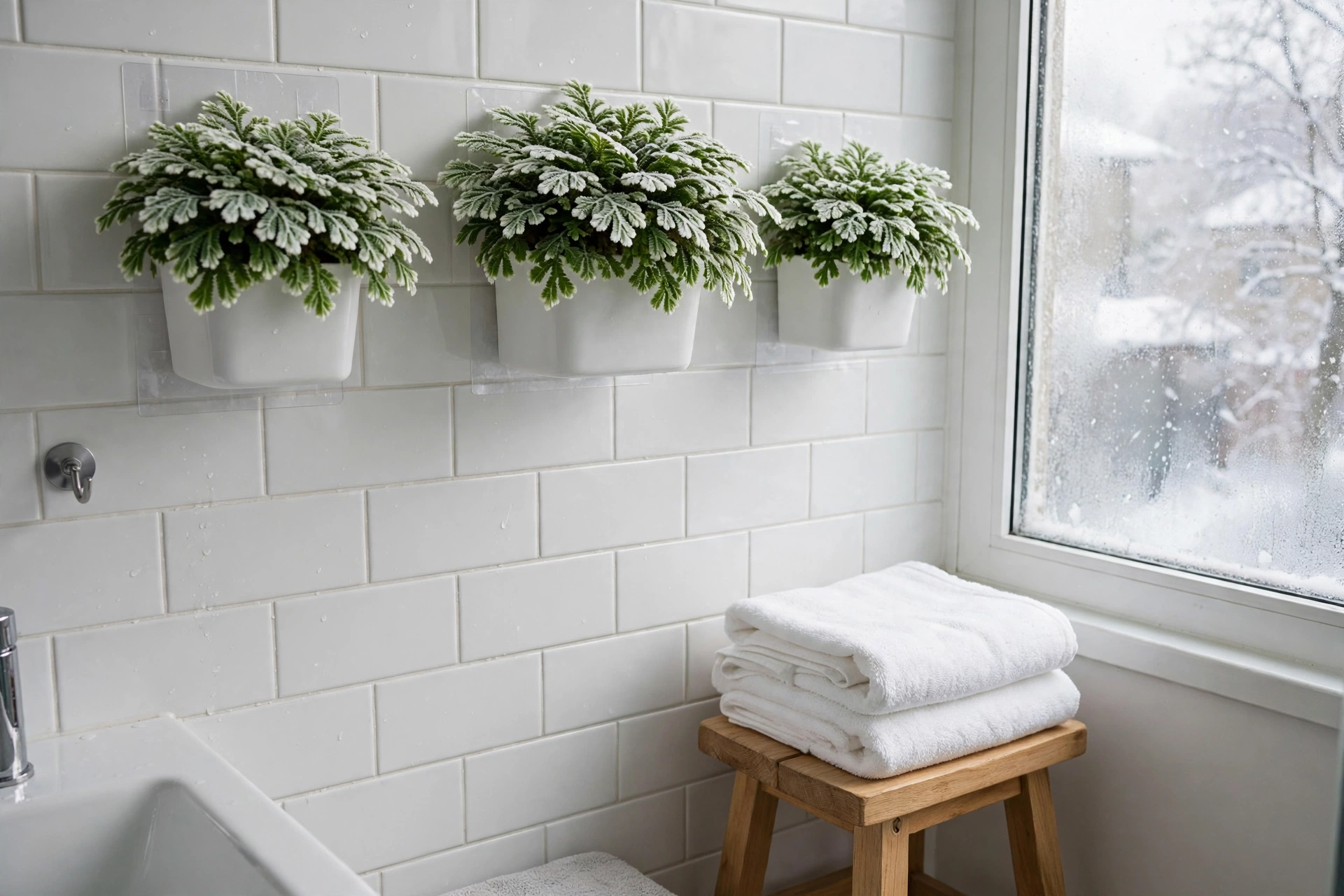
A pair of small adhesive strips holds about 1 pound, so a tiny frosty fern in a light pot is a perfect, delightful match for a no-drill wall! Its lovely soft green fronds wear frosty white tips! Bright indirect light keeps the frosty tips crisp and the green beautifully deep! Use room-temperature water and keep the soil lightly moist, since this little fern loves steady drinks! Humidity near 70 percent keeps it happiest, so a bathroom wall suits it well. Warm rooms between 65 and 75 degrees suit it beautifully! The ASPCA lists frosty fern as non-toxic to cats and dogs, wonderful news for pet owners!
One tip: wait a full hour after sticking the strips before you hang the pots, since the adhesive needs that time to bond strongly and securely for a happy little display!
2. Old Lady Cactus in Magnetic Fridge Planters
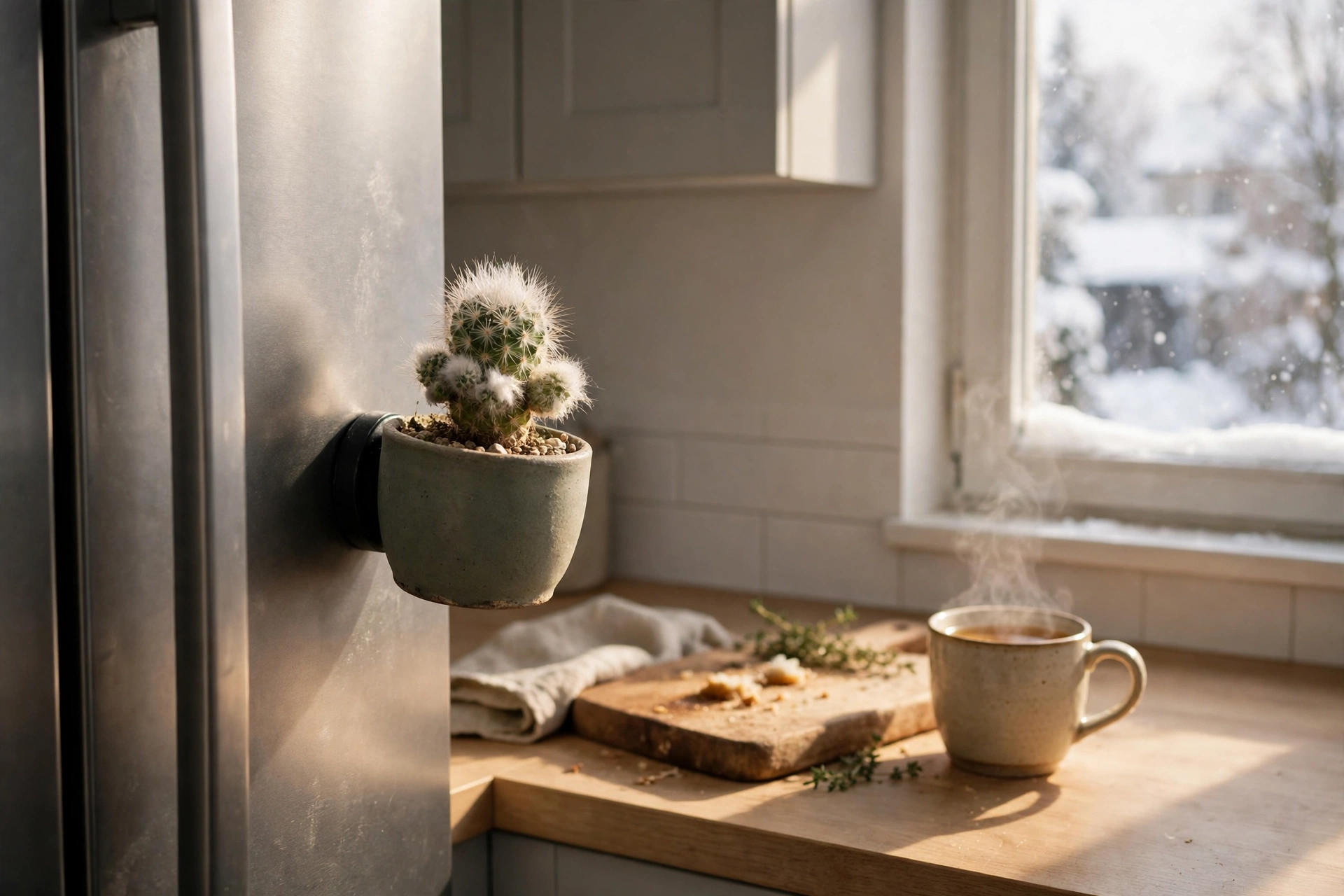
Okay, so here’s the thing! Small magnetic hooks hold around 4 pounds each, so a tiny old lady cactus in a mini pot is a light load for one! Its round body wears a coat of soft white hairs, with a gorgeous ring of pink flowers in spring! Bright light for 4 to 6 hours a day keeps it compact and happy! Water only after the soil has dried out completely, then keep it nearly dry through winter! Warm rooms between 60 and 80 degrees suit it beautifully! NC State notes pincushion cacti are non-toxic to people and pets, though the spines can still prick, so handle it with gloves!
One tip: test the magnet on your fridge first, since some stainless steel doors are not magnetic at all, so check before you buy the pots and hang your cactus happily!
3. Peace Lily on a Clamp-On Table Shelf
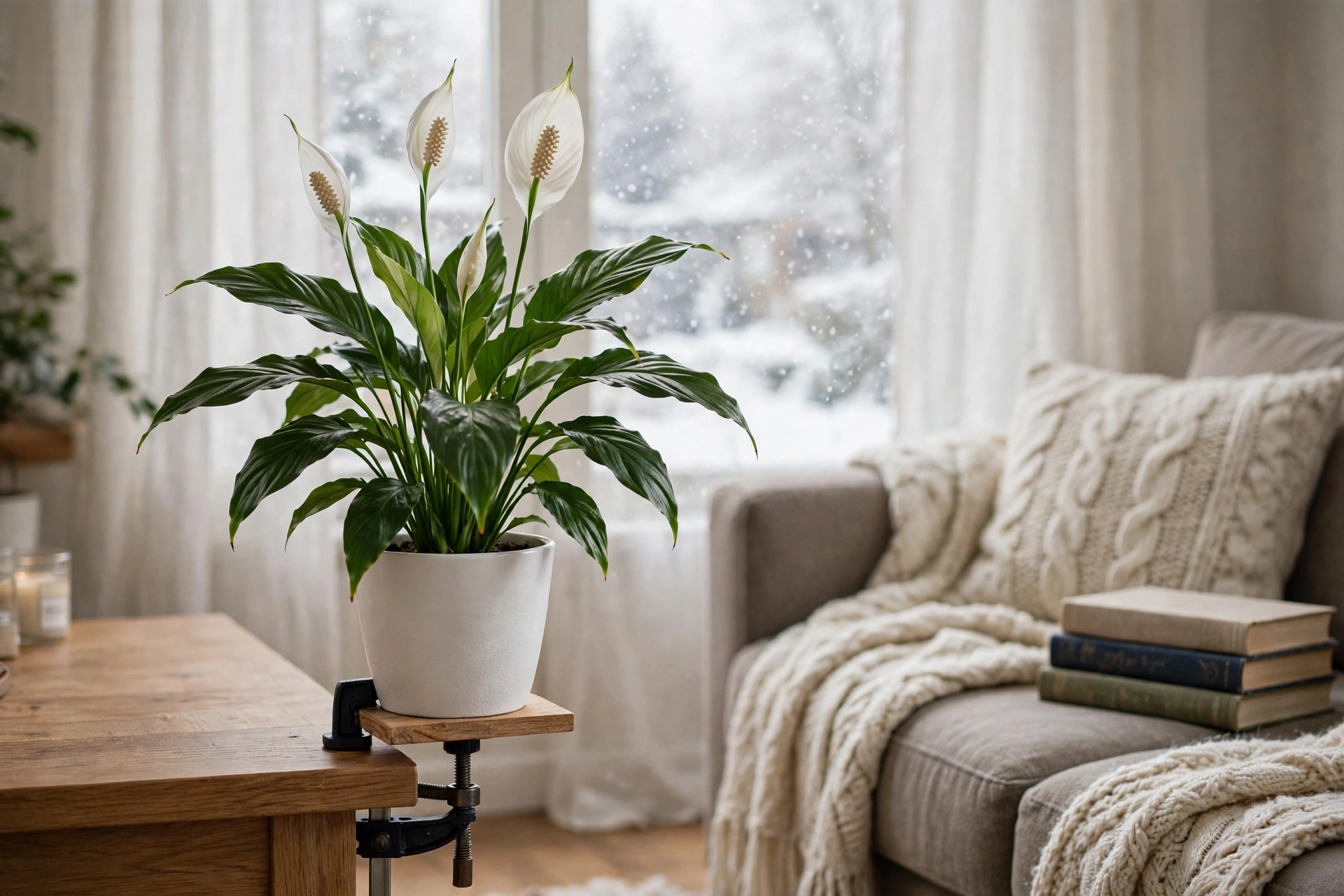
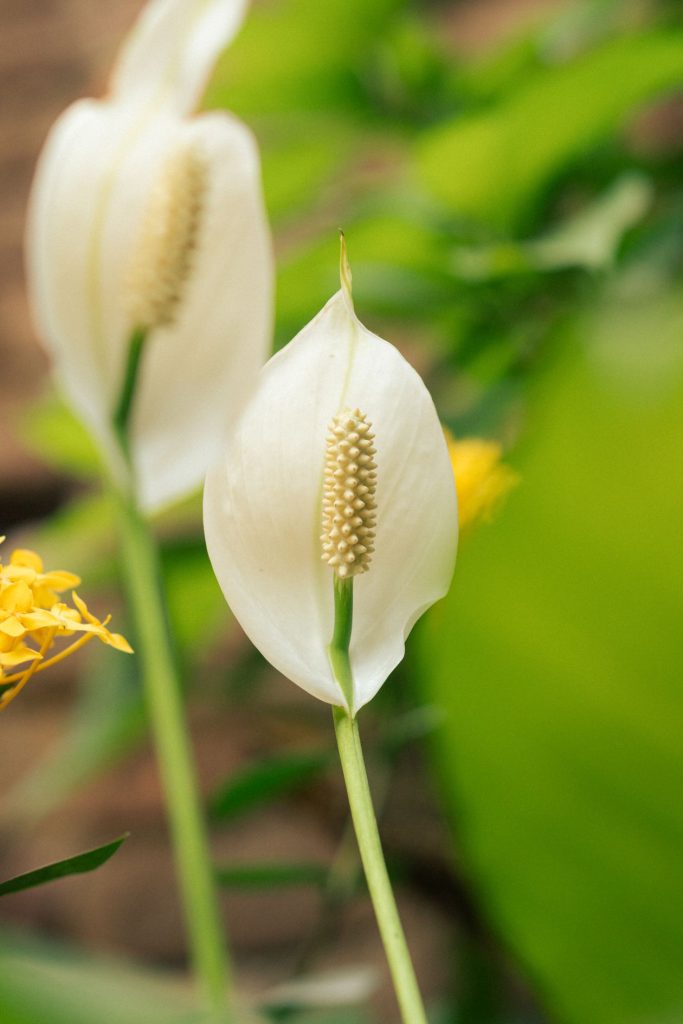
A clamp-on shelf grips a table edge with no tools and no holes, so your peace lily sits in the light! Check the load limit on the pack, since a small clamp holder is rated for a few pounds! Its gorgeous glossy leaves rise in a lush clump, and white spathes open like little flags! Bright indirect light suits it beautifully, since direct sun burns the leaves! Water when the top inch of soil feels dry! Warm rooms between 68 and 85 degrees suit it best, never below 60 degrees. The ASPCA lists peace lily as toxic to cats and dogs, so grow it in a room pets cannot enter!
One tip: slide a felt pad under the clamp jaws, since it guards the table edge and stops the shelf from slipping, and your peace lily sits happily!
4. Asparagus Fern on a Floor-to-Ceiling Tension Pole
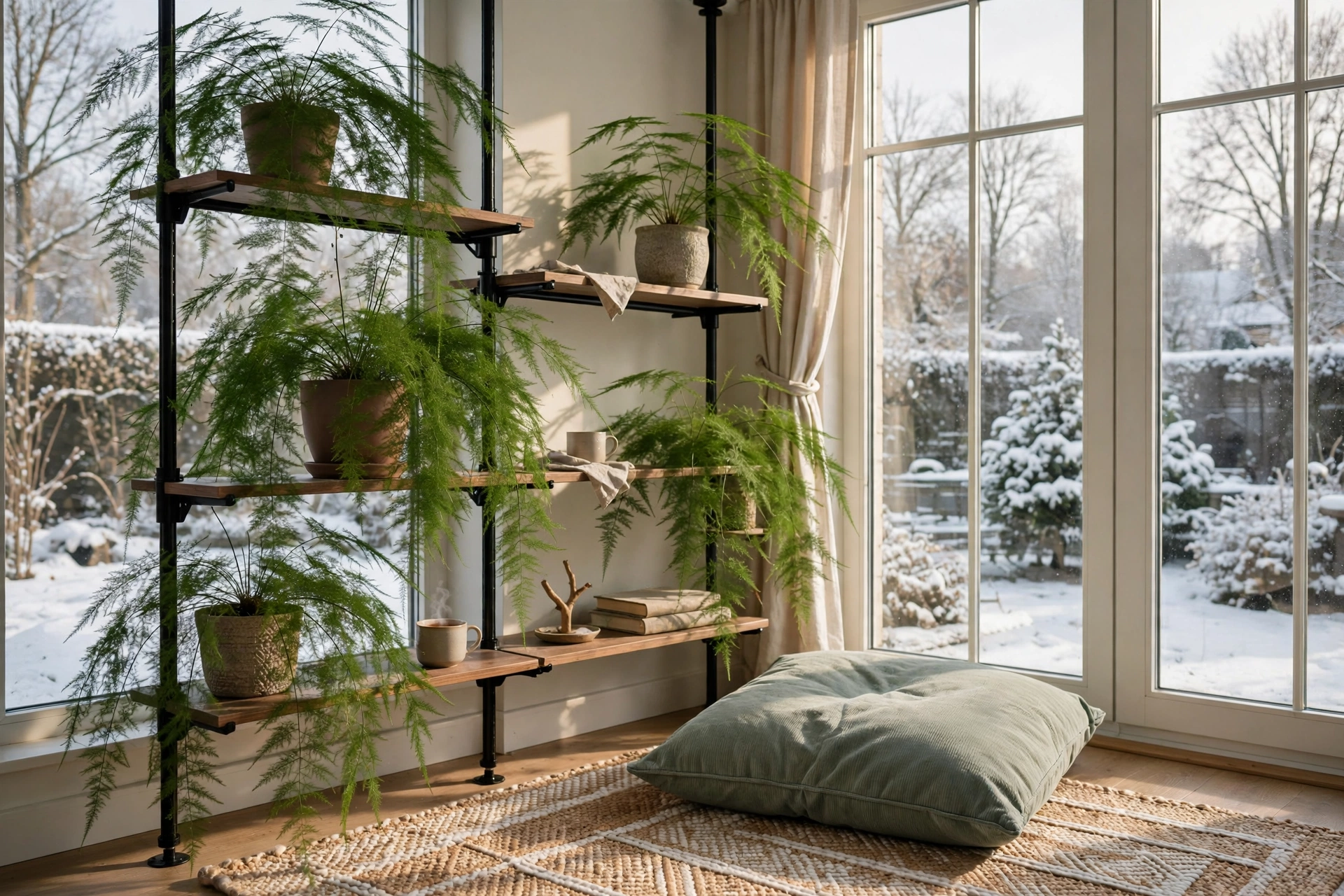
A tension pole braces between floor and ceiling with a spring or screw jack, so it stands tall and proud in an awkward corner with zero holes! Check the rating on yours, since tray limits run from about 3 pounds on light poles to 15 pounds on sturdier ones! Asparagus fern ‘Sprengeri’ is not a true fern, and its gorgeous feathery stems spill from the shelves! Bright indirect light keeps the stems beautifully full and green! Water to keep the soil evenly moist, and water less in winter! The ASPCA lists asparagus fern as toxic to dogs and cats, so grow it in a room pets cannot enter!
One tip: set the pole plumb on its rubber foot and check the tension each season, since temperature shifts can loosen the grip, and a quick check keeps everything happy and steady!
5. Staghorn Fern on Stacked Wooden Crates
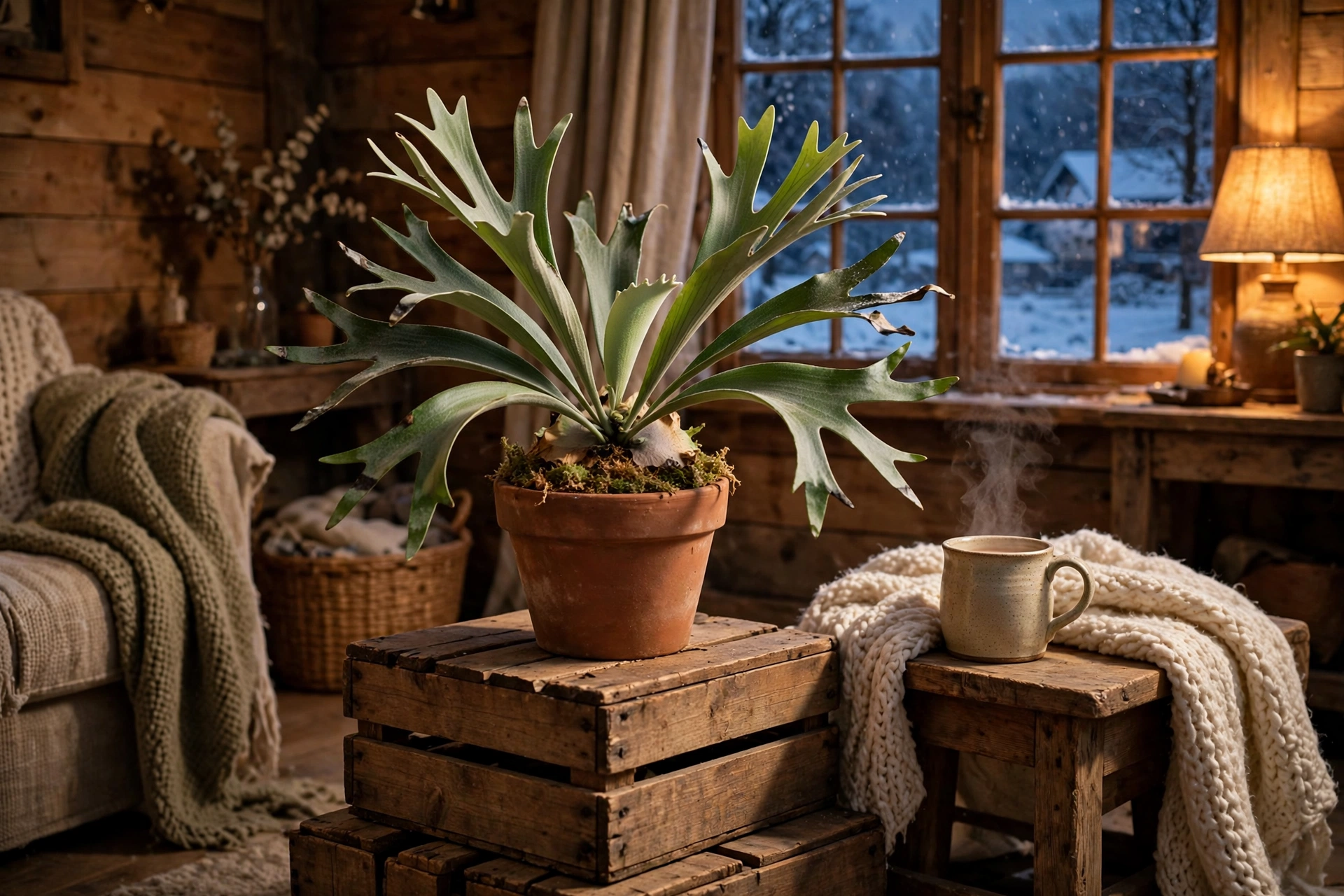
Okay, so here’s the thing! Wooden crates stack into a plant tower with zero tools, and the heaviest pots go on the bottom! A staghorn fern crowns the top, with antler-shaped fronds that spread like a living sculpture. Bright indirect light keeps the fronds green and strong, with a little gentle morning sun welcome. Soak the moss or root ball for 10 to 20 minutes when it feels dry, then let it drain fully. Humidity near 50 percent or higher suits it best. Warm rooms between 64 and 75 degrees suit it best. The ASPCA lists staghorn fern as non-toxic to cats and dogs, wonderful news for pet owners!
One tip: leave the brown shield fronds alone, since they guard the roots and the plant needs them right where they are!
6. Grape Ivy on a Freestanding Coat Rack
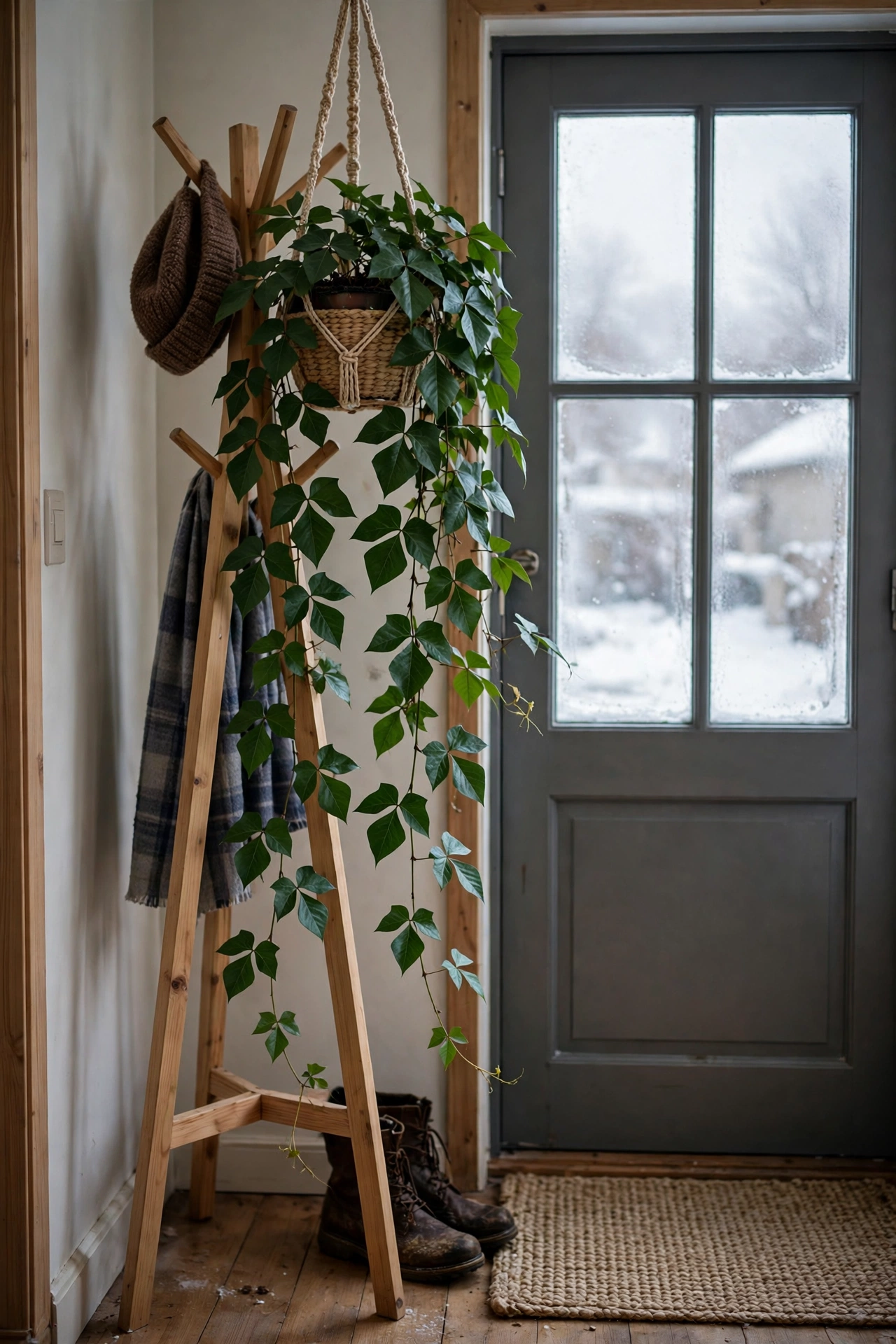
A freestanding coat rack makes a brilliant plant hanger, and it moves with you when you rearrange the room! Grape ivy trails from a hanging planter on one of its hooks, with glossy diamond-shaped leaves that catch the light. Bright filtered light keeps the leaves glossy and green, and it tolerates lower light too. Water when the top 1 to 2 inches of soil feel dry, and water sparingly in winter. Keep it above 50 degrees, in a warm spot away from cold drafts. The ASPCA lists grape ivy as non-toxic to cats and dogs, wonderful news for pet owners!
One tip: hang the heaviest pot lowest on the rack, since a low center keeps the whole stand steady and safe!
7. Maidenhair Vine on Stair Railing Hooks
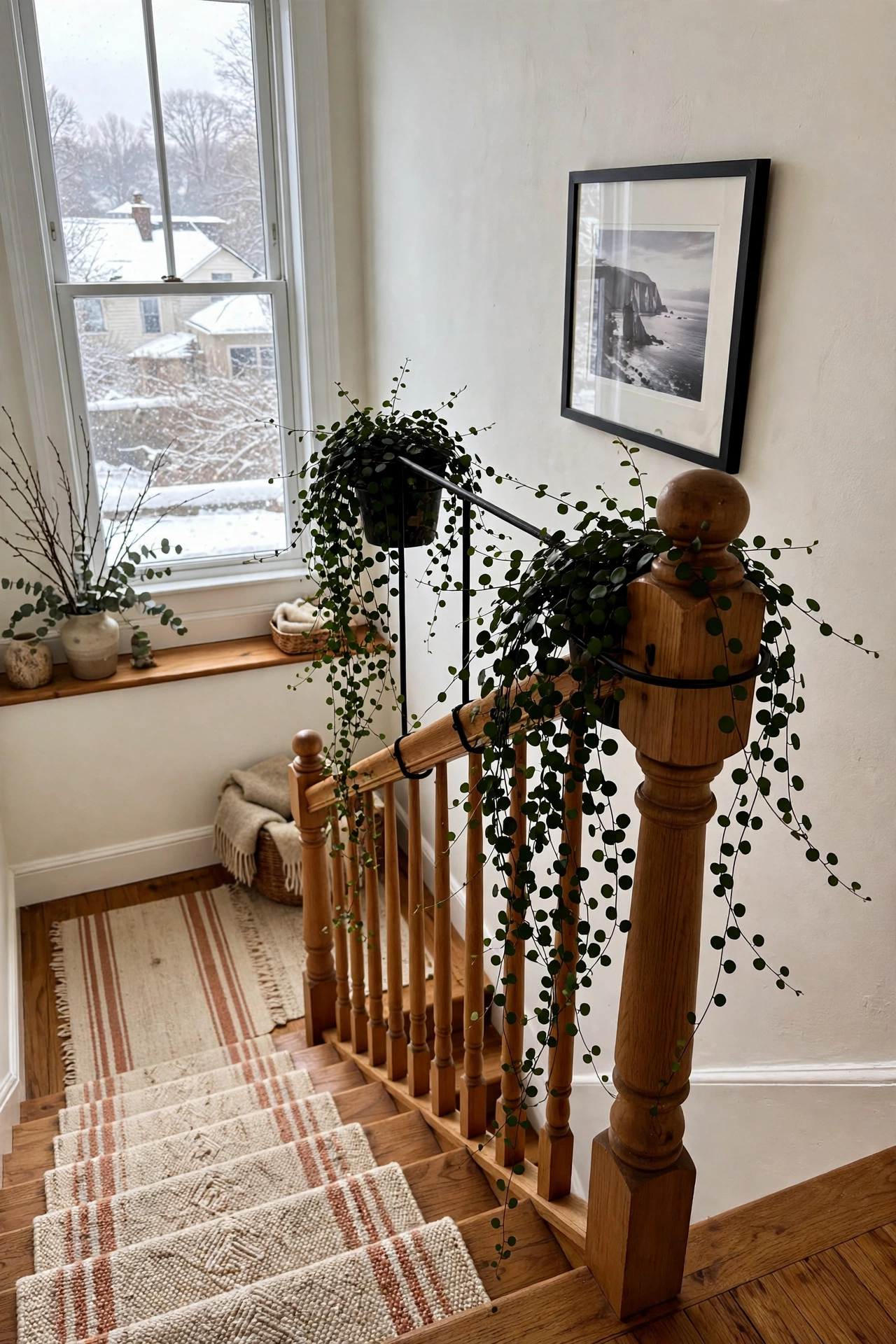
Hook planters over a stair banister turn a plain railing into a green cascade, with no drilling and no damage! Maidenhair vine spills from the pots in a tangle of wiry stems and tiny round leaves. Bright light with some sun keeps it dense and leafy, so a bright stairwell suits it well. Water as the top inch dries, so the soil stays evenly moist. Warm rooms between 60 and 75 degrees suit it best. Wire vine is listed as non-toxic to cats and dogs, wonderful news for pet owners!
One tip: trim the longest stems back in spring, since a quick trim keeps the vine dense and full all year!
8. Stromanthe Triostar on Step Stool Risers
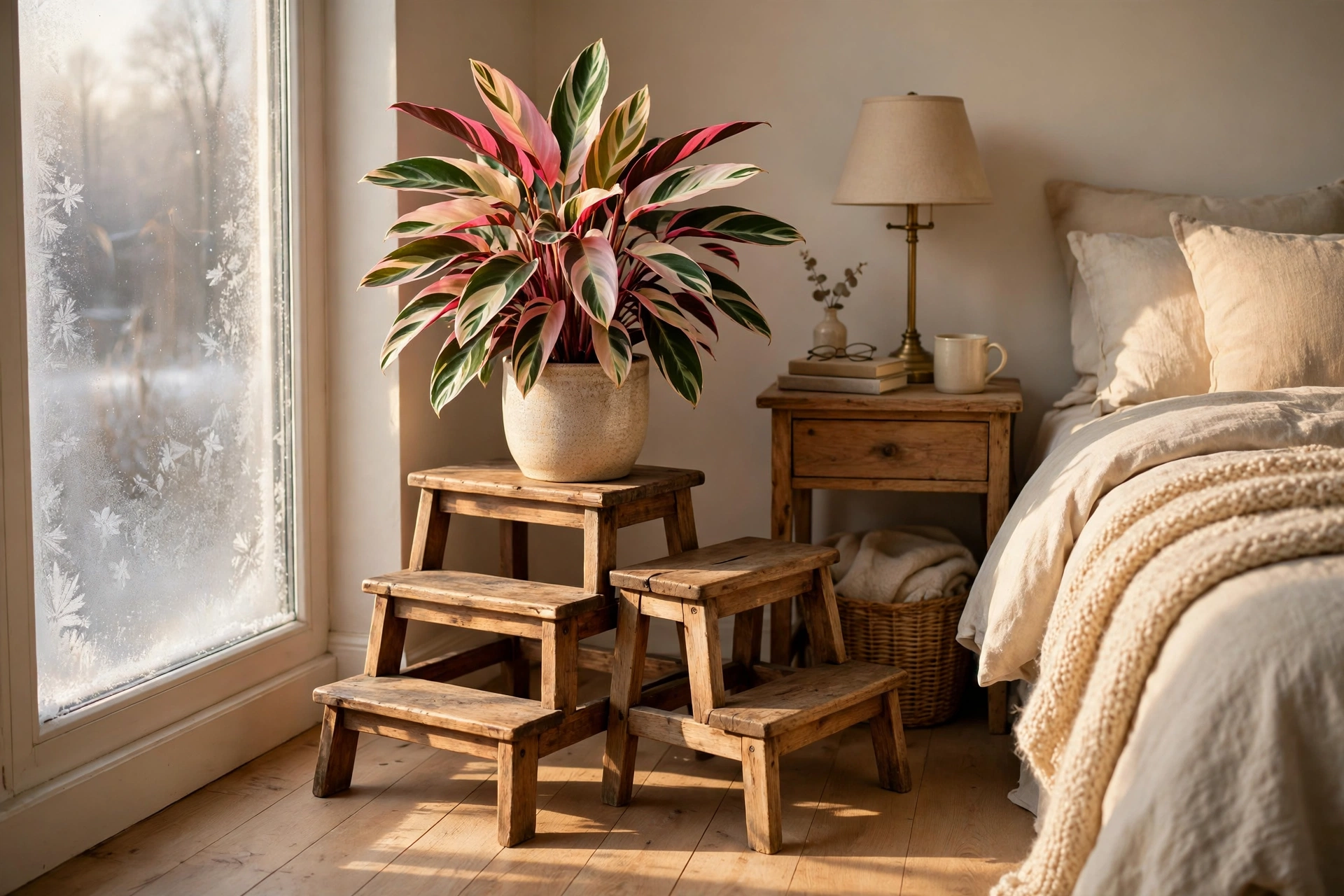
Wooden step stools in different heights make charming plant risers, and they tuck away flat when you need the floor back! Stromanthe ‘Triostar’ steals the show, with leaves painted in cream, pink, and green, plus magenta undersides that glow in the light. Bright indirect light keeps the pink and cream vivid. Water when the top inch of soil feels dry, and keep the mix evenly moist. Humidity near 60 percent or higher suits it best. Warm rooms between 65 and 80 degrees suit it best. Pet owners can relax, since stromanthe is considered non-toxic to cats and dogs!
One tip: group it with other plants on the stools, since a little cluster raises the humidity around the leaves all day!
9. Dischidia Million Hearts on a Rolling Garment Rack
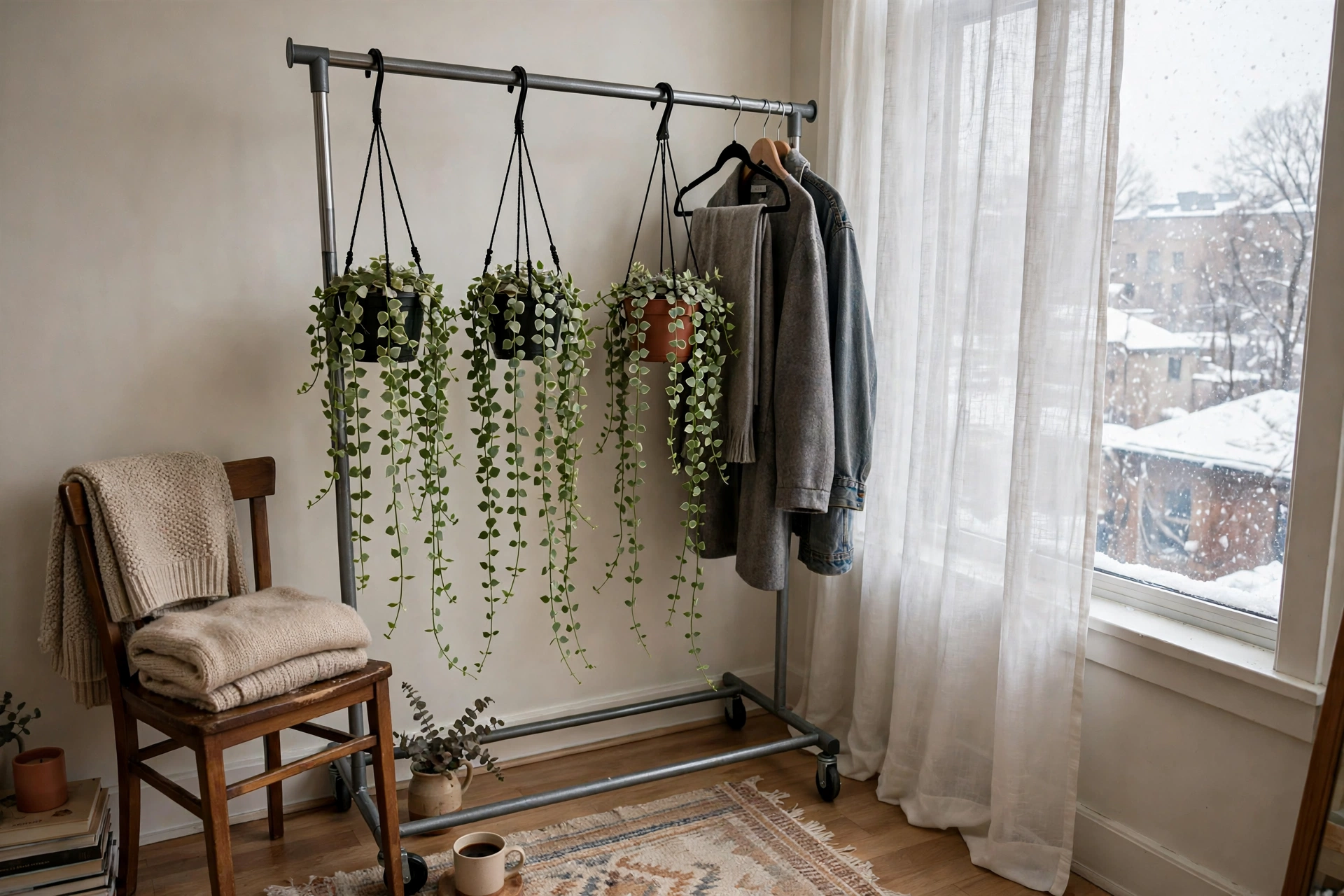
A rolling garment rack turns into a plant rail in minutes, and it rolls to the sunniest spot in the room! Dischidia ‘Million Hearts’ trails from S-hooks on the rail, with adorable tiny heart-shaped leaves in neat facing rows! Bright indirect light keeps the little hearts plump, green, and happy! Water only after the mix has dried out, since this epiphyte loves air around its roots! Humidity between 40 and 60 percent suits it beautifully! Pet owners should note it is mildly toxic if nibbled, so keep it in a room pets cannot enter!
One tip: hang the rail near a bright window, since the little hearts stay plump and green in good light all winter long!
10. Fishbone Prayer Plant on a Shower Curtain Rod
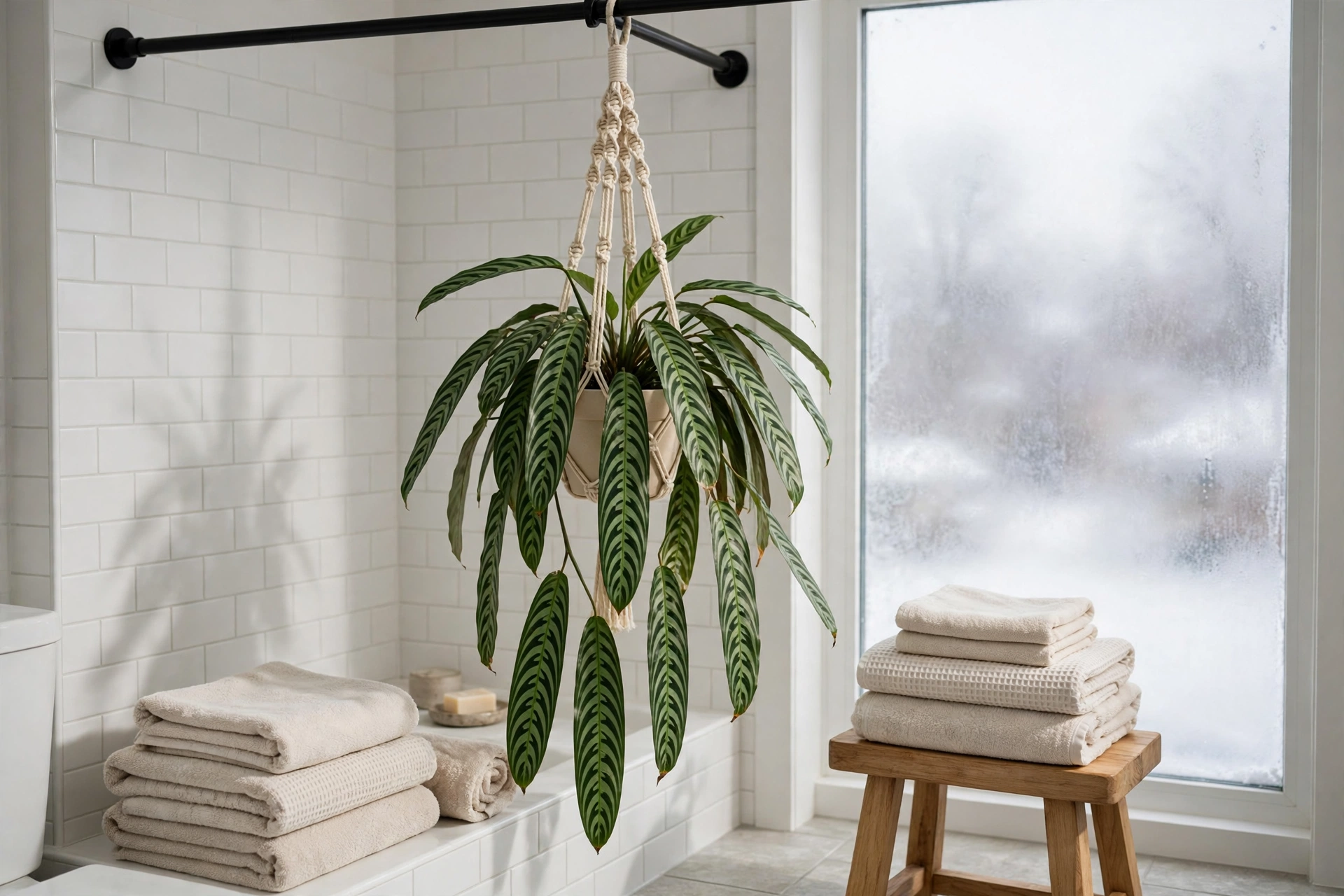
Okay, so here’s the thing! A shower curtain rod already hangs in your bathroom, so S-hooks turn it into a plant rail with zero drilling! Tension rods spanning 28 to 48 inches are often rated near 10 pounds, so keep the pots light and check the rating on yours! Fishbone prayer plant loves the steamy air, with long leaves striped like a fish skeleton! Bright indirect light keeps the stripes crisp and vivid! Water when the top inch of soil feels dry, and keep the mix evenly moist! Humidity near 60 percent or higher suits it beautifully! Ctenanthe is considered non-toxic to cats and dogs, wonderful news for pet owners!
One tip: water it with filtered or distilled water, since fluoride in tap water can brown the leaf tips over time!
11. German Primrose on a Windowsill Extender Shelf
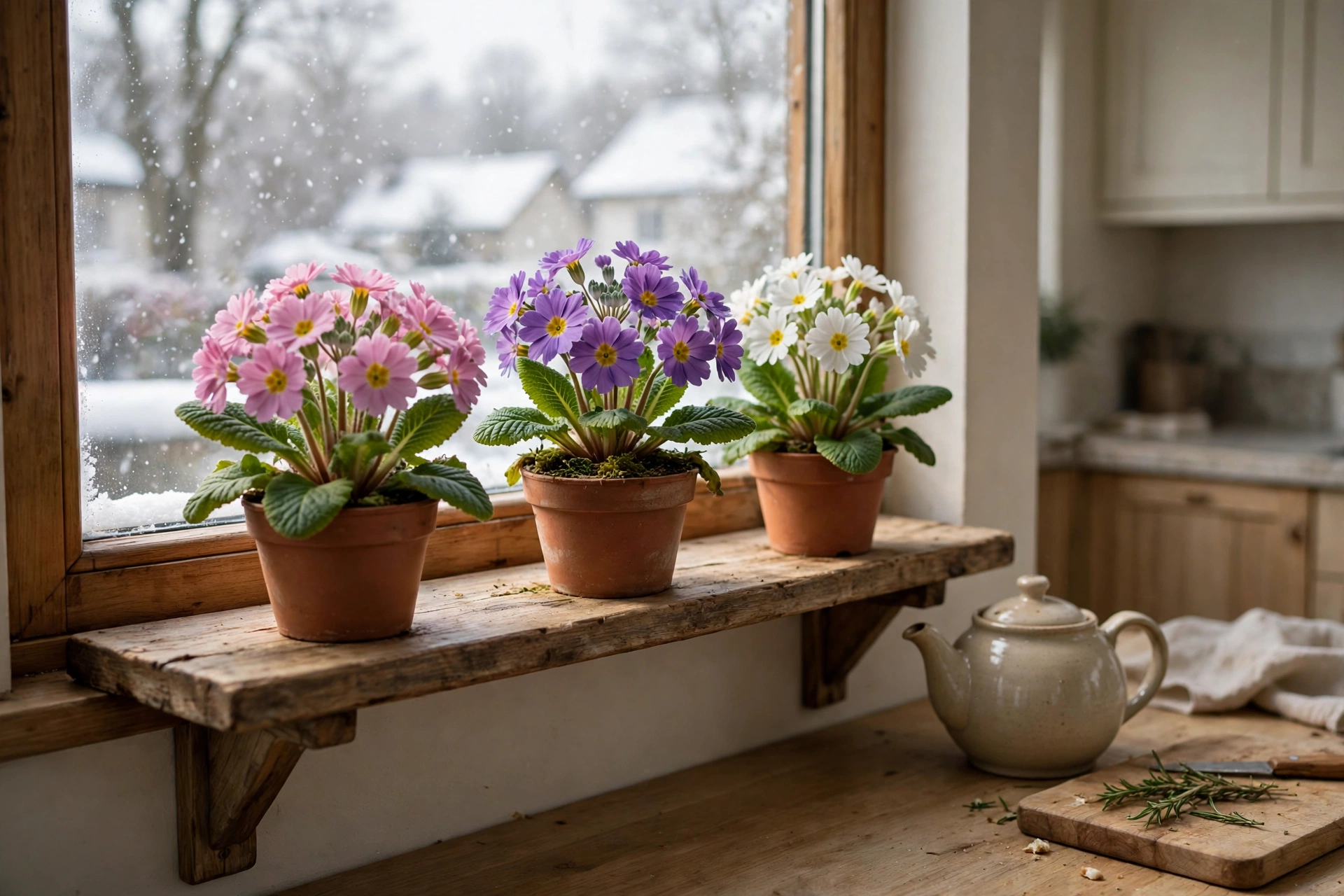
A windowsill extender hooks onto your sill and doubles the growing space, with no drilling and no tools! Solid wood extenders can hold up to 30 pounds, so a row of primroses sits safely and happily! German primrose blooms in winter and early spring, with cheerful clusters of gorgeous flowers in many colors! Bright light without direct sun keeps the blooms coming beautifully! Cool rooms between 55 and 65 degrees suit it beautifully! Water to keep the soil moist while it blooms! NC State rates German primrose as toxic to cats and dogs, so grow it in a room pets cannot enter!
One tip: wear gloves when you handle it, since the leaf hairs can raise a rash on sensitive skin over time!
12. Herb Tower With Thyme, Cilantro, and Rosemary
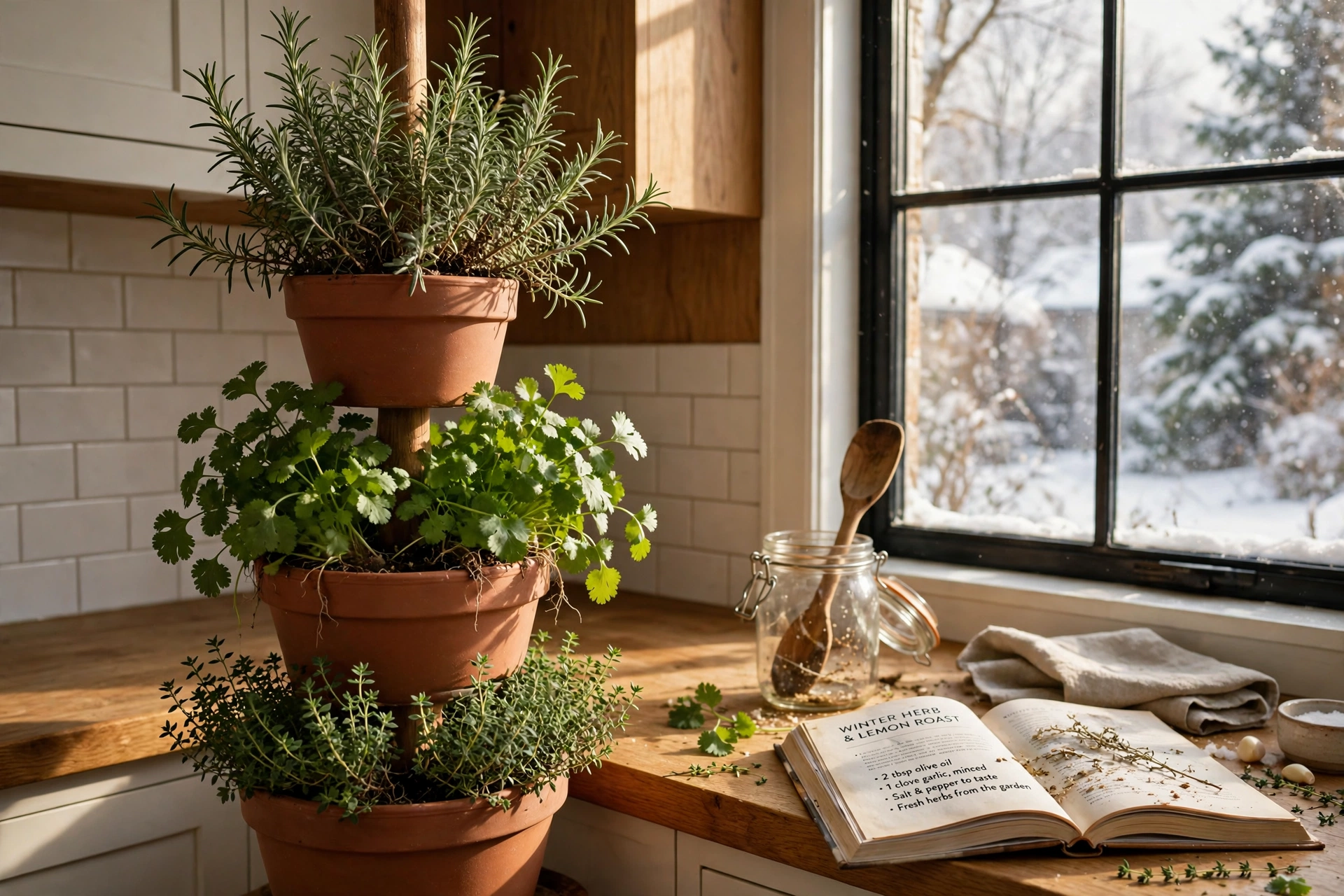
A stacking herb tower piles pots on a central pole, so a whole herb garden fits in one small corner! Water poured at the top trickles down through the stack, so every tier gets a lovely drink! Thyme, cilantro, and rosemary share the tower, and all three love a bright spot! Indoor herbs need 6 to 8 hours of bright light a day, and a south window suits them beautifully! Let thyme’s mix dry a little between waterings, while cilantro likes steady moisture! The ASPCA lists thyme, cilantro, and rosemary as non-toxic to cats and dogs, wonderful news for pet owners!
One tip: resow cilantro every few weeks, since it is short-lived and fresh young plants keep the harvests coming all winter!
13. Ti Plant on Top of the Fridge
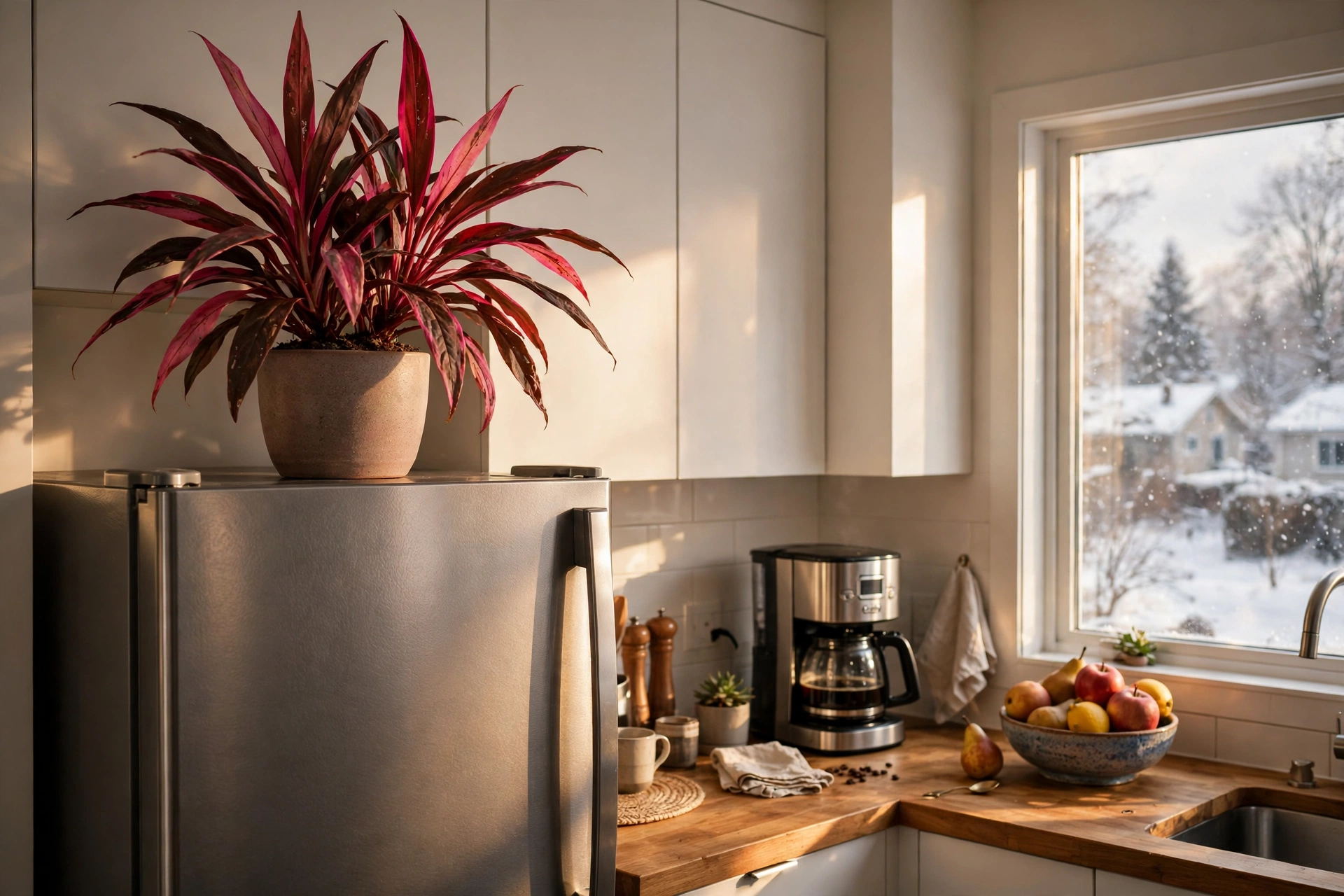
Fridge tops are free space in most kitchens, and a low tray turns yours into a plant shelf, if the light is bright enough! Ti plant ‘Red Sister’ shines up there, with gorgeous sword-shaped leaves in deep red and hot pink! Bright indirect light keeps the reds rich and vivid! Water when the mix feels dry, and keep the soil moist but never soggy! Warm rooms between 65 and 85 degrees suit it best, but the dry air above the fridge can brown its leaf tips. The ASPCA lists ti plant as toxic to cats and dogs, so grow it in a room pets cannot enter!
One tip: set the tray back from the front edge, since a pot that cannot slide off is a pot that stays safe!
14. Pink Jasmine on Adhesive Window Frame Hooks
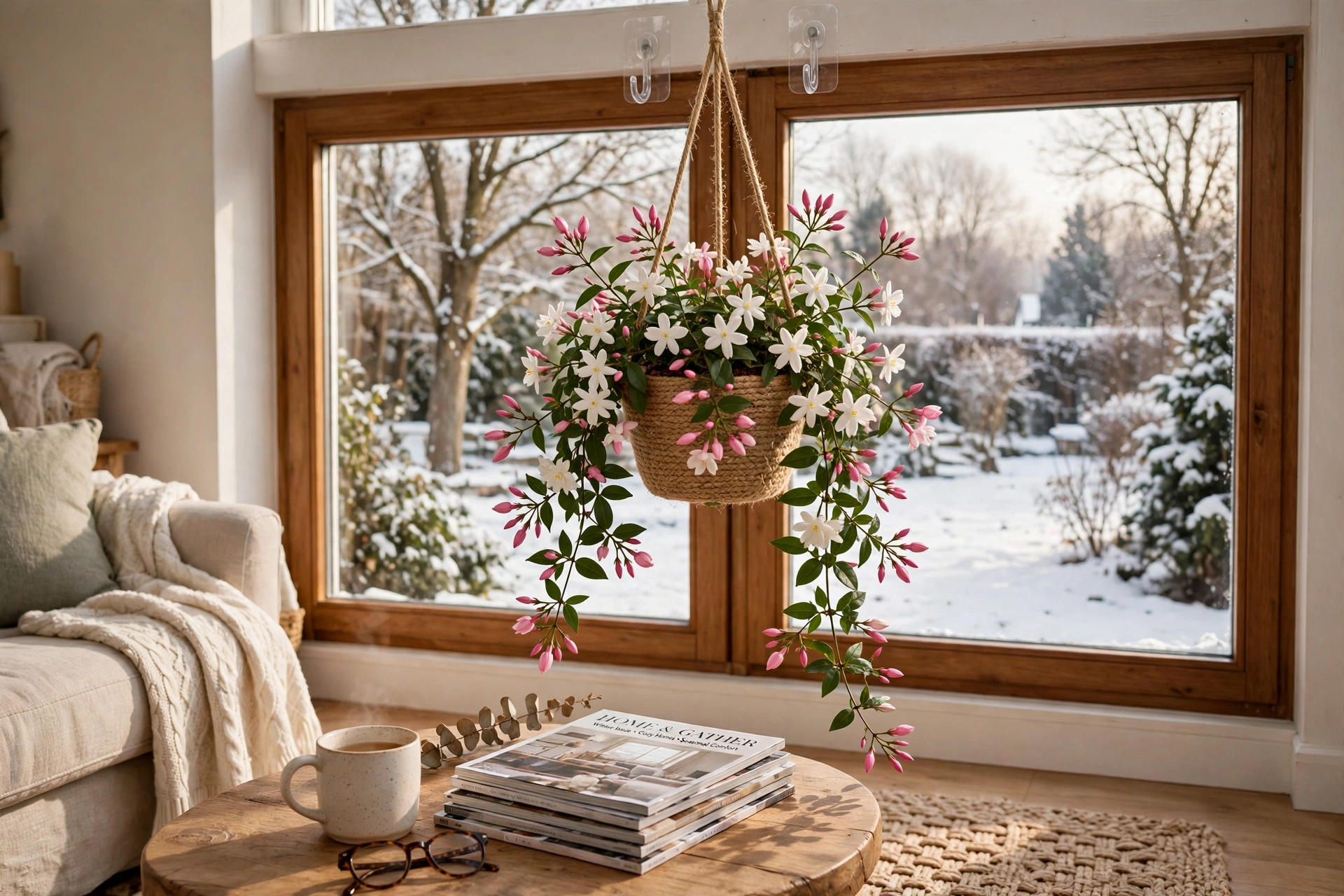
Adhesive hooks stick to a smooth window frame in seconds, and a hanging jasmine turns the glass into a flowering curtain! A large adhesive hook holds up to 5 pounds, so a small potted jasmine hangs safely and happily! Pink jasmine opens fragrant white flowers from lovely pink buds in late winter and spring! Very bright light with 2 to 4 hours of direct sun keeps the blooms coming beautifully! Water lightly in winter, and keep the mix moist but never waterlogged in growth! Cool rooms between 59 and 75 degrees suit it beautifully! The ASPCA lists true jasmines as non-toxic to cats and dogs, wonderful news for pet owners!
One tip: prune it right after it blooms, since a quick trim keeps the vine tidy and the next flowers coming!
15. Clivia on a Freestanding Room Divider
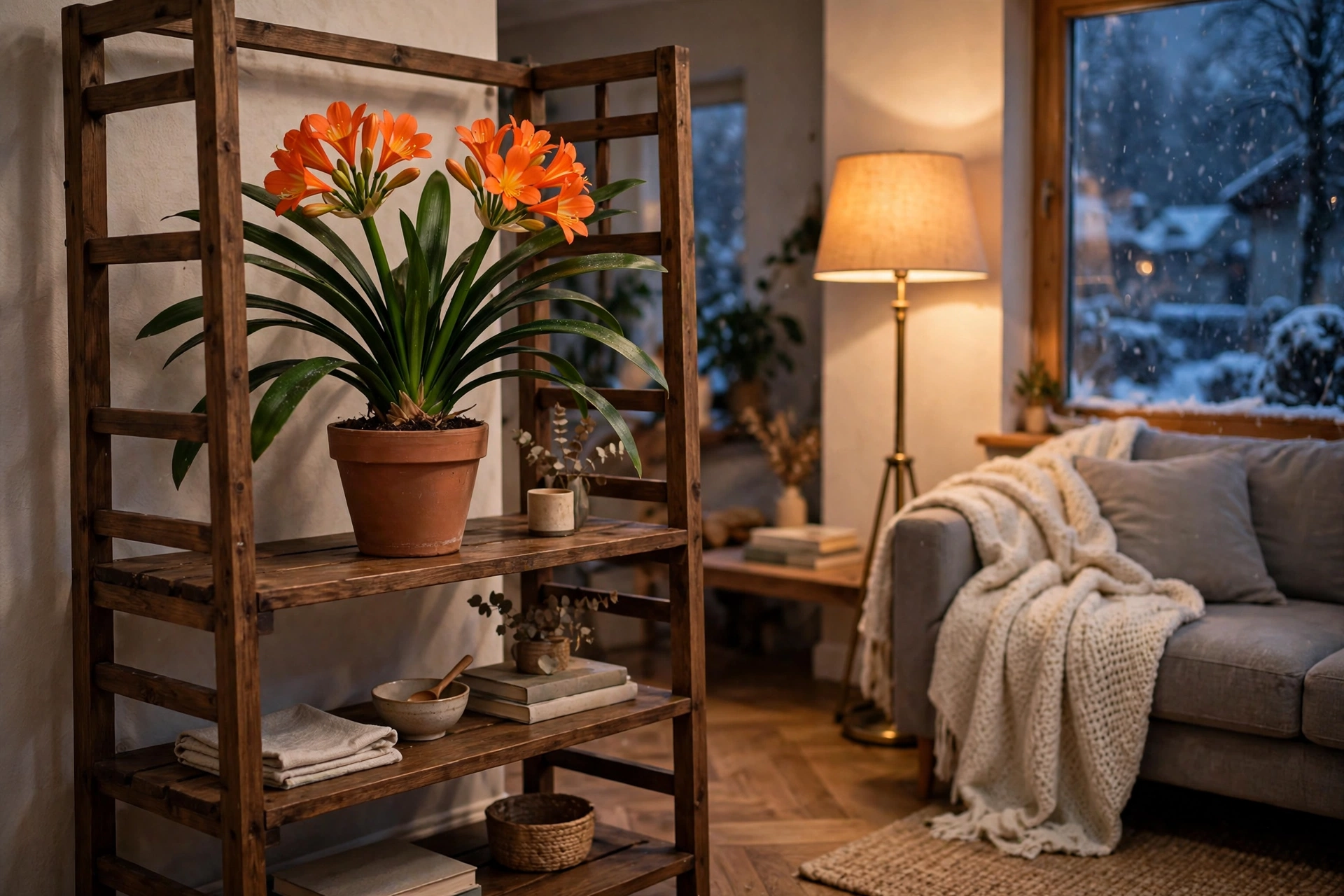
A freestanding room divider with shelves splits a studio in two, and plants make the split feel alive! Clivia crowns a divider shelf with strappy green leaves and gorgeous clusters of orange trumpet flowers! Bright indirect light keeps the leaves glossy and the blooms coming beautifully! Water when the top 1 to 2 inches of soil feel dry in spring and summer! Give it a cool dry rest near 50 degrees for 6 to 8 weeks in winter, and buds form for spring blooms. The ASPCA lists clivia as toxic to cats and dogs, so grow it in a room pets cannot enter!
One tip: keep the pot snug and repot rarely, since clivia blooms best when its roots stay crowded and cozy all year!