1. Golden Pothos in a Macramé Hanger
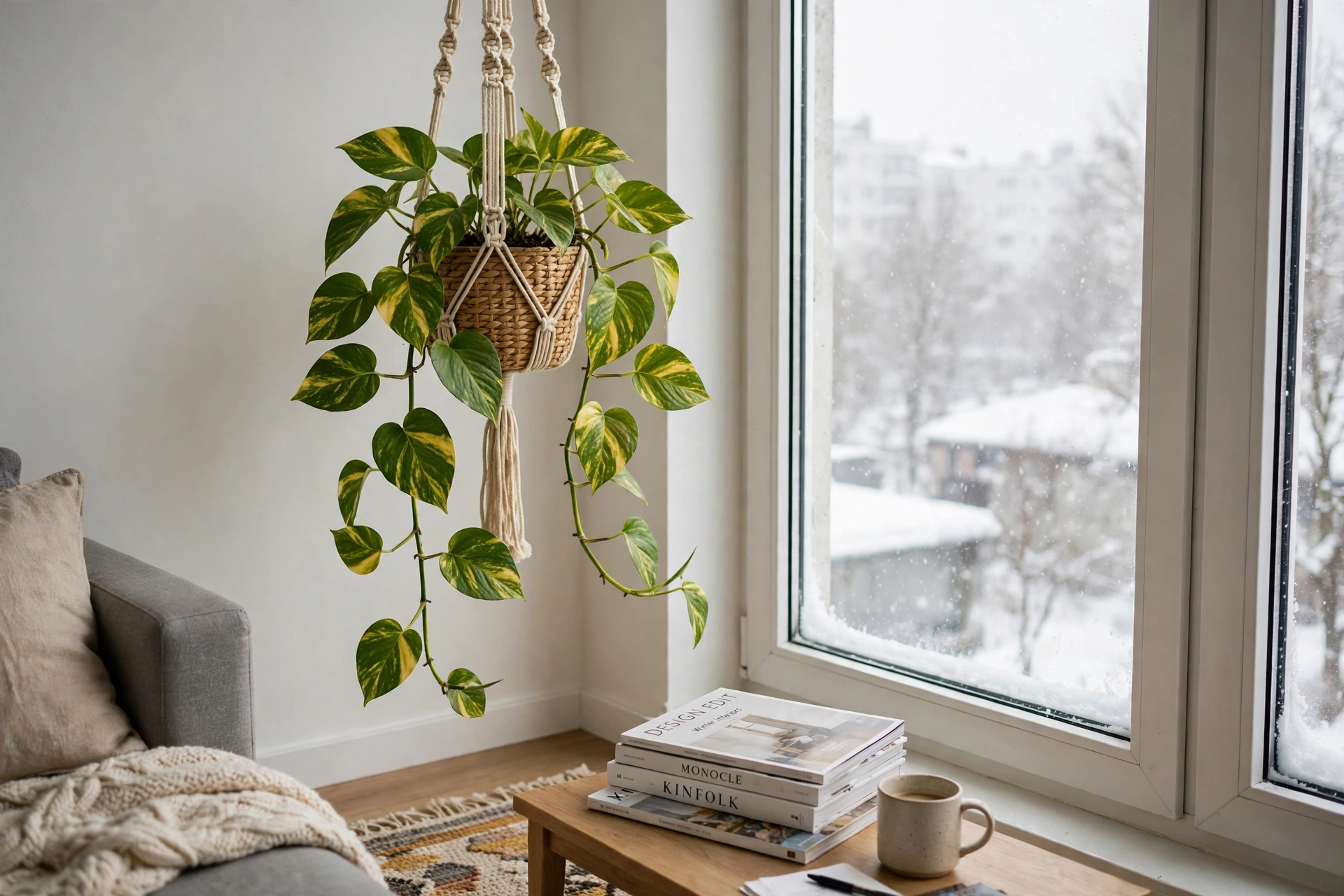
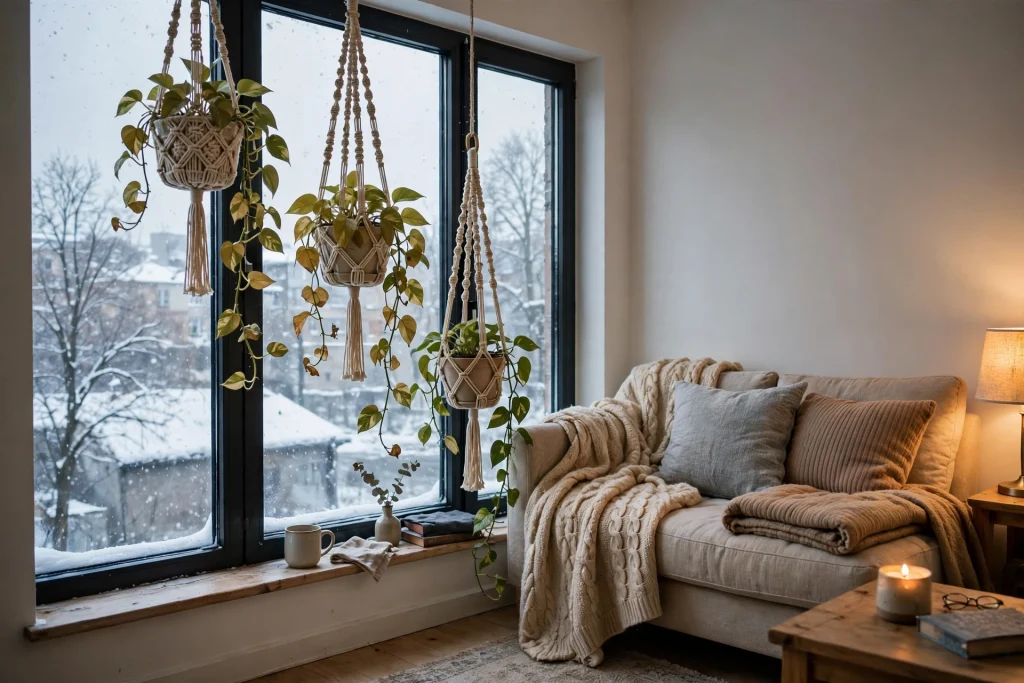
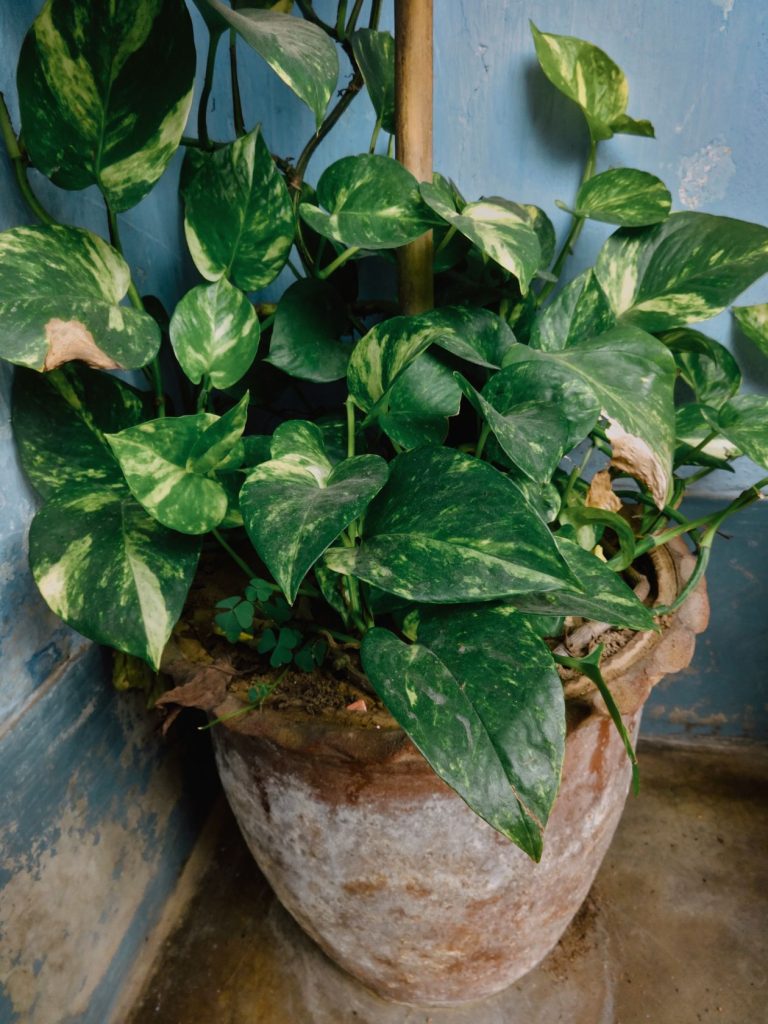
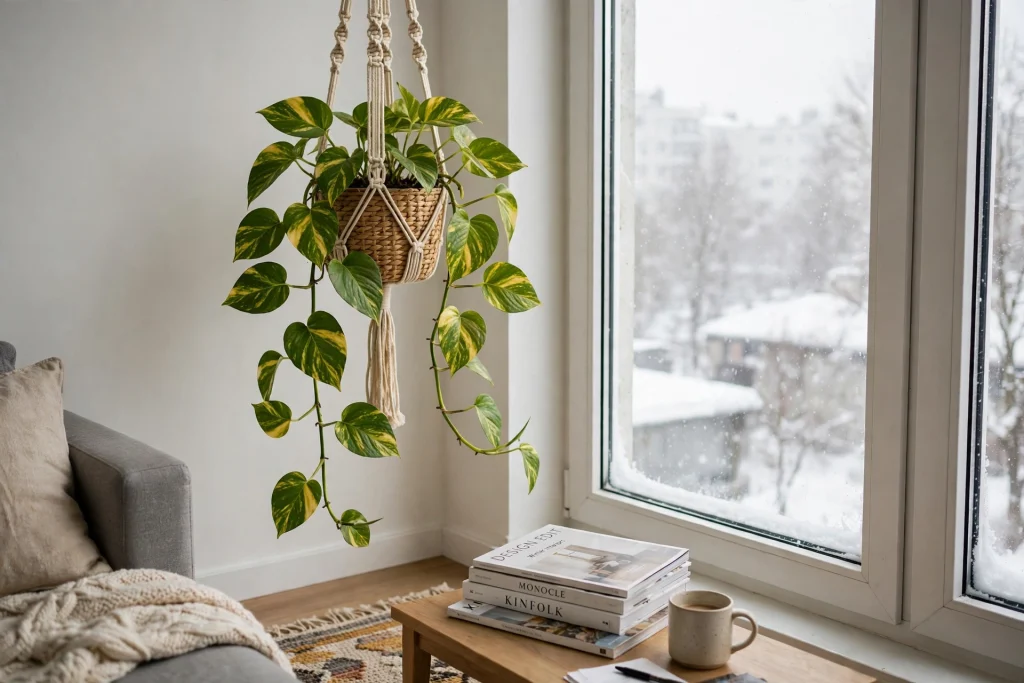
Okay, so here’s the thing! A golden pothos in a macramé hanger turns a bare window into the happiest little corner of the room, and it uses zero floor space! Its heart-shaped leaves wear bold yellow streaks, and the vines trail 8 feet or longer! Bright indirect light keeps the yellow streaks vivid and the leaves full and lovely. Water only after the soil has dried out, then water deeply and let the pot drain. Warm rooms between 60 and 85 degrees make it happiest, away from cold drafts. The ASPCA lists golden pothos as toxic to cats and dogs, so grow it in a room pets cannot enter!
One tip: snip long vines just above a leaf node, since a quick trim keeps the plant bushy and the cuttings root easily in water, hello free plants!
2. Spider Plant on a Ceiling Hook
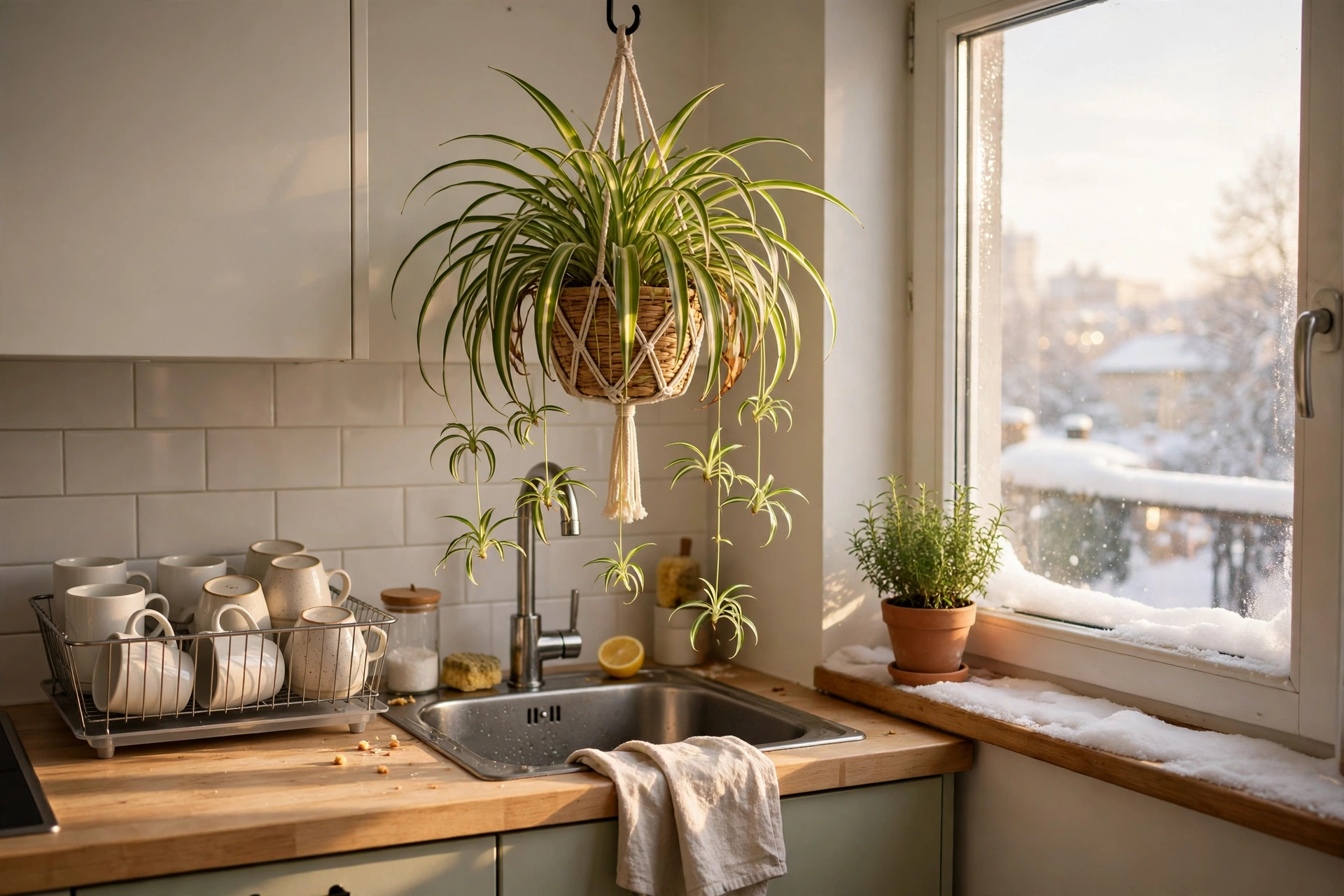
Spider plant is the overachiever of hanging plants, and its babies are the whole show! Its ‘Vittatum’ form has long arching leaves with a creamy center stripe, and mature plants send out long stems sprinkled with tiny white flowers and baby plantlets. Bright indirect light keeps the stripes crisp and the plantlets coming! Water when the top inch of soil feels dry, and water less in winter. Keep it between 60 and 75 degrees, in a cozy spot away from cold drafts. Rainwater or distilled water keeps the leaf tips green and crisp! The ASPCA lists spider plant as non-toxic to cats and dogs, wonderful news for pet owners!
One tip: leave the plantlets attached until their roots reach an inch or two, since a well-rooted baby settles happily into its own pot in weeks!
3. String of Pearls on a High Wall Hook
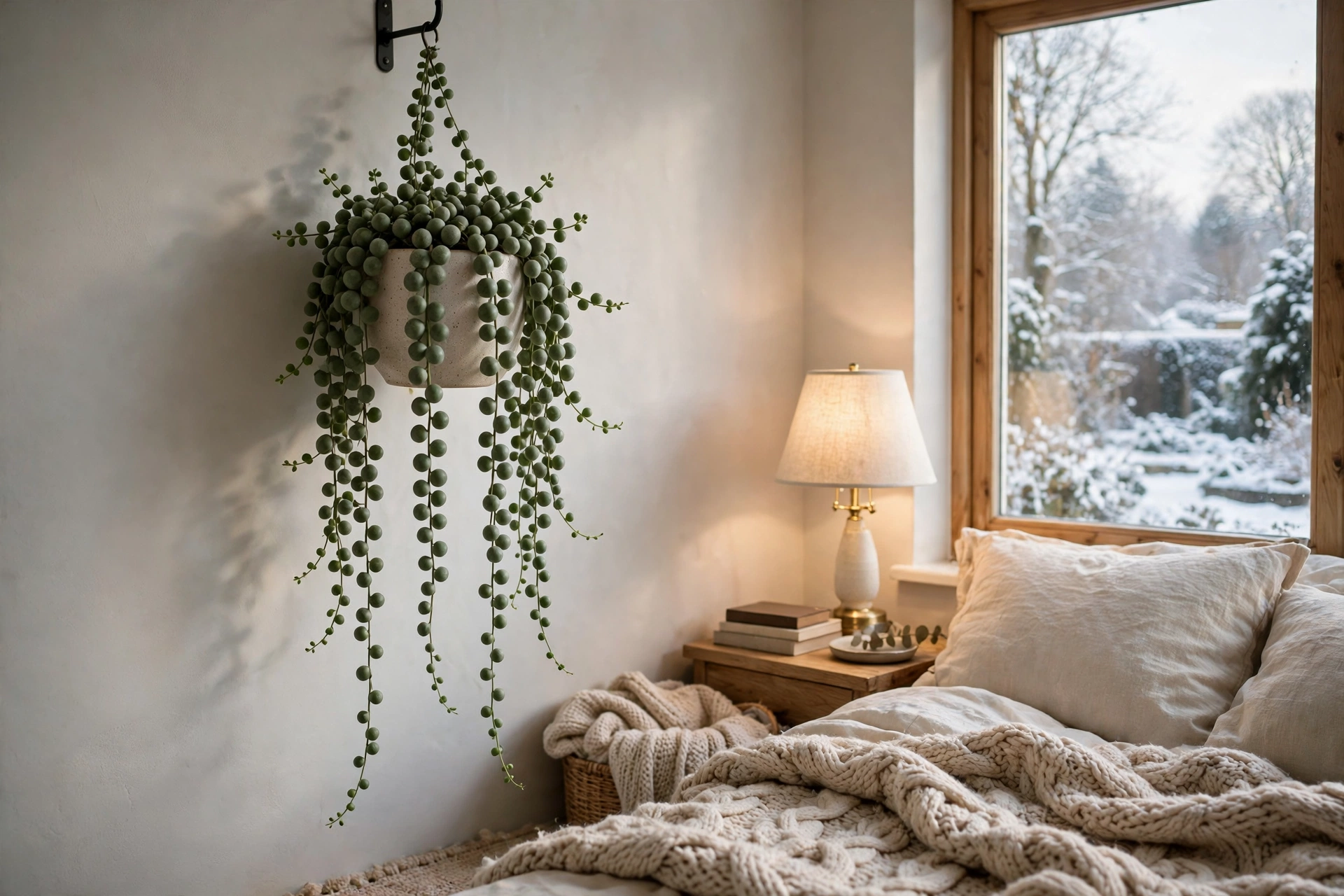
String of pearls is pure jewelry for a bare wall, and it loves a high hook! Its round bead-like leaves string along thin stems that trail up to 3 feet, and each pearl wears a clear stripe that catches the light beautifully. Bright light near an east or west window keeps the pearls plump and the stems neat and happy. Water only after the mix has dried out, and water sparingly in winter when growth slows. Keep it above 50 degrees, in a warm cozy spot away from cold drafts. NC State rates string of pearls as mildly toxic, so hang it in a room pets cannot enter!
One tip: watch the clear stripe on each pearl, since a fading stripe means the plant is thirsty and plump pearls mean it is happy and thriving!
4. Boston Fern in a Bathroom Basket
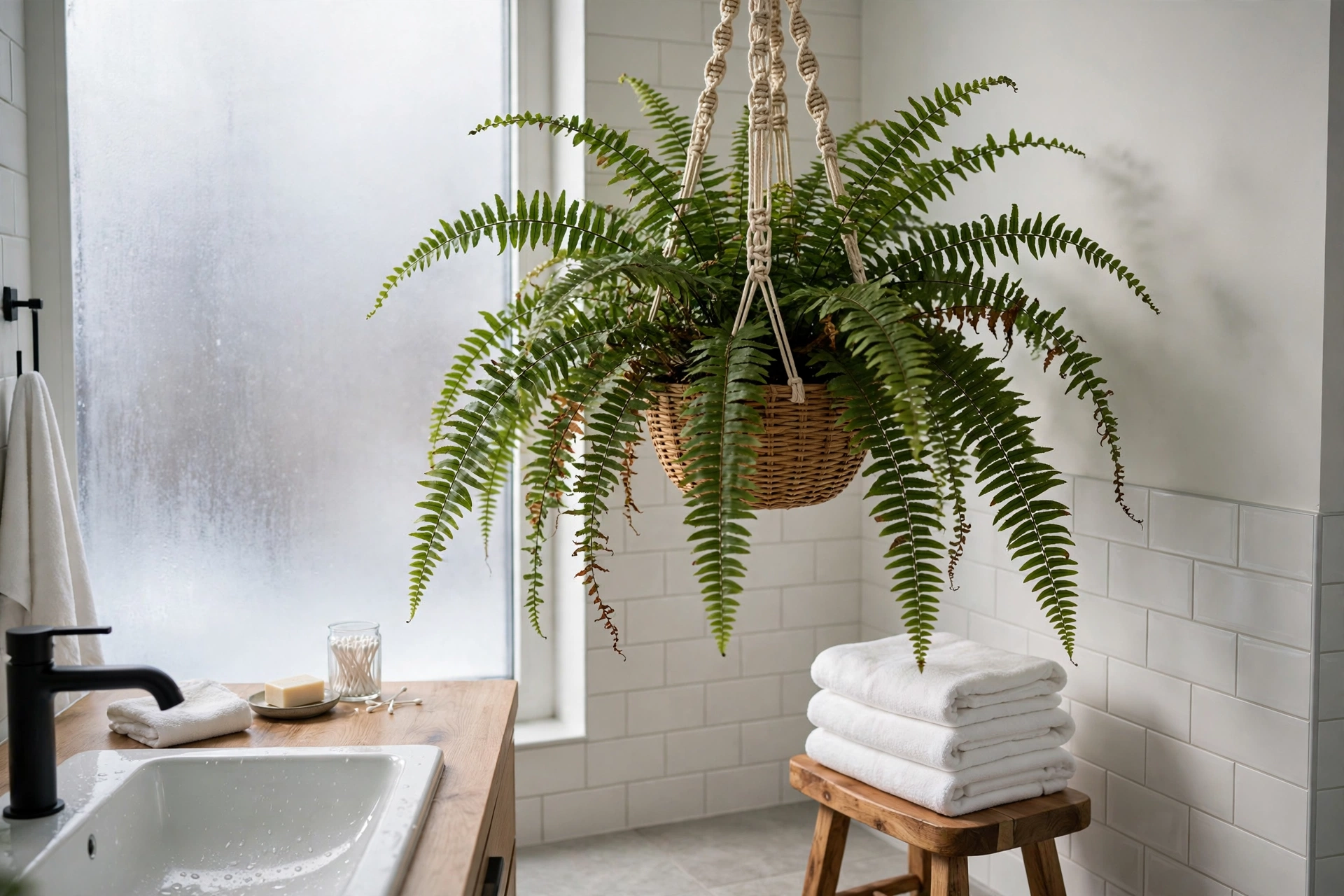
Boston fern turns a steamy bathroom into a lush little jungle, and it asks for almost nothing! Its arching fronds stretch 2 to 3 feet, and each frond wears rows of tiny leaflets that feel soft. Bright indirect light keeps the fronds green and full. Keep the soil evenly moist, since steady drinks keep the fern lush and happy! Humidity near 50 percent or higher suits it best, so a bathroom basket is a brilliant home. Warm rooms between 60 and 70 degrees keep it happy, away from cold drafts and heat vents. The ASPCA lists Boston fern as non-toxic to cats and dogs, wonderful news for pet owners!
One tip: set the basket on a pebble tray filled with water, since the tray lifts humidity around the fronds all day!
5. String of Hearts in a Corner Hook
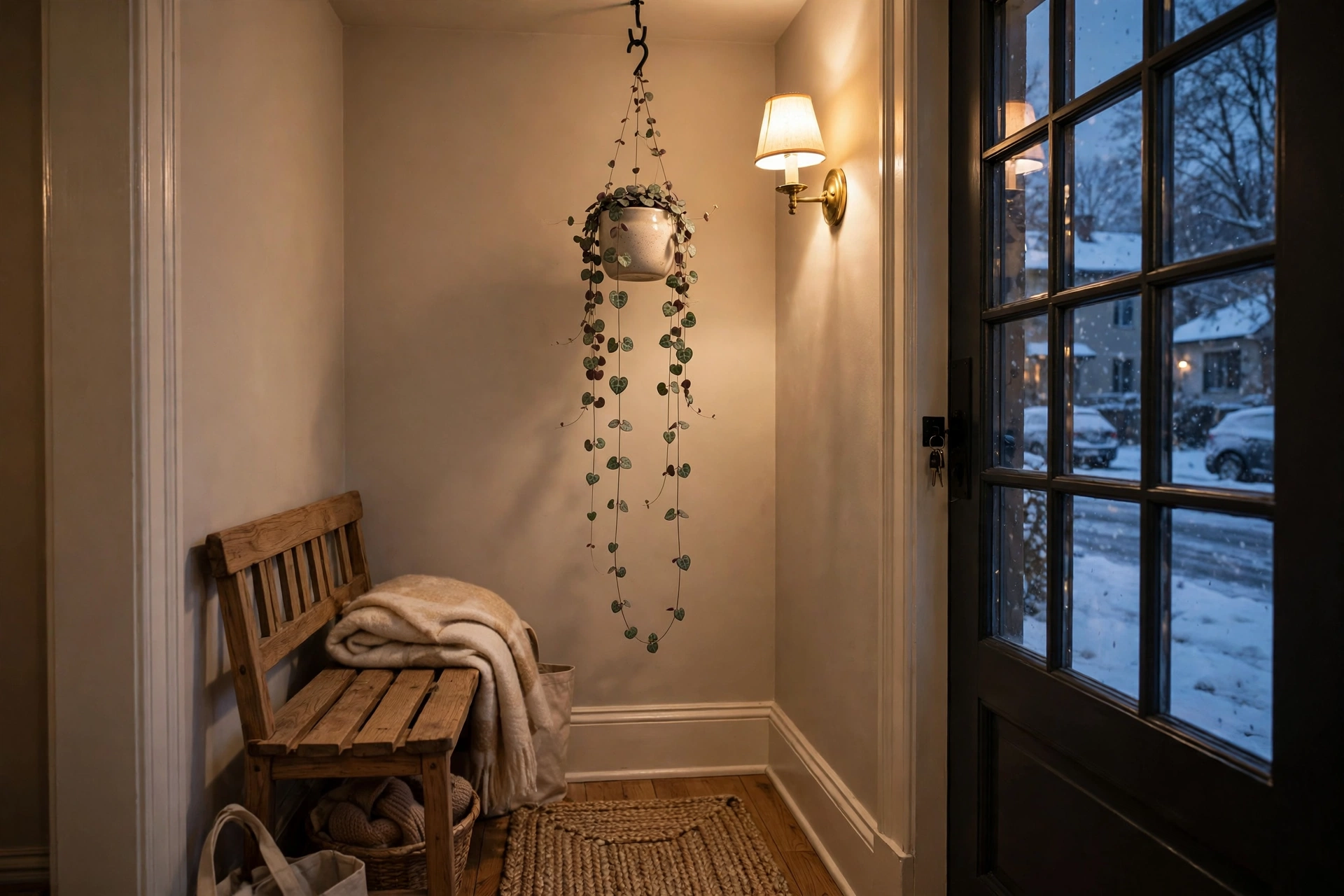
String of hearts is the sweetest way to wake up a forgotten corner, and it barely asks for a thing! Its thin vines trail 3 feet or more, and every tiny heart-shaped leaf wears a silver pattern with a purple underside. Bright indirect light keeps the leaves close together and the pattern crisp and vivid. Water only when the top 1 to 2 inches of soil feel dry, and stretch watering to every three weeks in winter. No toxicity is listed for string of hearts in the ASPCA database, so hang it high where curious pets cannot reach the vines!
One tip: coil a long vine back into the pot, since the stem nodes root where they touch the soil and the top fills in fast!
6. Hoya Carnosa in a Hanging Planter
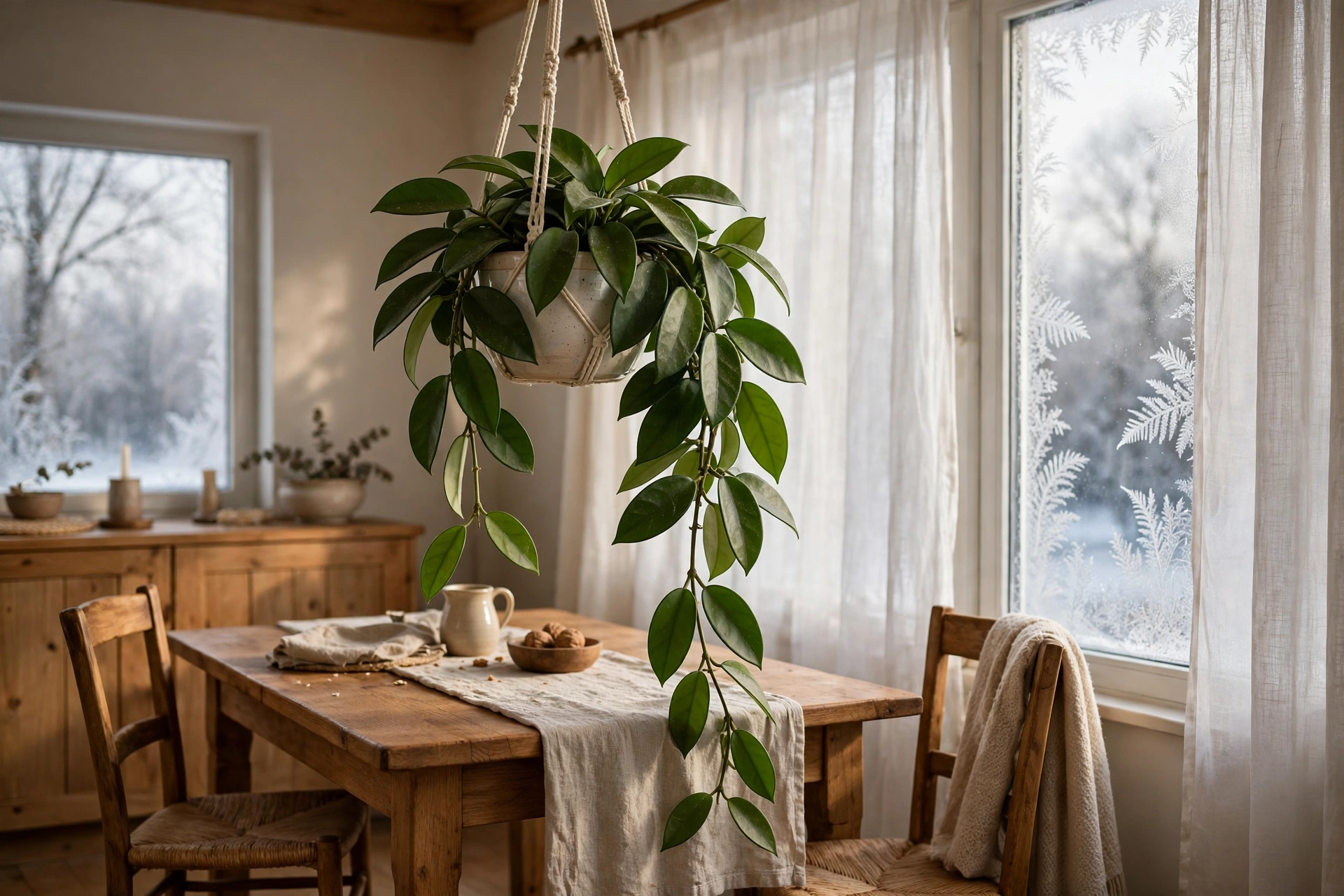
Hoya carnosa is the wax plant that rewards patience with the sweetest flowers! Its thick waxy leaves trail on long vines, and mature plants open clusters of star-shaped pink flowers that smell lovely in the evening. Bright indirect light keeps the leaves firm and the blooms coming. Water only after the mix has dried out, and stretch the gap to two or three weeks in winter. Keep it above 50 degrees, in a warm spot away from cold drafts. Never cut the old flower stalks, since fresh blooms return on those same spurs! The ASPCA lists hoya carnosa as non-toxic to cats and dogs, wonderful news for pet owners!
One tip: pick the planter’s spot once and let the vine settle there, since a steady spot keeps the buds safe until they open!
7. Air Plants in a Hanging Glass Globe
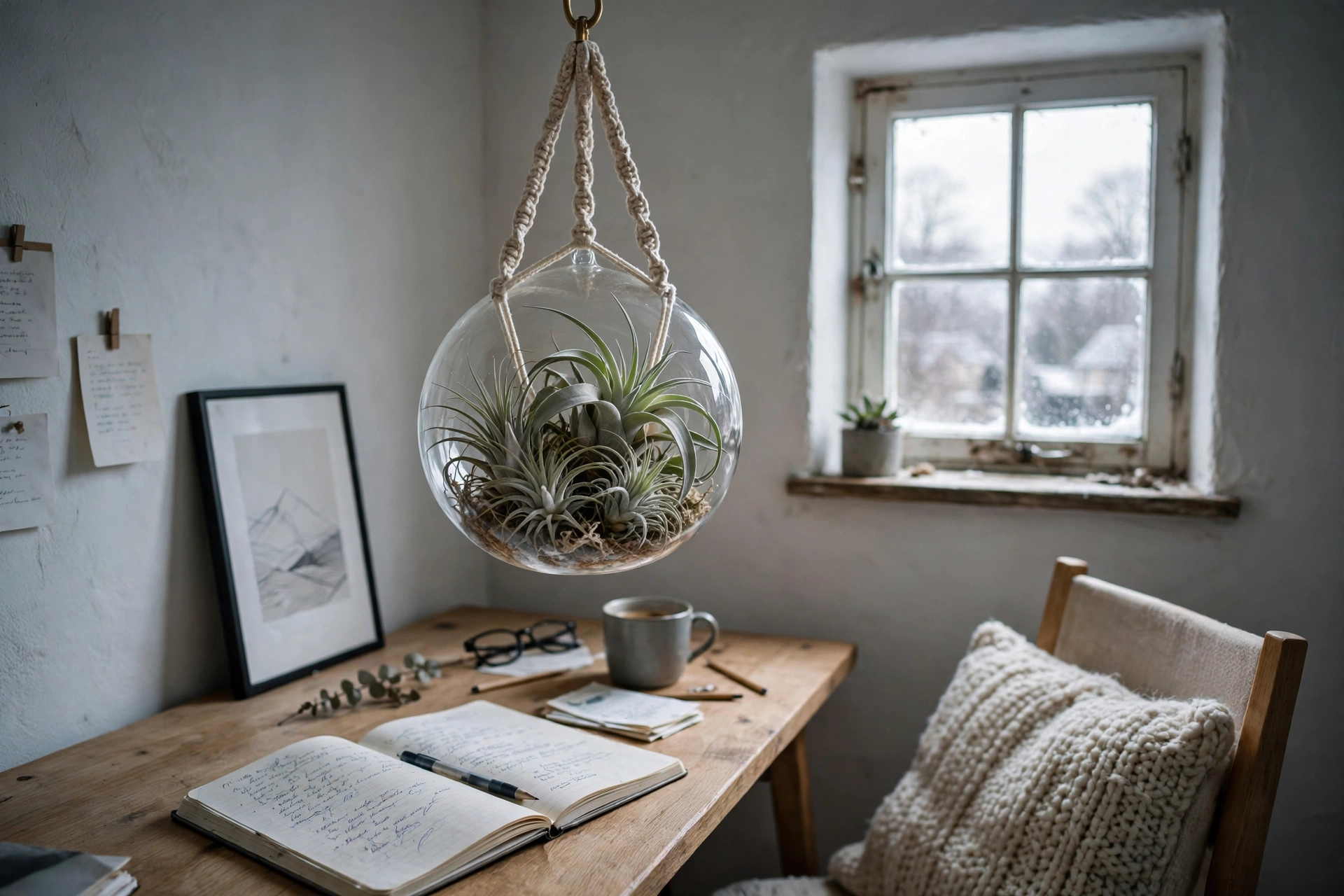
Air plants are the cleverest zero-floor-space trick, and they do not even need soil! Their silvery-green leaves wear tiny scales that drink in water straight from the air. Bright indirect light for 6 hours or more each day keeps them green and growing. Soak the plants in room-temperature water for 20 to 30 minutes once a week, then shake off the water and dry them upside down on a towel. Dry bases stay healthy and gorgeous, so let them dry fully within 4 hours! Keep them between 50 and 90 degrees, with fresh air moving around the globe.
One tip: mist the globe plants between soaks in dry winter air, since a light mist keeps the leaves plump and green!
8. Tradescantia Zebrina in a Hanging Pot
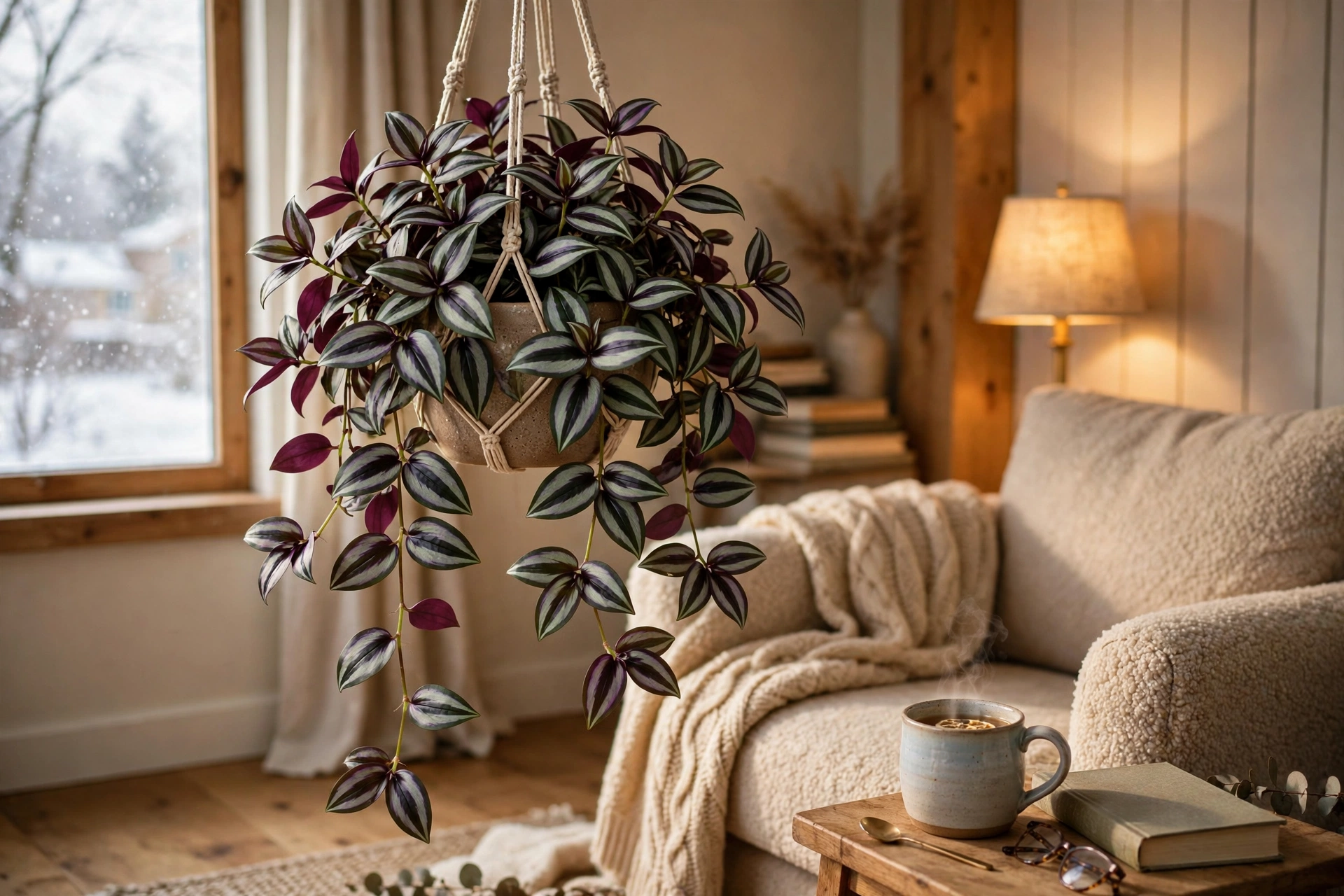
Tradescantia zebrina is the speedster of hanging plants, and it grows so fast you can almost watch it! Its pointed leaves wear bold silver stripes over deep purple, and the stems spill several feet. Strong light keeps those stripes vivid and the purple deep. Water when the top of the soil feels dry, and ease off in winter when growth slows. A quick pinch of the tips keeps the stems full and lush! Warm rooms suit it best, so keep it above 50 degrees and it stays happy. NC State rates tradescantia zebrina as mildly toxic, so keep it in a room pets cannot enter!
One tip: snip a few stem tips and poke them into the pot, since they root fast and fill the top in weeks!
9. Burro’s Tail in a Hanging Pot
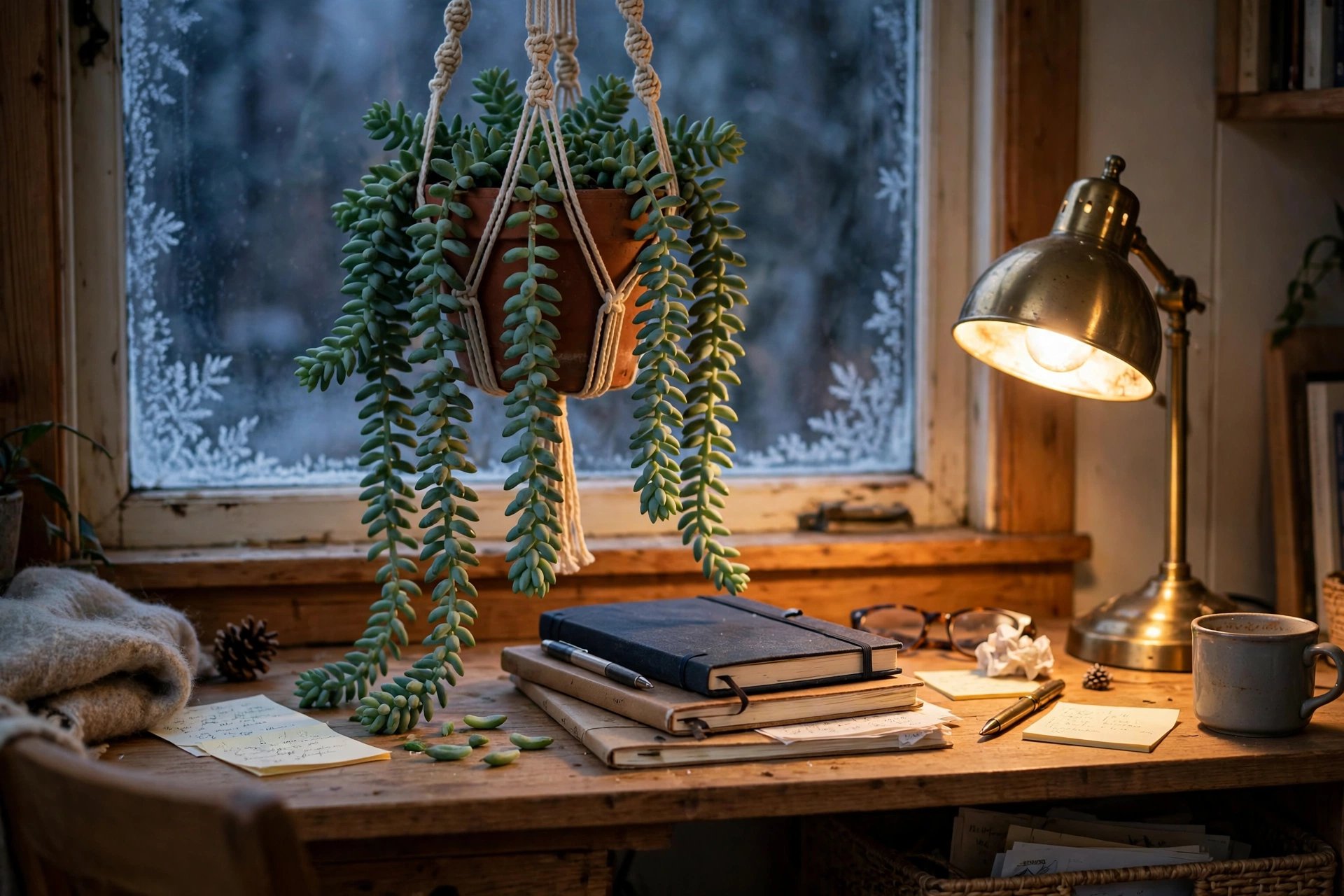
Burro’s tail is the drama queen of hanging plants, and I say that with love! Its thick stems hang in ropes of plump blue-green leaves, and a mature plant trails 2 to 3 feet. Bright light keeps the leaves tight and plump, and a few hours of gentle direct sun suits it best. Let the soil dry out completely between waterings, roughly every two to three weeks, and keep it above 55 degrees through winter. Those plump leaves are delicate, so pick its perfect spot once and let it shine there! Pet owners can relax, since the ASPCA lists burro’s tail as non-toxic to cats and dogs.
One tip: lay any fallen leaves on dry soil, since each plump leaf can root and grow into a brand-new plant!
10. Peperomia Hope in a Hanging Basket
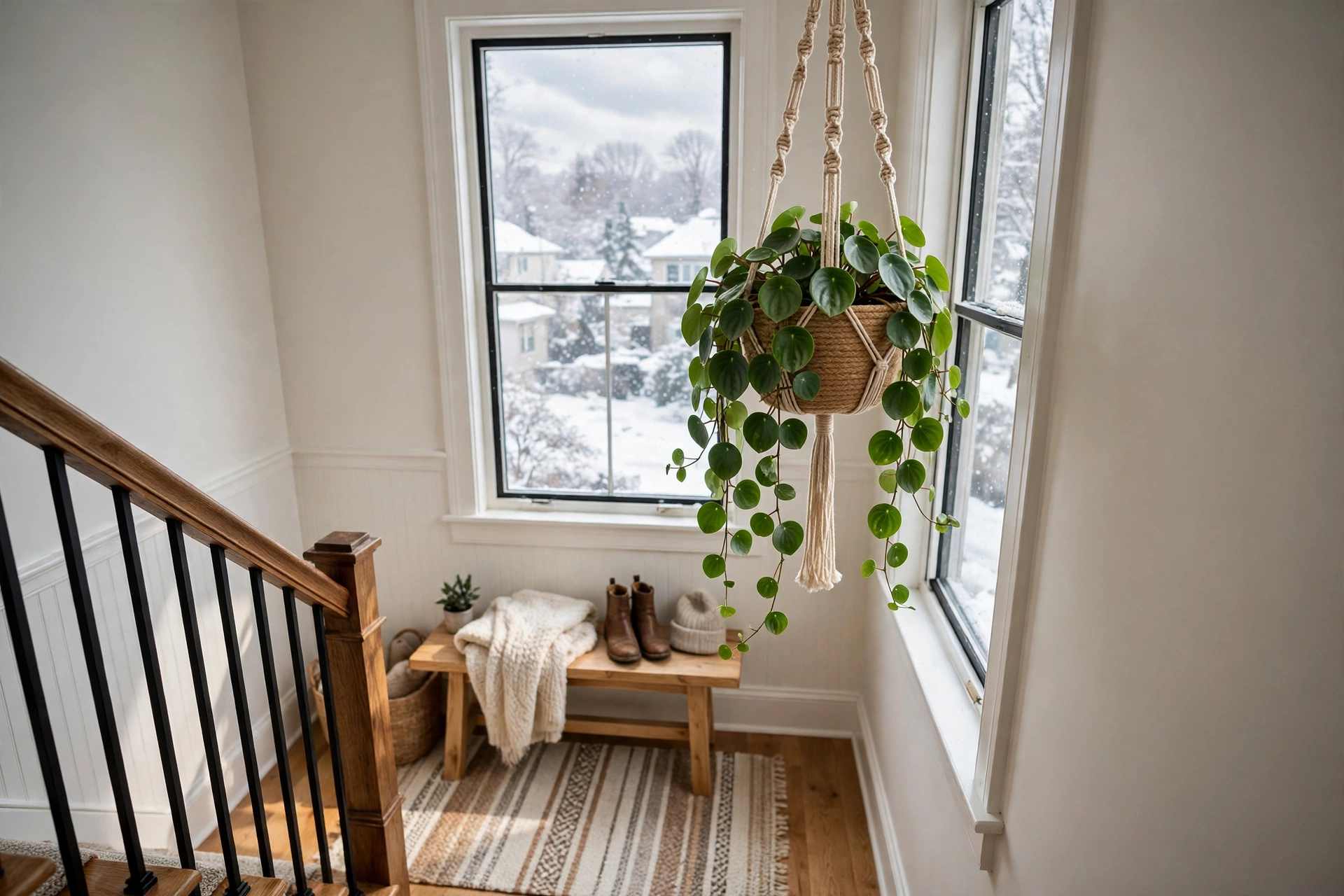
Peperomia Hope is the cutest little trailer for a stairwell landing, and it stays small on purpose! Its coin-shaped leaves cluster in groups of three or four along thin stems that trail about a foot. Bright indirect light keeps the leaves plump and the stems neat. Water only when the top 1 to 2 inches of soil feel dry, and stretch watering to every two to three weeks in winter. Keep it above 55 degrees, in a warm spot away from cold drafts. Most peperomias are considered safe for pets, and Hope hangs high where curious paws cannot reach!
One tip: prune a long stem just above a leaf node, since a quick cut makes the plant branch and look fuller!