1. Bedroom Bench Trio in Cream Pots With Pixie Lime Peperomia
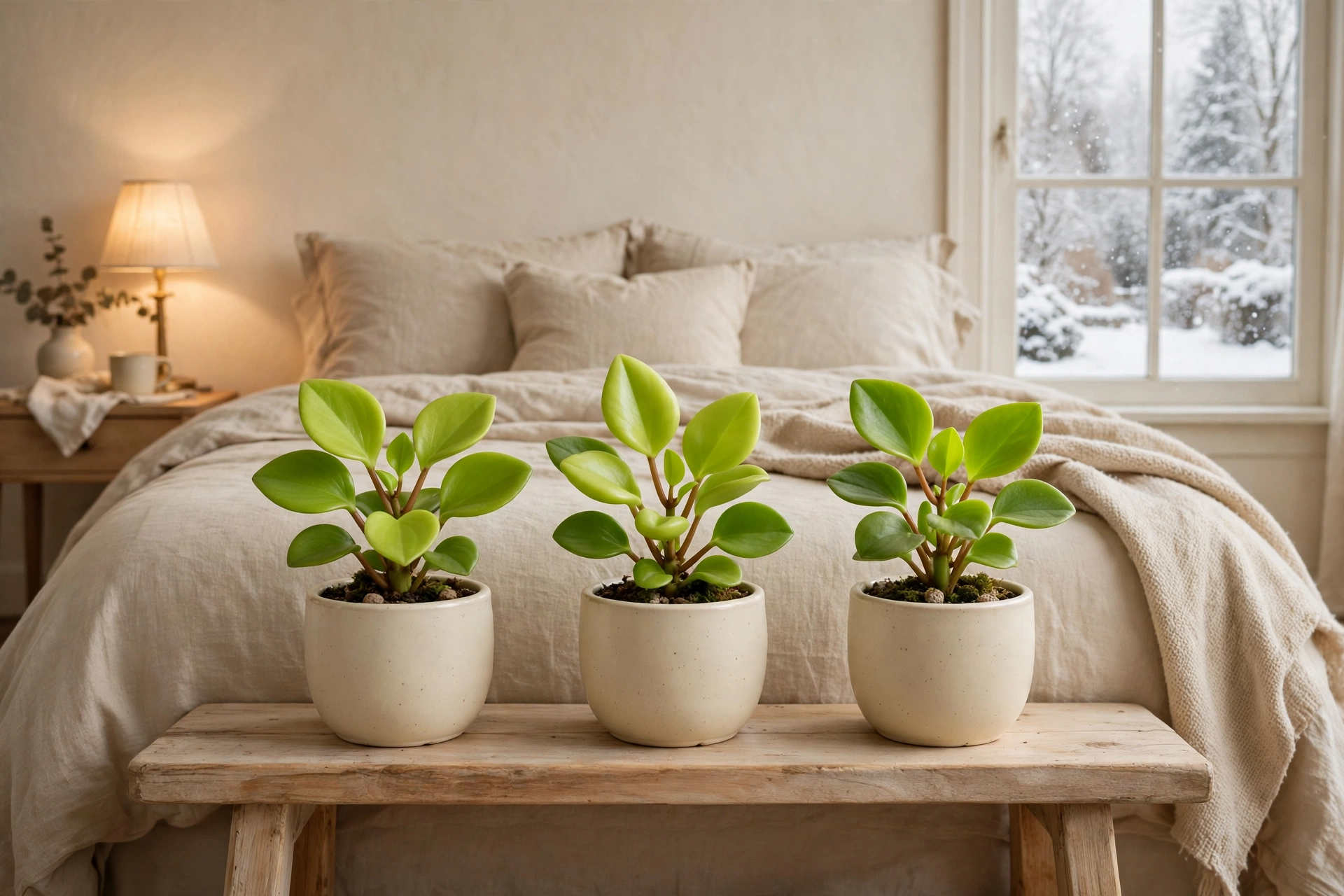
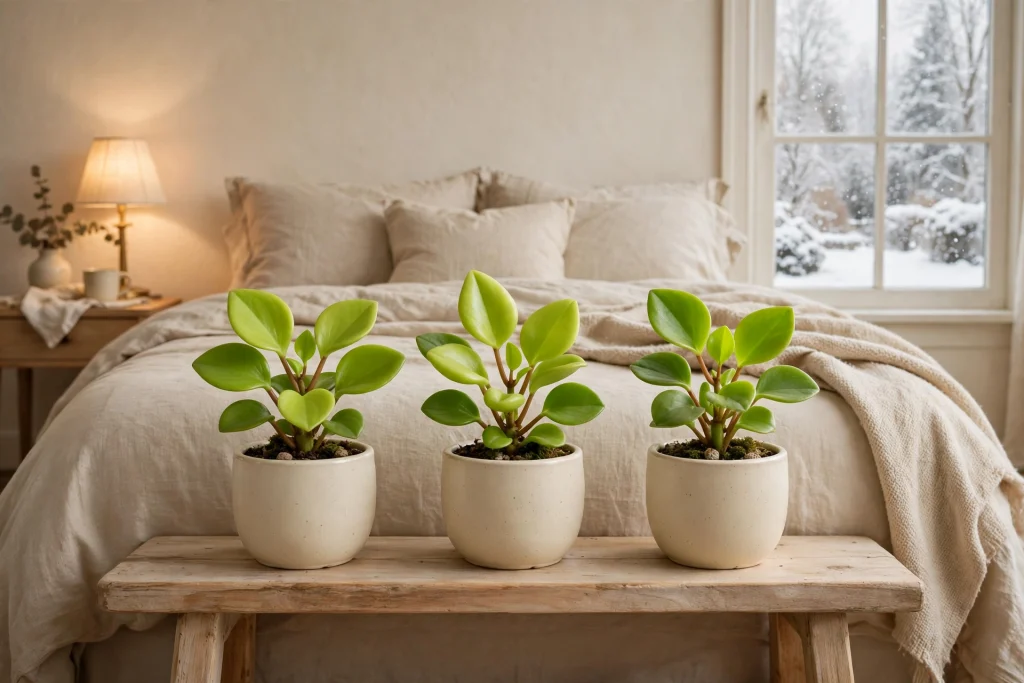
Okay, confession time! That empty bench at the foot of your bed begs for green company! Three small plants in matching cream pots make the coziest corner! Pixie Lime peperomia wears fleshy lime-green leaves that store water, so it forgives a forgotten watering! Bright indirect light keeps the lime color vivid, though harsh midday sun can scorch the leaves! Water when the top inch or two feels dry, and water less in winter when growth slows! Warm rooms between 65 and 75 degrees suit it beautifully, like most bedrooms! No toxicity is listed for this exact peperomia, and its peperomia relatives are ASPCA-listed non-toxic, lovely news for pet owners!
One tip: empty the saucer after every watering, since Pixie Lime stores water in its leaves and soggy soil spells trouble fast!
2. Leaning Mirror With a Song of India Dracaena
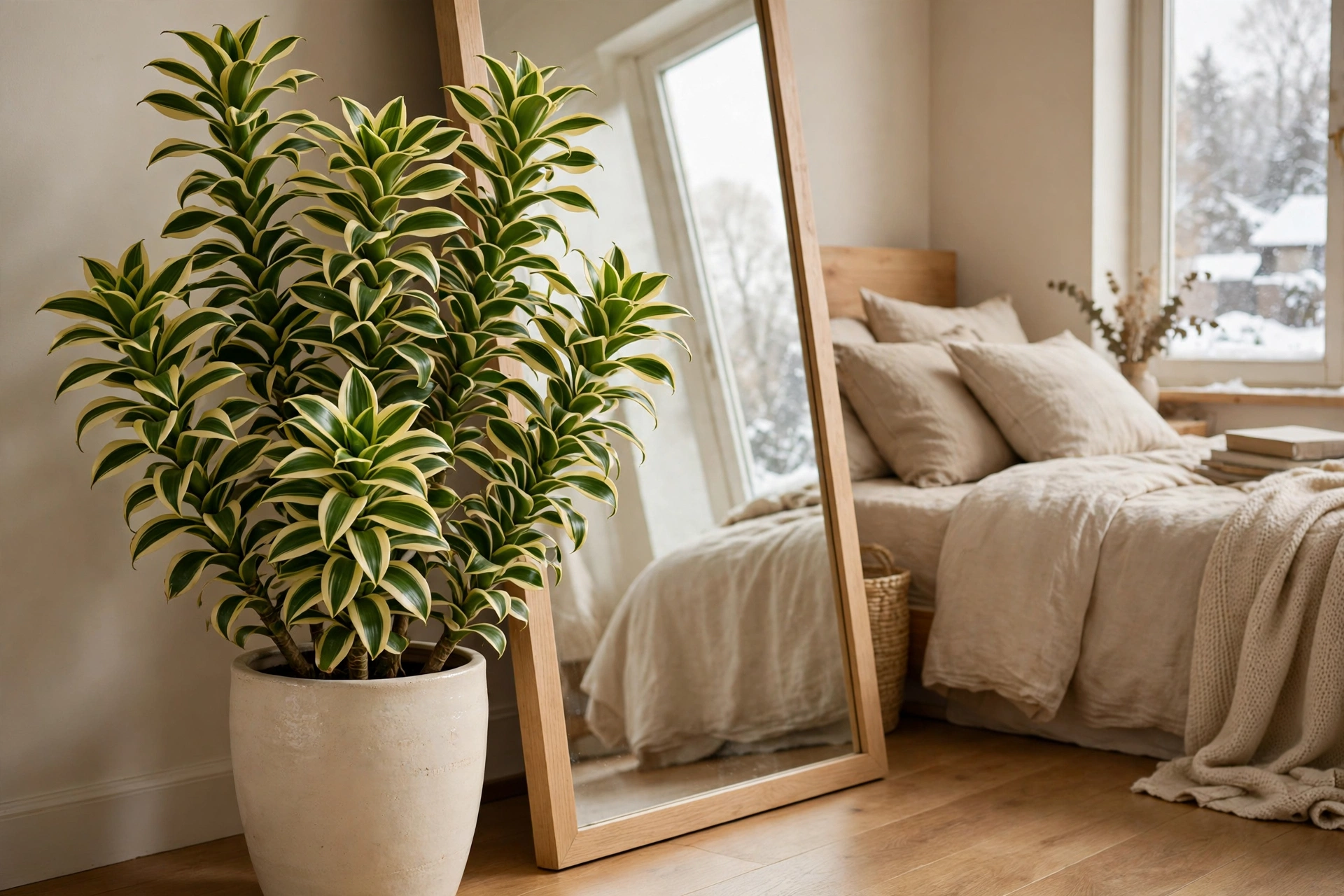
Seriously, a leaning mirror plus a Song of India is the easiest glow-up ever! Creamy yellow margins edge every leaf, and the mirror doubles the color beautifully! Bright indirect light keeps variegation crisp, so park it near your brightest window! Water when the top 1 to 2 inches feel dry, and empty the saucer after! Warm rooms between 65 and 80 degrees suit it perfectly, with humidity around 40 to 60 percent! It can reach 3 to 6 feet indoors, so give it plenty of room beside the mirror! The ASPCA lists Song of India as toxic to cats and dogs, so this one belongs in a pet-free bedroom!
One tip: water with distilled or filtered water when you can, since tap water fluoride often leaves brown tips on the pretty leaves!
3. Matching Kimberly Queen Ferns Flanking the Bed
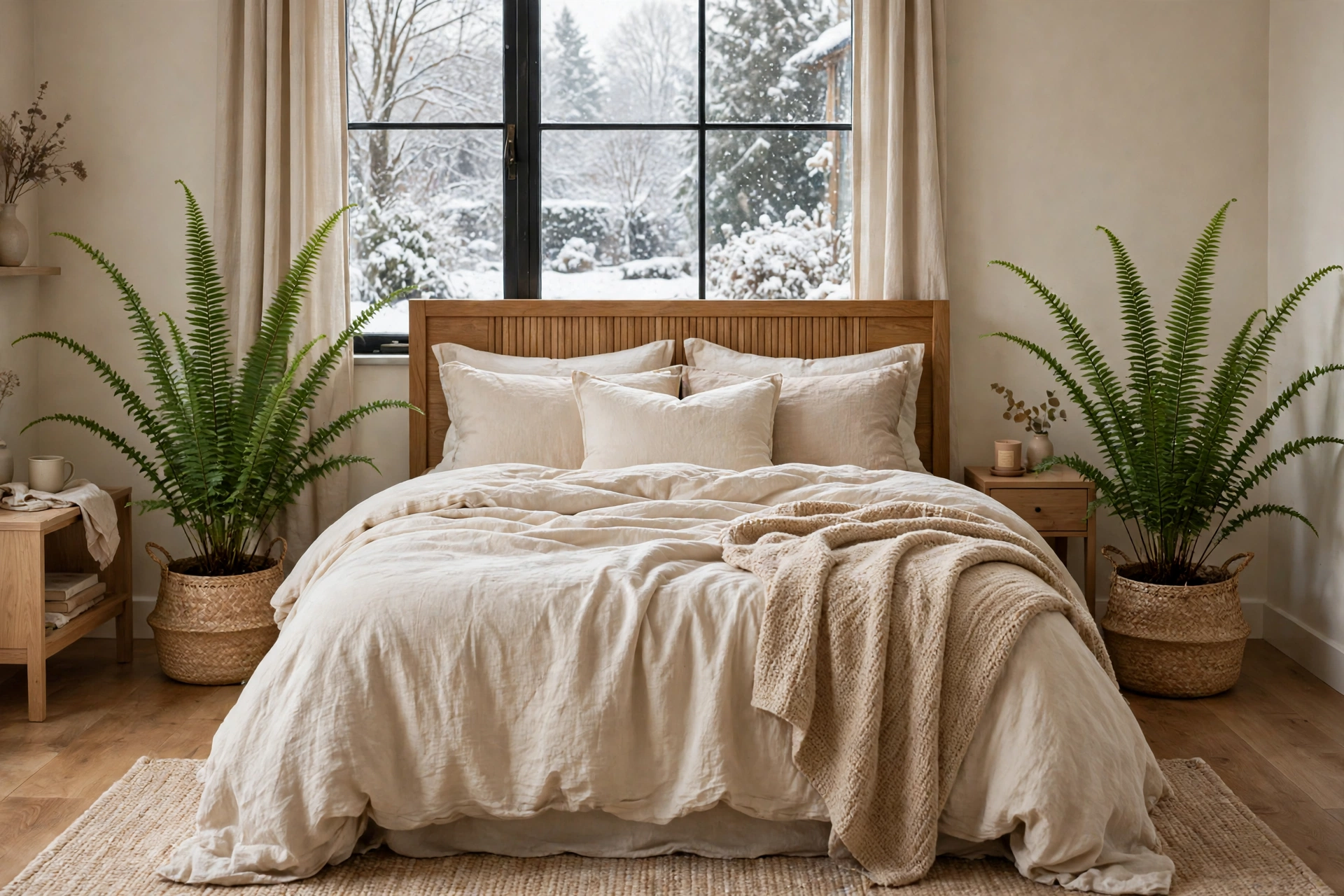
Okay, picture this! Two matching Kimberly Queen ferns stand like friendly guards on either side of the bed! Their upright sword-shaped fronds arch in a bushy fountain of green, framing the bed like a hug! Bright indirect light suits them best, and they handle partial sun, though low light can leave them leggy! Water when the top 1 to 2 inches feel dry, and never let the soil dry out completely! Cool rooms between 60 and 70 degrees suit them beautifully, with a pebble tray nearby for humidity! Kimberly Queen fern has no ASPCA entry of its own, though its Boston fern relatives are listed non-toxic, reassuring for pet owners!
One tip: snip any tired fronds off at the base with clean scissors, since a quick tidy keeps the whole plant looking fresh and full!
4. Wooden Trunk Top With a Lady’s Slipper Orchid
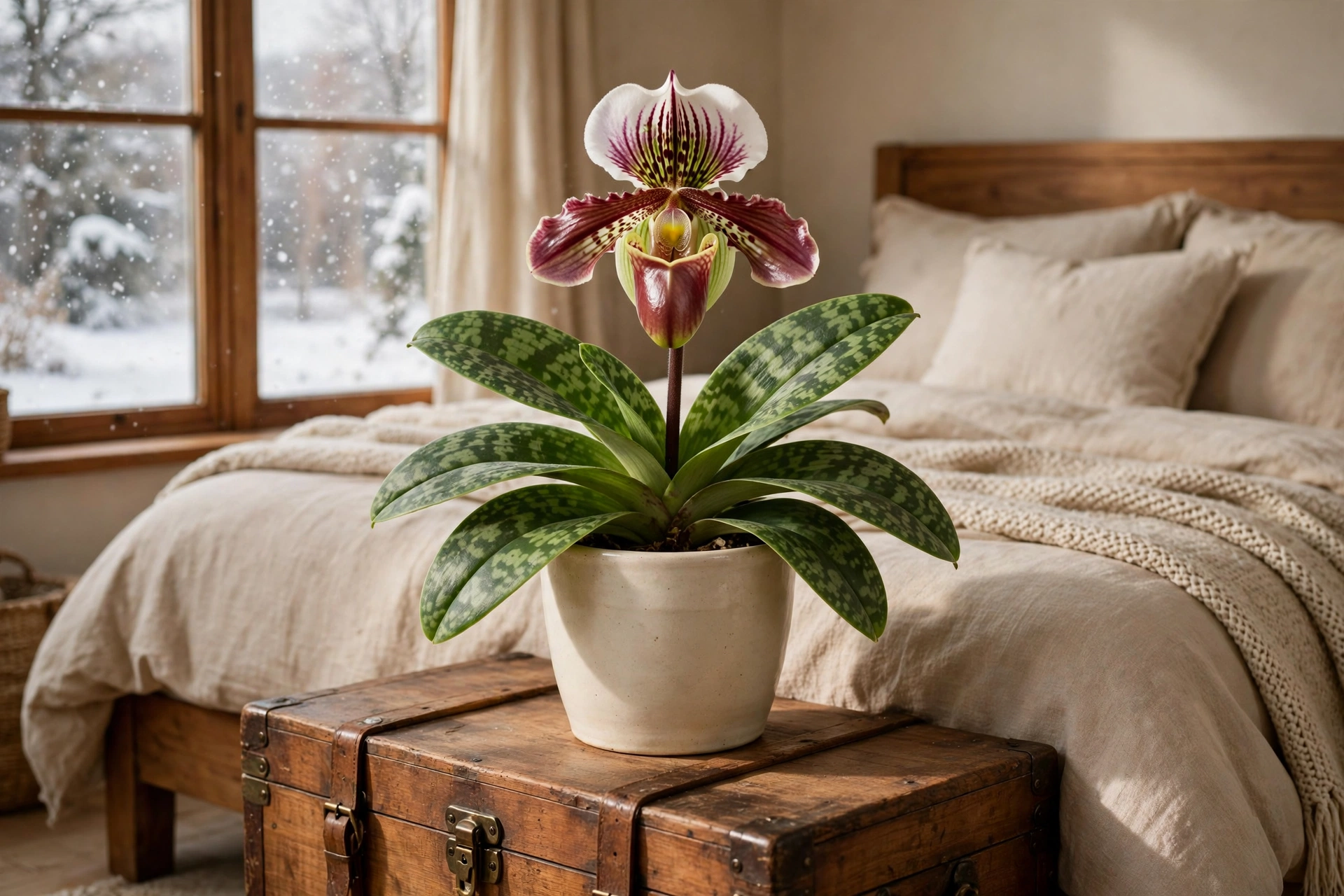
A wooden trunk at the foot of your bed is secretly a lovely stage for a lady’s slipper orchid! Mottled green leaves fan out in a neat rosette, topped by a waxy bloom with a pouch like a tiny slipper! Bright indirect light suits it best, since direct sun can scorch the leaves fast! Keep the mix lightly moist, and never let it dry out completely! Water less in winter, but never let the roots go bone dry! Warm rooms between 68 and 80 degrees suit mottled types best! Paphiopedilum has no ASPCA entry of its own, though its orchid relatives are listed non-toxic, great news for pet owners!
One tip: flush the mix with plain water once a month, since salts build up fast and clean roots grow stronger blooms!
5. Flowering Maple in a Woven Basket Beside the Door
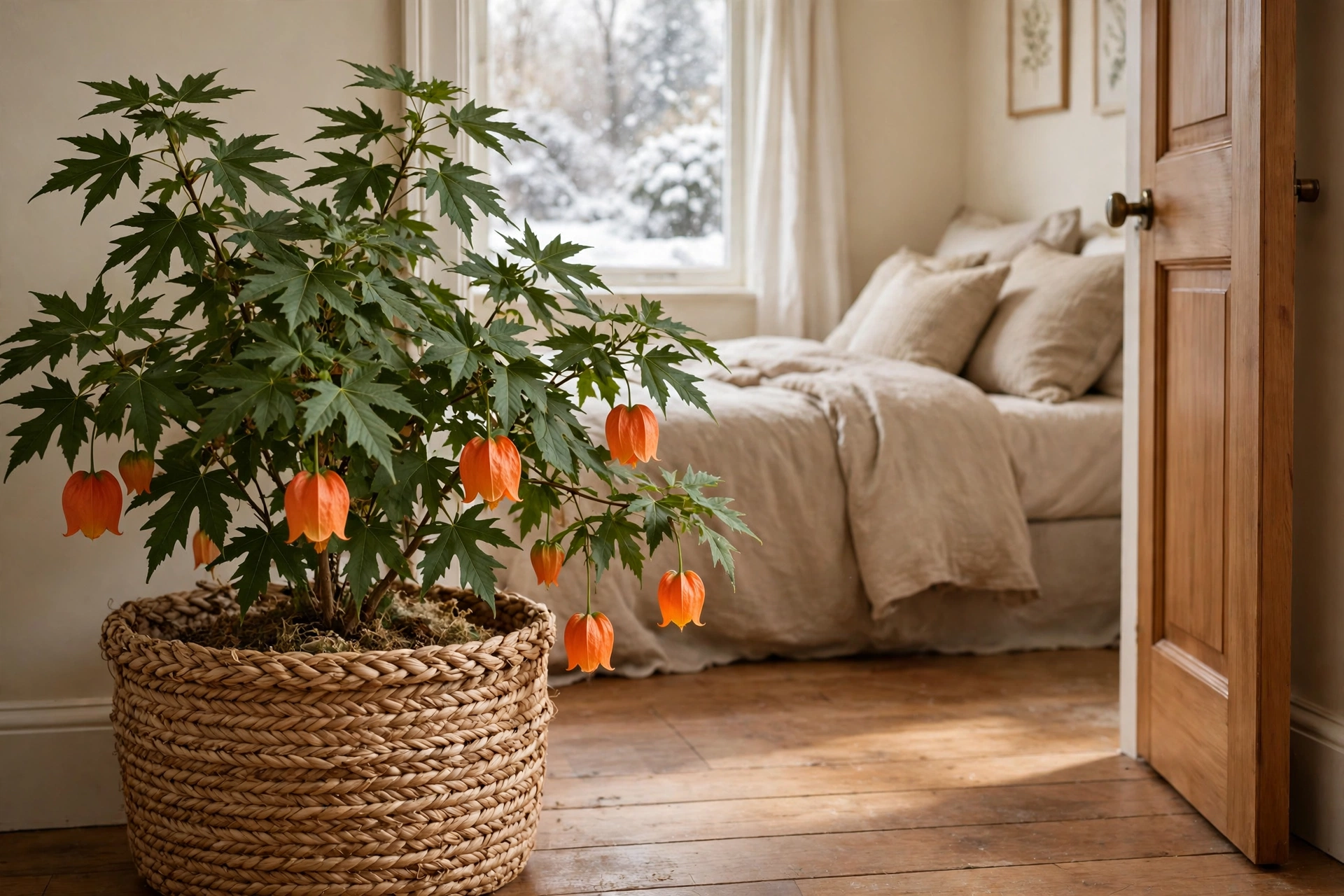
That awkward empty spot beside your bedroom door finally has a lovely purpose, and it involves a flowering maple! Maple-shaped leaves crowd the stems, and bell-shaped blooms dangle like little lanterns almost all year, a cheerful sight! Bright light suits it best, so park the basket near your brightest window! Water when the top inch of soil feels dry, and water less in winter when growth slows! Warm rooms between 65 and 75 degrees feel just right, with humidity around 40 to 50 percent! The ASPCA lists no pet toxicity for flowering maple, yet its leaves may upset people and pets, so keep pets away from the pot!
One tip: rotate the pot a quarter turn every week, since even light keeps the stems straight and the blooms open all around!
6. Corner Accent Table With a Madagascar Jasmine
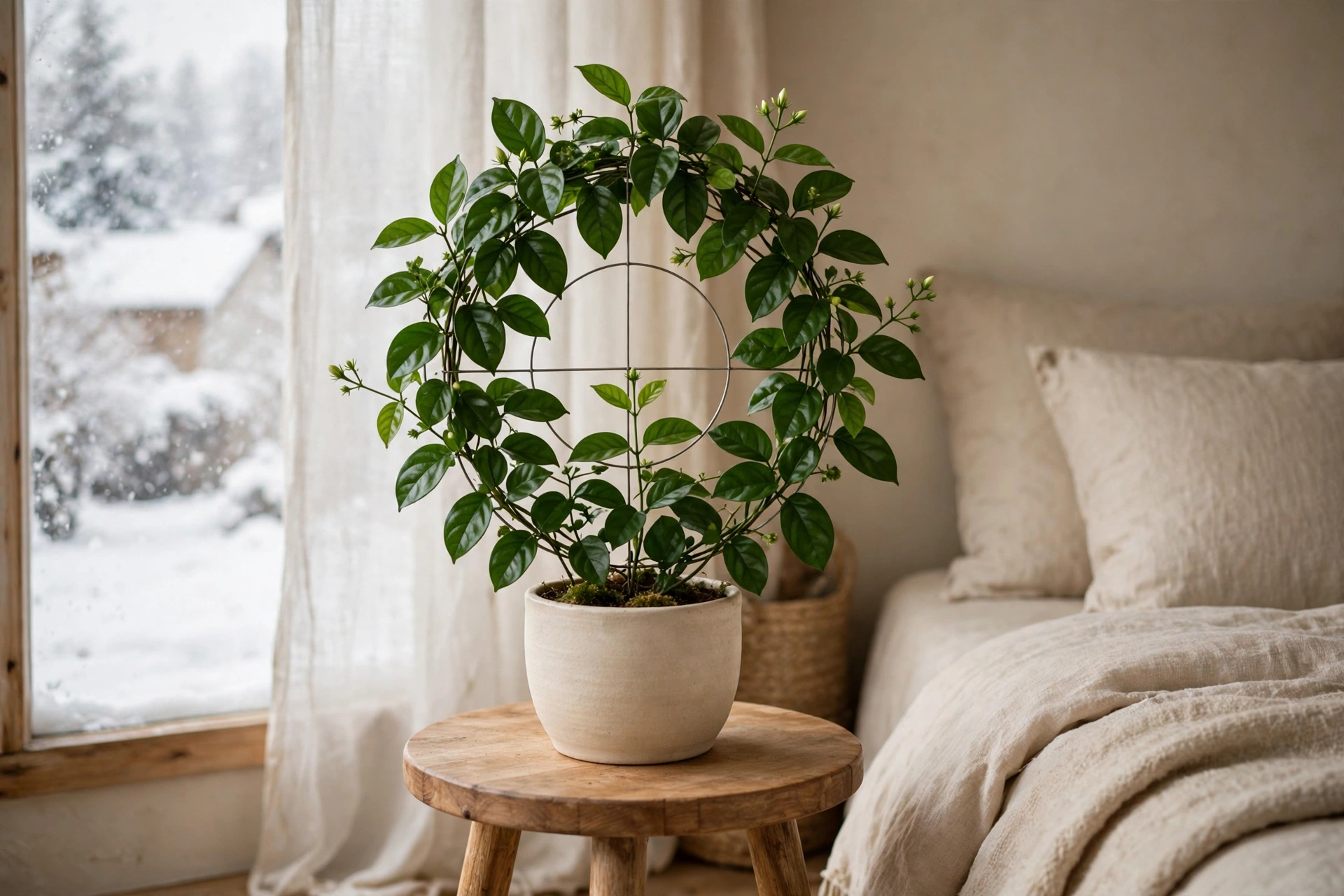
Okay, hear me out! A Madagascar jasmine on a little corner table turns your bedroom into the fanciest, happiest room in the house! Its glossy deep green leaves look handsome all winter, and waxy white star blooms bring a rich sweet scent in season! Bright filtered light suits it best, so park the table near an east-facing window! Water when the top inch of soil feels dry, and water much less in winter! It loves warm days between 65 and 80 degrees, with humidity around 50 to 70 percent! The ASPCA lists Madagascar jasmine as non-toxic to cats and dogs, wonderful news for pet owners!
One tip: train the vine around a small hoop, since a tidy loop keeps the stems neat and the blooms where you can see them!
7. Suitcase Stack Side Table With Tricolor Sage
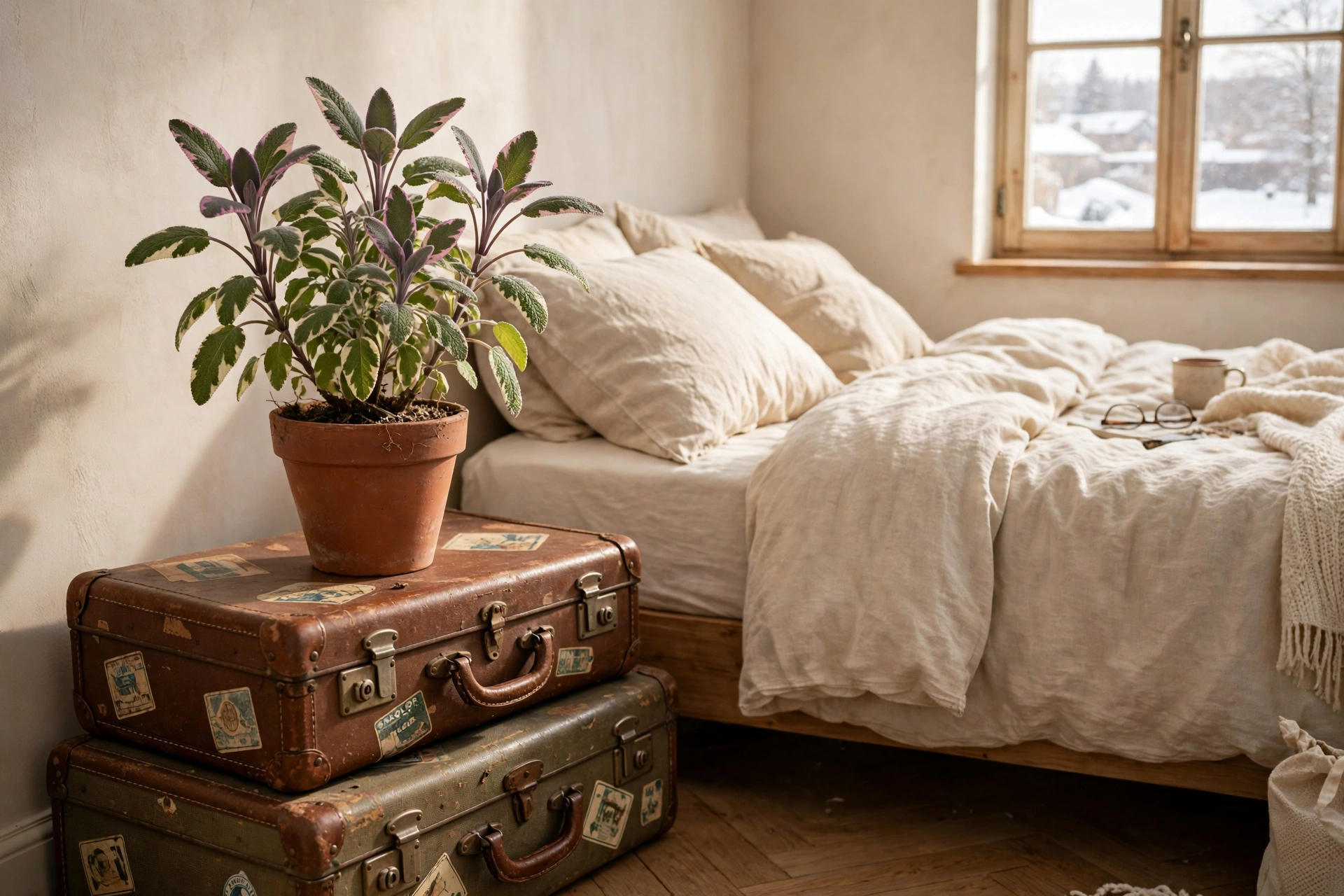
A stack of vintage suitcases makes the quirkiest side table, and tricolor sage is its perfect partner! Tricolor sage grows 12 to 18 inches tall, with green leaves edged in cream and flushed pink! It wants 6 to 8 hours of direct sun daily, so park the stack beside a sunny window! Water only when the top inch of soil feels dry, and water less in winter! Good air flow keeps it happy, since still damp air invites powdery mildew on the leaves! Warm days between 60 and 75 degrees suit it best! The ASPCA lists sage as non-toxic to cats and dogs, so pets can sniff around freely!
One tip: snip the stem tips back in spring, since a light prune keeps the sage bushy instead of leggy!
8. Wooden Chair Plant Seat With Black Mondo Grass
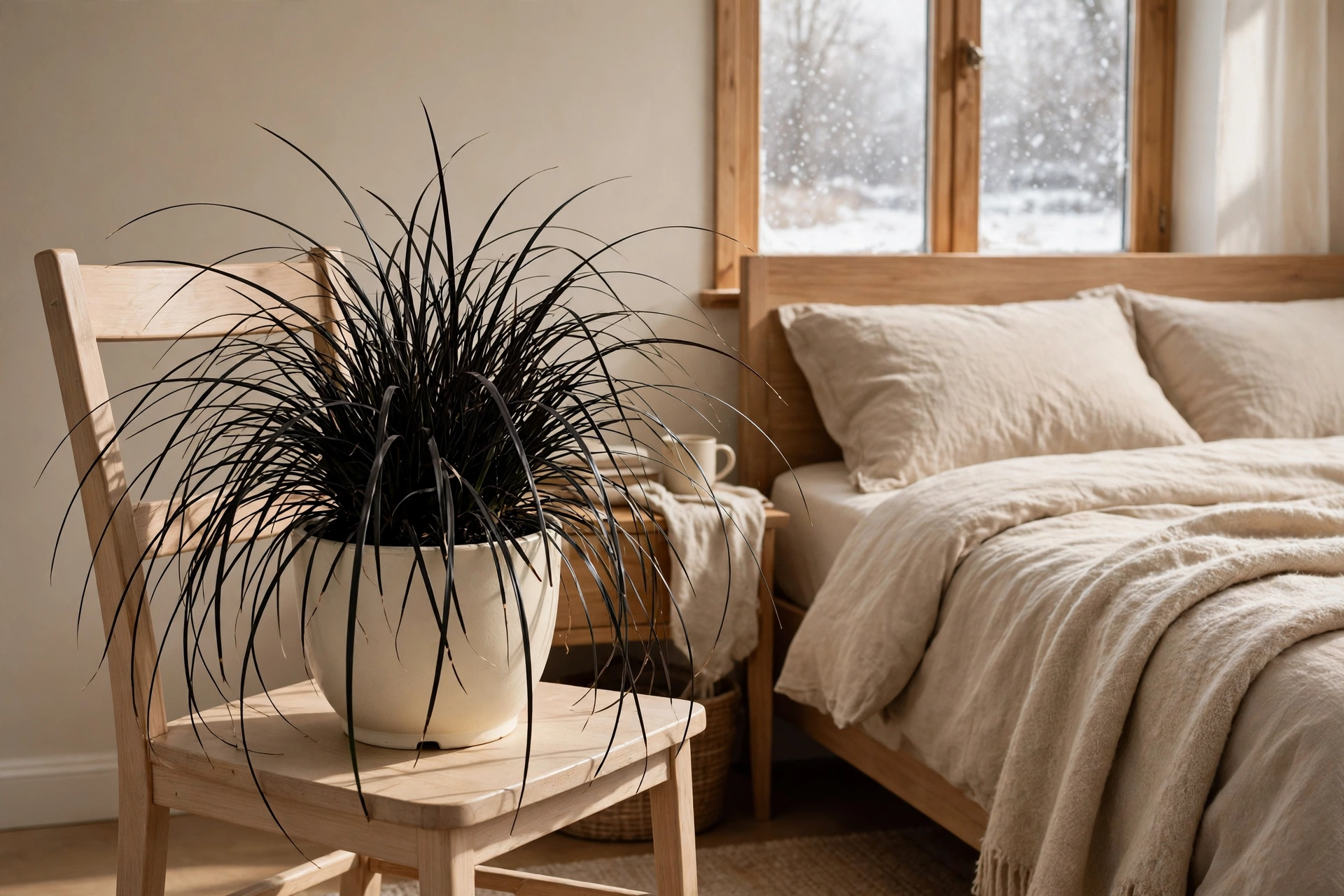
Okay, this one is pure drama! A spare wooden chair becomes a plant pedestal, and black mondo grass steals the whole show! Its arching blades are genuinely black, which almost no other plant can claim, and the clump stays just 6 to 10 inches tall! Bright indirect light suits it best, though gentle morning sun deepens the black color! Water when the top inch of soil feels dry, and keep the soil lightly moist through winter! Rooms between 60 and 75 degrees suit it beautifully, and average indoor humidity works fine! No toxicity is listed for black mondo grass, so play it safe and keep pets away from the pot!
One tip: divide the clump every two or three years in spring, since a fresh division keeps the black blades thick and full!
9. Floor Cushion Vignette With a Japanese Painted Fern
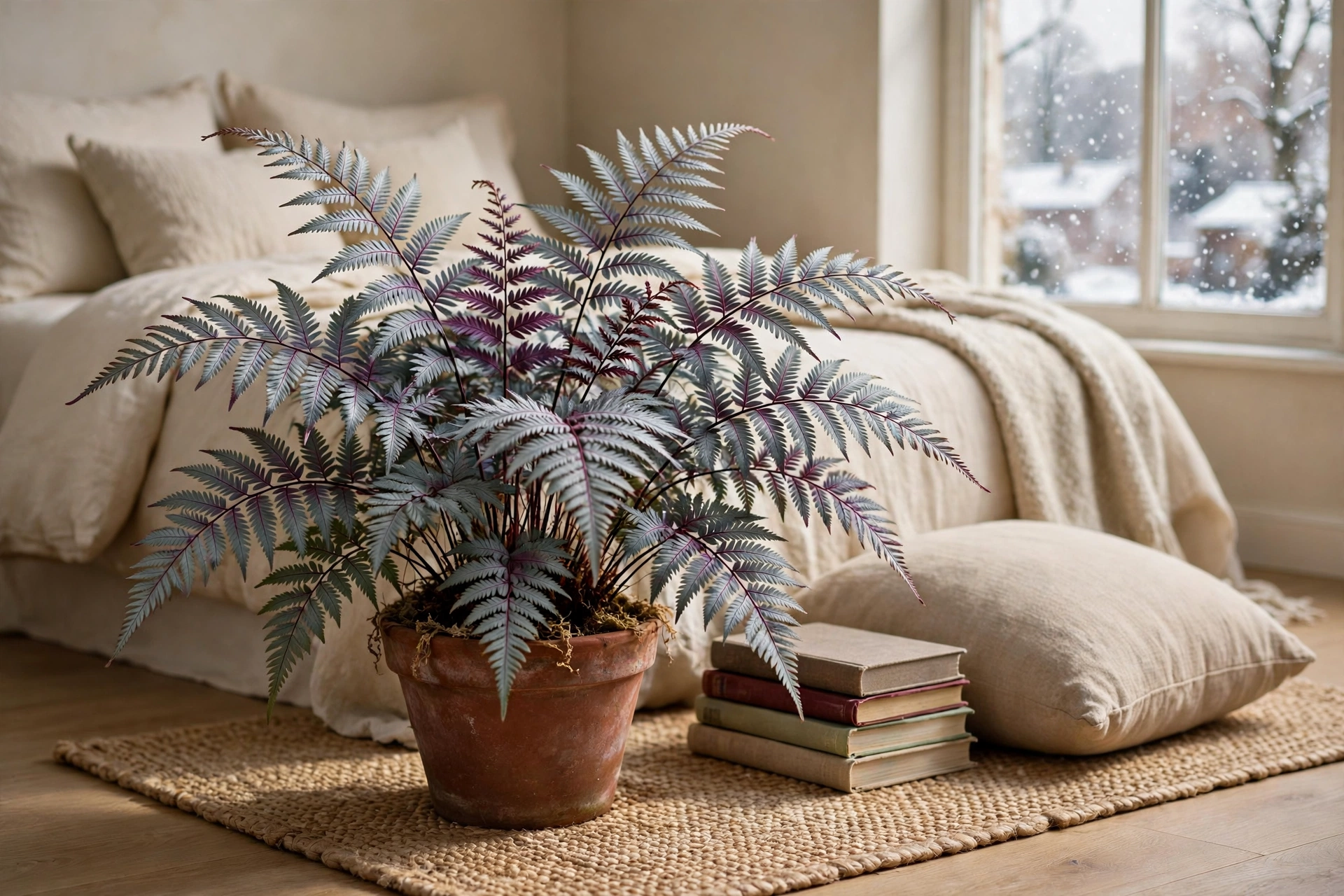
Your coziest reading spot might just be on the floor, and a Japanese painted fern makes it official! Silvery fronds brushed with purple and burgundy look hand-painted, and the clump grows about 12 to 18 inches tall! Bright indirect light suits it best, though direct sun fades the silver colors! Water when the top inch of soil feels dry, and keep the soil lightly moist through winter! Cool rooms between 55 and 72 degrees suit it best, with humidity around 50 to 70 percent! Japanese painted fern has no ASPCA entry of its own, though its fern relatives are listed non-toxic!
One tip: group it with your other houseplants, since leafy neighbors share humidity and fresh fronds return again each spring!
10. Ceramic Urn With a Leopard Plant Beside the Bed
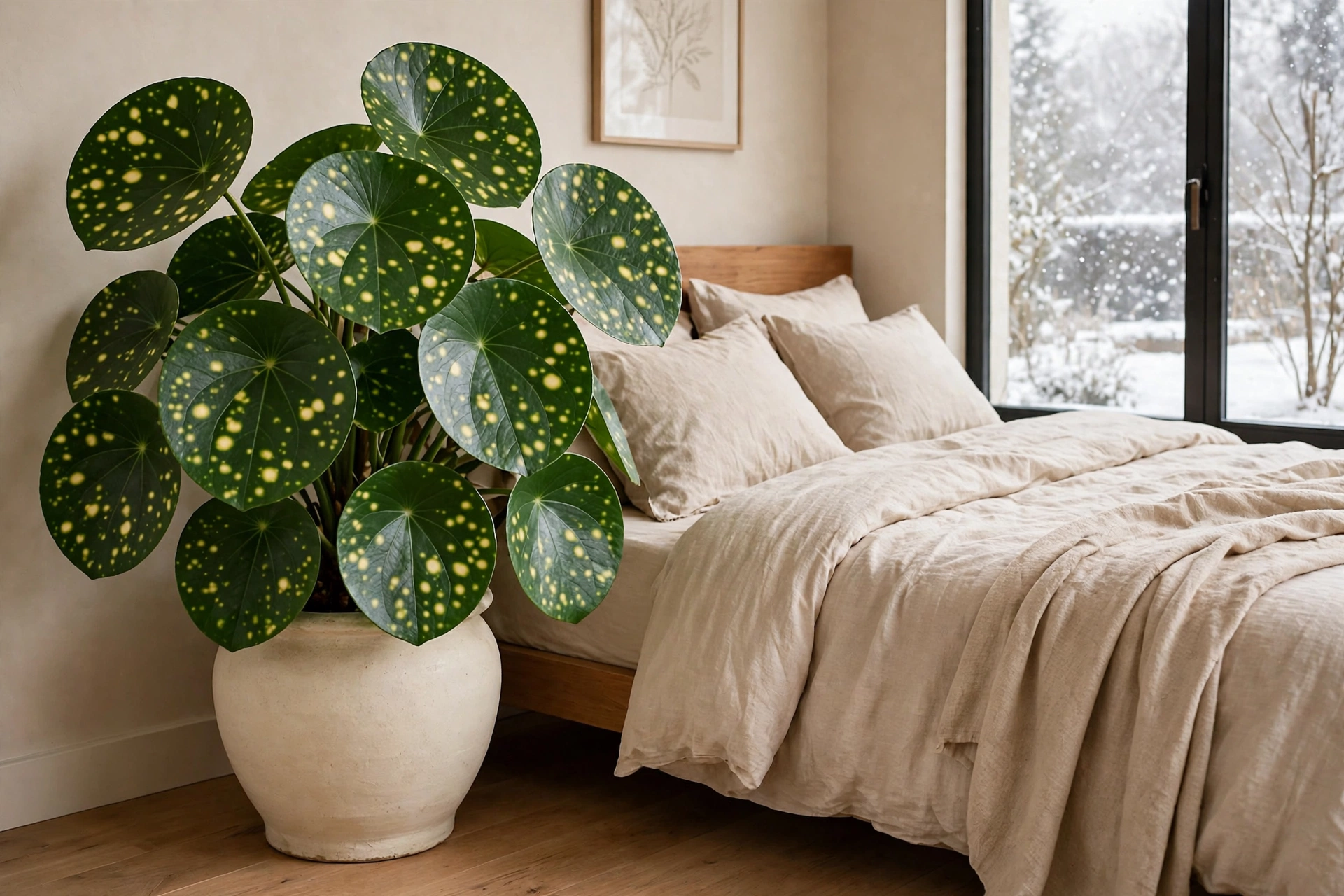
A big ceramic urn beside your bed turns a leopard plant into a living focal point, and the whole room glows with warmth! Big round leaves wear golden spots like a leopard’s coat, each leaf glossy and beautiful! Bright indirect light suits it best, since direct sun can scorch the spotted leaves! Water when the top inch of soil feels dry, and keep the soil lightly moist through winter! It loves cool to warm rooms between 60 and 75 degrees, with humidity above 50 percent! The ASPCA has no entry for leopard plant, but it contains pyrrolizidine alkaloids that can harm the liver, so keep pets away from the pot!
One tip: watch the big leaves for a slight droop, since leopard plant wilts fast when thirsty and perks up happily after a drink!
11. Tree-Stump Table Beside the Dresser With a Pansy Orchid
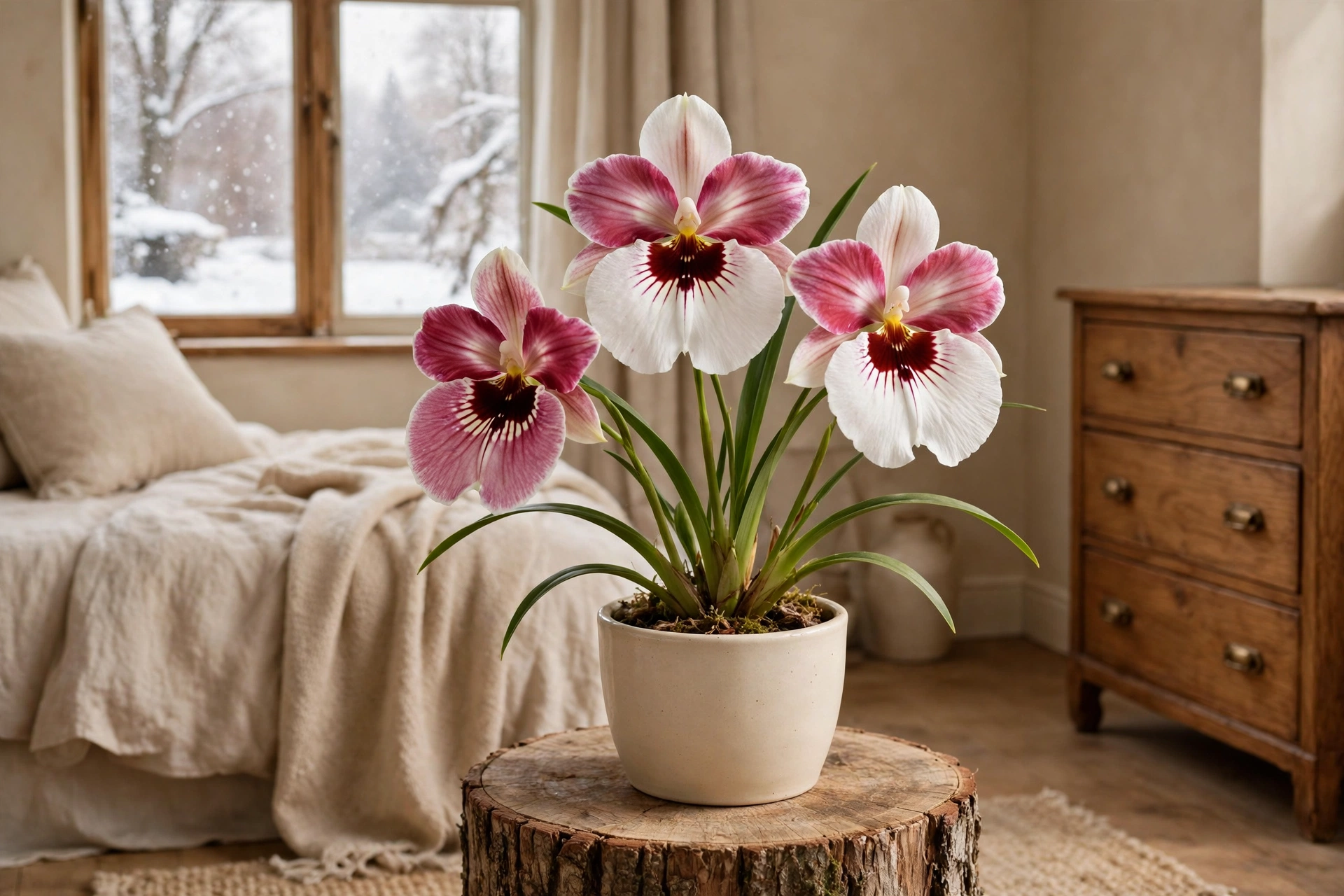
A tree-stump table beside your dresser is the rustic twist your bedroom never knew it needed, and it looks wonderful! On top sits a pansy orchid, sending up big flat blooms shaped just like garden pansies, a joyful sight every morning! Bright indirect light suits it best, so keep it near an east-facing window! Water as soon as the mix starts to dry, since this orchid dislikes dry roots! Cool days between 70 and 80 degrees suit it best, with nights near 55 to 65 degrees! Miltoniopsis has no ASPCA entry of its own, though its orchid relatives are listed non-toxic, which is reassuring for pet owners!
One tip: water in the morning with lukewarm water, since wet leaves overnight invite trouble and soft water suits it best, a lovely morning ritual!
12. Wooden Pedestal by the Window With a Grey Star Ctenanthe
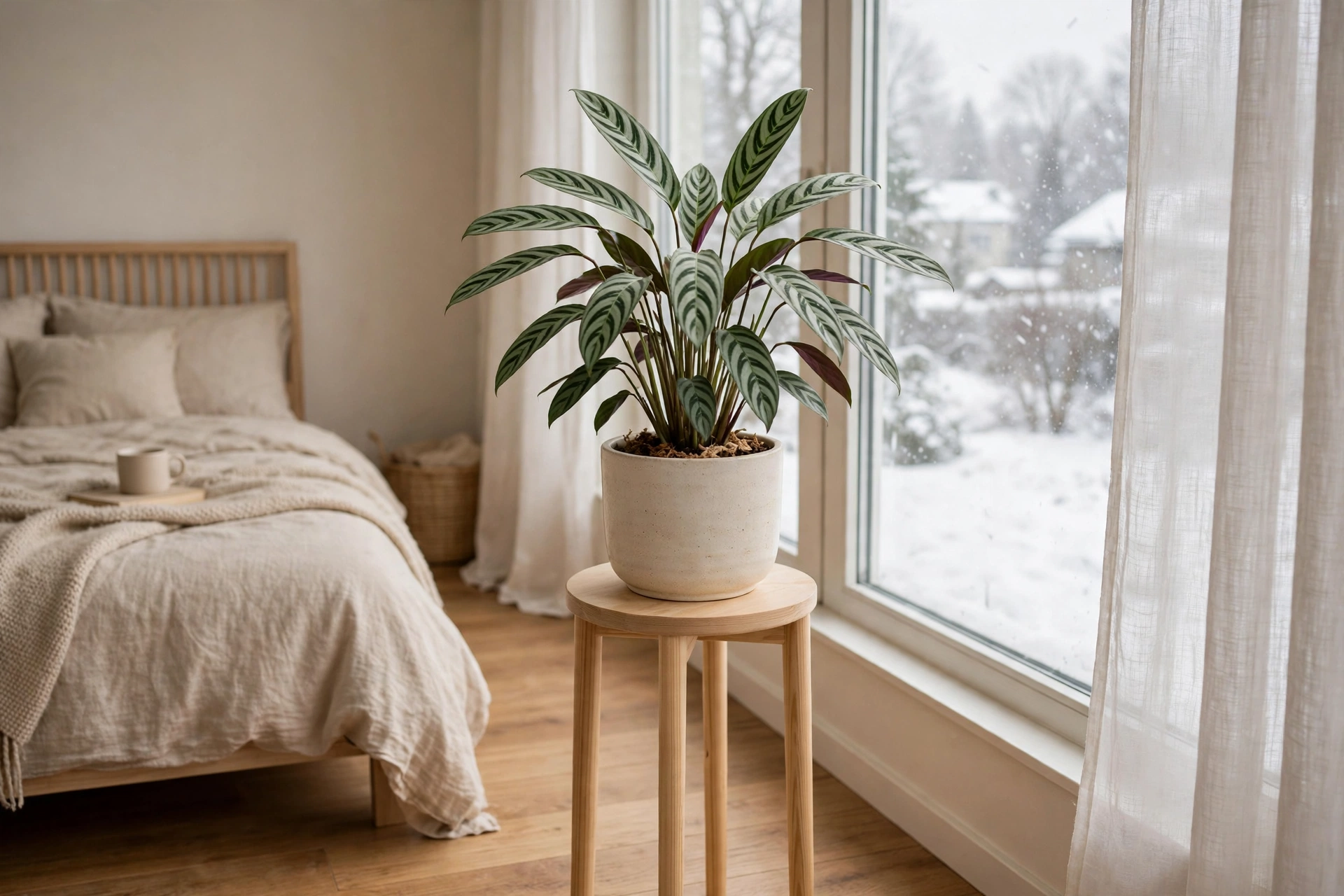
A tall wooden pedestal by the window gives a Grey Star ctenanthe the gallery treatment it deserves, and the whole corner glows! Long silvery leaves wear dark green feathered markings, with deep purple undersides that glow in the light! Bright filtered light suits it best, while direct sun can scorch the silver stripes! Water when the top inch of soil feels dry, and never let the root ball dry out completely! Warm rooms between 65 and 80 degrees suit it best, with humidity of 60 percent or higher! No toxicity is listed for ctenanthe, and its prayer-plant relatives are ASPCA-listed non-toxic, wonderful news for pet owners!
One tip: set a small humidifier nearby in winter, since heated air dries the leaves and steady moisture keeps the silver stripes bold and beautiful!