1. Low Maintenance Bedroom Plants Start With Agave ‘Blue Glow’
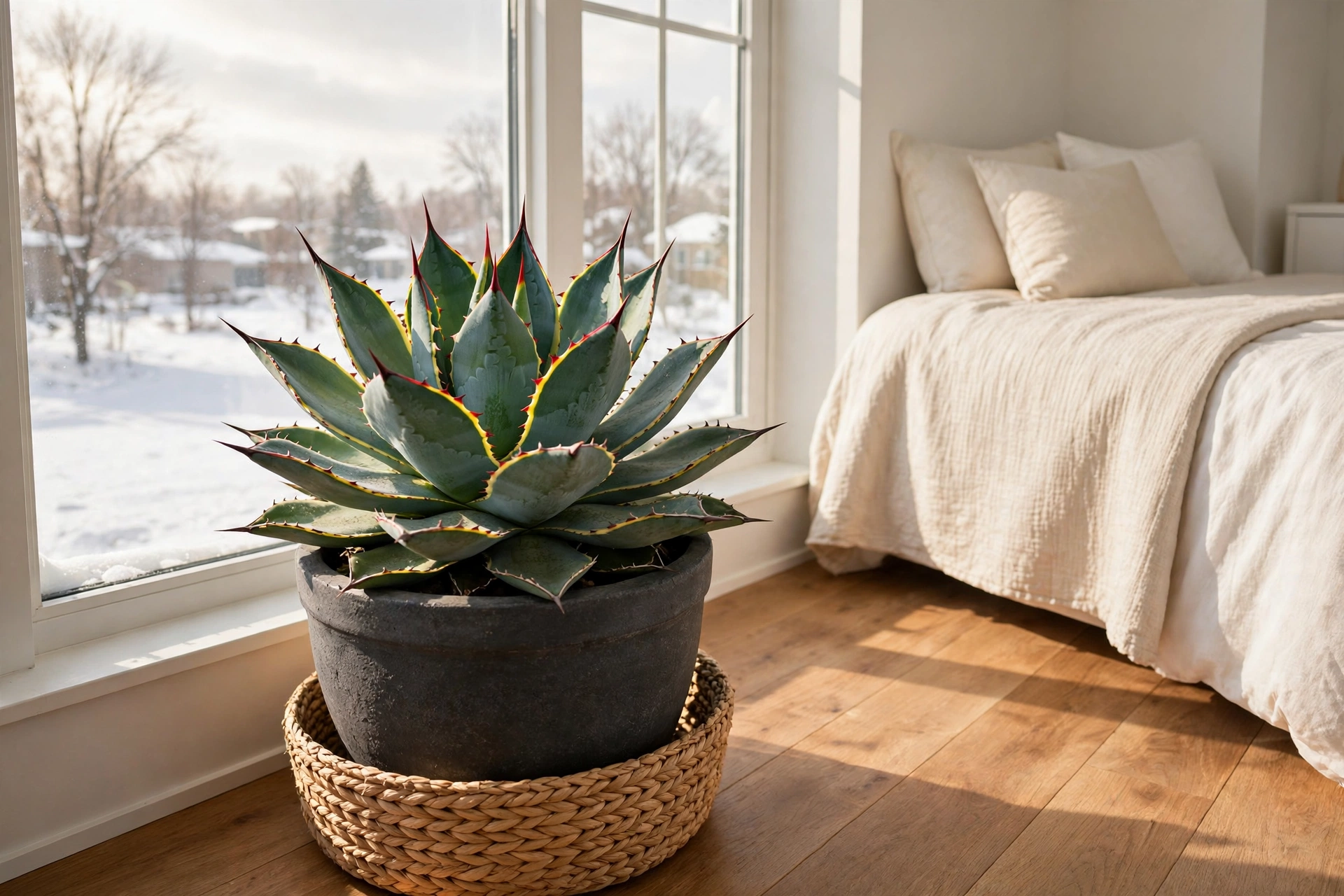
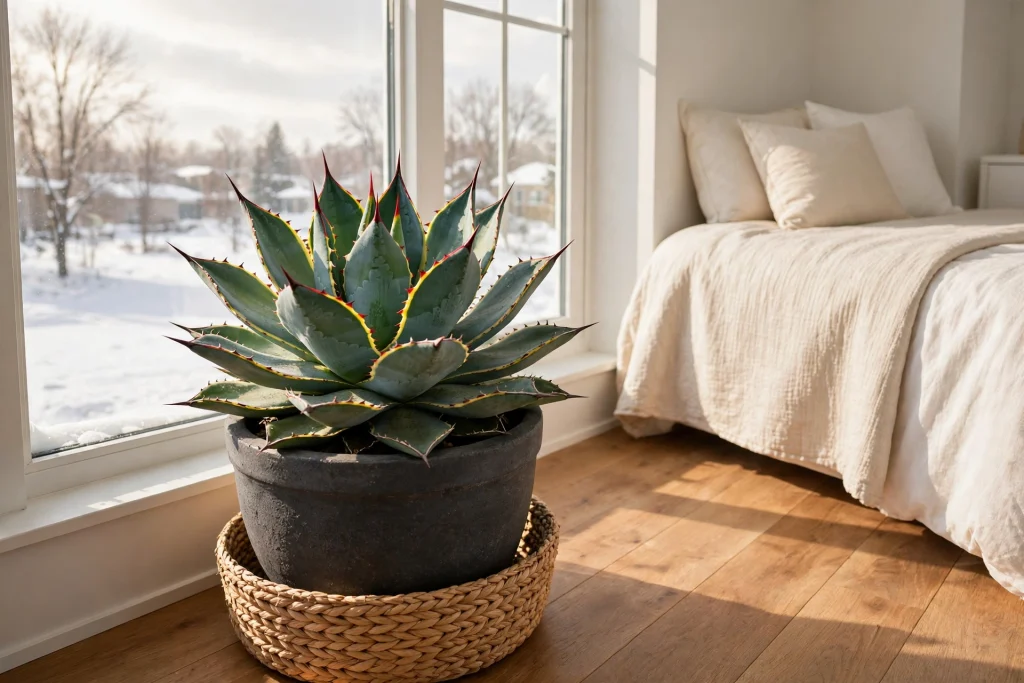
Okay, confession time! If low maintenance bedroom plants had a team captain, this gorgeous agave would wear the armband! Its tight rosette wears blue-green leaves edged in red and yellow, like it dressed for picture day! Like other agaves, its sap can irritate skin and upset a pet’s stomach, so a high shelf keeps everyone safe and happy! Give it 6 to 8 hours of direct sun a day, so the brightest south-facing window is its happy place! Water only when the soil feels completely dry, then soak it and let the pot drain! Rooms between 65 and 85 degrees suit it best, which covers most bedrooms beautifully!
One tip: pick a wide, heavy pot, since a sturdy base keeps a top-heavy rosette steady, even if you bump it in the dark!
2. Cardboard Palm in a Floor Pot by the Reading Chair
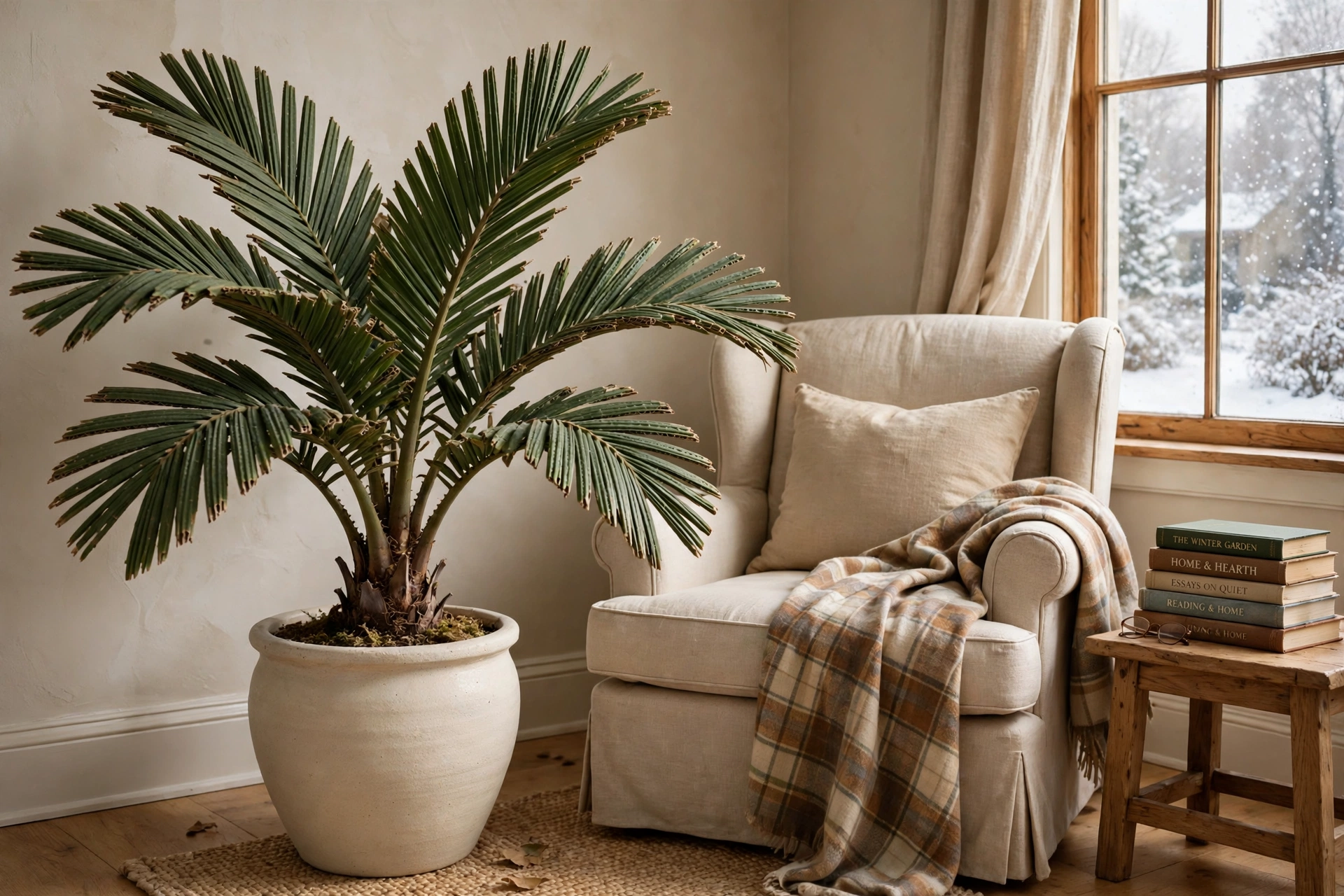
This cheerful plant was old before dinosaurs were cool! Cardboard palm is no palm, but a cycad with stiff fronds like cardboard! Thick leaflets fan from a squat trunk, and it grows too slowly to notice! The ASPCA lists cardboard palm as toxic to cats and dogs, and just 1 or 2 seeds can be fatal, so a pet-free corner keeps everyone safe! Bright light suits it best, with a few hours of gentle morning sun! Water only when the top 2 inches feel dry, about every 2 to 3 weeks, and less in winter! Rooms between 60 and 80 degrees suit it, and it stays happiest above 50 degrees!
One tip: lift the pot before you water, since a light pot means dry soil and a heavy pot means wait another week, and it always works!
3. Coral Cactus on the Dresser
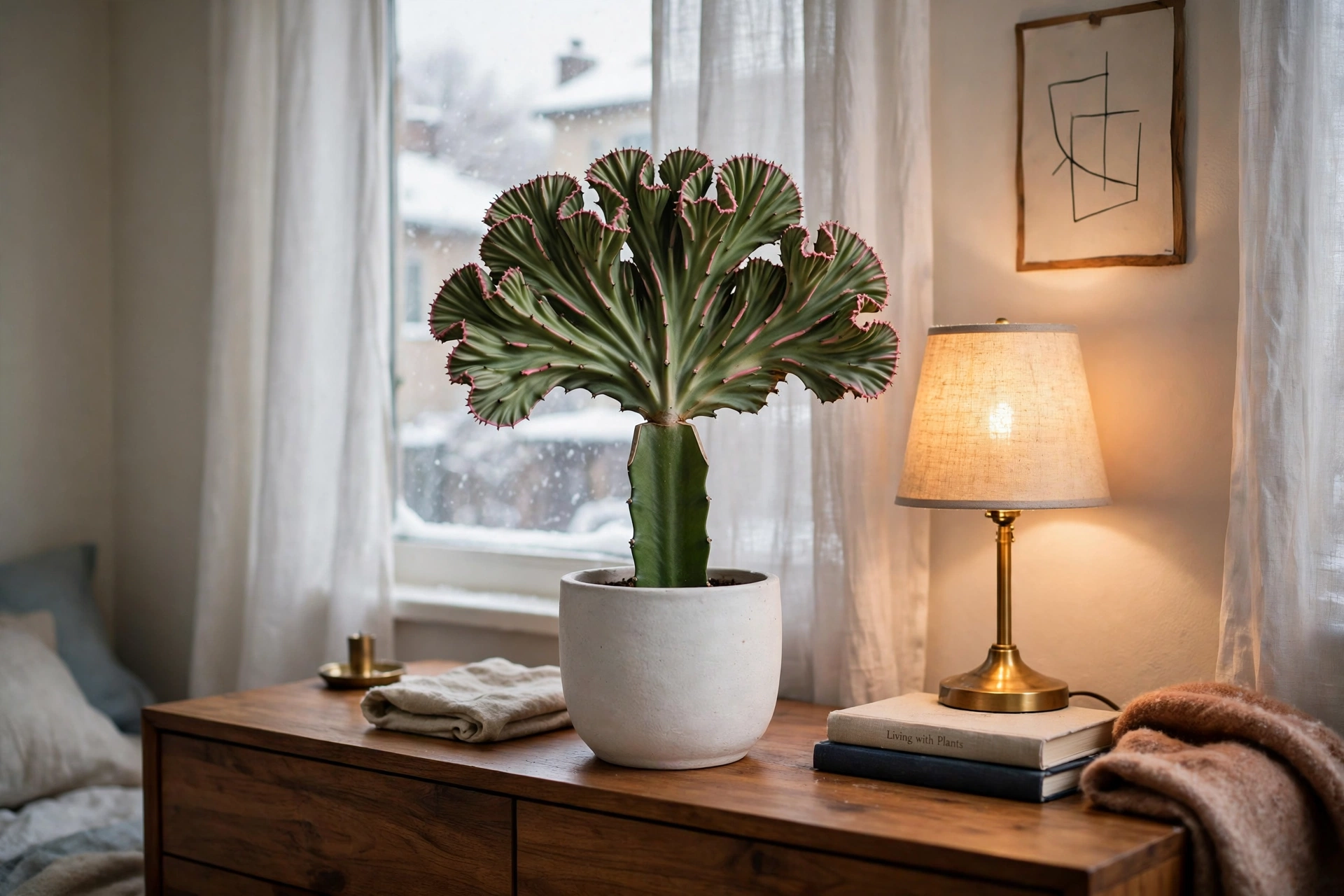
Plot twist! This sculptural showpiece is not a cactus at all, but a crested euphorbia, grafted onto a plain green stem! Its wavy fan-shaped crest looks like ocean coral, with a wild, wonderful shape all its own! Like other euphorbias, coral cactus is toxic to cats and dogs, and its milky sap irritates skin and eyes, so a high spot keeps pets safe! Bright indirect light suits it best, so an east-facing window with gentle morning sun is ideal! Water only when the soil feels completely dry, about every 3 to 4 weeks, and just once a month in winter! Rooms between 60 and 80 degrees suit it best!
One tip: wear gloves and keep it away from your face when you repot it, since the milky sap can sting your skin and eyes! Gloves keep the job easy and safe!
4. Old Man Cactus on a Sunny South Sill
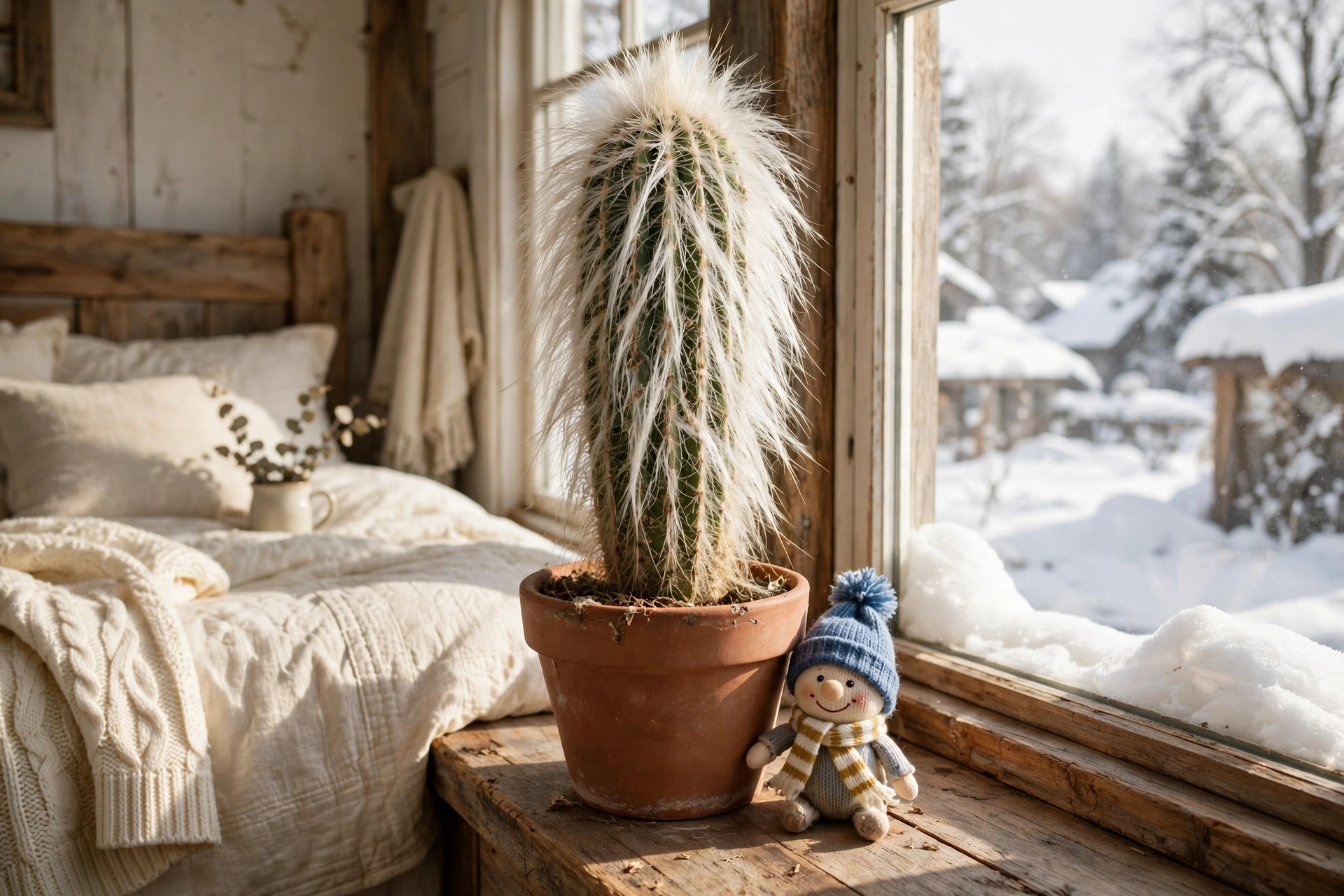
Seriously, this cactus looks like it raided a wig shop! Old man cactus is a tall green column wrapped in long white hair, really a coat of fine spines! It grows very slowly, reaching 1 to 3 feet tall indoors over many years! Give it 6 or more hours of direct sun a day, so a south-facing window is its happy place! Water every 3 to 4 weeks in spring and summer, and barely in winter, maybe once every 6 to 8 weeks! The ASPCA lists old man cactus as non-toxic to cats and dogs, though sharp spines hide under that soft hair, so admire it from a cozy distance!
One tip: water from below when you can, since overhead water can mat the hair down and invite rot, so bottom watering wins! Dry hair stays fluffy and bright!
5. Star Cactus on the Bedside Table
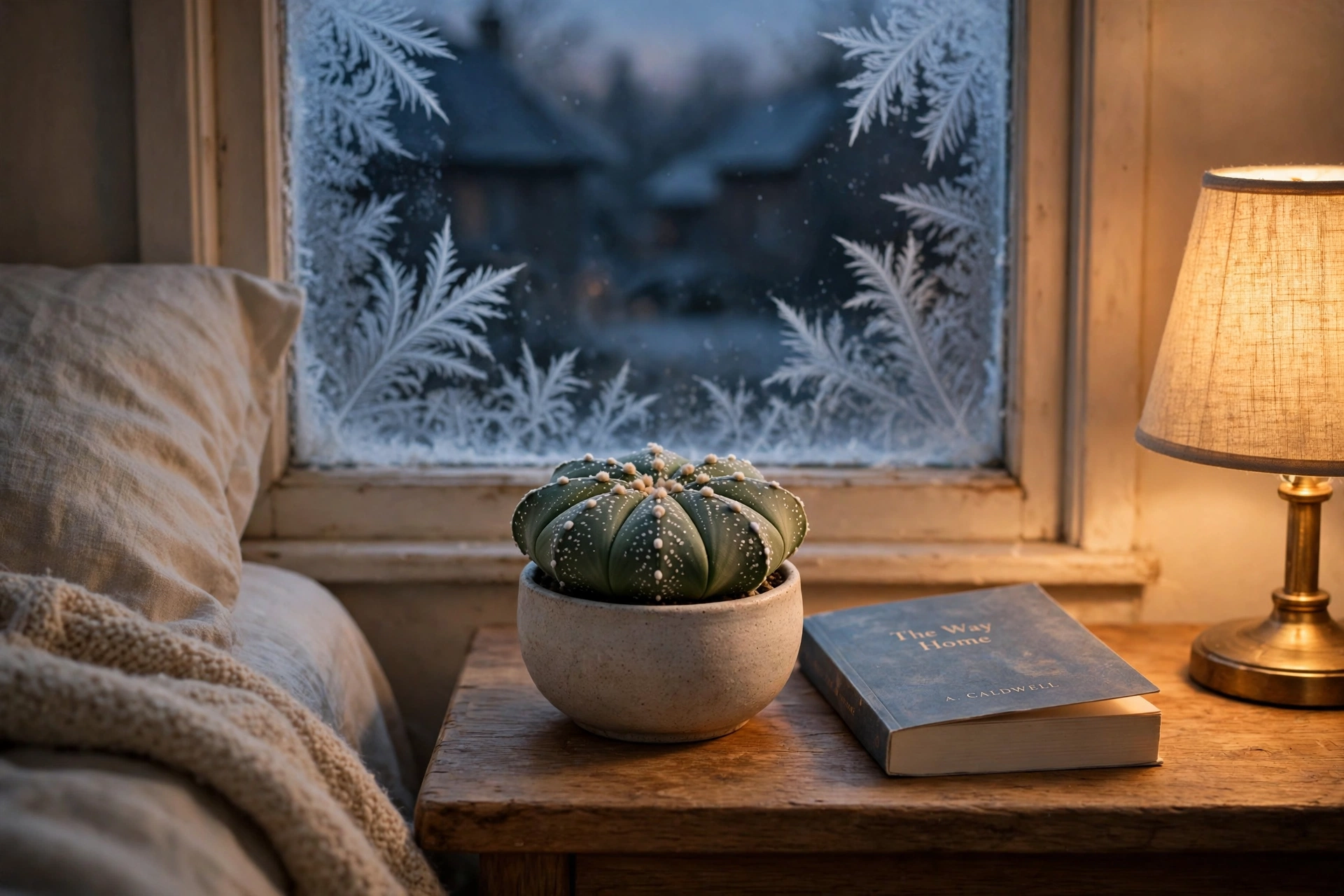
Guess what! This little cactus has no spines at all, so it is safe beside your bed! Star cactus is a flat green disc with low ribs and white flecks, like a lovely living sand dollar! It stays tiny, just 2 to 6 inches wide, so it fits a nightstand beside the lamp! Give it 4 to 6 hours of gentle morning sun each day! Water only when the soil feels completely dry, and barely at all in winter! Warm rooms between 70 and 85 degrees suit it best, and it loves the warmth! Pet lovers can relax and smile, since star cactus is considered non-toxic to cats and dogs!
One tip: buy a nursery-grown plant from a trusted seller, since wild star cacti are endangered and protected by law, and nursery plants grow happily!
6. Screw Pine in a Tall Pot Beside the Wardrobe
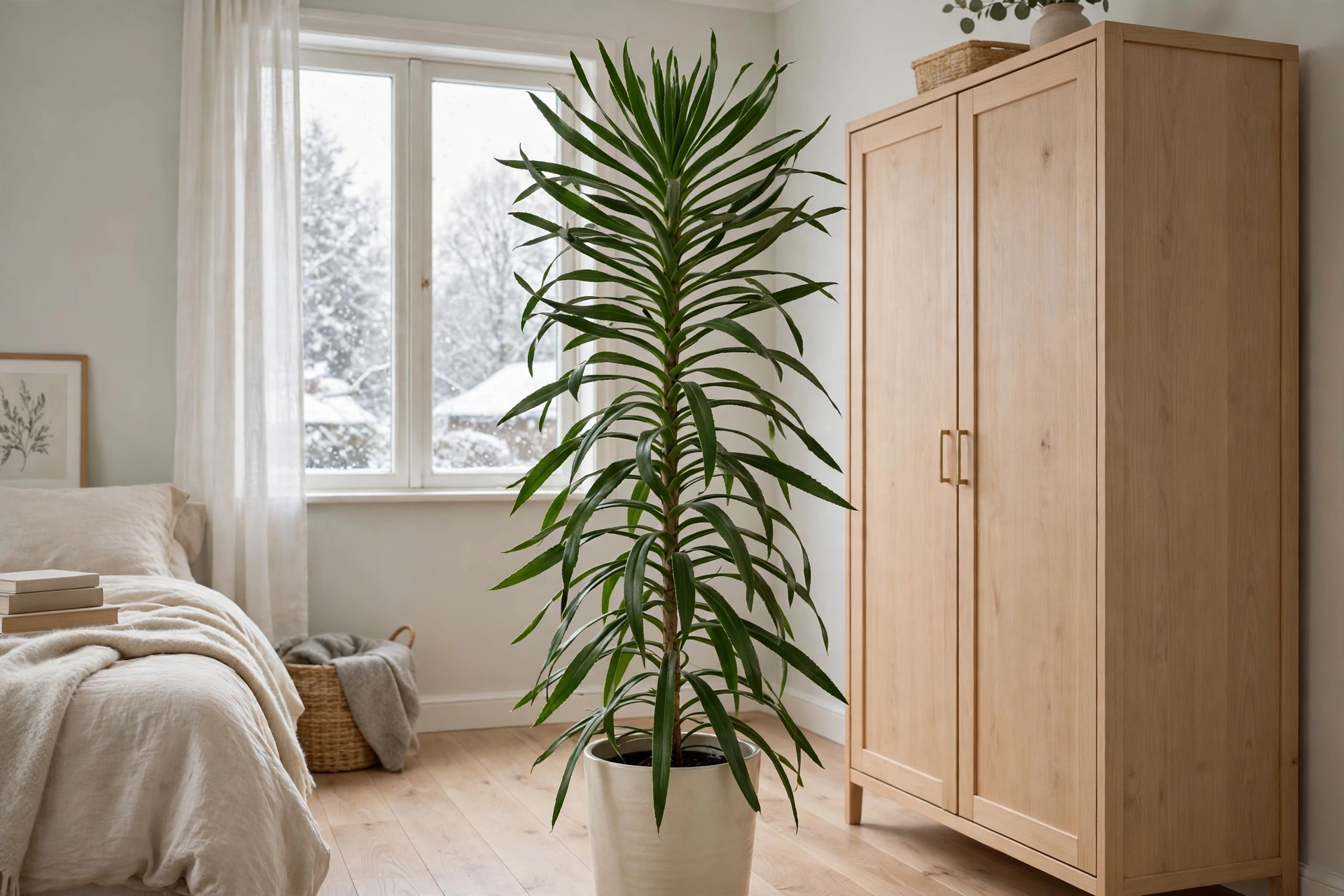
Okay, real talk! This leafy giant is no pine, but a tropical plant with strappy leaves spiraling around its stem! Screw pine grows 3 to 5 feet tall indoors, like a lovely green fountain! No pet-poison authority lists screw pine either way, so keep it from nibbling pets, and your leafy giant stays safe! Bright indirect light suits it best, at least 6 hours a day, with gentle morning sun! Water when the top 1 to 2 inches feel dry, every 7 to 10 days in spring and summer, every 2 to 3 weeks in winter! Rooms between 65 and 80 degrees suit it best, which covers most bedrooms beautifully!
One tip: wear long sleeves when you move the pot, since the leaf edges carry fine backward-facing spines that catch skin, and sleeves keep it easy!
7. Bear’s Paw on a Bright Windowsill
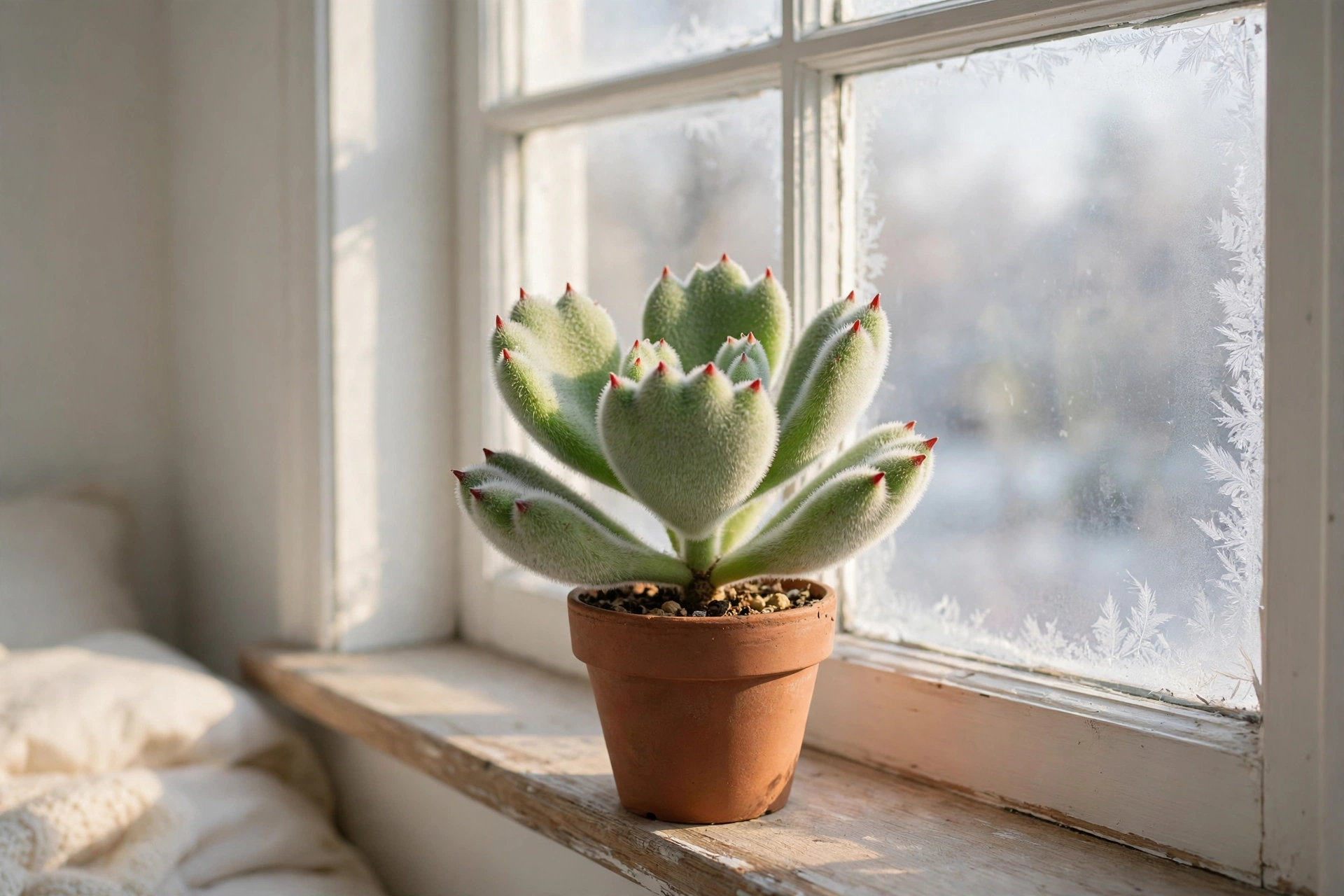
Be honest, how cute is this plant! Bear’s paw grows chunky fuzzy leaves shaped like little paws, each one tipped with tiny red claws! It stays compact, about a foot tall and wide, its claws reddening in strong light! Pet lovers should know it is considered toxic to cats and dogs if eaten, so a high sunny sill keeps pets safe and your bear’s paw happy! Give it 4 to 6 hours of bright light a day, with gentle direct sun! Water only when the soil feels completely dry, about every 7 to 14 days, and barely at all in winter! Rooms between 55 and 80 degrees suit it best!
One tip: water at the base and never wet the fuzzy leaves, since dry leaves stay healthy and happy, so base watering wins!
8. Split Rock on the Desk
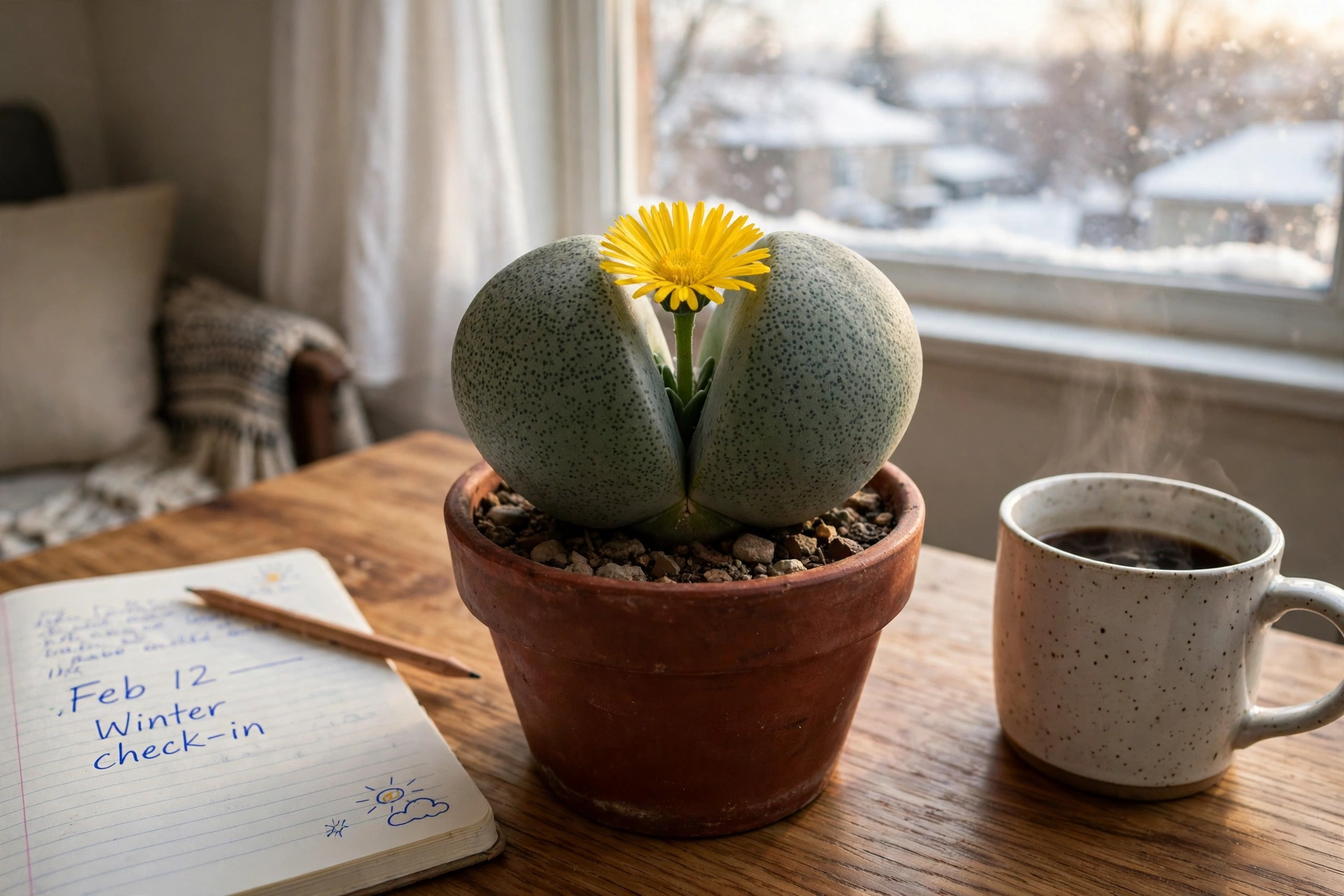
Wait, is that a plant or a pebble! Split rock is one pair of thick gray-green leaves, split down the middle by a crack! It stays tiny, 2 to 3 inches tall and 4 inches wide! Give it 4 to 6 hours of direct morning sun! Water only when the soil feels completely dry, every 2 to 3 weeks in winter, barely in summer! Warm rooms between 65 and 80 degrees suit it best! When it blooms, one daisy-like flower opens from the crack, nearly as wide as the plant, and it is pure joy! Pet lovers can relax, since split rock is considered non-toxic to cats and dogs!
One tip: pick a pot at least 4 inches deep, since split rock grows a long taproot that needs room below the leaves! A deep pot keeps it happy and growing!
9. Ruby Necklace in a Hanging Planter by the Window
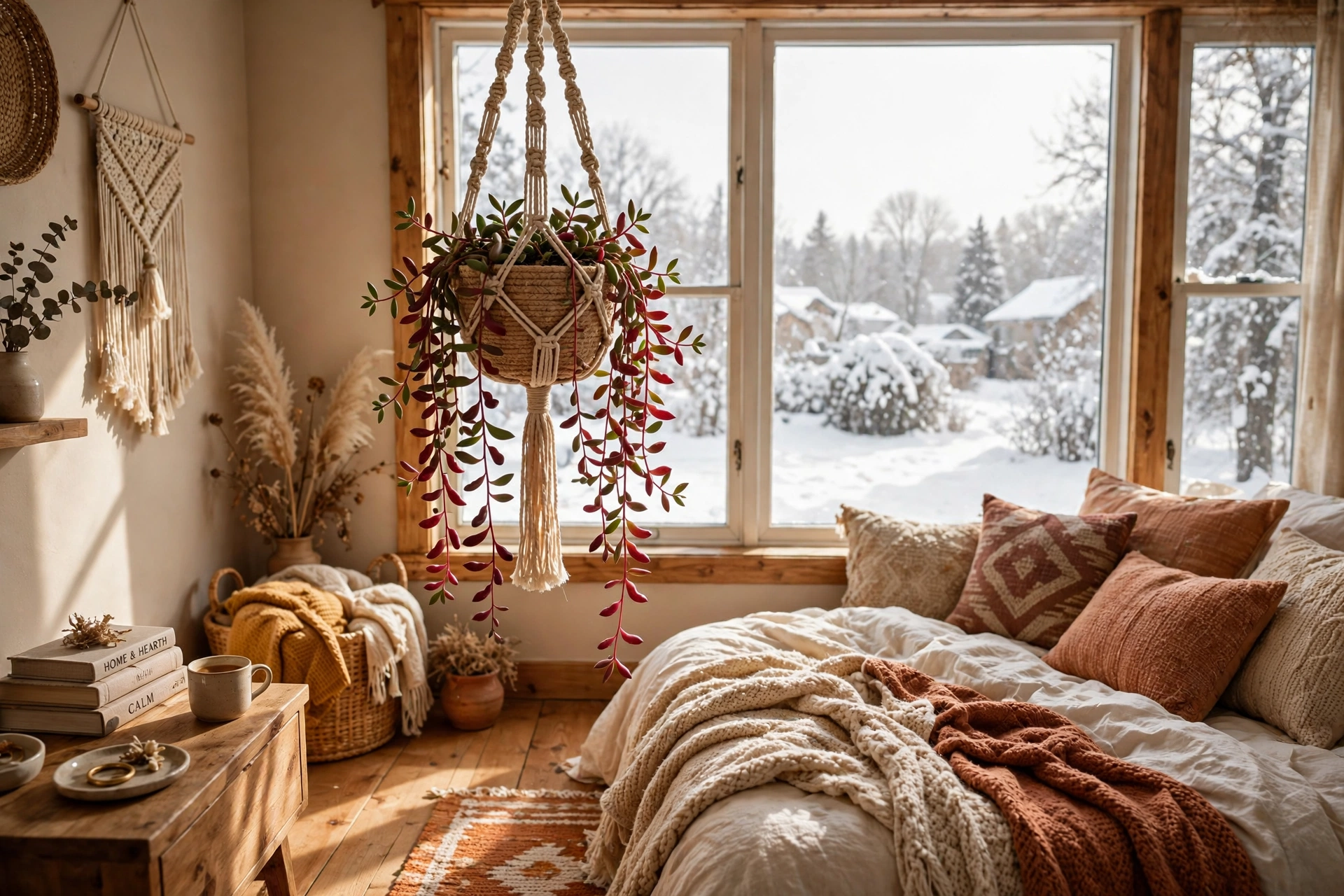
Okay, drama alert! This trailing succulent is the drama queen of the list, with ruby-red stems spilling over the pot! Ruby necklace wears thin bean-shaped leaves on stems turning deep red in bright sun! Give it at least 6 hours of sunlight a day, so a south-facing window is its happy place! Water only when the soil feels completely dry, about every 2 to 3 weeks, and less in winter! Rooms between 65 and 80 degrees suit it best! Pet lovers can relax, since ruby necklace is considered non-toxic to cats and dogs! A chewed stem can still upset a small stomach, so hang it high and let it shine!
One tip: wait until the leaves wrinkle slightly before you water, since wrinkled leaves mean the plant has used up its stored water!
10. Madagascar Palm in a Floor Pot by the Window
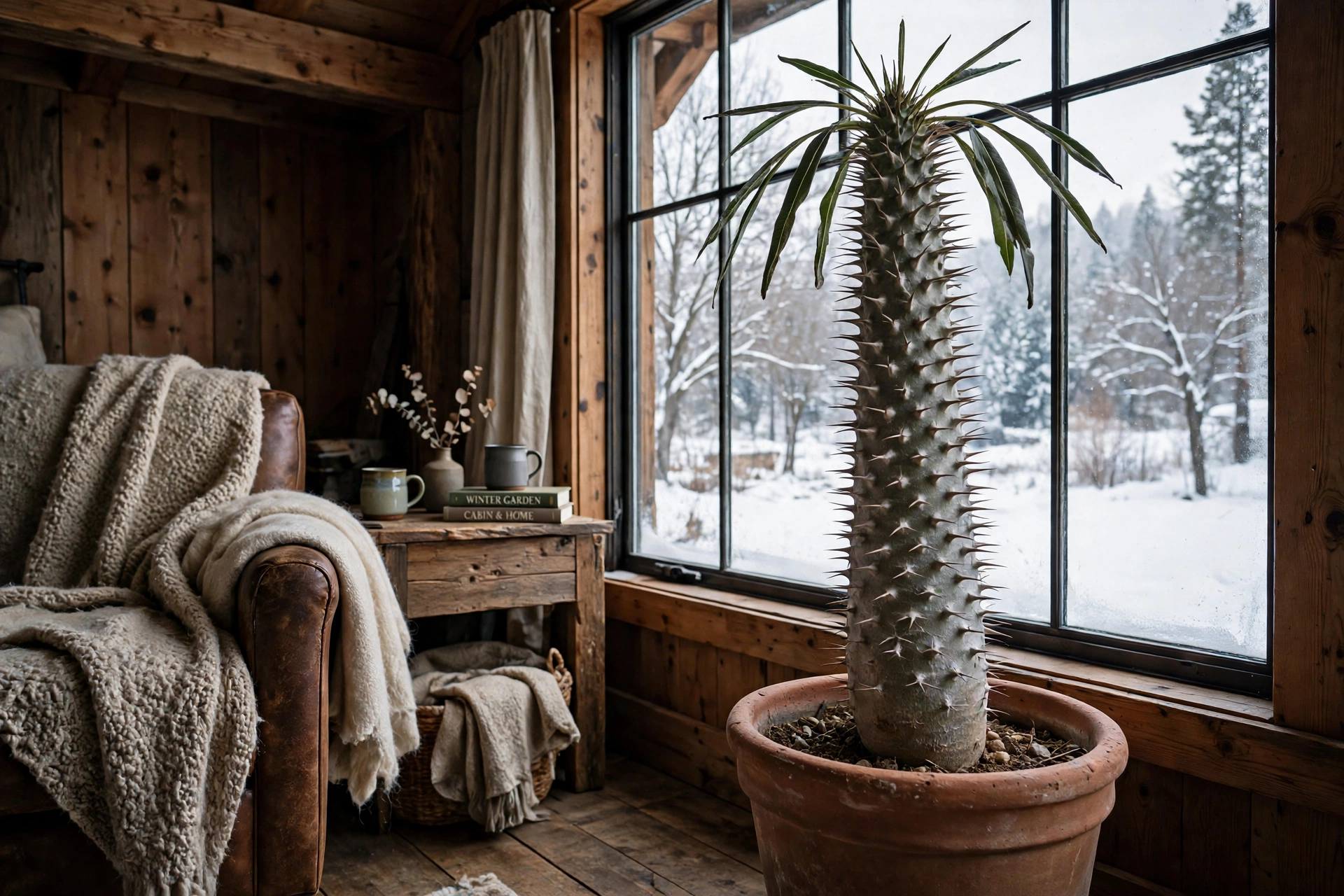
Meet the tallest drama queen on this list! Madagascar palm is no palm at all, but a bold succulent with a thick spiny trunk! It grows 4 to 6 feet tall indoors, just a few inches a year! All parts of Madagascar palm are toxic, and its sap can upset cats and dogs, so gloves and a sunny corner keep everyone safe! Give it as much direct sun as you can, at least 6 hours a day! Water every 2 to 3 weeks in summer, and once a month or less in winter, and keep it above 50 degrees! Leaves drop in winter, and new leaves return in spring!
One tip: wear thick gloves when you move it, since the trunk spines are sharp and the sap can irritate skin, and gloves make the move easy!